Furnace Fuse Replacement Made Simple for Cold Winter Nights
Signs of a Blown Furnace Fuse and Component Locations
To perform a quick furnace fuse replacement, turn off power at both the main circuit breaker and the furnace toggle switch, remove the lower blower access door, and locate the 3-amp or 5-amp blade fuse on the integrated control board. Pull the fuse out to inspect the internal filament, and if it is blown or shows open continuity, insert an identical replacement fuse before securing the access door and restoring power.
When a furnace suddenly stops running in the middle of a freeze, electrical safeguards are usually the first components to react. The fuse is intentionally designed to be the weakest electrical link in the system. Its primary job is to sacrifice itself to protect expensive parts—like your integrated printed circuit board (PCB) and 24-volt transformer—from high-voltage spikes or sudden short circuits.
The most common signs that you are dealing with a blown control fuse include:
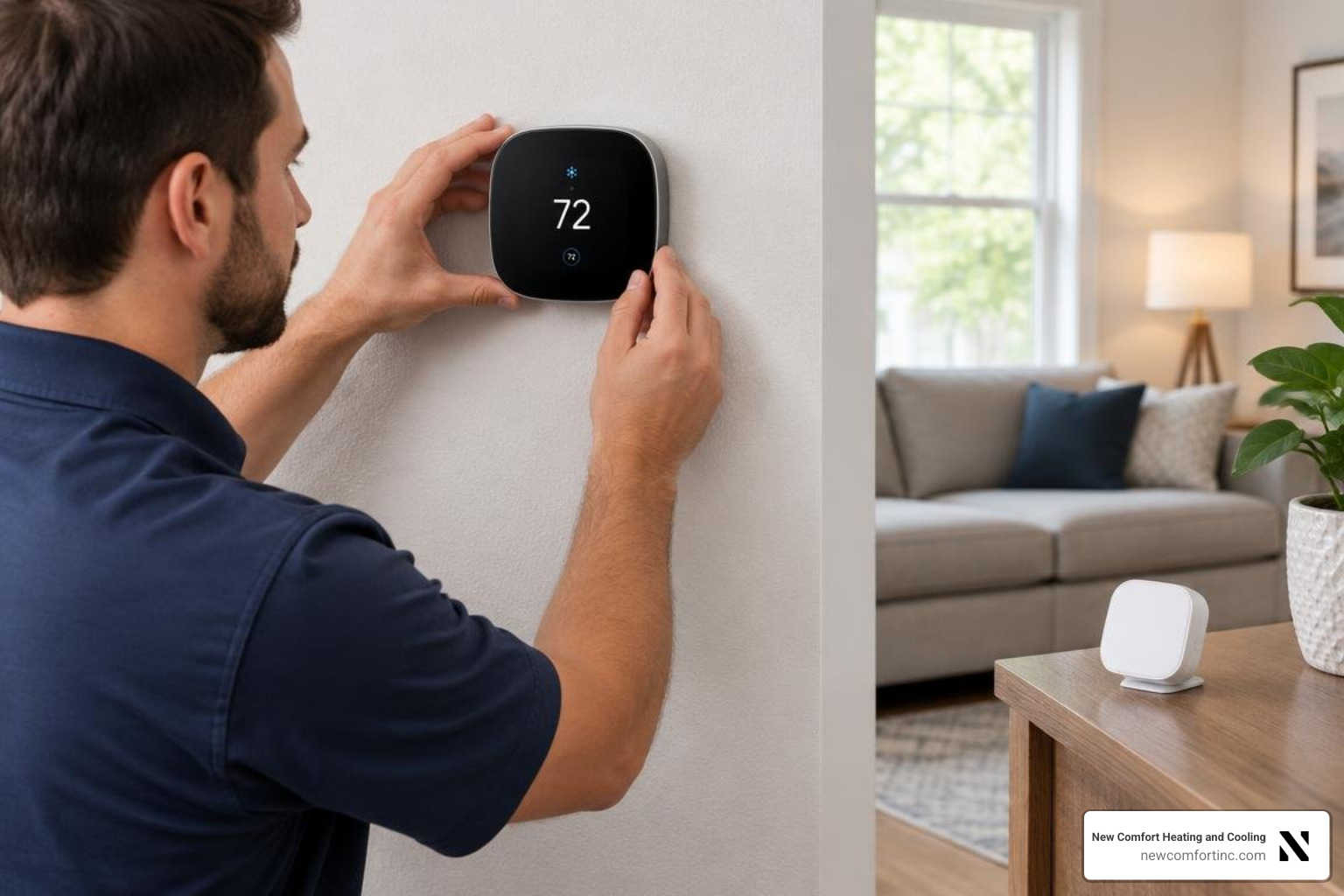
- A completely blank thermostat screen: If your digital thermostat is powered via a common "C-wire" from the furnace rather than standalone backup batteries, a blown fuse cuts low-voltage power, making the display go dark.
- No response from the furnace: The system will not initiate an ignition sequence, the draft inducer will not spin, and the blower fan remains dead silent.
- No diagnostic LED lights on the control board: Modern control boards feature one or two colored LED indicator lights. If the board is completely unpowered, these status lights will be entirely off.
To find your furnace fuse, you first need to know where heating manufacturers place them. In modern units (like Goodman, Carrier, Rheem, or Lennox), the low-voltage fuse is plugged directly into the primary control board located inside the lower blower compartment. Look for a small plastic automotive-style blade fuse labeled "SEC FUSE" or "3A/5A."
On older systems or units without an integrated board fuse, you might find an inline glass cartridge fuse holder wired along the secondary side of the step-down transformer. If you have questions about general system operation, checking our HVAC FAQ can help clarify how these electrical safeguards interact with your thermostat.
| Fuse Type | Common Rating | Location | Function |
|---|---|---|---|
| Low-Voltage Blade Fuse (ATC/ATO) | 3-Amp (Violet) or 5-Amp (Yellow) | Control board or inline transformer wire | Protects the 24V secondary circuit, transformer, and circuit board from electrical shorts. |
| Thermal Fusible Link | High-temp rating (152°C to 167°C) | Near burner assembly / combustion chamber | Safety shutoff that permanently opens during abnormal flame rollout or excessive heat buildup. |
Step-by-Step Guide to Furnace Fuse Replacement
Replacing a blown fuse is straightforward, but working inside a heating unit requires strict safety discipline. A furnace combines 120-volt line voltage with sensitive low-voltage electronic controls. If you are uncomfortable handling wiring, scheduling a prompt furnace repair is the safest route.
Essential Safety Steps Before Furnace Fuse Replacement
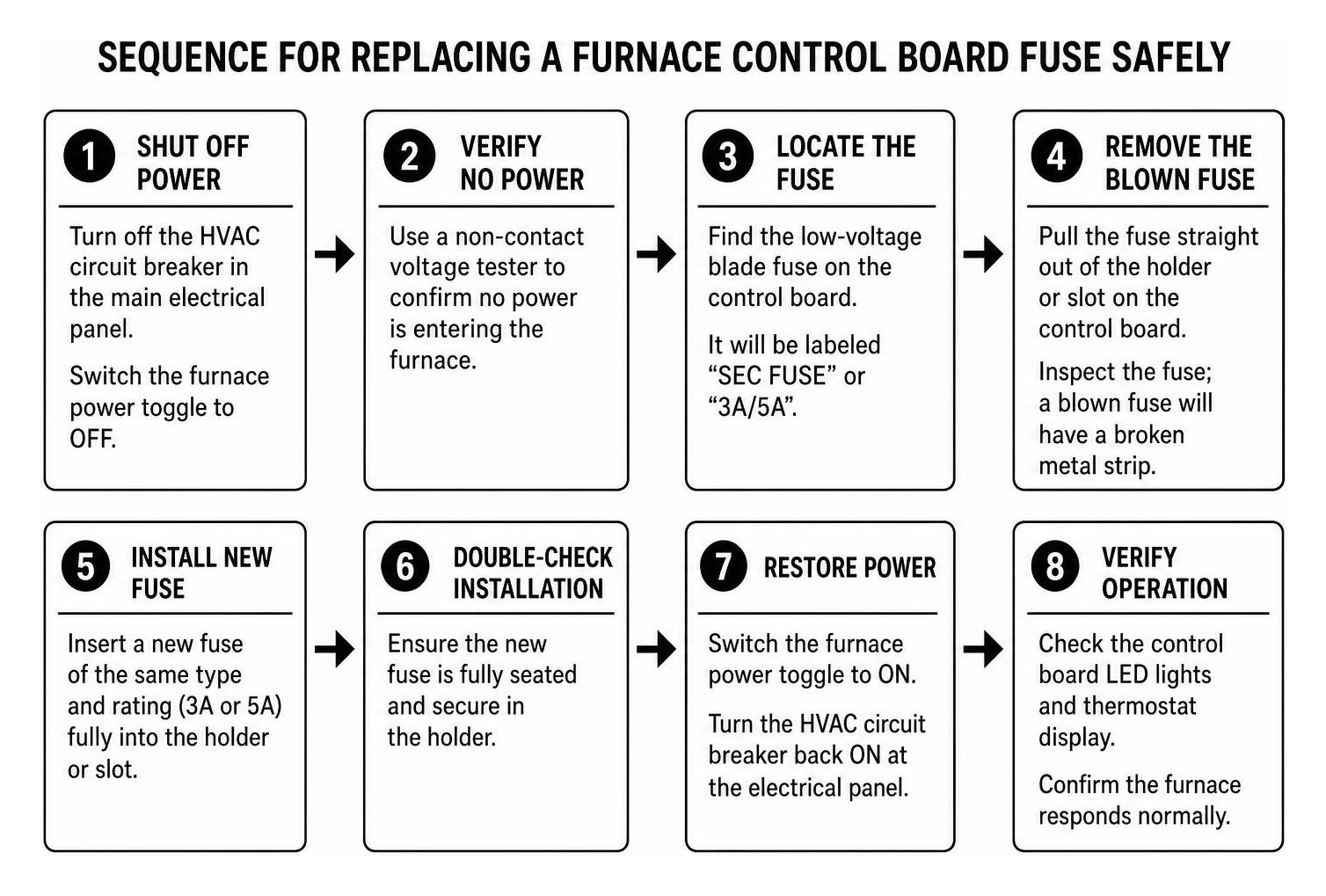
Before grabbing your tools, eliminate any chance of electrical shock:
- Enact a double-layer power shutoff: First, locate your home’s main electrical service panel and switch off the dedicated HVAC circuit breaker. Next, flip the local furnace power toggle switch (located directly on the furnace cabinet or on the adjacent wall) to the "OFF" position.
- Verify zero-energy state: Remove the service switch plate or use a non-contact voltage tester around the power wiring to verify that no live electrical current is entering the unit.
- Remove cabinet access doors: Use a 1/4-inch nut driver or 5/16-inch socket to remove the upper burner access panel and slide the lower blower door off its mounting pins. Furnaces feature a cabinet door interlock switch that cuts line voltage when the door is removed, but you should never rely on this switch alone for personal protection.
Testing and Swapping the Blade Fuse
Once you have clear access to the control board:
- Locate the fuse: Find the colored blade fuse mounted on the board. In most residential equipment, this is a 3-amp purple blade fuse or a 5-amp yellow blade fuse.
- Extract the fuse: Using needle-nose pliers or a plastic fuse puller, grip the plastic housing and pull straight out. Avoid wiggling aggressively to prevent bending the delicate metal prongs on the control board.
- Inspect the filament: Hold the fuse up to a bright light. If the metal filament inside the clear plastic housing is broken, melted, or blackened, the fuse has blown. For absolute certainty, set a digital multimeter to resistance (Ohms) or continuity mode and touch the probes to both metal prongs. A healthy fuse will show near-zero resistance and beep; an open, blown fuse will show "OL" (open loop).
- Install the replacement: Insert an exact replacement fuse of the identical amperage and physical size flush into the socket. If the socket feels loose, gently squeeze the board's metal terminal contacts with insulated pliers to ensure a snug fit. Follow all manufacturer Installation Instructions to ensure the system is restored properly.
- Reassemble and power up: Secure the access panels properly so the safety door interlock closes, then restore power at the service switch and main breaker.
Thermal Fusible Link vs. Standard Furnace Fuse Replacement
Do not confuse low-voltage electrical blade fuses with high-temperature fusible links. Fusible links are specialized, single-use safety devices located near the burner housing in older non-condensing, induced-combustion furnaces. Rather than reacting to electrical overcurrent, they physically melt and break the circuit when exposed to excessive temperatures caused by dangerous conditions like flame rollout, cracked heat exchangers, or severe flue blockages.
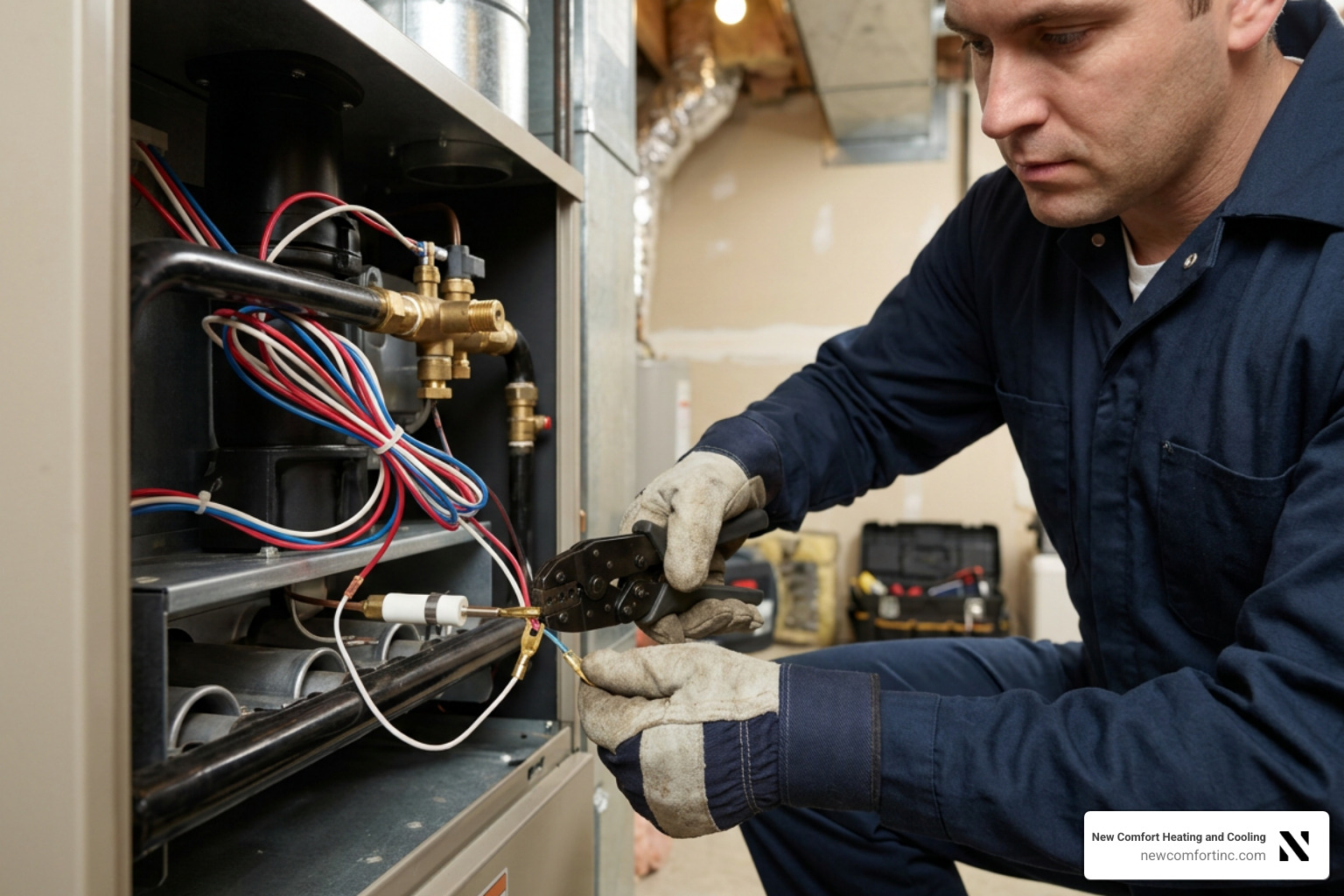
Replacing a fusible link requires extra mechanical precision:
- Technicians disconnect the blown link, cut the damaged leads, and strip precisely 1/4-inch of insulation from the furnace wires.
- The replacement kit (such as Robertshaw 10-660 or Carrier part 307566-701) must be secured using crimp connectors and routed strictly through designated wire clamps.
- Consult the manufacturer's INSTALLATION DATA for single or dual left-hand/right-hand link arrangements.
- Crucial Rule: Never simply swap a thermal fusible link without running the furnace through a full heat cycle to diagnose and correct the combustion problem that created the high-heat rollout condition.
Why Furnace Fuses Keep Blowing and Root-Cause Diagnostics
A fuse is a diagnostic canary in the coal mine. If your newly installed fuse pops the moment you restore power or initiate a call for heating or cooling, replacing it again will not solve the issue. You must hunt down the underlying electrical short circuit.
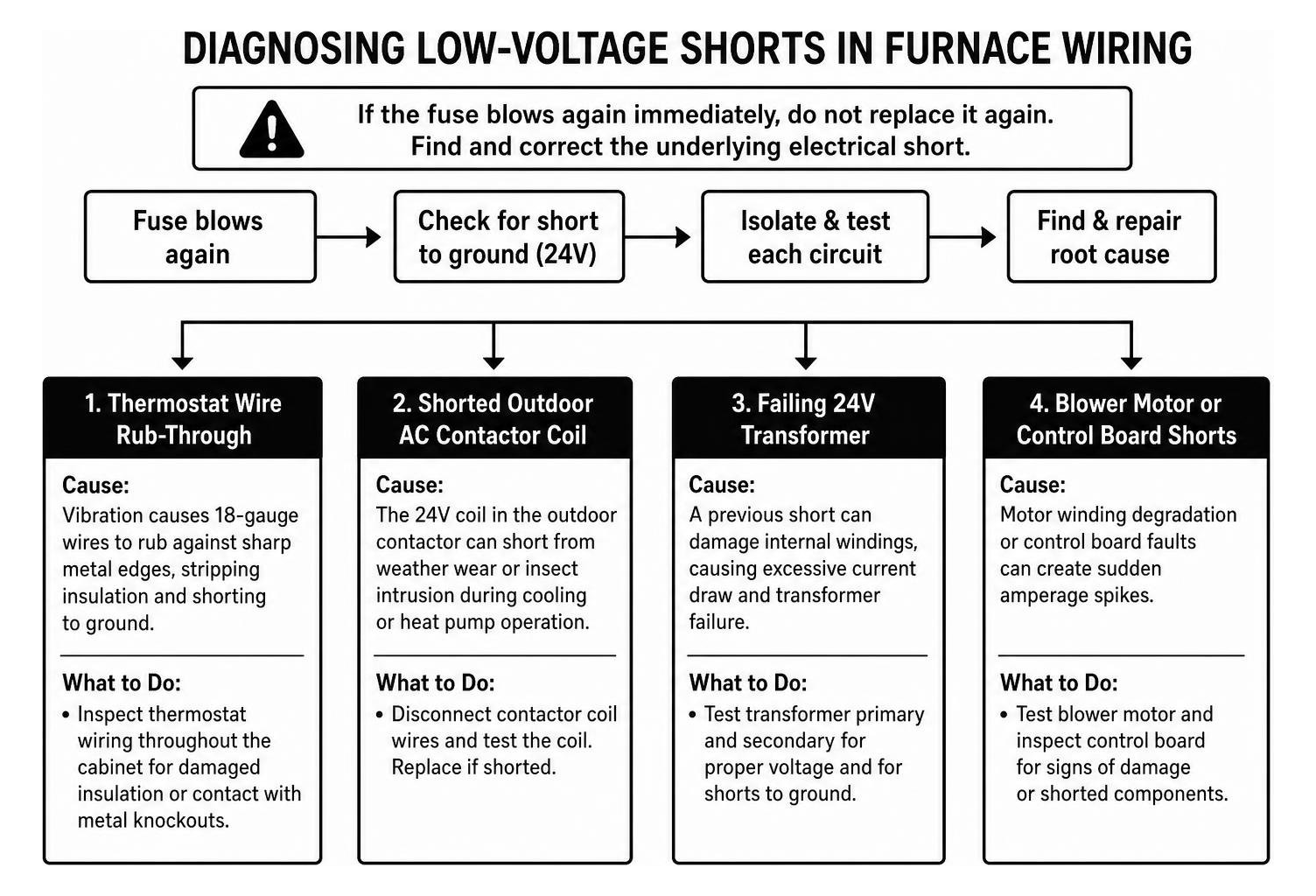
Common culprits behind recurring blown fuses include:
- Thermostat wire rub-through: Vibration from the blower motor over years of operation can cause low-voltage 18-gauge wires to rub against sharp metal cabinet knockouts, stripping insulation and creating a direct 24V short to ground.
- Shorted outdoor AC contactor coil: During cooling season or dual-fuel heat pump operation, the 24V coil inside the outdoor contactor can short out from weather wear or insect intrusion, instantly blowing the furnace board fuse when cooling is called.
- Failing 24-volt transformer: If a previous short created an internal winding fault, the step-down transformer will draw excessive primary current and fail.
- Blower motor or control board short circuits: Internal motor winding degradation can cause sudden amperage spikes.
To keep these electrical and mechanical problems from leaving you out in the cold, scheduling regular furnace maintenance helps technicians identify frayed wires and weakening contactors long before they leave you without heat.
Frequently Asked Questions About Furnace Fuses
What size and amp rating fuse does my furnace control board require?
Most residential gas furnaces use an automotive-style ATC/ATO fast-acting blade fuse rated at 3 amps (violet/purple) or 5 amps (yellow) with a 32V DC / 24V AC rating. Always verify the rating stamped on your circuit board, the wiring diagram on the access door, or the OEM service manual rather than guessing.
Can I install a higher amp fuse to stop it from blowing?
No, never increase the amperage rating of a furnace fuse. Upgrading a 3-amp slot with a 5-amp, 10-amp, or 15-amp fuse defeats the safety mechanism. The 3-amp threshold ensures the fuse blows before high current damages the delicate copper traces on the printed circuit board or destroys the transformer. Installing a larger fuse forces excess current into delicate components, risking melted wiring, ruined boards, and serious electrical fires.
When should I call a professional for furnace electrical issues?
If a replacement fuse blows immediately upon power-up, if you detect a burnt electrical smell, if you suspect a transformer burnout, or if a thermal fusible link has tripped due to flame rollout, turn off the power and call a certified technician. Our team at New Comfort Heating & Cooling is ready to help Chicago-area homeowners with fast diagnostics and Emergency HVAC Service Justice IL when severe winter storms strike.
Conclusion
Understanding how to inspect and swap a blown fuse provides peace of mind when winter temperatures drop. While replacing a standard blade fuse is a manageable task, persistent electrical issues and thermal link trips demand skilled diagnostic tools and comprehensive heating safety checks.
If your heating system is aging, experiencing repeated electrical breakdowns, or failing to keep your home comfortable, our team at New Comfort Heating & Cooling provides dependable, energy-efficient solutions backed by 24/7 live phone support and same-day service throughout Justice and Chicago, IL. Read our complete guide to see whether furnace repair vs replacement makes the right call for your home and budget this season.