What you’ll learn in this article:
- What’s the difference between traditional and ductless systems?
- Pros and cons of each system
- Which system is better for apartments in Clarendon Hills, Burr Ridge & surrounding areas?
- Final thoughts
Choosing the right air conditioning system is a key decision for any apartment owner in areas like Hinsdale, La Grange, or Downers Grove — places known for weather extremes, from scorching summers to bitterly cold winters. At New Comfort Inc., we specialize in helping homeowners throughout Chicago’s western and southwestern suburbs find the best HVAC solutions tailored to their living spaces. One of the most common questions we get is about ductless vs traditional AC: Should I go with a traditional AC system or a ductless system?
In this article, we provide an in-depth comparison between central air conditioning and ductless mini-split systems, breaking down the pros, cons, energy efficiency, installation costs, and comfort levels — all with the climate and housing styles common in local suburbs in mind.
What’s the difference between traditional and ductless systems?
Central air conditioning
A traditional AC system uses a network of ductwork to distribute cooled air throughout your home. It typically includes an outdoor condenser unit and an indoor furnace or air handler that pushes air through the ducts into each room.
Ductless mini-split systems
Ductless systems, also known as mini-splits, are a modern HVAC solution that doesn’t require ductwork. Each room or zone has its own indoor unit connected to an outdoor condenser via small refrigerant and electrical lines. These systems can often both cool and heat, making them a year-round comfort solution.

Pros and cons of each system
Benefits of traditional central AC
- Even cooling throughout the apartment thanks to the ducted airflow
- Integrated heating and cooling if combined with a furnace or heat pump
- Ideal for new builds or major renovations, where ductwork is planned from the start
Drawbacks of traditional AC
- Higher upfront cost if ductwork needs to be added to an existing building
- Energy loss through ducts, especially if they are old or poorly sealed
- Limited control over individual room temperatures
Benefits of ductless systems
- No ductwork needed, making them perfect for older suburban apartments in areas like Western Springs or Willow Springs, where installing ducts would be invasive or impractical
- Lower installation cost for units in homes without existing ductwork
- Zoned climate control – set different temperatures for each room
- High energy efficiency, with less air leakage and direct operation
- Quiet operation and sleek, modern design
Drawbacks of ductless systems
- Higher unit cost per room – for large apartments, total costs may add up
- Visible indoor units, which may not appeal to every homeowner’s taste
You may also like:

Which system is better for apartments in Clarendon Hills, Burr Ridge & surrounding areas?
In suburban towns like La Grange or Homer Glen, where the weather swings between intense heat and deep freeze, your cooling system needs to be:
- Reliable and efficient
- Cost-effective in the long run
- Simple to maintain and service
Older apartments and vintage buildings
Many older buildings in suburbs such as Willow Springs or Indian Head Park don’t have existing ductwork or room to install it. In these cases, ductless mini-split systems are often the smarter choice. They require minimal construction, preserve architecture, and offer high efficiency without major renovation.
Newer apartments and condos
If your apartment is located in a newer building in places like Elmhurst or Orland Park with pre-installed ductwork, a traditional central AC system may be more practical, especially if you're cooling multiple rooms or larger square footage. In these cases, a properly sized and professionally installed system — like those offered by New Comfort Inc. — can provide excellent performance and long-term savings.
Installation and operating costs
Installation
- Traditional systems can be more expensive to install if ducts need to be added from scratch
- Ductless systems typically cost less to install in apartments without ductwork, though each indoor unit adds to the price
Energy efficiency
- Ductless systems often win on efficiency, especially in smaller spaces or when zoning is a priority
- Central AC can be economical if the ductwork is already present and well-maintained
You may also like:
Air quality and maintenance
Ductless systems include easily accessible filters, making maintenance and air quality control more manageable. Traditional systems, on the other hand, can accumulate dust, debris, and moisture in the ducts over time, requiring regular duct cleaning. For people with allergies or respiratory issues, mini-splits often provide better indoor air quality.

Ductless vs Traditional AC: Side-by-Side Comparison
If you want a quick summary before making a decision, here is how the two options compare on the factors that matter most to apartment and condo owners in the western and southwest suburbs:
- Ductwork – Central air conditioning needs a duct system; a ductless mini-split does not.
- Installation disruption – Adding ducts can mean opening walls and ceilings. A ductless system usually needs only a small opening in an exterior wall for each indoor unit.
- Temperature control – Central AC typically cools the whole home to one setting. Ductless systems allow room-by-room or zone-by-zone control.
- Appearance – Central AC hides behind registers and grilles. Ductless indoor units are visible on walls or ceilings.
- Efficiency – Ductless systems avoid duct losses. Central AC can be very efficient when the ductwork is well sealed and insulated.
- Heating – Many ductless systems are heat pumps that can heat as well as cool. Central AC is usually paired with a furnace for winter heat.
Neither choice wins in every situation. The best answer in the ductless vs traditional AC debate depends on the layout of your home, whether ducts already exist, and how you use each room.
Heating Too: Ductless Heat Pumps in Chicago Winters
One advantage that often surprises homeowners is that most ductless systems are heat pumps. In spring and fall, they can provide efficient heating without firing up the furnace or boiler. Modern cold-climate models are designed to keep working at much lower outdoor temperatures than older heat pumps.
For Chicago-area homes, many owners keep their existing furnace or boiler as a backup for the coldest stretches of January and February, while the ductless system handles cooling in summer and supplemental heat during milder weather. The ENERGY STAR guide to ductless heating and cooling explains how these systems work and what to look for in an efficient model.
Condo and Apartment Considerations
Apartments and condos come with a few extra questions that single-family homes do not. Before choosing a system, check the following:
- Association rules – Many condo associations have guidelines about where outdoor units can be placed and how wall penetrations must be finished.
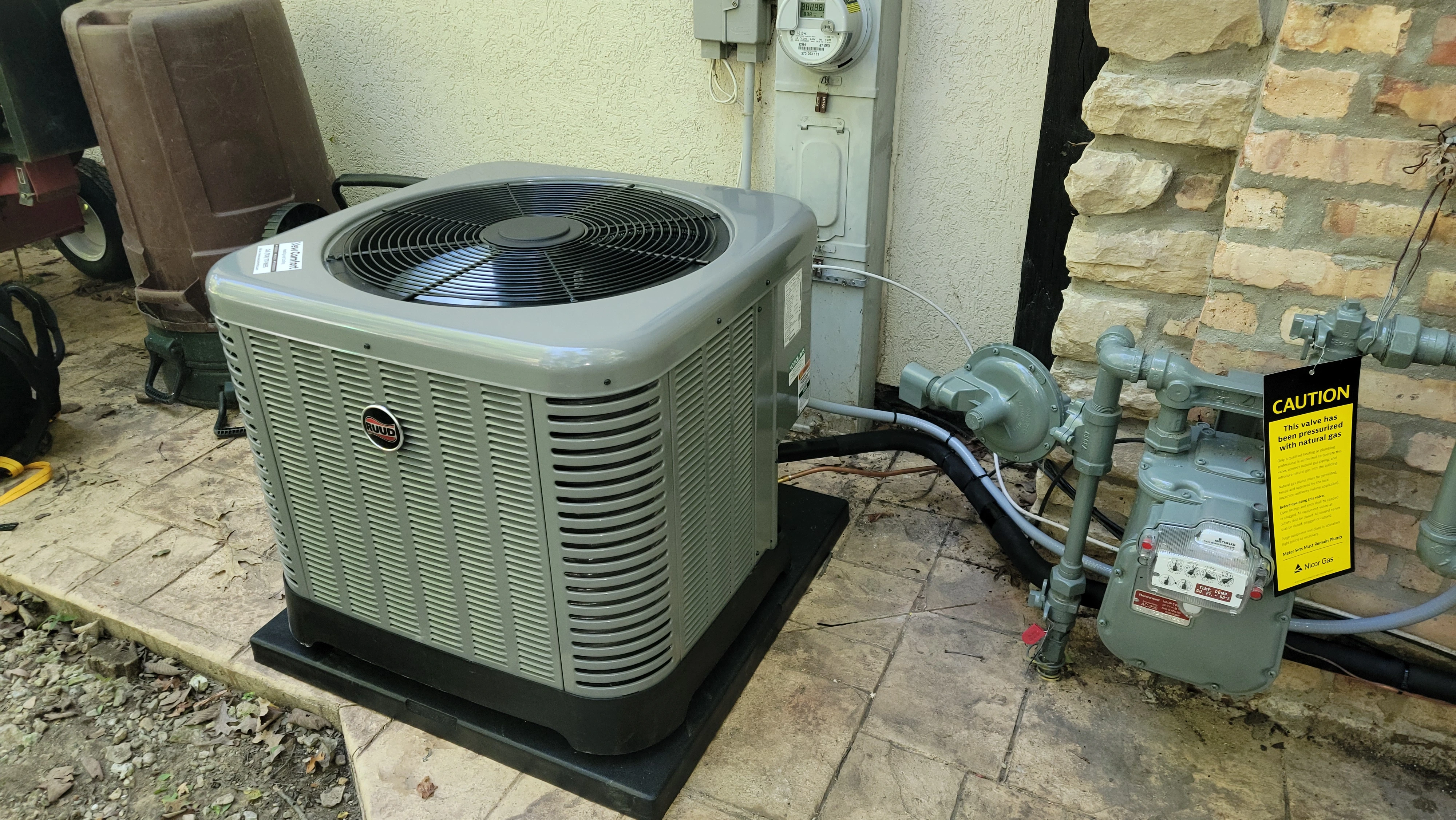
- Outdoor unit location – Ductless condensers can often be mounted on a wall bracket, a balcony, or a small pad. Central AC condensers usually need a ground-level location.
- Noise – Both systems have quiet modern options, but placement matters when neighbors are close by.
- Electrical capacity – Older buildings may need an electrical upgrade to support a new system.
- Shared walls – In some buildings, line sets for a mini-split must be routed carefully through exterior walls only.
A professional site visit is the best way to understand what is allowed and practical in your building.
The Hybrid Approach: Combining Central Air and Ductless
Some homes benefit from both systems. A central air conditioning system may handle most of the house, while a ductless mini-split cools a space that the ducts do not reach well. Common examples include:
- Finished attics and bonus rooms that stay hot in summer
- Sunrooms and enclosed porches
- Home additions built after the original duct system was installed
- Basement offices or guest suites
- Garages converted into living space
Adding a ductless unit to these areas can be far less disruptive than extending ductwork, and it often improves comfort throughout the rest of the home because the central system no longer has to overwork to reach the problem room.
Three Common Scenarios in Suburban Homes
To make the ductless vs traditional AC decision more concrete, here are three situations we often see in apartments, condos, and smaller homes around the western and southwest suburbs.
An older building heated by radiators
Many vintage apartment buildings and two-flats were built with boiler and radiator heat, so there are no ducts at all. Installing a full duct system would mean opening walls and ceilings and losing closet space. In this case, a ductless mini-split is usually the most practical way to add efficient cooling while leaving the existing heating system in place.
A newer condo with a furnace and ducts
If your unit already has a forced-air furnace and a duct system in reasonable condition, central air conditioning is typically the simplest upgrade. A matched outdoor condenser and indoor coil can use the existing ducts, and the whole home is controlled from one thermostat.
A townhome with a hot upper floor
Two- and three-story townhomes often have one floor that never quite cools down. Instead of replacing the whole system, adding a single ductless indoor unit to the upper level can solve the problem and take pressure off the central system. This hybrid approach can be one of the most cost-effective comfort upgrades available.
Ductless vs Traditional AC: Cost Factors to Consider
Every project is different, so it is impossible to quote a fair price without seeing the space. These are the main factors that affect the cost of either option:
- Whether usable ductwork already exists, and what condition it is in
- The number of rooms or zones you want to cool or heat
- The efficiency rating of the equipment you choose
- Electrical work needed to support the new system
- Placement of the outdoor unit and the length of refrigerant lines
- Any wall, ceiling, or finishing work required after installation
Over time, energy use matters just as much as the upfront price. A ductless system that only runs in occupied rooms can save energy, while a well-designed central system may cost less to operate in a home where every room is used every day. New Comfort offers free estimates, so you can compare options based on your actual space.
Understanding Efficiency Ratings
When you compare proposals, you will see a few efficiency ratings. SEER2 measures cooling efficiency over a typical season – the higher the number, the less electricity the system uses to deliver the same cooling. If you are considering a ductless heat pump, you will also see HSPF2, which measures heating efficiency.
Higher-rated equipment usually costs more upfront but can lower monthly bills, especially if you use the system heavily. Ask your contractor to explain how different ratings would affect your home specifically, rather than simply recommending the most expensive model.
Maintenance Comparison
Both systems need regular care to stay efficient and reliable, but the routines are a little different:
- Ductless mini-split – Rinse or vacuum the washable filters in each indoor unit about once a month during heavy use. Have the indoor coils, blower wheels, and drain lines professionally cleaned on a regular schedule, since moisture and dust can build up inside the units.
- Central air conditioning – Replace the air filter every 1–3 months, keep supply and return vents clear, and schedule an annual tune-up. Ducts may need periodic inspection or cleaning, especially in older buildings.
- Both – Keep the outdoor unit clear of leaves, snow, and debris, and schedule professional service once a year.
Questions to Ask Before Installation
Whichever direction you are leaning, these questions will help you get a clear and fair proposal:
- Will you perform a load calculation to size the system correctly?
- How many indoor units or zones do you recommend, and why?
- Where will the outdoor unit and line sets be placed?
- Can my existing ductwork handle a new central system, or does it need repairs?
- What efficiency ratings are available, and how do they affect operating costs?
- Is financing available for larger projects?
You can learn more about our installation process on our AC unit installation page.
Frequently Asked Questions
Is ductless cheaper than central air conditioning?
It depends on the home. In a space without ductwork, a ductless mini-split is often less expensive and less disruptive to install. In a home that already has good ducts, central air conditioning can be the more economical choice.
Can one ductless unit cool an entire apartment?
A single indoor unit can work well in a small, open apartment. Larger or divided floor plans usually need several indoor units so that every room stays comfortable.
Do ductless systems work in Chicago winters?
Modern cold-climate ductless heat pumps can provide heat well below freezing. Many homeowners still keep a furnace or boiler for the coldest days, using the ductless system for cooling and supplemental heating.
Which option is better for allergies?
Both can support good indoor air quality when they are maintained properly. Ductless systems avoid dust that collects in old ducts, while central systems can be paired with higher-efficiency filters that clean the air for the whole home. Regular filter care is the key for either option.
Will a ductless system lower my energy bills?
It can, particularly if you only need to cool a few rooms or if your current ducts are leaky. Because each indoor unit runs only when that space needs it, you avoid cooling empty rooms. Actual savings depend on your habits, the equipment, and your current system.
Can I install a ductless system myself?
We do not recommend it. Ductless systems require proper refrigerant line sizing, vacuum and leak testing, electrical connections, and correct charging. Mistakes can reduce efficiency, cause leaks, and void the manufacturer's warranty. A professional installation protects both your comfort and your investment.
How long does installation take?
Many ductless installations can be completed in a day or two, depending on the number of indoor units. Central air conditioning installation time varies widely, especially if new ductwork is required.
So, which one should you choose?
Ultimately, the decision depends on:
- The age and construction of your building
- Whether or not ductwork is already installed
- Your budget and long-term energy goals
- The number of rooms or zones you want to cool or heat
Final thoughts
Both central air conditioning and ductless mini-split systems can be great solutions for apartments in suburban areas like Hinsdale, Darien, and La Grange — what matters is choosing the system that fits your space and lifestyle best.
If:
- You live in a building without existing ductwork
- You want an energy-efficient, modern solution
- You prefer room-by-room temperature control
Then a ductless system may be your best option.
If:
- You have an existing duct system in place
- You're cooling a large apartment or multiple rooms with a single unit
- You want everything hidden behind walls and ceilings
Then traditional central AC may be more cost-effective and visually seamless.
Still unsure which solution is right for you? Reach out to the experts at New Comfort Inc. for a free consultation and estimate. Our team will assess your space and recommend the most efficient and comfortable solution tailored to your needs.
Trust your local HVAC specialists in Hinsdale, Downers Grove, and surrounding suburbs to keep your home comfortable — no matter the season.