What you’ll learn in this article:
- Start with the Obvious: Airflow and Temperature Irregularities
- Pay Attention to Noises and Smells
- Use Your Thermostat as a Diagnostic Tool
- Inspect Your Air Filter and Vents
- Look for Ice, Water Leaks, or Unusual Moisture
- Know When to Call a Professional HVAC Technician
- What You Can Expect During a Professional HVAC Diagnosis
- Final Thoughts
When the temperature rises or drops sharply, the last thing you want is an HVAC system that doesn't perform as expected. In the area like Justice, IL, where seasonal extremes are common, a reliable HVAC system is not a luxury—it’s a necessity. At New Comfort Heating and Cooling, we’ve seen how early diagnosis of issues can save homeowners time, money, and a lot of stress. In this article, we’ll walk you through effective methods to diagnose HVAC issues quickly and explain when it’s time to call in a professional.
Start with the Obvious: Airflow and Temperature Irregularities
If your HVAC system isn’t heating or cooling evenly, it’s one of the first signs something is off. Walk around your home and check if:
- Airflow feels weak in some rooms
- Vents are blowing air that’s not aligned with your thermostat settings
- One area is significantly warmer or cooler than others
This could indicate clogged filters, duct issues, or problems with the blower motor.
You may also like:
Pay Attention to Noises and Smells
Unusual sounds or odors coming from your unit are more than a nuisance—they're warning signs. Common issues include:
- Grinding or squealing noises, which may signal motor or belt problems
- Musty smells, indicating possible mold in the ducts or unit
- Burning odors, which could point to electrical issues
In places like Western Springs or Elmhurst, where many homes have older ductwork, these signs can escalate quickly if ignored.

Use Your Thermostat as a Diagnostic Tool
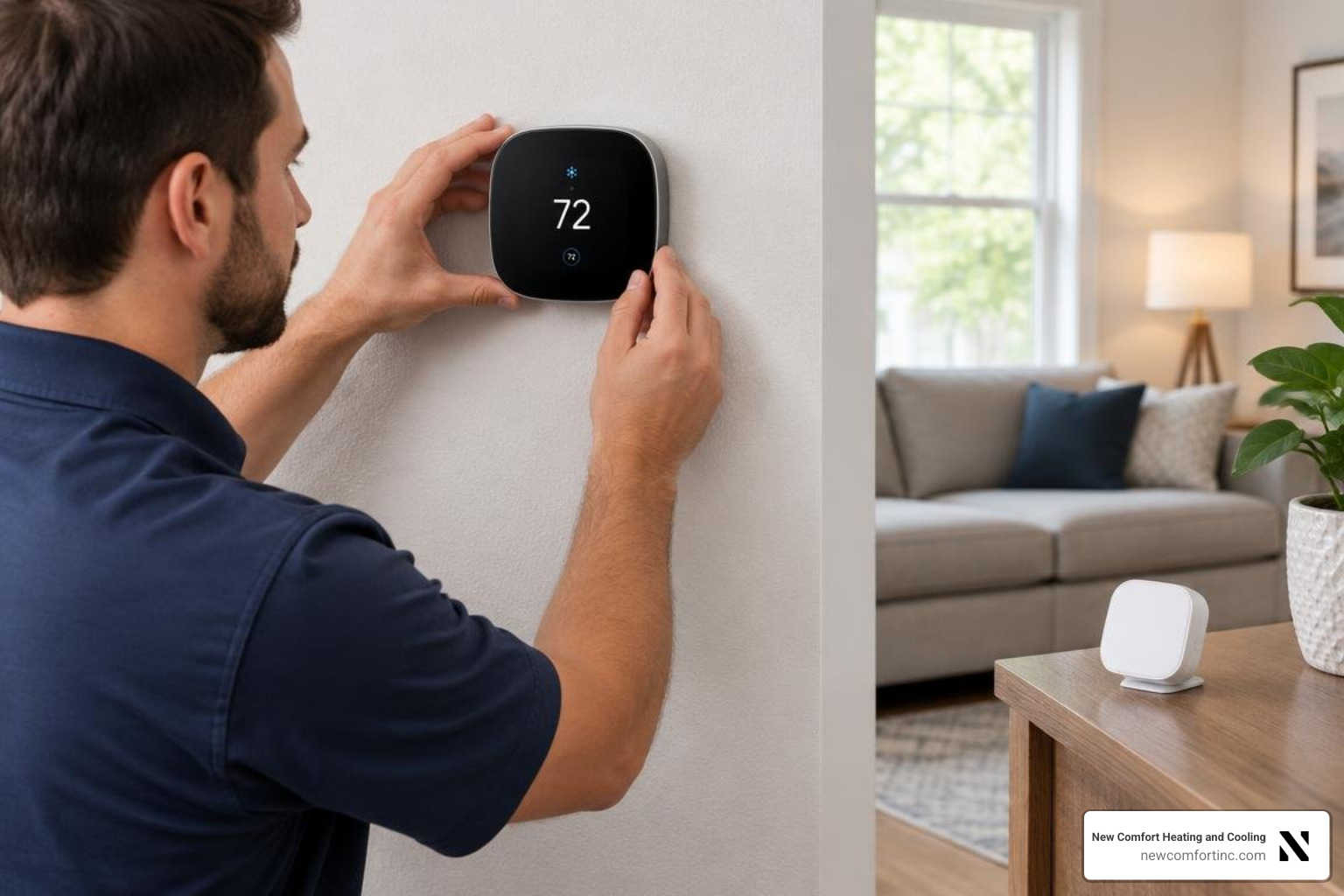
Modern thermostats offer more than just temperature control—they can help diagnose system issues. If your system short cycles (turns on and off rapidly) or doesn’t respond to settings, the problem could lie in:
- A miscalibrated thermostat
- Wiring issues
- A faulty control board in the HVAC unit
Residents of La Grange Park and Burr Ridge often benefit from upgrading to smart thermostats, which can also send maintenance alerts.
Inspect Your Air Filter and Vents
A clogged air filter can restrict airflow and cause your system to overheat or freeze up. Make sure to:
- Replace filters every 1–3 months, especially during peak heating or cooling seasons
- Ensure vents are open and unobstructed by furniture
- Check for visible dust buildup inside vents, which could suggest a need for duct cleaning
In high-pollen areas like Downers Grove or Orland Park, frequent filter changes can also improve indoor air quality.
You may also like:

Look for Ice, Water Leaks, or Unusual Moisture
Condensation is normal, but if you notice water pooling around your unit or ice forming on the coils, it's time to investigate. These problems could be related to:
- A blocked condensate drain
- Low refrigerant levels
- Malfunctioning evaporator coils
Homeowners in Willow Springs or Darien, where humidity levels can fluctuate, should be especially vigilant about moisture issues.
Know When to Call a Professional HVAC Technician
While DIY inspections are helpful, certain signs mean it’s time for expert help. Contact an HVAC specialist if you notice:
- System failures with no clear cause
- Tripped breakers when the system runs
- Burning smells or loud mechanical noises
- Inconsistent thermostat readings despite replacements
Each of these issues requires trained expertise and the right tools, which is why professional HVAC services in the Justice, IL area are the safest and most effective solution. Attempting complex repairs without experience can worsen the problem and lead to higher costs.

What You Can Expect During a Professional HVAC Diagnosis
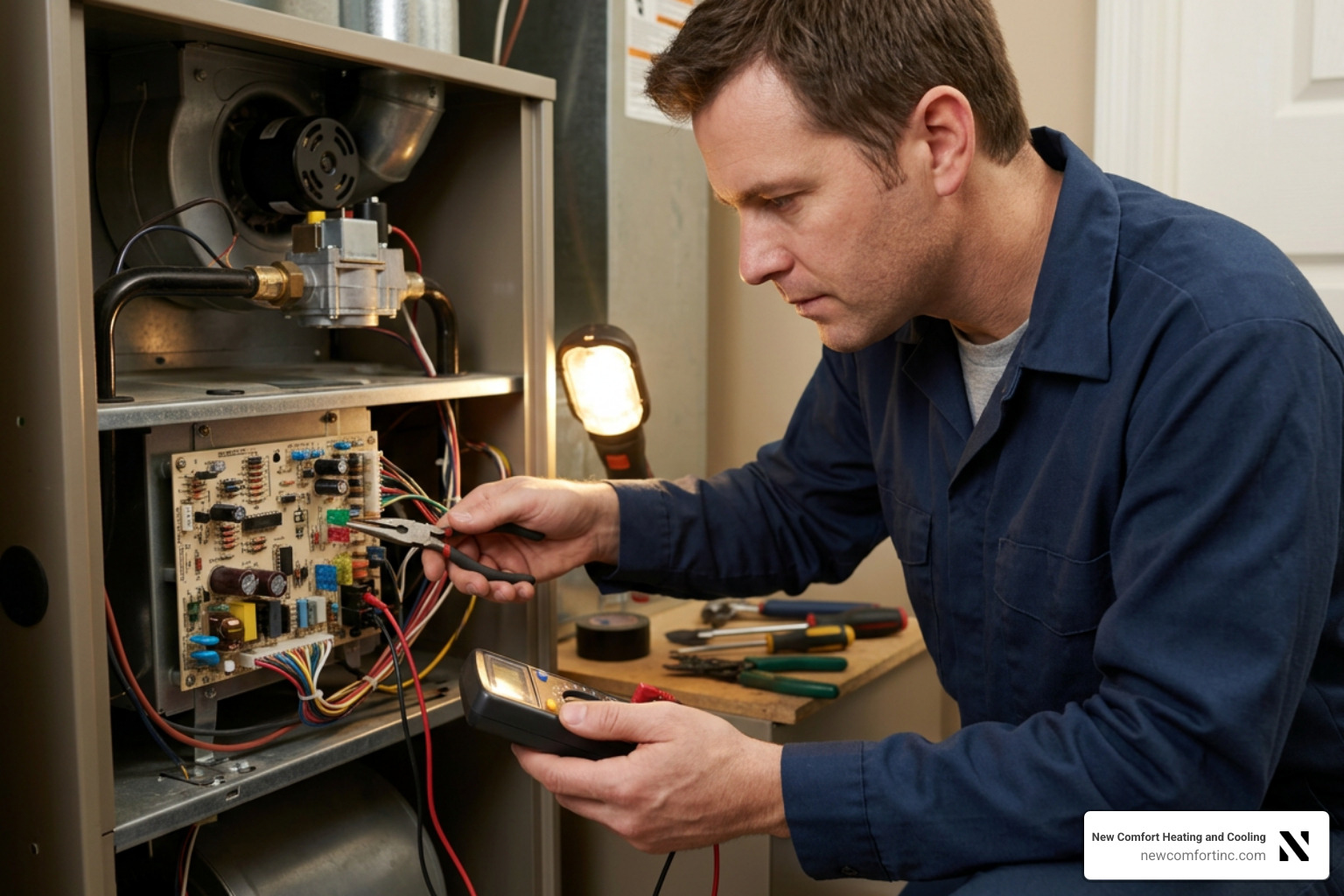
When you schedule a diagnostic appointment with New Comfort Heating and Cooling, here’s what we typically do:
- Inspect and test key system components (compressor, fan, motor)
- Check refrigerant levels and detect possible leaks
- Run system performance tests and examine airflow efficiency
- Calibrate thermostat and verify wiring connections
- Review your system’s maintenance history
By using modern diagnostic tools and deep local experience in towns like Hinsdale, Countryside, and Hickory Hills, we ensure no issue goes unnoticed.
A Step-by-Step HVAC Troubleshooting Routine
When something seems wrong, it helps to follow the same order every time. A consistent routine keeps you from overlooking simple causes and gives you useful information to share if you need professional help. Here is a safe HVAC troubleshooting sequence most homeowners can follow in 10 to 15 minutes:
- Check the thermostat – Confirm the mode (heat, cool, or auto), the set temperature, and the fan setting. Replace the batteries if the display is dim or blank.
- Confirm power – Look for tripped breakers in your electrical panel and make sure the service switch near the furnace is on. Check the outdoor disconnect next to the AC condenser.
- Inspect the air filter – Hold it up to a light. If you cannot see light through it, replace it.
- Walk through the house – Make sure supply vents are open and return grilles are not blocked by furniture, rugs, or curtains.
- Look at the outdoor unit – In summer, check that the fan is spinning and the coil is not covered in debris. In winter, make sure heat pump units are not buried in snow or ice.
- Check for water – Look around the furnace, air handler, and condensate pump for leaks or a full drain pan.
- Listen and smell – Note any new sounds or odors when the system starts, runs, and shuts off.
- Write it down – Record what you found, the time, and any error codes. This makes professional HVAC diagnosis faster and more accurate.
If the system starts working after a simple fix, such as a new filter or reset breaker, keep an eye on it for the next few days. If the same HVAC issues return, there is likely an underlying cause that needs attention.
Seasonal Guide: How to Diagnose HVAC Issues in Winter
Winter HVAC problems in Justice and the surrounding suburbs usually show up during the first real cold snap, when the furnace starts running for long periods. Here are common symptoms and what they often mean:
- Furnace runs but blows cold air – Possible causes include a dirty flame sensor, an ignition problem, or a thermostat set to “fan on” instead of “auto.”
- Furnace clicks but does not light – Often related to the igniter, gas supply, or a safety switch that is preventing ignition.
- Short cycling – A clogged filter, overheating, a faulty flame sensor, or an oversized furnace can cause the system to turn on and off rapidly.
- Uneven heat between floors – Usually tied to ductwork design, closed dampers, or blocked returns rather than the furnace itself.
- Water around a high-efficiency furnace – A blocked condensate line or failed condensate pump is a common culprit.
Replacing the filter and checking the thermostat are safe steps for anyone. Problems involving gas, ignition, or the heat exchanger should always be handled by a trained technician.
Seasonal Guide: Diagnosing Summer Cooling Problems
In summer, high humidity and long run times put extra stress on your air conditioner. Typical cooling-season HVAC problems include:
- Warm air from the vents – The outdoor unit may not be running, the breaker may have tripped, or a capacitor may have failed.
- Outdoor unit hums but the fan does not spin – Often a sign of a weak capacitor or failing fan motor.
- Ice on the refrigerant lines – Usually caused by poor airflow from a dirty filter or coil, or by low refrigerant. Turn the system off and let it thaw before calling for service.
- AC runs constantly – A dirty outdoor coil, low refrigerant, leaky ducts, or an undersized system can keep the AC running without reaching the set temperature.
- High indoor humidity – May point to an oversized system, incorrect fan settings, or a dirty evaporator coil.

Simple HVAC Troubleshooting Tools for Homeowners
You do not need a technician's toolbox to gather useful information. A few everyday items can help you diagnose HVAC issues more accurately:
- A flashlight – For checking the filter, the furnace status light, the drain pan, and the area around the outdoor unit.
- A digital thermometer – Measure the air temperature at a return grille and at a nearby supply vent. In cooling mode, supply air is typically noticeably cooler than return air. A very small difference can point to a refrigerant or airflow problem worth reporting.
- Your smart thermostat app – Many models show daily run times. A sudden jump in run time with no change in weather can be an early sign of trouble.
- A notebook or phone – Record symptoms, dates, and error codes so nothing is forgotten when you call for help.
Mistakes to Avoid When You Diagnose HVAC Issues
Well-meaning DIY efforts can sometimes make problems worse. Avoid these common mistakes:
- Resetting the system or breaker over and over instead of finding out why it tripped
- Closing many supply vents to push air elsewhere, which can strain the blower and freeze the coil
- Running the AC while the lines are iced over
- Using the wrong filter size or a very restrictive filter that the system was not designed for
- Removing panels or bypassing safety switches to keep the system running
- Ignoring a recurring smell or noise because the system still seems to work
When in doubt, turn the system off and call for professional help. A quick visit is far less costly than repairing damage caused by forcing a failing system to run.
Airflow Problem or Equipment Problem?
A helpful way to narrow down HVAC issues is to ask whether the problem is about moving air or about producing heat and cooling. If air comes out of the vents weakly everywhere, the cause is often a clogged filter, a dirty blower wheel, or a blocked return. If only one or two rooms are affected, the ductwork, a closed damper, or a crushed flex duct may be to blame.
If airflow is strong but the air is the wrong temperature, the issue is more likely with the equipment itself – the burners, igniter, refrigerant charge, compressor, or outdoor fan. Sharing this observation with your technician can shorten the diagnostic process considerably.
Decoding Furnace Error Codes and Status Lights
Many modern furnaces have a small window on the lower panel where a status light blinks in a specific pattern. That pattern is a built-in diagnostic code. The legend explaining each code is often printed on a label inside the furnace door.
If your furnace stops working, look through the window before turning off the power, because cutting power can clear the code. Count the blinks, note the pattern, and share it with your technician. Common codes point to issues such as a pressure switch fault, flame sensing problem, open limit switch, or ignition failure. Avoid resetting the system again and again – if a safety device keeps shutting it down, there is a reason.
Common HVAC Problems That Need a Professional
Some HVAC problems are simple to spot but should never be fixed without proper training and tools. These include:
- Refrigerant leaks and recharging, which require certification and specialized equipment
- Gas valve, burner, or ignition repairs
- Cracked heat exchangers, which can allow carbon monoxide to escape
- Electrical work on control boards, capacitors, contactors, and motors
- Compressor failures and major component replacement
Make sure your home has working carbon monoxide alarms on every level and near sleeping areas. The U.S. EPA explains why on its carbon monoxide page.
How Early HVAC Diagnosis Saves Money
Many expensive repairs start as small, inexpensive ones. A weak capacitor that is replaced early protects the compressor. A dirty flame sensor that is cleaned prevents repeated shutdowns. A clogged drain line that is cleared avoids water damage to a finished basement. Prompt HVAC diagnosis gives you the chance to fix problems while they are still simple.
Early diagnosis also gives you time to plan. If a technician finds that a major component is wearing out, you can compare options and budget for a repair or replacement before the system fails on the coldest night of the year.
Keep a Simple HVAC Log
A short log of your system's history can make it much easier to diagnose HVAC issues in the future. Keep track of:
- Filter change dates and filter sizes
- Maintenance and repair visits, including what was done
- Any error codes or unusual symptoms and when they occurred
- Monthly energy bills, so you can spot unexplained increases
- The model and serial numbers of your furnace, air conditioner, and thermostat
Over time, this record reveals patterns – such as a breaker that trips only on the hottest days – that help a technician pinpoint the cause quickly. ENERGY STAR's maintenance checklist is a helpful companion to your log.
Frequently Asked Questions
Can I diagnose HVAC issues myself?
You can safely handle the basics: checking the thermostat, breakers, filter, vents, and outdoor unit. Anything involving gas, refrigerant, or electrical components should be left to a professional.
Why does my system work for a while and then shut off?
This is often a safety device responding to overheating, poor airflow, a flame sensing problem, or a blocked drain. A professional can identify which safety control is tripping and why.
How long does a professional HVAC diagnosis take?
Many diagnostic visits take about an hour, though intermittent problems or complex systems can take longer. Having your notes and error codes ready helps speed up the process.
What are the most common HVAC problems in Chicago-area homes?
Dirty filters, clogged condensate drains, failed capacitors, dirty flame sensors, and airflow problems caused by blocked returns or leaky ducts are among the most frequent HVAC problems we see. Most of them can be prevented with regular maintenance.
Is it worth paying for a diagnostic visit if the system still runs?
Often, yes. A system that runs poorly is usually working harder than it should, which raises energy bills and adds wear. An early HVAC diagnosis can uncover a small, inexpensive fix before it turns into a breakdown during peak season.
Can a smart thermostat help with HVAC troubleshooting?
Yes. Many smart thermostats track run times, indoor humidity, and temperature trends, and some send alerts when the system is not reaching its target. That data gives you and your technician a clearer picture of when a problem started and how it behaves over time.
Should I turn off my system if I notice ice on the lines?
Yes. Turn the cooling off and run the fan to help the ice melt, then replace the filter if it is dirty. If ice returns after the system restarts, schedule service.
Final Thoughts
Fast diagnosis of HVAC issues can prevent full system failures and keep your indoor comfort consistent year-round. Whether you live in Indian Head Park or Naperville, being proactive is the best way to extend your system's lifespan.
At New Comfort Heating and Cooling, we’re here to support you with expert guidance and reliable air conditioner service whenever you need it. Book your inspection today and enjoy peace of mind all season long.