Why Every Business Needs a Reliable Commercial HVAC Repair Service
A commercial HVAC repair service is a professional service that diagnoses, fixes, and restores heating, ventilation, and air conditioning systems in commercial buildings — keeping employees comfortable, air quality healthy, and energy bills under control.
Here's what to know at a glance:
- What it covers: Repairs to rooftop units, chillers, boilers, air handlers, ductwork, thermostats, and controls
- When you need it: Unusual noises, uneven temperatures, rising energy bills, poor airflow, or a system that won't turn on
- Who to call: A licensed, NATE-certified HVAC contractor with commercial experience and 24/7 emergency availability
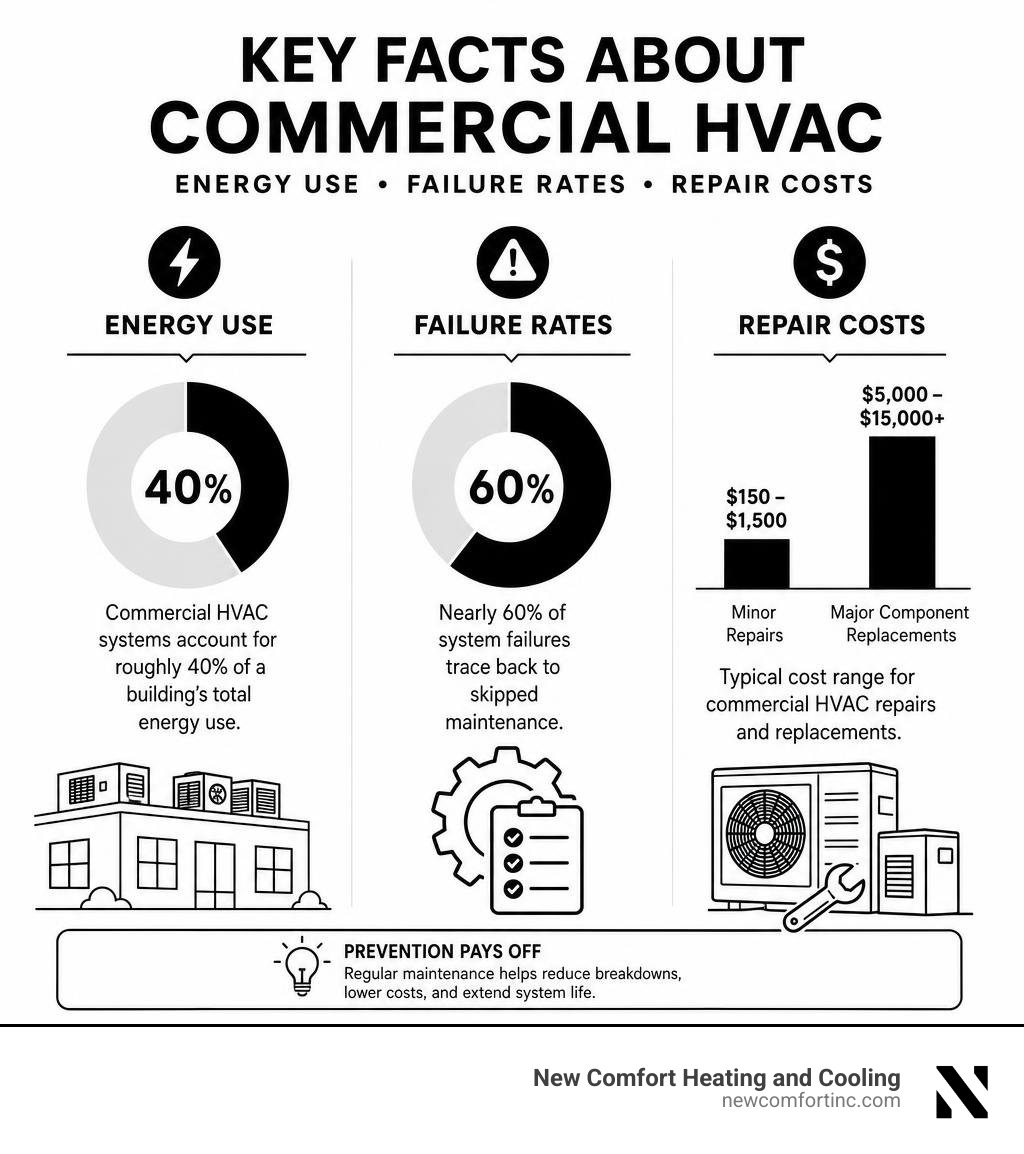
- Typical cost range: $150–$1,500 for minor repairs; $5,000–$15,000+ for major component replacements
- Response time: Reputable providers offer same-day or emergency service to minimize business downtime
When your HVAC system fails at work, it's not just uncomfortable — it's costly. Commercial HVAC systems account for roughly 40% of a building's total energy use. Nearly 60% of system failures trace back to skipped maintenance. And the global commercial HVAC market is growing fast, now valued in the hundreds of billions, which means more options — but also more variation in service quality.
Choosing the right contractor matters more than most business owners realize.
At New Comfort Heating and Cooling, we focus on transparent, fast, and reliable commercial HVAC repair service for businesses across the Chicago area. In this guide, we'll walk you through everything you need to know to make smart decisions about your system.
Common Signs Your Business Needs a Commercial HVAC Repair Service

In a bustling commercial environment, it is easy to overlook the subtle warning signs of a struggling HVAC system. However, ignoring these early red flags can lead to catastrophic failures, costly business downtime, and unhappy customers. Understanding what to look and listen for can save your business thousands of dollars.
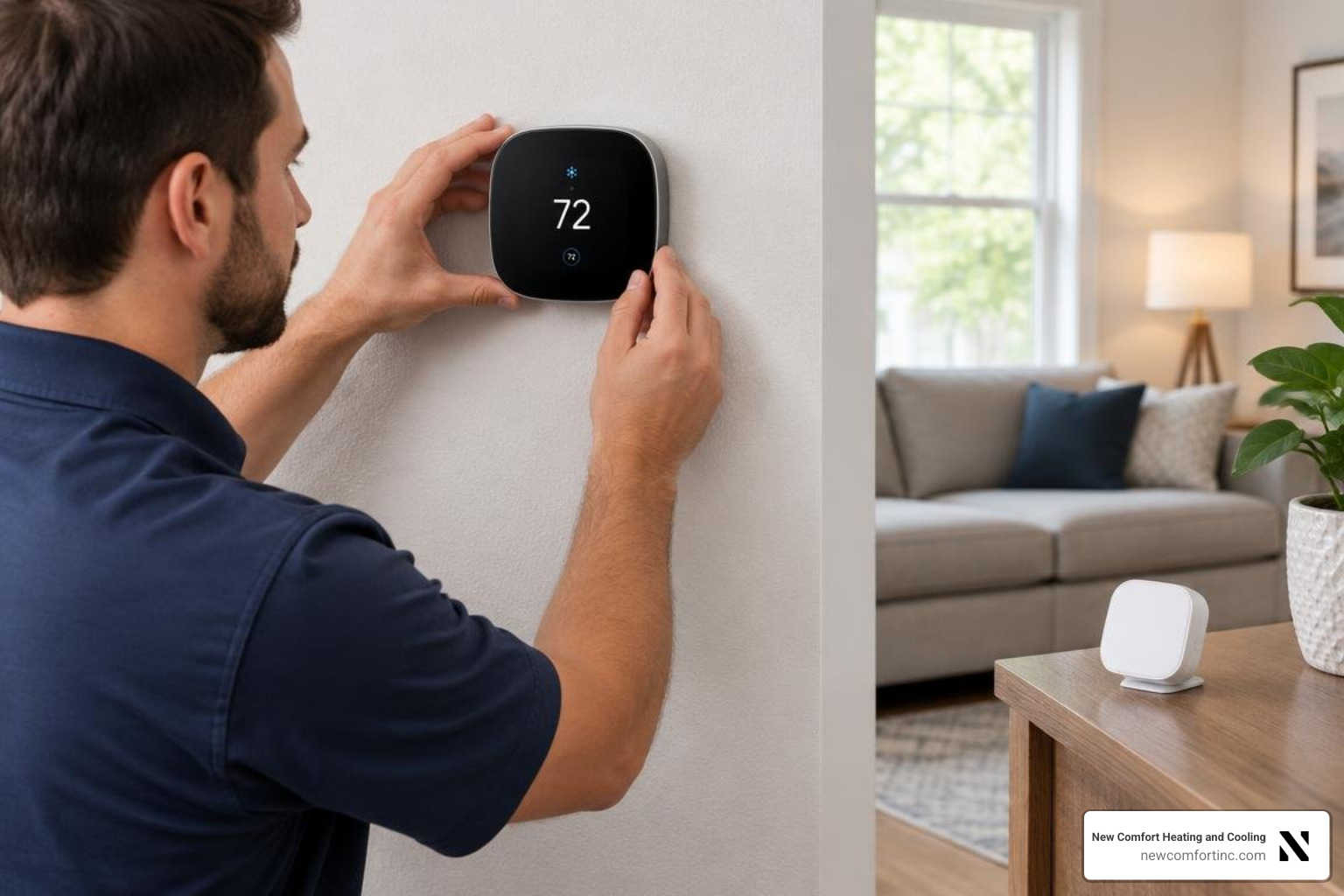
One of the most obvious signs of trouble is a sudden drop in airflow. If employees are complaining that certain offices feel like a sauna while others are freezing, your system is crying out for help. This issue often stems from faulty Thermostats or a malfunctioning Zoning System that fails to route conditioned air properly throughout your facility.
Unusual noises are another clear indicator that a professional inspection is overdue. While a gentle hum is normal, you should never hear:
- Squealing or screeching: Often points to a worn-out blower belt or failing motor bearings.
- Clanking or rattling: Suggests loose components or a blower assembly that has shifted out of alignment.
- Hissing: A classic sign of a refrigerant leak, which requires immediate environmental and technical attention.
Additionally, a decline in Indoor Air Quality — characterized by stuffy air, lingering odors, or an influx of dust — indicates that your system's filtration and ventilation components are failing. In the dry winter months or humid summer seasons of Chicago, improper Humidification control can also lead to warped wood, static electricity, and physical discomfort for everyone in the building.
Identifying Inefficiency and Airflow Problems with a Commercial HVAC Repair Service
When a commercial HVAC system begins to lose its efficiency, it rarely stops working all at once. Instead, it works harder to achieve the same results. This extra effort shows up clearly in your monthly energy bills. If you notice a sudden, unexplained spike in utility costs, your system is likely consuming excess power to overcome an internal mechanical bottleneck.
Clogged air filters are the most common culprit behind restricted airflow. When air cannot move freely, the system must run longer cycles — a phenomenon known as short cycling. This constant starting and stopping places immense wear and tear on the compressor and fan motors. To ensure your building aligns with modern Commercial building energy efficiency guidelines, keeping these air pathways clear is vital. A professional diagnostic can identify whether your high bills are caused by simple blockages, leaky ductwork, or failing internal components.
Addressing Heating and Cooling Failures Promptly
When the Chicago winter sets in, or the humid summer peaks, a complete breakdown of your heating or cooling system is a true emergency. Major components like the compressor, which acts as the heart of your cooling system, can fail due to electrical overloads or liquid slugging. Refrigerant leaks not only diminish cooling capacity but can also cause the evaporator coils to freeze solid, completely halting operation.
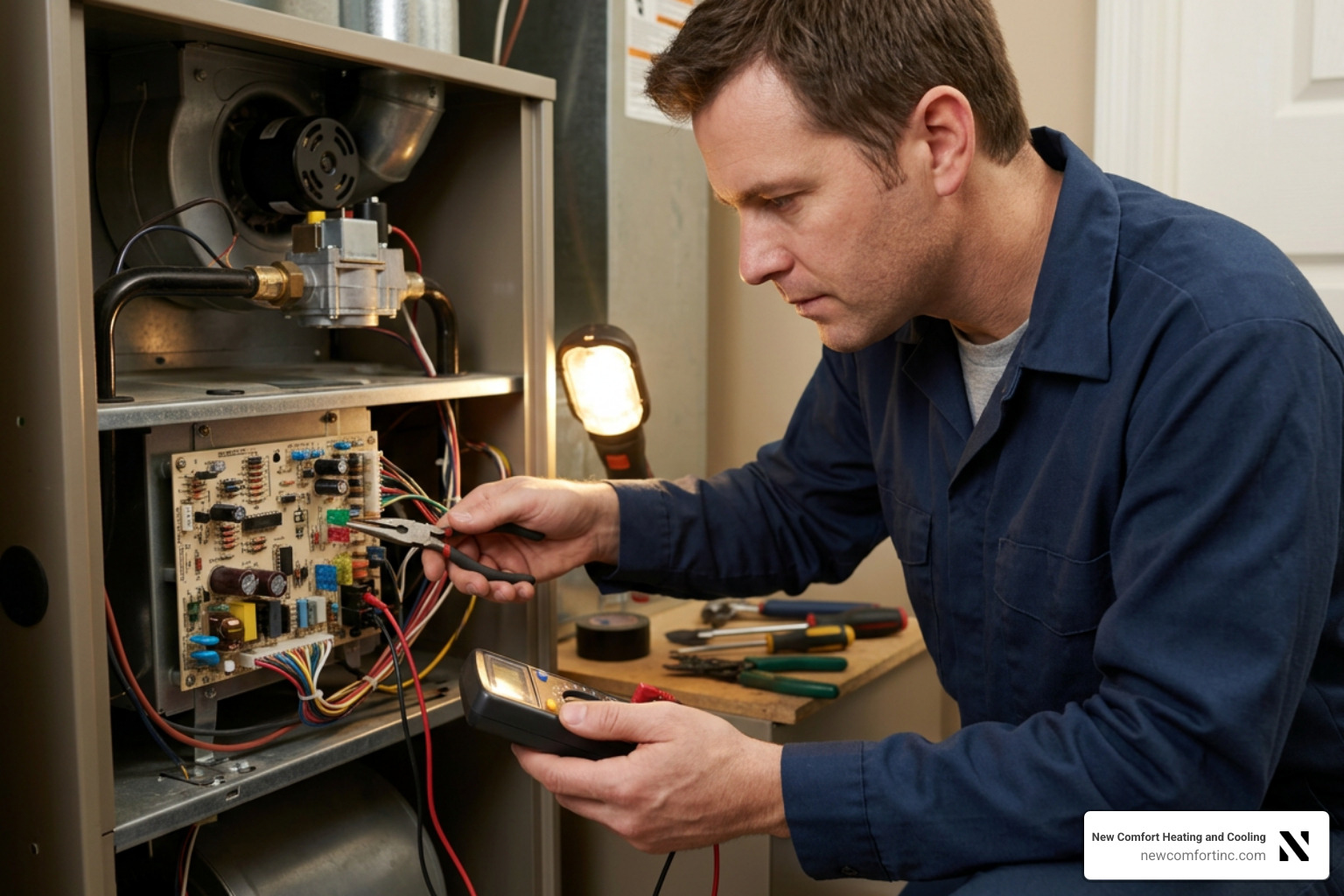
On the heating side, ignition failures, cracked heat exchangers, or faulty burners can leave your building freezing within hours. To protect your property, inventory, and staff, you must address these heating and cooling failures promptly. Whether you require immediate AC Repair to restore cool air during a summer heatwave, or comprehensive Heating Services such as rapid Furnace Repair to combat sub-zero winter temperatures, working with an experienced commercial technician ensures the root cause is resolved safely.
Commercial HVAC Repair vs. Replacement: Making the Right Decision
Every facility manager eventually faces the ultimate question: Should we fix the existing unit one more time, or is it time to invest in a brand-new system? Making the wrong choice can lead to throwing good money after bad, or replacing a system that still had years of reliable service left in it.
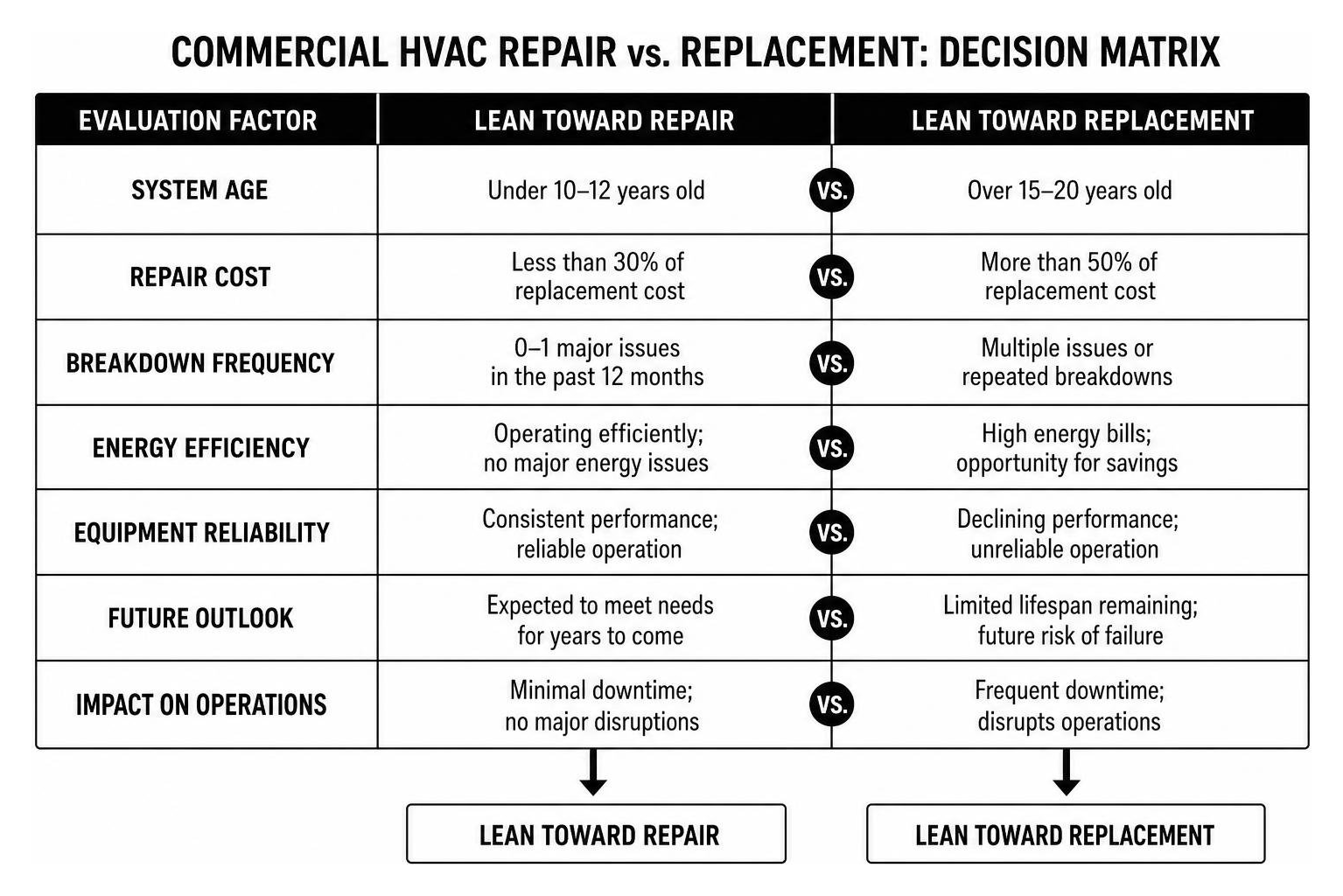
To help you navigate this decision, we use a balanced approach that evaluates the age of the equipment, the total estimated repair costs, the frequency of recent breakdowns, and the potential energy savings of a modern system.
| Evaluation Factor | Lean Toward Repair | Lean Toward Replacement |
|---|---|---|
| System Age | Under 10–12 years old | Over 15–20 years old |
| Repair Cost | Less than 50% of the replacement cost | Exceeds 50% of the replacement cost |
| Frequency of Breakdowns | Infrequent, isolated mechanical issues | Chronic failures occurring multiple times a year |
| Energy Efficiency | Operating close to original manufacturer specifications | Outdated technology causing high utility bills |
| Business Needs | Current building layout and usage remain unchanged | Building footprint or occupancy load has significantly changed |
If your system is nearing the end of its natural lifespan and struggles to keep up with demand, continuing to repair it is often a temporary band-aid. Transitioning to a modern, high-efficiency system through a planned AC Replacement or Furnace Replacement will reduce your monthly energy consumption, eliminate unexpected repair bills, and provide peace of mind for the next two decades.
Understanding Costs, Timelines, and Emergency Services

When your business's comfort is compromised, you need to know three things: How much will it cost? How long will it take? And how quickly can someone get here?
At New Comfort Heating and Cooling, we understand that every hour of downtime can mean lost revenue, reduced productivity, and disrupted operations. That is why we emphasize transparent communication, rapid response times, and straightforward pricing.
Understanding the Factors Influencing Commercial HVAC Repair Service Costs
Commercial HVAC systems are significantly larger, more complex, and more varied than residential units. Consequently, repair costs depend heavily on several key factors:
- System Size and Type: A multi-zone rooftop variable air volume (VAV) system or a heavy-duty chiller requires specialized tools and expertise compared to a standard split system.
- Labor Rates and Timing: Standard weekday business hours carry lower labor rates. Emergency, holiday, or weekend dispatches typically incur additional fees, though we always aim to keep our transparent pricing highly competitive against larger corporate contractors.
- Severity of the Issue:
- Minor Repairs ($150 to $1,500): Replacing blown fuses, worn belts, faulty contactors, or simple sensor calibrations.
- Major Repairs and Component Replacements ($5,000 to $15,000+): Swapping out a failed compressor, replacing a cracked heat exchanger, or rebuilding an entire blower motor assembly.
- Parts Availability: Standard components can often be sourced on the same day from local distributors, while specialized, proprietary parts for older or imported systems may require overnight shipping or custom manufacturing.
How Preventative Maintenance Minimizes Repair Needs
The old saying "an ounce of prevention is worth a pound of cure" could not be truer when applied to commercial climate control. Nearly 60% of commercial HVAC system failures are the direct result of neglected maintenance. When dust, dirt, and mechanical friction are allowed to build up unchecked, they create a cascading effect of component failures.
By prioritizing regular, structured maintenance, you can expect to:
- Reduce energy costs by 15% to 20%: Clean coils, lubricated motors, and calibrated controls allow the system to run at peak thermodynamic efficiency.
- Extend equipment lifespan to 15–20 years: Regular inspections catch minor wear before it turns into a system-wide breakdown, preventing premature failure.
- Improve indoor comfort and air quality: Clean filters and clear condensate drains prevent mold growth, dust buildup, and humidity imbalances.
To keep your system running smoothly year-round, we highly recommend scheduling comprehensive AC Maintenance every spring and thorough Furnace Maintenance every autumn. Our maintenance protocols strictly align with ASHRAE standards for commercial building maintenance to ensure your facility remains fully compliant with industry safety and efficiency benchmarks.
How to Choose a Commercial HVAC Repair Service in the Chicago Suburbs
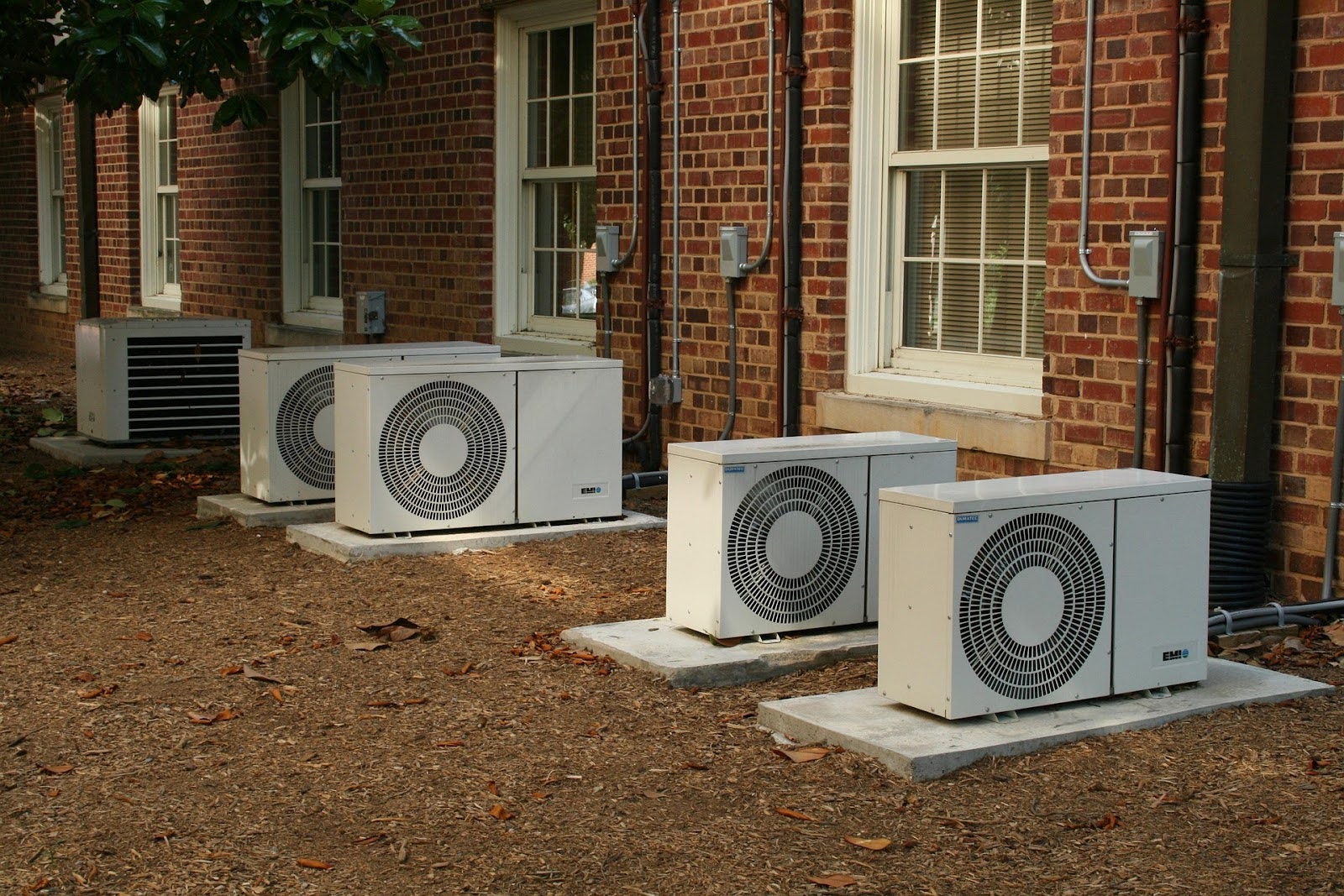
Not every heating and cooling company is set up for commercial work. Rooftop units, multi-zone controls, makeup air systems, and larger boilers call for different tools, parts access, and scheduling than a typical home furnace. Before you need emergency help, it pays to know which commercial HVAC repair service you will call and what you can expect from them.
Questions to Ask Before You Hire
- Do you have experience with buildings like ours, such as offices, retail storefronts, restaurants, or light industrial space?
- Are your technicians EPA Section 608 certified to handle refrigerants? (The EPA Section 608 program explains why this certification is required for anyone servicing refrigerant-containing equipment.)
- How do you handle after-hours calls, and what does an emergency visit include?
- Will you give a written estimate and explain the repair versus replacement options before work begins?
- Can you set up a preventive maintenance plan that fits our operating hours?
Clear answers to these questions tell you a lot about how a contractor will treat your business when something goes wrong on a busy Monday morning.
A Seasonal Commercial HVAC Maintenance Checklist for Chicago Weather
Chicago-area buildings swing from subzero wind chills to humid 90-degree afternoons, which puts heavy demand on commercial HVAC equipment in both seasons. A simple seasonal plan keeps that demand from turning into breakdowns:
- Spring: Clean condenser coils, check refrigerant pressures, test economizers, and clear condensate drains before the cooling season starts.
- Summer: Change filters more often in high-traffic spaces, watch for ice on refrigerant lines, and keep rooftop units clear of debris.
- Fall: Inspect heat exchangers, burners, and flue connections, and test safety controls before the first cold snap.
- Winter: Clear snow and ice from rooftop units and intake vents, and monitor for frozen coils or short cycling during extreme cold.
Regular commercial HVAC maintenance does not eliminate every repair, but it makes most problems smaller, cheaper, and easier to schedule around your business hours.
How to Prepare for a Commercial HVAC Repair Visit
You can shorten the time a technician spends on site by having a few details ready when you call:
- The make, model, and approximate age of the equipment, if you know it.
- Which zones, rooms, or floors are affected and when the problem started.
- Any error codes on thermostats or building controls.
- Safe roof access, keys to mechanical rooms, and the location of electrical panels.
- Recent maintenance records or notes from past repairs.
This information helps the commercial HVAC repair technician arrive with the right parts and diagnose the issue faster, which means less downtime for your staff and customers.
Keeping Your Business Open During Repairs
Many repairs can be completed without closing your doors. Ask your contractor whether work can be staged zone by zone, scheduled before opening or after closing, or supported with temporary heating or cooling while parts are on order. Communicating early with employees and tenants also prevents surprises if a space will be warmer or cooler than usual for part of the day.
ENERGY STAR also offers free tools and guidance for tracking a building's energy use, which can help you spot when a commercial HVAC system starts working harder than it should. You can explore them at energystar.gov. If your numbers are creeping up, call New Comfort Heating and Cooling at (708) 717-9995 to schedule an inspection.
Frequently Asked Questions About Commercial HVAC Systems
Navigating commercial HVAC care can raise many questions for building owners and facility managers. For more deep dives, industry tips, and helpful advice, explore our FAQ page and browse our educational Blog.
How long does a typical commercial HVAC repair take?
The duration of a commercial HVAC repair depends heavily on the complexity of the issue. A standard diagnostic assessment usually takes between 1 to 2 hours. Once the problem is identified:
- Minor repairs (such as replacing a thermostat, belt, or contactor) are typically completed within 2 to 4 hours, assuming parts are on the technician's truck.
- Major repairs (such as a compressor swap or heat exchanger replacement) can take anywhere from 1 to 2 business days. This timeline accounts for securing heavy lifting equipment (like cranes for rooftop units), sourcing specialized parts, and performing rigorous post-repair safety testing.
What certifications should a reputable commercial HVAC repair company hold?
A trustworthy commercial HVAC partner must hold all proper state and local licenses, comprehensive liability insurance, and worker's compensation coverage to protect your property. Additionally, look for:
- NATE Certification (North American Technician Excellence): This represents the gold standard for technical competency in the HVAC industry.
- EPA Section 608 Certification: Required by law for any technician handling, reclaiming, or repairing systems containing chemical refrigerants.
- OSHA Safety Certifications: Ensures the team follows strict safety protocols while working on rooftops, high-voltage electrical panels, and commercial ladders.
What emergency commercial HVAC services are available?
We provide 24/7 live phone support and rapid emergency dispatch because we know that HVAC emergencies don't wait for business hours. Our emergency services cover critical situations such as:
- Server Room Cooling Failures: Where high heat can destroy expensive IT infrastructure and cause massive data loss.
- Critical Heating Restorations: To prevent commercial plumbing pipes from freezing and bursting during extreme Chicago winters.
- Healthcare and Retail Comfort Emergencies: Ensuring vulnerable patients, customers, and employees remain safe and comfortable.
How often should a commercial HVAC system be serviced?
Most commercial buildings benefit from professional commercial HVAC maintenance at least twice a year: once in spring before cooling season and once in fall before heating season. Restaurants, medical offices, buildings with server rooms, and spaces with heavy foot traffic often need quarterly visits because filters, coils, and drains load up faster. A maintenance schedule built around your equipment and occupancy is the simplest way to reduce emergency calls and keep your commercial HVAC repair costs predictable.
Conclusion
A high-performing HVAC system is the invisible backbone of a successful business. It protects your inventory, keeps your electronics cool, and ensures your employees and clients remain comfortable regardless of the unpredictable weather in Chicago and Justice, IL.
When your system experiences issues, you don't have to navigate the stress alone. At New Comfort Heating and Cooling, we pride ourselves on delivering personalized, energy-efficient commercial solutions, 24/7 live phone support, and honest, transparent pricing that easily beats larger corporate competitors.
If your commercial system is showing signs of wear, don't wait for a total breakdown. Contact our team of certified professionals today, or schedule a reliable Furnace Repair to keep your business operating at its very best.