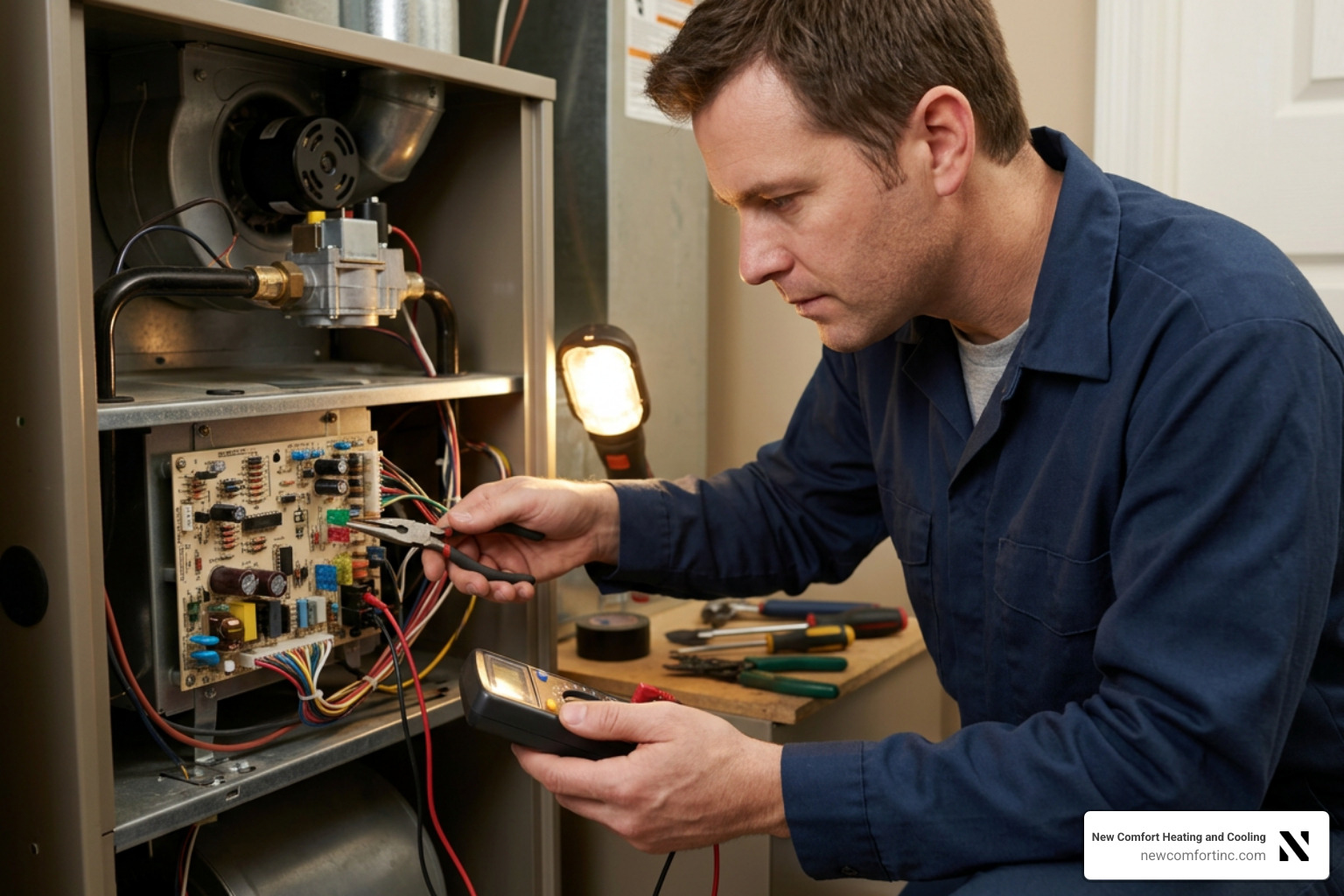
How to Avoid a Winter Freeze with Annual Boiler Furnace Maintenance
Why Boiler Heater Maintenance Can Make or Break Your Winter
Staying on top of boiler heater maintenance is one of the most important things a homeowner can do before winter hits — especially in the Chicago suburbs, where a heating failure in January is not just uncomfortable, it can be dangerous.
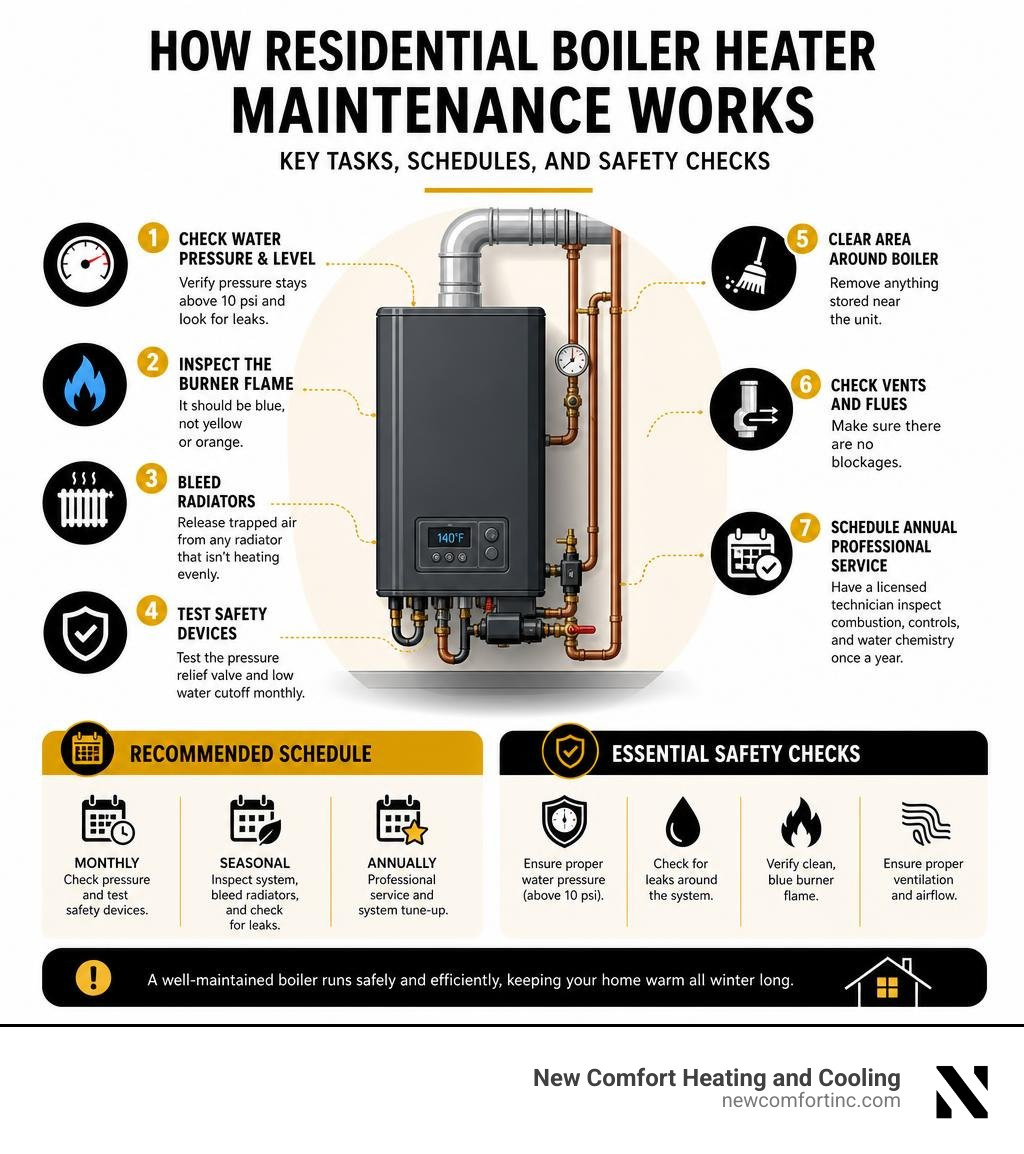
Quick answer: What does boiler heater maintenance include?
- Check water pressure and level — verify pressure stays above 10 psi and look for leaks
- Inspect the burner flame — it should be blue, not yellow or orange
- Bleed radiators — release trapped air from any radiator that isn't heating evenly
- Test safety devices — test the pressure relief valve and low water cutoff monthly
- Clear the area around the boiler — remove anything stored near the unit
- Check vents and flues — make sure there are no blockages
- Schedule annual professional service — have a licensed technician inspect combustion, controls, and water chemistry once a year
A well-maintained boiler can run reliably for decades. A neglected one can fail without warning — or worse, create a safety hazard. According to manufacturer guidelines, operating a boiler with insufficient water can damage the system beyond repair.
Older boilers also tend to be far less efficient. Older models typically rate between 56% and 70% AFUE (Annual Fuel Utilization Efficiency), while modern high-efficiency boilers reach 90% to 98% AFUE. That gap shows up directly on your energy bills every month.
Whether your home runs on a steam boiler, a hot water system, or a hydronic forced-air setup, the maintenance basics — and the stakes — are the same.
Understanding Boiler Heating Systems: Steam, Hot Water, and Hydronic Forced Air
To keep your home warm during a harsh Chicago winter, you first need to understand how your specific system moves heat. While many people use the terms "boiler" and "furnace" interchangeably, they rely on completely different methods of heat distribution. Furnaces heat air and blow it through ductwork, whereas boilers heat water and circulate it as either hot water or steam through a closed network of pipes.
How Steam and Hot Water Boilers Work
Traditional boiler systems are classified into two main categories based on how they distribute heat through your home:
- Steam Boilers: These systems heat water to its boiling point to create steam. Because steam naturally rises, it doesn't require a pump to travel through your home's pipes to the radiators. As the steam cools inside the radiator, it condenses back into water and flows back down to the boiler to be heated again. This process is known as the steam cycle.
- Hot Water Boilers: Instead of boiling the water, these systems heat it to a high temperature (typically between 140°F and 180°F). A circulation pump then forces this hot water through a hydronic loop consisting of copper pipes or PEX tubing, delivering warmth to copper-finned baseboards, cast-iron radiators, or radiant in-floor heating tubes.
If you are looking to upgrade or keep your current setup running smoothly, exploring our comprehensive Heating Services can help you determine the best approach for your home's unique layout.
The Pros and Cons of Traditional Boilers vs. Forced Air Systems
When comparing hydronic systems (boilers) to forced-air systems (traditional furnaces), there are distinct trade-offs in comfort, cost, and maintenance.
Some homeowners also utilize a hybrid setup known as a hydronic forced-air system. This system uses a boiler to heat water, which is then pumped to a hydronic coil located inside an air handler. A blower fan pushes air across this hot coil, distributing warm air through ductwork. This combines the heating power of a boiler with the ductwork-based delivery of a traditional furnace.
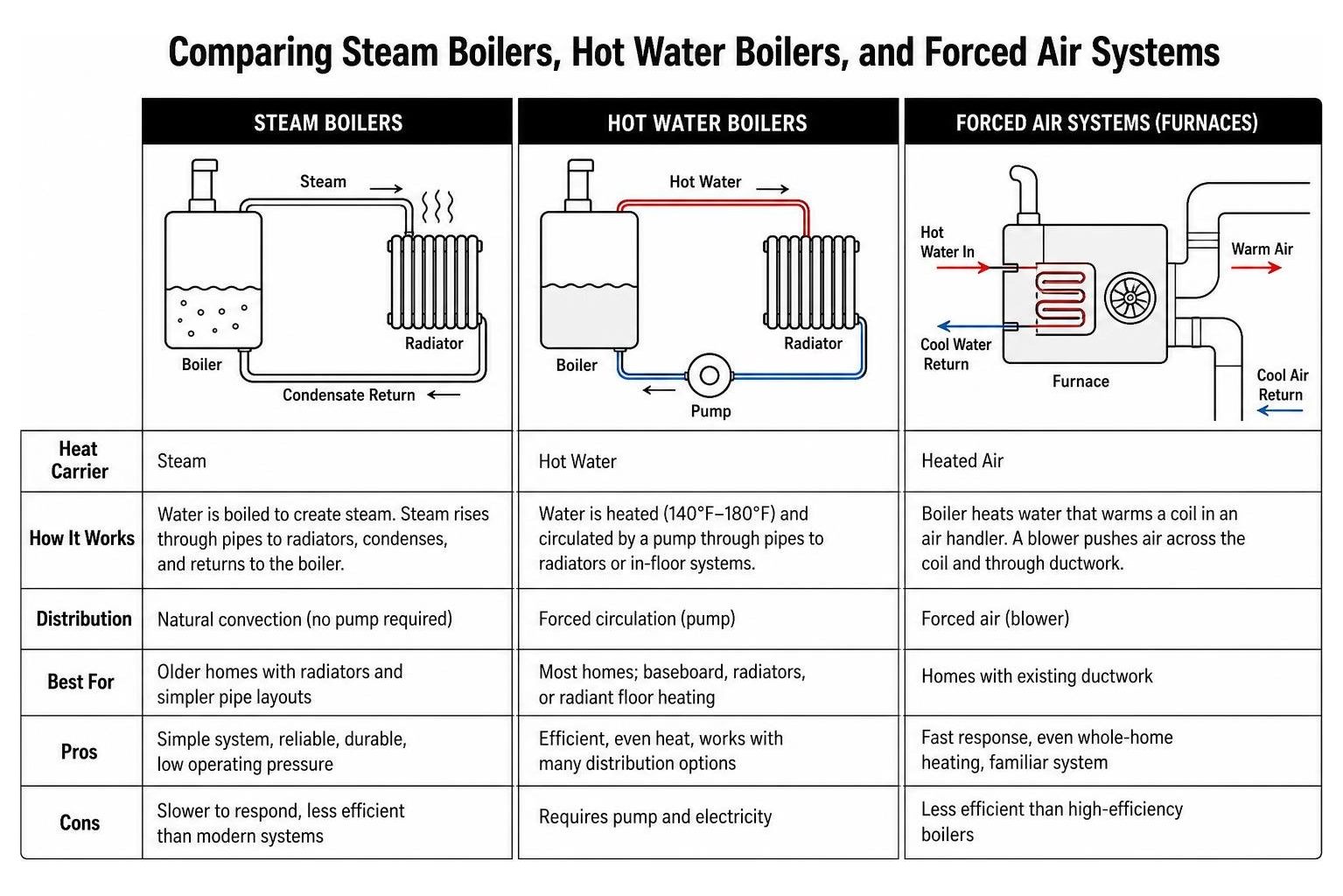
Here is how these systems stack up:
| Feature | Steam Boilers | Hot Water Boilers | Forced Air Systems (Furnaces) |
|---|---|---|---|
| Heat Carrier | Steam | Hot Water | Heated Air |
| Distribution | Radiators, pipes | Radiators, baseboards, underfloor | Ductwork, registers |
| Average AFUE | 80% - 85% (Standard) | 85% - 98% (Condensing) | 80% - 98% |
| Dust & Allergens | Extremely low (no blown air) | Extremely low (no blown air) | Can circulate dust if unmanaged |
| Durability | High (cast iron lasts decades) | High | Moderate (15-20 years) |
| Key Downside | Slow to heat, needs monitoring | Risk of water leaks | Can dry out indoor air |
Traditional boilers are highly praised for providing steady, radiant warmth without blowing dust and allergens around. This makes them a favorite for historic homes in Chicago and Justice, IL, particularly for residents managing allergies. If you are weighing your options between replacing an old boiler or transitioning to a different system, understanding Why Professional Furnace Installation Matters can help you make an informed decision.
The Ultimate Checklist for Boiler Heater Maintenance
To prevent a sudden system failure when temperatures drop below freezing, a strict maintenance schedule is essential. Below is the recommended checklist of DIY tasks and professional service requirements aligned with July 2026 industry standards.
Daily and Monthly DIY Boiler Heater Maintenance Tasks
Homeowners should perform basic visual checks regularly to keep the system safe and running efficiently.

- Daily Check - Clear the Surrounding Area: Ensure there are no boxes, storage bags, or combustible materials stored within 24 inches of your boiler. Your system needs adequate ventilation to prevent overheating and draft issues.
- Daily Check - Inspect for Leaks: Scan the floor around the boiler and along visible pipe connections for any signs of dripping water.
- Monthly Check - Monitor the Pressure Gauge: For most hot water boilers, the system pressure should not drop below 10 psi (typically operating around 12 to 15 psi). Steam boilers operate at much lower pressures, usually under 2 psi.
- Monthly Check - Inspect the Flame Color: Look through the burner sight glass. The burner flame should always be a crisp, stable blue. A yellow or orange flame indicates incomplete combustion, which is a safety hazard that requires immediate attention. If you notice this, read our guide on How to Diagnose HVAC Issues to understand the next steps.
How to Bleed a Radiator for Even Heating
If you notice that some of your radiators have cold spots or are completely cold at the top while hot at the bottom, there is likely air trapped inside. This trapped air prevents hot water from filling the radiator. Bleeding the radiator is a simple DIY task. "It’s not as strange as it sounds—trust us!"
Follow these step-by-step instructions to bleed your radiators:
- Turn off the heating system: Make sure your boiler is turned off and the radiators are cool to the touch to avoid scalding.
- Locate the bleed valve: This is a small metal valve typically located at the top of one end of the radiator.
- Prepare your tools: Grab a radiator key (available at any local hardware store) or a flathead screwdriver, along with a thick cloth or small bucket to catch water.
- Open the valve slowly: Insert the key into the valve and turn it counterclockwise (usually a half-turn is plenty). You will hear a distinct hissing sound as the trapped air escapes.
- Wait for water: Hold your cloth or bucket directly under the valve. As soon as the hissing stops and a steady stream of water begins to trickle out, turn the key clockwise to close the valve securely.
- Check system pressure: Bleeding radiators releases air, which can cause your boiler's water pressure to drop. Check the pressure gauge on your boiler and add water if it has fallen below 10-12 psi.
Unchecked air pockets can strain your circulation pump and lead to system failures. To learn more about identifying hydronic issues early, read about The Most Common HVAC System Failures.
Water Quality and Chemistry in Boiler Systems
Water is the lifeblood of your boiler. If the quality of the water inside the system is poor, mineral scale will build up on the heat exchanger, acting as an insulator and drastically reducing heating efficiency. Over time, poor water chemistry can corrode cast iron sections or cause the boiler water to foam, leading to water carryover and system damage.
Water Chemistry Limits for Steam and Condensing Boilers
Different types of boilers have highly specific water quality requirements. Standard oil-fired or gas steam boilers require different chemistry compared to modern, high-efficiency condensing systems.
For standard steam boilers, such as those detailed in the Weil-McLain Boiler Manual, the water chemistry must be kept within these strict limits:
- pH Range: 7.5 to 11 (slightly alkaline to prevent acidic corrosion of cast iron)
- Chloride Concentration: Less than 30 ppm
- Water Hardness: Less than 7 grains per gallon (to prevent scale buildup and foaming)
For high-efficiency condensing boilers, which use highly sensitive stainless steel or aluminum heat exchangers, the limits are even tighter:
- pH Range: 6.6 to 8.5
- Water Hardness: Between 1 and 9 grains per gallon
- Total Dissolved Solids (TDS): Between 10 and 150 ppm
- Chloride Concentration: Less than 125 mg/l
If your local water supply in the Chicago area is hard, a professional must treat the system water during installation or refilling to prevent premature heat exchanger failure.
Testing Safety Devices and Controls
Safety devices prevent your boiler from building up excessive pressure or firing without water, both of which can cause catastrophic system failures.
- Pressure Relief Valve (PRV): This valve is designed to open and release water if system pressure exceeds safe limits (typically 30 psi for hot water boilers). Manufacturers recommend performing a "try lever test" every two months. To do this, lift the lever on top of the valve for 5 seconds to flush out sediment, then let it snap shut. Ensure it seals completely and does not drip afterward.
- Low Water Cutoff (LWCO): This device prevents the boiler from firing if the water level drops to a dangerous level. Probe-type low water cutoffs should be tested monthly using the "Push-to-Test" button while the boiler is running to verify that the burner shuts down immediately.
- Blocked Vent Safety System: This safety switch shuts down the boiler if the chimney or exhaust vent becomes blocked, preventing dangerous carbon monoxide from backing up into your home.
For detailed testing procedures on oil-fired steam systems, refer to the Dunkirk SBO Series Manual.
High-Efficiency Condensing vs. Standard Oil-Fired Boiler Heater Maintenance
The mechanical design of your boiler determines its maintenance needs. A modern condensing boiler requires very different service steps than a traditional oil-fired steam boiler.
Servicing High-Efficiency Condensing Boilers
Condensing boilers achieve their 90%+ AFUE ratings by extracting latent heat from flue gases, which causes water vapor to condense inside the system.
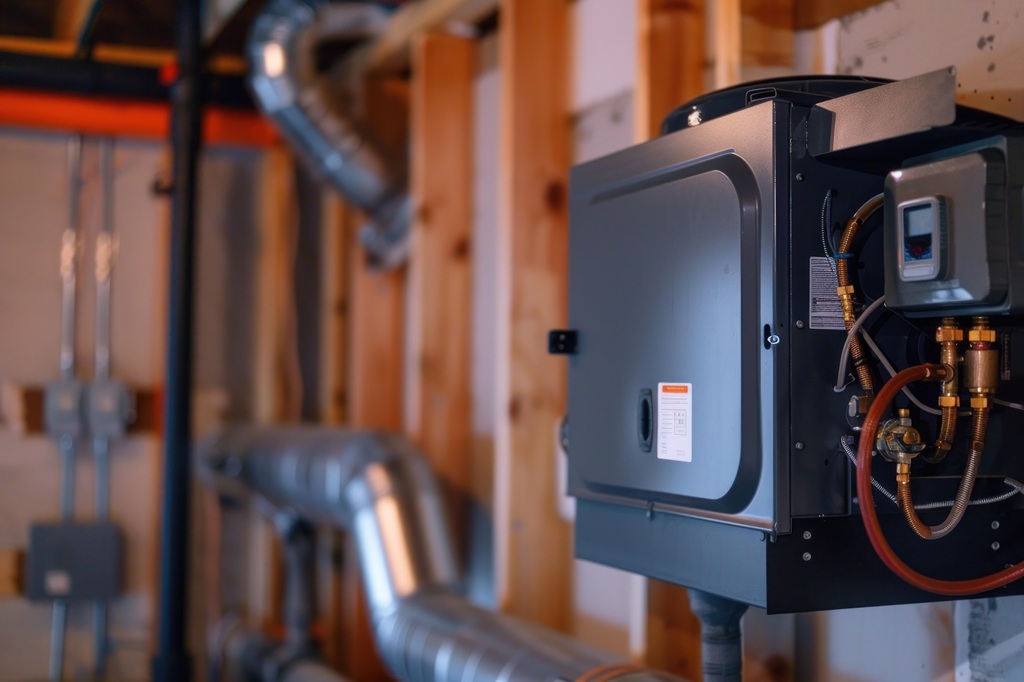
Because of this condensing process, these boilers have unique service requirements:
- Condensate Trap Maintenance: The acidic condensate generated by the combustion process must drain freely. Technicians must clean the condensate trap annually to prevent blockages that can cause the system to lock out.
- Combustion Chamber Cleaning: According to the NTI - Mandatory Service and Inspection Program , the primary heat exchanger should be checked for sulfur and dust buildup at least once every two heating seasons (or sooner if converted to LP gas).
- Combustion Analysis: Technicians must measure CO2 levels at full firing rate. Optimal CO2 ranges are 8% to 9.5% for natural gas and 9% to 10.5% for LP gas.
- Flame Signal Verification: The flame proving circuit must maintain a signal strength of at least 2.0 µA at both maximum and minimum firing rates to ensure reliable burner operation.
Standard Oil-Fired Steam Boiler Heater Maintenance Requirements
Standard oil-fired steam boilers are incredibly durable but require hands-on physical cleaning.
- The Skimming Process: Newly installed systems or those that have undergone repairs often contain manufacturing oils, grease, and pipe joint compounds. To clean these out, a technician will mix washing soda (typically 1/2 pound of washing soda per 10 quarts of water) and pour it into the boiler. The boiler is then heated to 180°F–200°F (just below steaming) to skim the oil off the surface of the water through a dedicated skim tapping. Steaming must be avoided during skimming, as steam mixes the contaminants back into the water.
- Stack Draft Calibration: Oil-fired boilers require a precise draft to pull combustion gases through the system. For SBO series oil-fired steam boilers, the minimum stack draft required ranges from -0.04 to -0.05 inches W.C. (water column).
- Refractory Ceramic Fiber (RCF) Precautions: The combustion chambers of older boilers are lined with RCF insulation. When exposed to temperatures above 1800°F, these fibers can transform into crystalline silica, a known carcinogen. Servicing these components requires specialized safety gear, including a NIOSH-approved respirator.
Additional operation protocols can be found in the High-efficiency Condensing Boiler User Manual .
A Fall Timeline for Boiler Furnace Maintenance Before the First Freeze
Timing matters as much as the tasks themselves. Spreading your boiler furnace maintenance across early fall gives you time to fix small problems before the first hard freeze, when service schedules fill up quickly across the Chicago suburbs.
- Late August to Early September: Schedule your annual professional boiler maintenance visit. Booking early gives you more appointment options and leaves time to order parts if a technician finds a worn component.
- Mid-September: Clear the boiler room, replace batteries in carbon monoxide detectors, and check that outdoor vent terminations are free of bird nests, leaves, and landscaping.
- Late September: Run the system for a short test cycle on a cool evening. Listen for kettling, banging, or unusual pump noise, and confirm every radiator or baseboard zone warms up.
- Early October: Bleed any radiators with cold spots, recheck system pressure, and test the pressure relief valve and low water cutoff as described above.
- Before the First Freeze: Make sure anyone in the household knows where the boiler emergency switch, gas shutoff, and main water valve are located.
Following this simple order turns boiler heater maintenance into a routine rather than a scramble when the first cold front arrives.
Steam Boiler Maintenance Tips for Older Chicago-Area Homes
Many bungalows, two-flats, and older homes in Chicago's western and southwest suburbs still rely on a steam boiler. These systems are durable, but they need a little more homeowner attention than a sealed hot water system.
- Watch the Sight Glass: On a steam boiler, the water level in the gauge glass should sit roughly in the middle. A low level can trigger the low water cutoff, and an overfilled boiler can send water into the steam mains.
- Listen for Water Hammer: Loud banging in the pipes often means condensate is trapped in a sagging pipe or a radiator is not pitched back toward the supply valve.
- Check Main Vents and Radiator Vents: Air vents that stick shut leave radiators cold, while vents that spit water or hiss constantly need replacement.
- Keep Radiator Valves Fully Open or Fully Closed: One-pipe steam radiator valves are not meant to be throttled halfway; doing so causes noise and uneven heating.
Steam boiler maintenance also includes periodic skimming and blowdown, which a technician handles during annual service. If your steam boiler needs frequent water additions, there may be a leak in the system piping or boiler sections that should be checked promptly.
Condensing Boiler Maintenance in Cold Weather
A high-efficiency condensing boiler saves fuel, but it has its own winter vulnerabilities. Because a condensing boiler vents through PVC or polypropylene pipes on the side of the house, drifting snow and ice can block the intake or exhaust and shut the system down.
After heavy snowfall, check that both terminations are clear and at least 12 inches above the snow line. Make sure the condensate line drains freely and is not routed through an unheated space where it can freeze. If your condensing boiler displays a lockout code, write it down before resetting it so a technician can trace the cause. Regular condensing boiler maintenance, including the condensate trap cleaning and combustion analysis covered earlier, keeps the equipment running at the high efficiency you paid for.
What Affects the Cost of Boiler Maintenance
The price of annual boiler maintenance depends on the type of system, its age and condition, how accessible the equipment is, and whether the visit uncovers parts that need replacement. A steam boiler that needs skimming or vent replacement, or a condensing boiler with a dirty heat exchanger, takes longer to service than a well-kept hot water system. Ask for a clear explanation of what is included in the visit and written pricing for any additional repairs before work begins. New Comfort Heating and Cooling offers free estimates on new equipment and financing options if an upgrade makes more sense than continued repairs.
When to Call a Professional for Boiler Service
While bleeding a radiator and keeping the area around your boiler clear are great DIY tasks, boilers are complex, high-pressure systems. Certain warning signs require the expertise of a professional technician to prevent property damage or safety hazards.
Recognizing Critical Boiler Warning Signs
If you notice any of the following issues, do not attempt to repair them yourself. Turn off the system and contact a professional immediately:
- Water Leaks or Dripping: Any visible pool of water around the boiler base, valves, or copper piping.
- Frequent Pressure Drops: If your system pressure repeatedly falls below 10 psi, it indicates an active leak or a failing expansion tank.
- Unusual Noises (Kettling or Banging): A loud rumbling or popping sound (known as kettling) usually means mineral scale has built up on the heat exchanger, causing the water to overheat and boil locally.
- Frequent Relief Valve Discharges: If the pressure relief valve is constantly dripping or opening, your expansion tank may be waterlogged or the valve itself may have failed.
If you are experiencing any of these issues, consult our guide on When to Call HVAC Technician for immediate steps to protect your home.
The Benefits of Annual Professional Maintenance
Scheduling a professional inspection before the winter heating season begins ensures your system operates safely and keeps your energy bills low. During an annual service visit, a technician will perform a full combustion analysis, calibrate the burner for maximum efficiency, test all safety controls, check water chemistry, and inspect the venting system for leaks.
To learn more about how regular maintenance keeps your heating costs under control, read our article on how HVAC Maintenance Lower Energy Bills.
Frequently Asked Questions about Boiler Systems
What is the difference between a furnace and a boiler?
A furnace heats air and uses a blower fan to circulate it through ductwork. A boiler heats water and uses a pump (or natural steam pressure) to circulate hot water or steam through copper pipes to radiators, baseboards, or radiant floor systems. If your current heating system is struggling and you are considering a replacement, check out our guide on Furnace Repair vs Replacement.
What does a yellow or orange boiler flame mean?
A healthy boiler flame should always be blue. A yellow or orange flame indicates incomplete combustion, meaning the burner is not getting enough oxygen or is burning fuel inefficiently. This is a primary cause of carbon monoxide production and requires immediate professional inspection. If you suspect burner issues, read our tips on How to Diagnose HVAC Issues.
Can I use automotive antifreeze in my boiler system?
No. You must never use automotive or standard ethylene glycol antifreeze in a home heating system. Ethylene glycol is highly toxic and can damage system components. If freeze protection is required for a hydronic system, only use food-grade, inhibited propylene glycol specifically formulated for hydronic heating systems. For professional assistance with system fluids, explore our expert Heating Services.
How often should boiler heater maintenance be done?
Professional boiler heater maintenance should be done once a year, ideally in late summer or early fall before the heating season starts. Homeowners should also check pressure, look for leaks, and inspect the flame monthly during the heating season. Some high-efficiency condensing boilers have manufacturer-specified inspection intervals, so follow your owner's manual as well.
Can regular boiler maintenance lower my heating bills?
Yes. Scale on the heat exchanger, poor combustion settings, trapped air, and a dirty burner all force the boiler to burn more fuel for the same amount of heat. Annual boiler maintenance corrects these issues so more of the fuel you pay for reaches your radiators. To book a visit, call New Comfort Heating and Cooling at (708) 717-9995 or contact our team online.
Conclusion: Keep Your Home Warm and Safe This Winter
As winter approaches, ensuring your home's heating system is prepared for the cold is essential for your comfort and safety. Routine boiler heater maintenance protects your heating equipment, keeps your energy bills manageable, and provides reliable warmth when you need it most.
Whether you need a quick system check, water chemistry testing, or emergency service, our team at New Comfort Heating & Cooling is here to help. We provide 24/7 live phone support, same-day service, and transparent pricing across Chicago and Justice, IL.
Don't wait for the first freeze of the season. Schedule professional furnace repair and boiler maintenance with New Comfort Heating & Cooling today to keep your home warm all winter long.