The Ultimate Forced Air Furnace Maintenance Guide
Why Regular Air Conditioning and Heating Maintenance Is the Smartest Thing You Can Do for Your Home
Air conditioning and heating maintenance is the single most important thing you can do to protect your home's comfort system — and most homeowners skip it until something breaks.
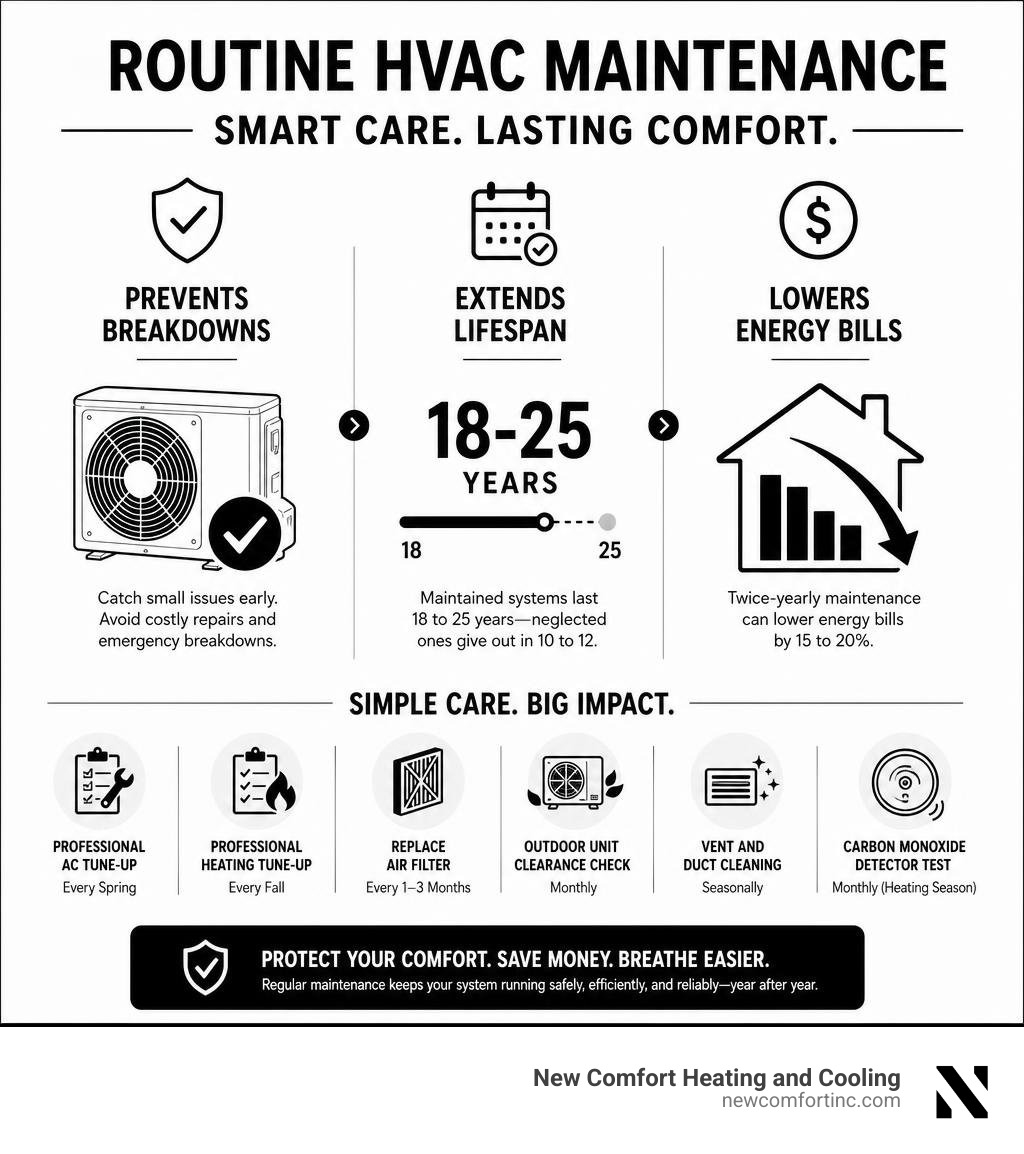
Here's what proper HVAC maintenance looks like at a glance:
| Task | Who Does It | How Often |
|---|---|---|
| Professional AC tune-up | Licensed technician | Every spring |
| Professional heating tune-up | Licensed technician | Every fall |
| Air filter replacement | Homeowner | Every 1–3 months |
| Outdoor unit clearance check | Homeowner | Monthly |
| Vent and duct cleaning | Homeowner | Seasonally |
| Carbon monoxide detector test | Homeowner | Monthly (heating season) |
The stakes are real. Maintained systems last 18 to 25 years. Neglected ones give out in 10 to 12. Homeowners who follow a twice-yearly service schedule report 15 to 20 percent lower energy bills — and roughly 40 percent fewer emergency repair calls.
A clogged filter alone is the root cause of nearly 60 percent of premature HVAC failures. And a cracked heat exchanger — something a technician catches during a routine fall visit — is linked to approximately 430 carbon monoxide deaths and 50,000 emergency room visits in the U.S. every year.
This guide covers everything: what gets done at each seasonal visit, what you can handle yourself, and how to avoid being oversold during a service call.
At New Comfort Heating and Cooling, years of operational experience have shown how consistent air conditioning and heating maintenance separates systems that run reliably for decades from those that fail at the worst possible moment. Let's walk through exactly what a solid maintenance plan looks like — and how to make it work for your home.
Air conditioning and heating maintenance word roundup:
The Strategic Importance of Air Conditioning and Heating Maintenance
When we consider the mechanical systems inside a Chicago or Justice, IL home, the forced-air HVAC system works harder than almost any other appliance. It cycles thousands of times every year, moving tens of thousands of cubic feet of air through tightly calibrated coils, delicate electrical components, and combustion chambers. Understanding how often central HVAC systems require service is the cornerstone of protecting your investment.
A biannual service cadence — scheduling a professional cooling tune-up in early spring and a comprehensive furnace inspection in late fall — keeps every component running within factory tolerances. This routine care dramatically impacts system longevity. While neglected equipment routinely breaks down around the 10-to-12-year mark, properly serviced forced-air systems regularly achieve an operational lifespan of 18 to 25 years.

The performance benefits are immediate. Routine servicing keeps coils clean and moving parts properly lubricated, directly lowering monthly utility expenses. In fact, homeowners who prioritize HVAC maintenance and lowering energy bills routinely see energy cost reductions of 15 to 20 percent compared to unmaintained systems.
Regular tune-ups also deliver a drastic reduction in unplanned, middle-of-the-night repair calls. Beyond convenience, maintaining a documented service record protects your equipment's factory warranty. Major HVAC manufacturers require annual professional maintenance to honor multi-year warranty coverage on high-value parts such as compressors and furnace heat exchangers.
Preventive, Corrective, and Seasonal Maintenance Categories
Understanding how different types of maintenance work together helps homeowners make informed decisions for their equipment. Professional HVAC management falls into three core categories:
- Preventive Maintenance: Scheduled, proactive checks intended to stop failures before they start. This involves tightening electrical connections, lubricating motor bearings, checking static pressure, and adjusting burner assemblies.
- Corrective Maintenance: Servicing required when a component shows signs of wear or minor failure but hasn't yet caused a complete system shutdown. Replacing a bulging run capacitor or a worn fan belt during a routine tune-up prevents a catastrophic system lockout later.
- Seasonal Tune-Ups: Focused visits tailored specifically to the upcoming weather extremes. Spring tune-ups prepare the air conditioner to fight Midwest summer humidity, while fall visits optimize gas burner performance before freezing temperatures arrive.
Combining these proactive efforts ensures continuous warranty protection while eliminating the stress of unexpected mid-season breakdowns.
Environmental and Household Factors Affecting Service Frequency
While a twice-a-year professional schedule serves as the industry gold standard, specific environmental and lifestyle variables dictate how heavily a system operates:
- Household Size and Activity: Larger families keep HVAC systems cycling more frequently, accelerating wear on air blowers and relay switches.
- Pet Dander and Fur: Homes with multiple dogs or cats experience rapid dust and dander accumulation, choking air filters and insulating evaporator coils prematurely.
- Local Climate: Northern Illinois winters present severe freezing cycles, while summers bring heavy air humidity. This double demand places maximum strain on both furnace heat exchangers and outdoor condenser coils.
- Equipment Age: Older units demand closer diagnostic oversight to monitor declining motor efficiency and insulation integrity.
- Air Filter Load: High-efficiency homes or properties near busy urban streets collect fine airborne particulates faster, requiring more frequent filter checks.
Seasonal Tune-Up Checklists for Heating and Cooling Systems

A thorough maintenance appointment is far more than a quick glance at a thermostat. A true professional tune-up follows standard industry guidelines, such as ACCA Standard 4, executing comprehensive checklists tailored to the specific operational demands of spring and fall.
Professional Air Conditioning and Heating Maintenance Checklist
When our technicians step into your home for a spring cooling or fall heating service, they perform rigorous diagnostic testing. You can explore our dedicated professional AC maintenance services and dedicated furnace maintenance options to see how comprehensive these visits are.
During a spring cooling visit, technicians focus on heat transfer capability and electrical safety:
- Dirty Condenser Coils: Outdoor coils accumulate lawn debris, dust, and grime. A dirty condenser coil alone can slash cooling efficiency by up to 30 percent, forcing the compressor to run hotter and longer.
- Refrigerant Level Verification: Technicians measure refrigerant subcooling and superheat levels rather than relying on basic pressure readings, ensuring precise charge balance without stressing internal seals.
- Airflow Optimization: Duct airflow problems can drag down efficiency by up to 15 percent. Blower fan blades are inspected and cleaned to guarantee proper cubic-feet-per-minute (CFM) output.
- Electrical Connection Testing: Loose wiring creates voltage drops and high electrical resistance, which can burn out contactors and control boards.
For complete heating assurance, comprehensive heating services cover heat exchanger checks, flue gas safety, and burner calibration.
Combustion Analysis and Gas Furnace Safety Checks
During the fall heating visit, safety takes center stage. Natural gas forced-air furnaces rely on controlled combustion to produce heat, making rigorous inspection vital for household safety.
Technicians conduct digital combustion analysis to verify the exact ratio of air to fuel, measuring exhaust gases within the flue pipe. Improper gas pressure or dirty burner orifices lead to incomplete combustion, producing dangerous carbon monoxide (CO).
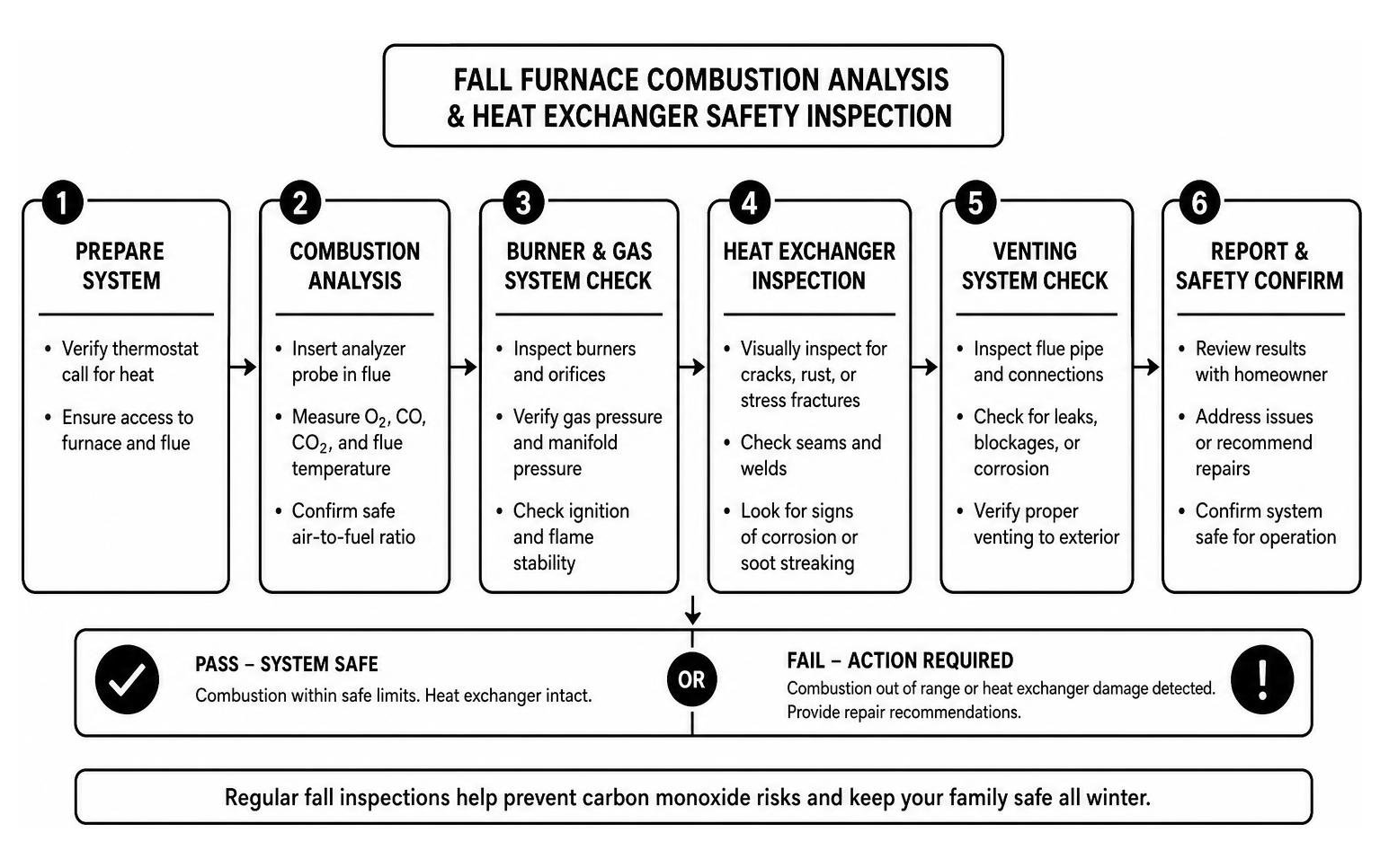
A key focal point is inspecting the furnace heat exchanger for hairline cracks, rust, or stress fractures. Over time, thermal expansion and contraction cause metal fatigue. A cracked heat exchanger allows deadly carbon monoxide to mix directly with the indoor supply air circulating through your home. Catching these hidden flaws during fall routine maintenance keeps your family safe and healthy throughout the freezing winter months.
DIY Tasks, Warning Signs, and Choosing a Contractor
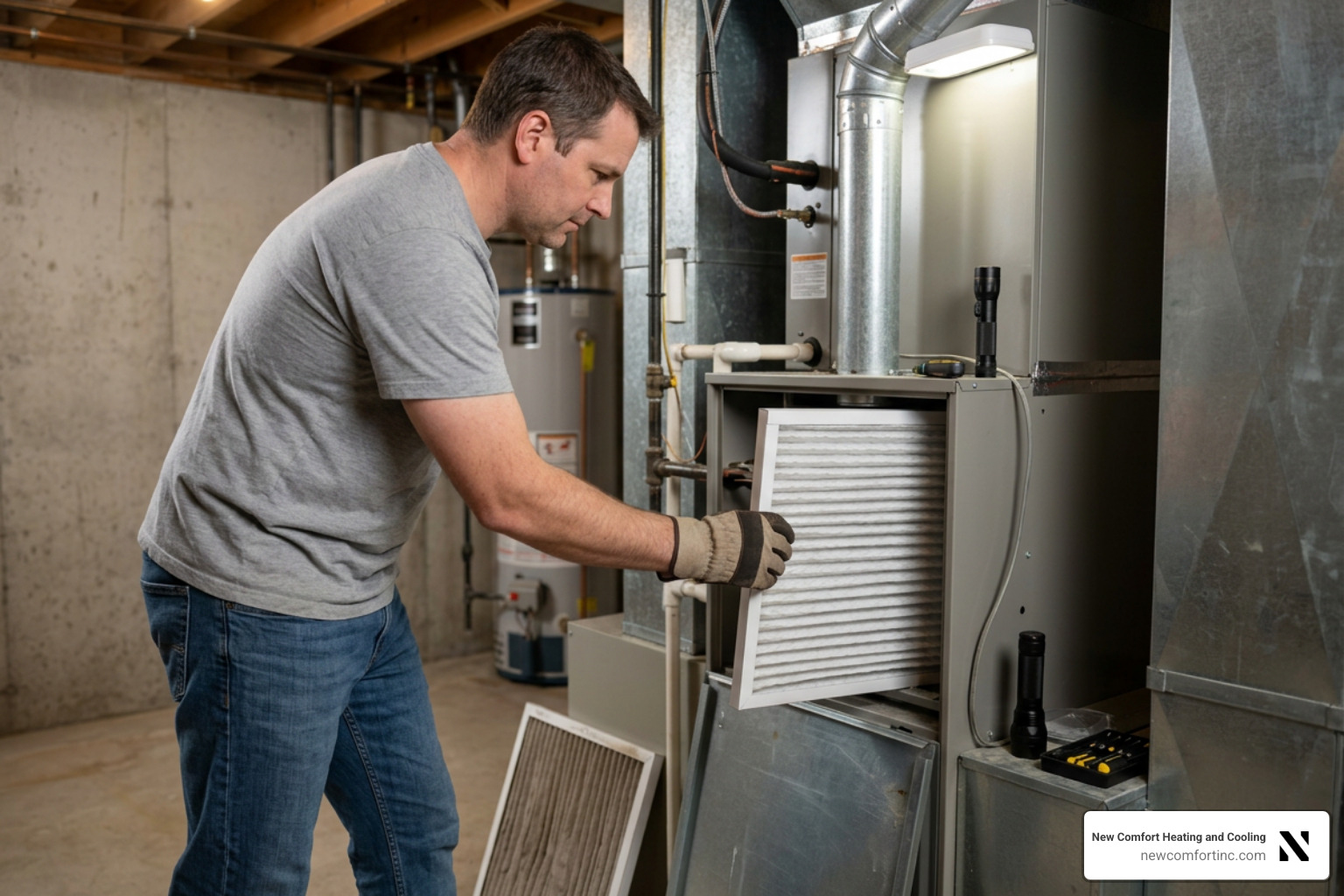
While complex electrical, mechanical, and combustion diagnostics require trained HVAC professionals, homeowners play a vital role in maintaining day-to-day equipment health.
DIY Air Conditioning and Heating Maintenance Tasks Every Homeowner Should Do
Taking an active role in your home's HVAC system prevents minor issues from compounding into expensive repairs. Here are the essential homeowner tasks:
- Air Filter Replacement: Inspect filters monthly. Standard 1-inch pleated filters should be replaced every 30 to 90 days. A heavily clogged filter restricts airflow, forcing the blower motor to overheat and dragging down overall system efficiency.
- Vent and Register Maintenance: Keep return and supply vents clear of furniture, drapes, and rugs. Restricting supply registers disrupts system static pressure and lowers performance.
- Outdoor Clearance: Maintain at least a two-foot clear perimeter around your outdoor AC condenser unit. Trim back weeds, bushes, and overhanging tree branches, and gently wash leaves or grass clippings off the outer fins using a standard garden hose.
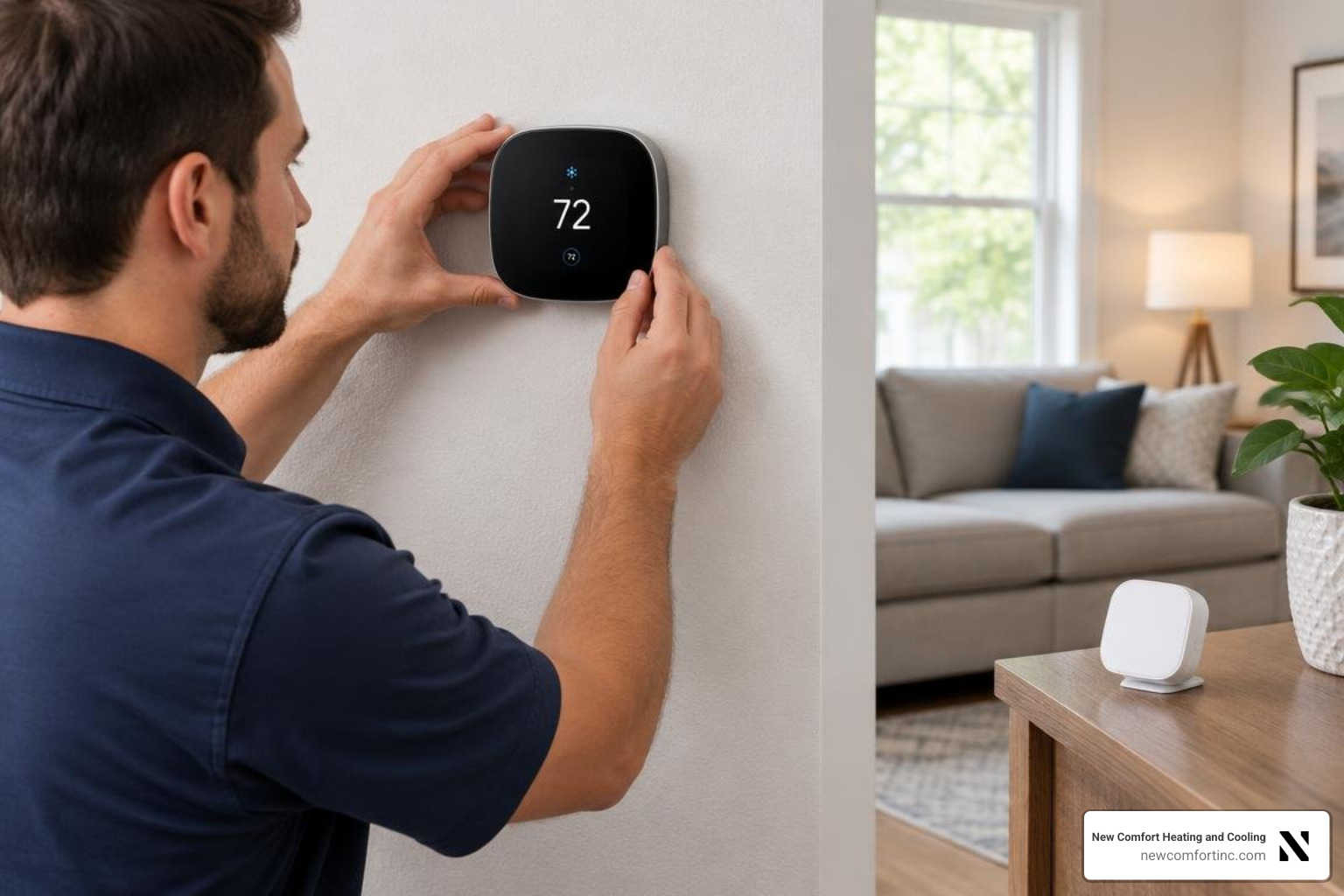
- Thermostat Controls: Test your programmable or smart thermostat seasonally. Upgrading or properly calibrating your controls ensures seamless temperature regulation without unnecessary equipment short-cycling. You can easily improve home air quality with thermostat controls and modern automation.
If you ever notice comfort imbalances across different levels of your house, integrating a modern zoning system can optimize airflow balance automatically.
Warning Signs, Maintenance Plans, and Avoiding Contractor Red Flags
Even with diligent homeowner care, systems can experience stress. You should request prompt professional service if you notice any of these red flags:
- Loud clanking, squealing, or banging noises upon startup.
- Short-cycling (the unit turns on and off rapidly without reaching the target temperature).
- Unexplained spikes in monthly utility bills.
- Musty odours or burning smells coming from supply vents.
- Water pooling around the indoor furnace or air handler base.
When choosing between single service visits and continuous maintenance agreements, review how the two options compare:
| Feature | A La Carte Seasonal Visits | Maintenance Plan Agreement |
|---|---|---|
| Schedule Reliability | Subject to peak-season availability | Guaranteed priority booking |
| Emergency Service | Standard service queue | Expedited response times |
| Component Discounts | Standard rates | Percentage savings on parts and repairs |
| Multi-Point Diagnostics | Standard seasonal checklist | Standard checklist + continuous system tracking |
| Cost Structure | Pay-per-visit | Predictable yearly coverage |
When selecting a contractor in Chicago or Justice, IL, choose licensed, insured, and locally established professionals. Be cautious of red flags such as abnormally cheap "15-minute quick inspections," contractors offering immediate quotes without inspecting equipment, or high-pressure door-to-door sales tactics pushing complete equipment replacement for minor component faults. Legitimate technicians adhere to established ACCA standards and provide transparent, detailed diagnostic reports.
Frequently Asked Questions About HVAC Maintenance
How often should air filters be changed and what happens if neglected?
Standard 1-inch air filters should be inspected monthly and replaced every 30 to 90 days, while thicker 4-to-5-inch media filters can last six to twelve months depending on household factors like pets and dust levels.
When an air filter is neglected, restricted airflow forces the blower motor to work significantly harder, leading to overheating and high power consumption. A severely clogged filter can drag down cooling SEER efficiency ratings by up to 15 percent and stands as the root cause behind nearly 60 percent of premature HVAC system failures. In summer, severe airflow restriction causes evaporator coils to freeze into solid ice; in winter, it trips the furnace limit switch, triggering safety shutdowns.
Why is annual combustion analysis critical for gas furnaces?
Annual combustion analysis measures gas pressure, flame characteristics, and flue exhaust gas composition using precision digital analyzers. This test verifies that gas is burning cleanly and efficiently within the furnace burners.
Incomplete combustion releases dangerous levels of carbon monoxide (CO), an invisible, odorless gas. Combustion testing detects fuel-air imbalances early and helps technicians identify cracked heat exchangers or clogged exhaust flues before lethal gases enter your living space.
What is the financial return on investment for regular HVAC tune-ups?
Regular HVAC maintenance delivers a high return on investment across three main areas: reduced monthly utility costs, extended equipment life, and avoided emergency repair fees.
By keeping coils clean and electrical components calibrated, regular tune-ups reduce monthly energy consumption by 15 to 20 percent. Furthermore, routine care prevents minor component wear from cascading into major system failures, helping homeowners avoid costly emergency replacement projects while maximizing the unit's 18-to-25-year service life.
Conclusion
Proactive air conditioning and heating maintenance is the ultimate insurance policy for home comfort, indoor air quality, and peace of mind. By pairing simple DIY homeowner tasks like regular air filter changes with thorough professional spring and fall inspections, you protect your system from unexpected breakdowns, lower your monthly energy expenses, and ensure your home stays safe through every season.
Whether you need to clear up indoor humidity issues with specialized humidification systems, upgrade your overall indoor air quality, or evaluate your setup for future AC replacement or furnace replacement, routine care keeps your entire home performing at its best.
At New Comfort Heating and Cooling, we serve Justice, IL, Chicago, IL, and the surrounding communities with 24/7 live phone support, same-day scheduling, and honest, transparent service tailored to your home's unique needs. If your system hasn't been serviced recently, or if you suspect your heating equipment needs expert attention, schedule professional furnace repair services today or check out our complete FAQ and contact pages to speak with our team!