Don't Freeze on the Commute: A Practical Guide to Heater Car Repair
How Your Vehicle's Heating System Operates
Troubleshooting and fixing a car heater begins with four practical diagnostic checks: verifying engine coolant levels, testing the thermostat, checking the blower motor and resistor pack across all fan speeds, and feeling the heater core inlet and outlet hoses at the firewall. If fluid is low, topping off coolant and bleeding air pockets often restores heat. When the fan only blows on high, replacing the resistor solves the issue, whereas cold heater hoses indicate a clogged heater core or failing water pump.
Unlike a household furnace with a dedicated electric coil or burner, your car's climate system relies entirely on heat produced during engine combustion. When your vehicle runs, it generates thermal energy that the cooling loop must regulate to protect internal components.
Instead of discarding all of that thermal energy through the radiator at the front of your car, the system routes a portion of the hot liquid through the dashboard. This thermal exchange warms the cabin air while assisting in keeping the engine within its optimal operating temperature band.
Understanding the Engine Coolant Loop
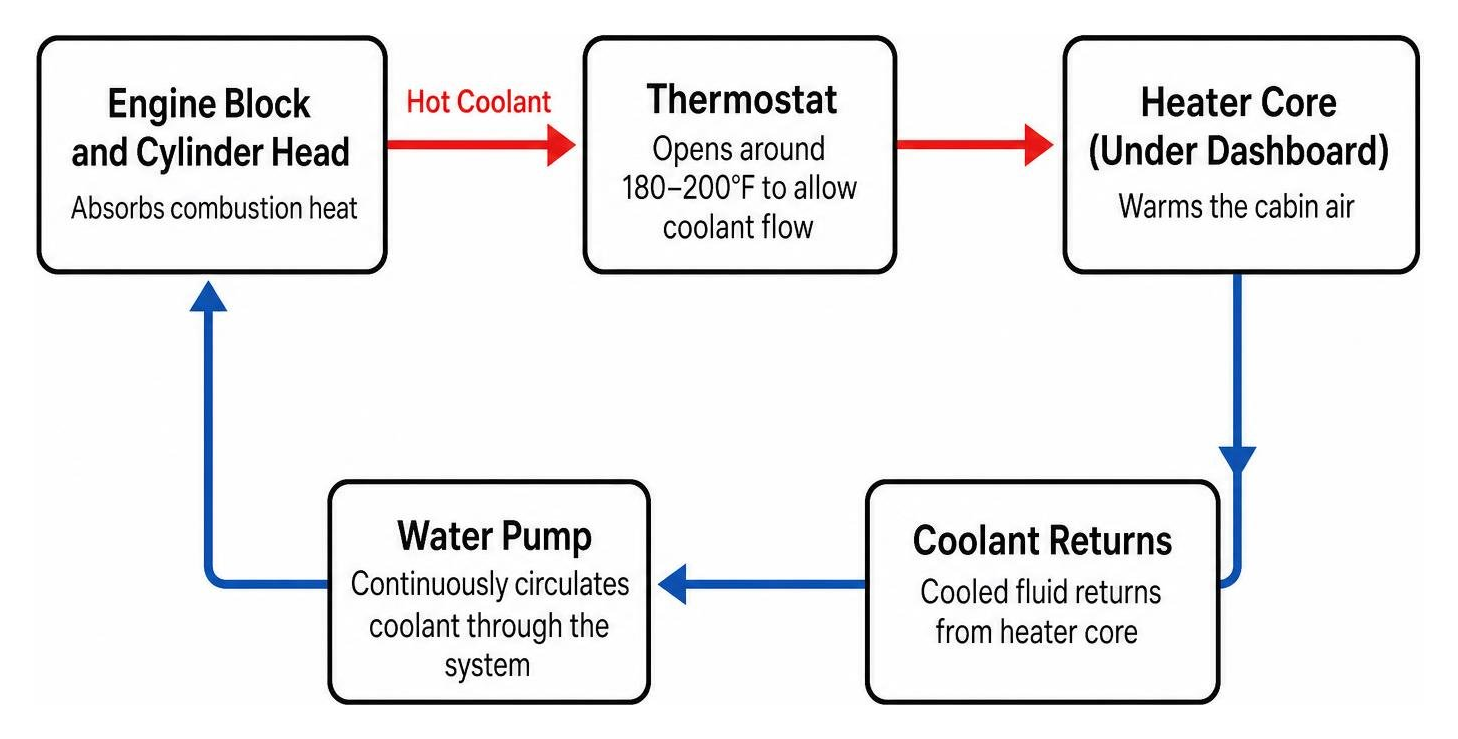
The heart of this thermal exchange process is the engine coolant loop. A mechanical or electric water pump continuously circulates a 50/50 mixture of antifreeze and distilled water through passages in the engine block and cylinder head. As the fluid circulates, it absorbs combustion heat.
A mechanical thermostat acts as a gatekeeper. When the engine is cold, the thermostat stays shut to help the motor reach standard operating temperature quickly. Once the engine reaches roughly 180 to 200 degrees Fahrenheit, the thermostat opens, permitting hot fluid to cycle through the main radiator and into the secondary loop under the dashboard.
The Role of the Heater Core and Blend Doors
Inside the passenger compartment, behind the dashboard assembly, sits a compact heat exchanger known as the heater core. Functioning like a miniature radiator, hot coolant passes through tiny aluminum tubes surrounded by cooling fins. When you turn on the fan, the blower motor pushes ambient air across these warm fins, transferring heat into the cabin air stream.
To regulate cabin temperature, modern vehicles use an internal blend door actuator. This motorized flap mixes air drawn over the heater core with cold outdoor or air-conditioned air to achieve your exact temperature setting. Some vehicles also utilize a heater control valve within the engine bay to open or restrict coolant flow into the cabin matrix. When particulate matter clogs these passages, heat transfer fails entirely, as detailed in this NHTSA Technical Service Bulletin addressing restricted coolant passages and cabin temperature loss.
Common Causes of Car Heating Failures
When a car heating system fails, the root cause almost always traces back to fluid circulation, airflow delivery, or mechanical blend control. Diagnosing the issue begins by separating heat generation problems from air movement problems.
| Heating Symptom | Potential Root Cause | Primary Corrective Action |
|---|---|---|
| Air blows strong but stays ice cold | Low coolant level or stuck-open thermostat | Top up coolant / replace thermostat |
| Warm air at highway speeds, cold at idle | Trapped air pockets or failing water pump | Bleed cooling system / inspect water pump |
| Sweet maple syrup odor inside cabin | Leaking heater core or internal hose leak | Pressure test system / replace heater core |
| Greasy film and fog on windshield | Pin-hole leak in heater core tubes | Inspect core and clean interior glass |
| No air coming from vents on any setting | Blown blower fuse or burned-out motor | Test fuse panel / swap blower motor |
| Fan only operates on maximum speed | Failed blower motor resistor pack | Replace blower motor resistor |
Identifying Symptoms of a Bad Heater Core
A failed heater core is among the most disruptive automotive heating issues because it combines thermal loss with fluid leaks inside the passenger area. Because the core operates under direct cooling system pressure, corrosion or fatigue can create small pinholes.
Watch for these primary signs of a compromised heater core:
- Distinct sweet smell: Coolant contains ethylene glycol, which produces an unmistakable sweet, syrup-like aroma when heated.
- Persistent interior windshield fogging: Leaking hot fluid turns into vapor that settles on cold glass as an oily film that windshield wipers cannot clear.
- Wet passenger carpet: Fluid escaping the heater box drains straight down into the front passenger footwell, soaking the carpeting and padding.
- Unexplained coolant loss: If your reservoir continually runs low without external puddles under the front bumper, fluid is likely pooling in your interior cabin floor pan.
Why Airflow Stops or Blows Only on High
If your engine reaches normal operating temperature and the heater hoses feel warm, but no air enters the cabin, the issue lies in the electrical blower circuit. A vehicle blower motor uses an electric fan to force air through your vents. Over time, debris or worn internal bearings increase mechanical resistance, overloading the circuit.
When the fan works exclusively on its highest setting, the blower motor resistor has almost certainly failed. Lower fan speeds require electrical resistance to slow down the motor. Maximum speed bypasses this resistor pack entirely, sending direct vehicle voltage to the fan. When the resistor burns out, lower speeds cease to function while the highest setting continues to run.
Step-by-Step Troubleshooting for Car Heater Repair
Diagnosing vehicle climate controls requires a logical progression, starting with simple visual checks and advancing to mechanical testing. Just as we recommend when learning how to diagnose hvac issues in residential units, narrowing down car heating problems requires isolating fluid dynamics from electrical delivery. A practical car heater repair starts with confirming coolant volume, then checking the thermostat, blower motor and resistor, and finally inspecting the heater core for leaks or blockage.
DIY Checks Before Booking Professional Heater Car Repair
Before scheduling shop service, several straightforward inspections can reveal the source of heating trouble:
- Verify Coolant Levels: Ensure the engine is completely cold. Open the hood and check both the transparent overflow reservoir and the radiator pressure cap. Low fluid prevents the heater core from filling with hot liquid.
- Inspect Fuses: Locate your vehicle's interior and under-hood fuse panels using the owner's manual. Check the fuses dedicated to the climate control system, blower motor, and auxiliary cooling fans.
- Check the Cabin Air Filter: A clogged cabin air filter blocks airflow before it ever reaches the dashboard vents. Remove the filter (typically accessed through the glovebox) and inspect it for heavy dust, leaves, or debris.
- Feel Heater Core Hoses: With the engine warmed up and idling safely in park, carefully touch the two rubber hoses entering the firewall from the engine bay. Both hoses should feel hot to the touch. If one hose is hot and the other is lukewarm or cold, coolant is not circulating through the heater core.
Applying basic diagnostic skills is similar to tackling a safe diy hvac repair, but always prioritize safety when working near rotating engine belts, electrical fans, and hot pressurized fluids.
Complex Heater Car Repair and Component Replacements
When simple fixes do not restore cabin warmth, deeper mechanical intervention becomes necessary. Replacing a malfunctioning heater control valve requires draining the cooling circuit, disconnecting vacuum lines or electrical harnesses, and securing new hose clamps, as outlined in this step-by-step valve replacement guide.
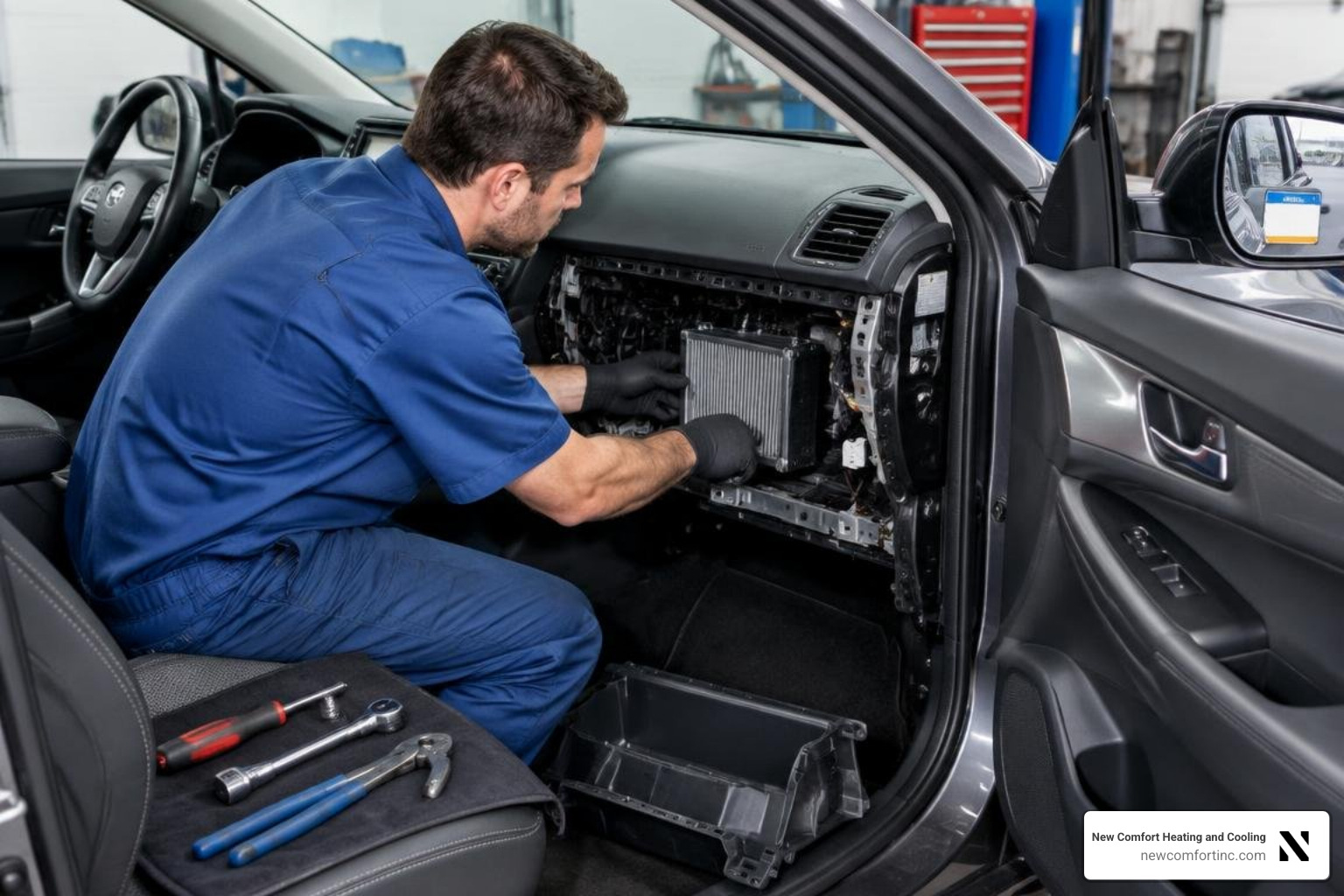
For a blocked heater core, technicians often attempt a reverse-flush using pressurized water and compressed air to dislodge sediment. If the core is cracked or permanently obstructed by aluminum oxide sludge, full replacement is required. This extensive job typically requires complete removal of the steering column, center console, and main dashboard structure to access the climate control housing box.
Preventive Maintenance to Avoid Winter Heating Breakdowns
Vehicle cooling systems degrade over time as protective chemical additives inside antifreeze break down. Once these corrosion inhibitors deplete, acidic coolant attacks internal aluminum radiators and heater matrices, creating sediment that plugs delicate waterways.

Essential Seasonal Cooling System Care
To protect your vehicle's heating capacity and prevent sudden mid-winter breakdowns, maintain these core service habits:
- Perform Regular Coolant Flushes: Refresh your vehicle's antifreeze according to manufacturer mileage recommendations to preserve corrosion protection and maintain balanced pH levels.
- Inspect Belts and Hoses: Check radiator and heater hoses for soft spots, swelling, cracking, or dry rot. A leaking hose can rapidly drain the cooling system, leading to both cabin heat loss and severe engine overheating.
- Test the Radiator Cap: A weak radiator pressure cap prevents the cooling system from maintaining necessary operational pressure, which lowers the fluid's boiling point and creates air locks.
- Check Thermostat Response: If your dashboard temperature gauge takes an unusually long time to reach the midpoint during cold weather, replace the thermostat before winter arrives.
Temporary Alternatives When Repairs Must Wait
If a major heater repair must be scheduled for a later date, you can use practical interim measures to maintain visibility and basic comfort during short drives:
- 12-Volt Auxiliary Ceramic Defrosters: Plug-in dashboard defrosters draw power from the accessory socket to deliver localized airflow directly onto the windshield to prevent fogging.
- Heated Seat Pads: Portable 12-volt heated cushions provide immediate contact warmth without relying on engine coolant circulation.
- Silica Moisture Absorbers: Placing reusable dehumidifier packs on your dashboard overnight absorbs cabin humidity, reducing windshield condensation before you start your morning commute.
Frequently Asked Questions About Car Heater Repair
Why is my car heater blowing cold air after the engine warms up?
This condition occurs when hot coolant cannot reach or pass through the heater core. Common culprits include a low coolant level, a thermostat stuck in the open position, air trapped in the cooling circuit, or a failed blend door actuator that prevents warm air from mixing into the cabin vents.
Can I safely drive my vehicle if the cabin heater is broken?
Driving without a functional heater is hazardous if outside temperatures cause interior glass fogging or freezing that impairs driving visibility. Additionally, if the heating failure stems from a coolant leak or failed water pump, driving the vehicle risks severe engine overheating and major internal engine damage.
What causes the heater fan to work only on the highest setting?
This symptom indicates a failed blower motor resistor. Lower fan speeds pass electrical current through resistance coils that generate heat and wear out over time. High speed bypasses the resistor entirely, allowing the fan to run only when set to maximum output.
Conclusion
A dependable vehicle heating system is an absolute necessity for safe, clear-headed winter driving. From ensuring your windshield stays free of ice and condensation to keeping your morning drive comfortable, diagnosing cooling and ventilation issues early prevents minor component failures from turning into severe roadside breakdowns.
While staying warm on the road relies on your car's cooling system, maintaining total comfort inside your home requires a dependable residential system. At New Comfort Heating & Cooling, we deliver comprehensive residential and commercial climate solutions across Justice, IL, and the greater Chicago area. Whether you need an urgent furnace tune-up, seasonal maintenance, or system replacement, explore our reliable heating services to ensure your home stays warm and efficient all winter long.