When Your HVAC Breaks Down, Every Minute Counts
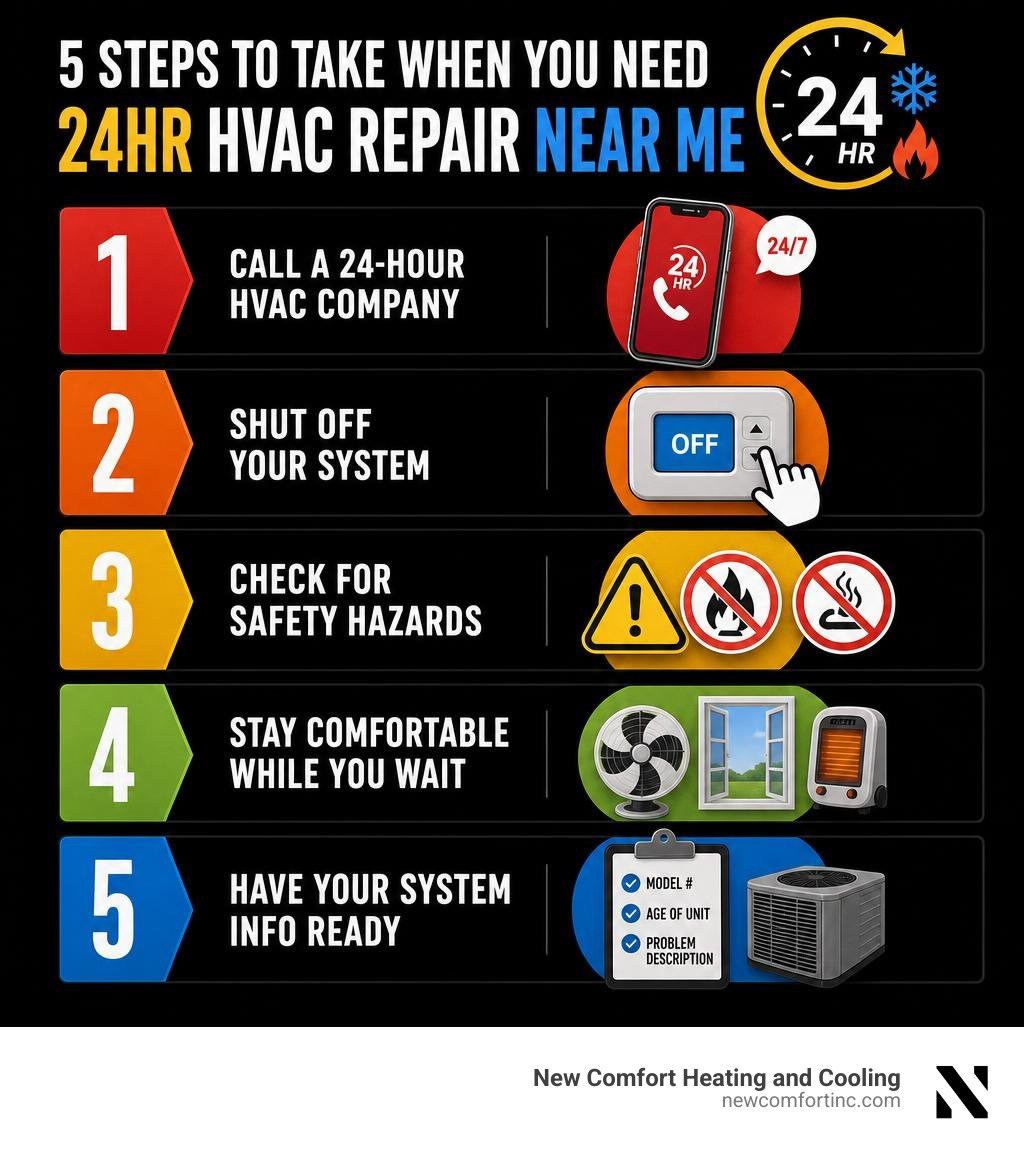
When you need 24hr HVAC repair near me, here's what to do right now:
- Call a 24-hour HVAC company — look for one with live phone support, not just an answering machine
- Shut off your system at the thermostat to prevent further damage
- Check for safety hazards — if you smell gas or burning, leave the home immediately
- Stay comfortable while you wait — use fans, open windows, or space heaters depending on the season
- Have your system info ready — model number, age of unit, and a description of the problem speeds up the repair
A broken HVAC system isn't just uncomfortable — in a Chicago summer or a January freeze, it can become a health emergency fast. Whether your AC dies at 2 a.m. in July or your furnace goes out on a school night in December, you need a technician who picks up the phone right now and shows up fast.
This guide covers everything you need to know: when to call, what to do while you wait, how to pick the right company, and what it will cost.
At New Comfort Heating and Cooling, with nearly a decade of operations experience in the HVAC industry, we know what separates a true 24hr HVAC repair near me service from one that just claims to be available around the clock. That experience is exactly what shaped how we built New Comfort — and what we'll share with you here.
When to Call for 24hr HVAC Repair Near Me

It is 11:00 PM on a Friday. The house is getting warmer, or perhaps the temperature is dropping rapidly, and you are staring at your thermostat. You might be wondering: Is this a true emergency, or can it wait until Monday morning?
Distinguishing between a minor issue and a full-blown emergency can save you money, but waiting too long can compromise your safety and lead to costlier repairs down the road. When your heating or cooling fails, prompt AC Repair or Furnace Repair is essential to protect both your property and your family.
Immediate Safety Risks vs. Scheduled Maintenance
Some HVAC issues are inconvenient; others are dangerous. If you notice any of the following signs, do not wait to schedule a standard service call. You need to shut off your system and contact a 24hr HVAC repair near me provider immediately:
- The Smell of Gas: If you smell natural gas or a rotten egg odor near your furnace, you may have a gas leak. Evacuate your home immediately, call your gas company, and then call an emergency HVAC technician.
- Carbon Monoxide Alerts: If your carbon monoxide detector sounds, leave the building immediately. Carbon monoxide is a silent, odorless killer that can leak from a cracked furnace heat exchanger.
- Electrical Sparks or Burning Smells: A burning plastic or electrical smell coming from your vents or the unit itself indicates overheating wires or a failing motor. This is a severe fire hazard.
- Rapidly Pooling Water: While a clogged condensate drain line is common, unchecked water leaks can ruin your ceilings, floors, and electrical systems.
If your system is simply making a slight clicking noise or isn't cooling quite as efficiently as it did last week, it is likely a candidate for regular, scheduled maintenance rather than a midnight emergency call.
Extreme Temperatures and System Failures
In the Chicago area—from the high-density neighborhoods of Chicago itself to the suburban communities of Justice, IL—weather extremes are a way of life. When outdoor temperatures reach extremes, a system failure becomes a major health hazard.
During a July heatwave, indoor temperatures can quickly climb past 90°F. For the elderly, infants, pets, or those with underlying health conditions, this level of heat can lead to heat exhaustion or heat stroke. According to the OSHA extreme heat guidelines, high heat index environments require active cooling measures to prevent severe physiological stress.
Conversely, a broken furnace in the dead of a Chicagoland winter can cause indoor temperatures to plummet below freezing in a matter of hours. This does not just threaten your health—it also risks freezing and bursting your plumbing pipes, resulting in thousands of dollars in water damage.
What to Do While Waiting for Emergency HVAC Technicians
Once you have called for emergency service, the waiting game begins. How you handle the next hour or two can prevent further damage to your home and keep your family comfortable.
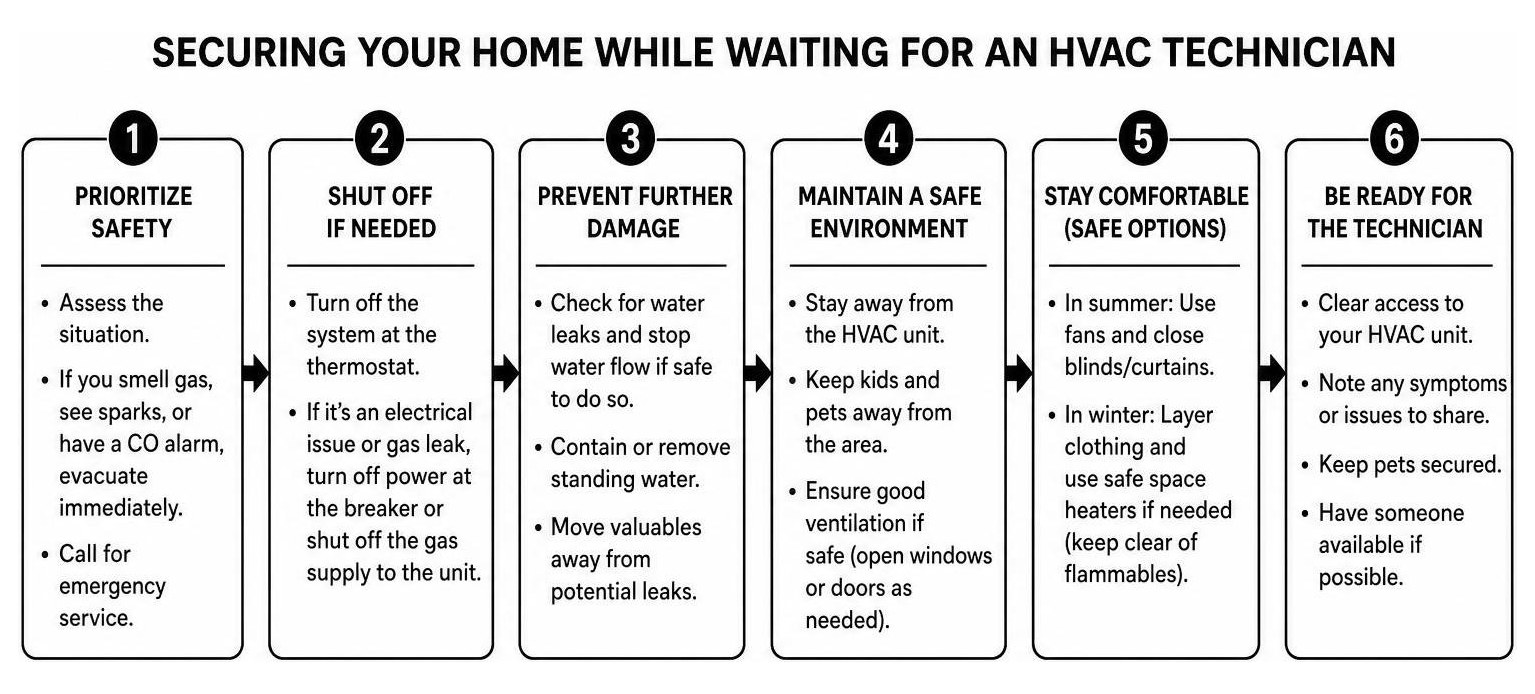
First and foremost: safety first. If you suspect an electrical issue or a gas leak, locate your main shutoff valves or breaker panel and turn off the utility lines to the unit. If the issue is a clogged drain or a minor electrical malfunction, turn the thermostat to the "Off" position.
To help you manage the situation effectively, refer to the comparison table below to determine the best immediate steps based on the season:
| Emergency Action | Summer AC Failure | Winter Furnace Failure |
|---|---|---|
| System Settings | Turn thermostat to "Off" to prevent compressor damage. | Turn thermostat to "Off" and shut off the main gas line if you suspect a leak. |
| Water Control | Check the drain pan; empty it if it is overflowing. | Monitor pipes near outer walls for signs of freezing. |
| Air Circulation | Turn on ceiling fans and open windows if there is a breeze. | Keep windows and doors tightly shut to trap remaining heat. |
| Safety Priority | Stay hydrated and move to the lowest level of the home. | Do not use gas ovens or outdoor grills indoors for heat. |
Taking care of your system before emergencies strike through routine AC Maintenance and Furnace Maintenance is always the best path, but when an unexpected breakdown occurs, these steps will keep you secure.
Steps for Summer AC Failures
If your air conditioning breaks down in the middle of a scorching summer day, try these steps to stay cool while our technician is on the way:
- Shade Your Windows: Close all blinds, drapes, and shades, especially on the south and west-facing windows, to block out solar heat.
- Stay Hydrated: Drink plenty of cool water and avoid strenuous activities.
- Utilize Portable Fans: Set up portable fans to create a wind-chill effect. That fans cool people, not rooms, so only run them in occupied spaces.
- Avoid Heat-Generating Appliances: Do not run your oven, stove, dishwasher, or dryer, as these will quickly raise your indoor temperature.
Steps for Winter Furnace Failures
When the heat goes out in winter, your primary goals are retaining heat and protecting your plumbing:
- Prevent Pipe Freezing: Open cabinet doors under sinks to allow warm air to circulate around your pipes. Let your faucets drip slowly to keep water moving.
- Use Space Heaters Safely: If you use portable electric space heaters, place them on flat, non-flammable surfaces and keep them at least three feet away from blankets, curtains, and furniture. Never leave them unattended.
- Insulate Your Living Space: Gather your family into a single room with insulated walls, close the door, and block drafts under doors with rolled-up towels.
- Bundle Up: Put on layers of loose-fitting clothing, hats, and heavy socks, and use extra blankets to stay warm.
Selecting and Budgeting for Emergency HVAC Services

When your system fails, you might feel pressured to hire the first company that answers the phone. However, taking a few minutes to verify credentials can save you from poor workmanship, voided manufacturer warranties, and inflated bills.
Finding Certified 24hr HVAC Repair Near Me
To find a reliable emergency technician in the Chicago and Justice, IL areas, look for these key indicators of professionalism:
- Licensing and Insurance: Never hire an unlicensed contractor. A licensed and insured company protects you from liability if an accident occurs on your property.
- Industry Certifications: Look for technicians with NATE (North American Technician Excellence) certification. This demonstrates they have passed rigorous testing and have the specialized knowledge required to fix complex heating and cooling issues.
- Local Reputation: Check online reviews on Google and local directories. Look for patterns in how the company handles emergency calls—do they show up when promised? Are their technicians respectful?
- Transparent Policies: A reputable provider will clearly explain their emergency dispatch fees and diagnostic rates before sending a technician to your door.
Questions to Ask a 24hr HVAC Repair Near Me Provider
Before you authorize any work, ask the dispatcher or the arriving technician these essential questions:
- What is your diagnostic or dispatch fee for after-hours calls?
- Do you charge a flat rate for repairs, or is it billed hourly?
- Are your technicians fully licensed, insured, and background-checked?
- Do you offer a warranty or service guarantee on the parts and labor?
- If my system cannot be repaired tonight, what are my temporary options?
For more answers to common service and repair questions, you can also check out our comprehensive FAQ page.
Understanding Emergency Costs and Response Times
Emergency services naturally carry higher costs than standard service visits because companies must keep technicians on standby, pay overtime wages, and maintain fully-stocked service vehicles 24/7.
While costs can vary based on your specific system and the complexity of the issue, here is a general breakdown of what to expect for emergency repairs:
- Diagnostic/Dispatch Fee: This fee covers the cost of bringing the technician and their mobile inventory to your home. For after-hours or holiday calls, this typically ranges from $150 to $300.
- Common Emergency Repair Costs:
- Thermostat Replacement: $150 - $450
- Blower Motor Repair/Replacement: $300 - $900
- AC Capacitor Replacement: $150 - $350
- Furnace Igniter or Flame Sensor Replacement: $150 - $300
- Refrigerant Leak Repair & Recharge: $400 - $1,200+
If your system is more than 15 years old and requires a major, expensive repair (such as a cracked heat exchanger or a failed compressor), the technician may discuss whether it makes more financial sense to invest in an AC Replacement or a Furnace Replacement rather than pouring money into a failing unit.
Frequently Asked Questions About Emergency HVAC Services
How quickly does an emergency technician arrive?
At New Comfort Heating and Cooling, we strive to dispatch a technician to your Justice or Chicago home as quickly as possible. Most emergency calls are responded to within 1 to 3 hours, depending on current call volume, weather severity, and local traffic conditions. We provide honest arrival windows so you aren't left wondering.
Are emergency HVAC repairs more expensive?
Yes, emergency repairs typically involve a higher diagnostic fee or after-hours dispatch fee to cover overtime labor costs. However, at New Comfort, we pride ourselves on transparent pricing, ensuring you never face unfair surcharges just because your system broke down at an inconvenient time.
Can I prevent emergency breakdowns?
Absolutely. The single best way to avoid a system failure is through regular preventive maintenance. Scheduling professional tune-ups twice a year—once in the spring for your AC and once in the autumn for your furnace—keeps your system clean, efficient, and allows technicians to catch minor wear-and-tear issues before they turn into midnight emergencies.
Conclusion
A sudden heating or cooling failure can turn your home upside down, but you do not have to face the elements alone. Knowing who to call and what steps to take while you wait can make a stressful situation completely manageable.
At New Comfort Heating and Cooling, we are dedicated to keeping our neighbors in Chicago and Justice, IL safe and comfortable all year round. We set ourselves apart with 24/7 live phone support, rapid response times, and honest, transparent pricing.
If you are dealing with a system breakdown right now, don't wait in the cold or the heat. Contact us immediately or schedule your professional Furnace Repair to restore your peace of mind and get your home back to the perfect temperature.