Is Your Burner Dead? A Guide to Beckett AFG Boiler Motor Replacement
When Your Boiler Goes Silent: What You Need to Know About Boiler Motor Replacement

A boiler motor replacement is often the fix when your oil burner suddenly stops firing, runs loudly, or trips into lockout — especially on systems using a Beckett AFG burner.
Here's a quick overview of what's involved:
- Diagnose the problem - Listen for humming, grinding, or a burner that won't start
- Match your motor specs - HP, RPM, voltage, and frame size must match your existing unit
- Choose the right motor type - PSC or split phase, depending on your burner model
- Gather extra parts - You may need a capacitor, coupling kit, or gasket
- Decide: DIY or pro? - High-voltage wiring and oil lines make this a job for experienced hands
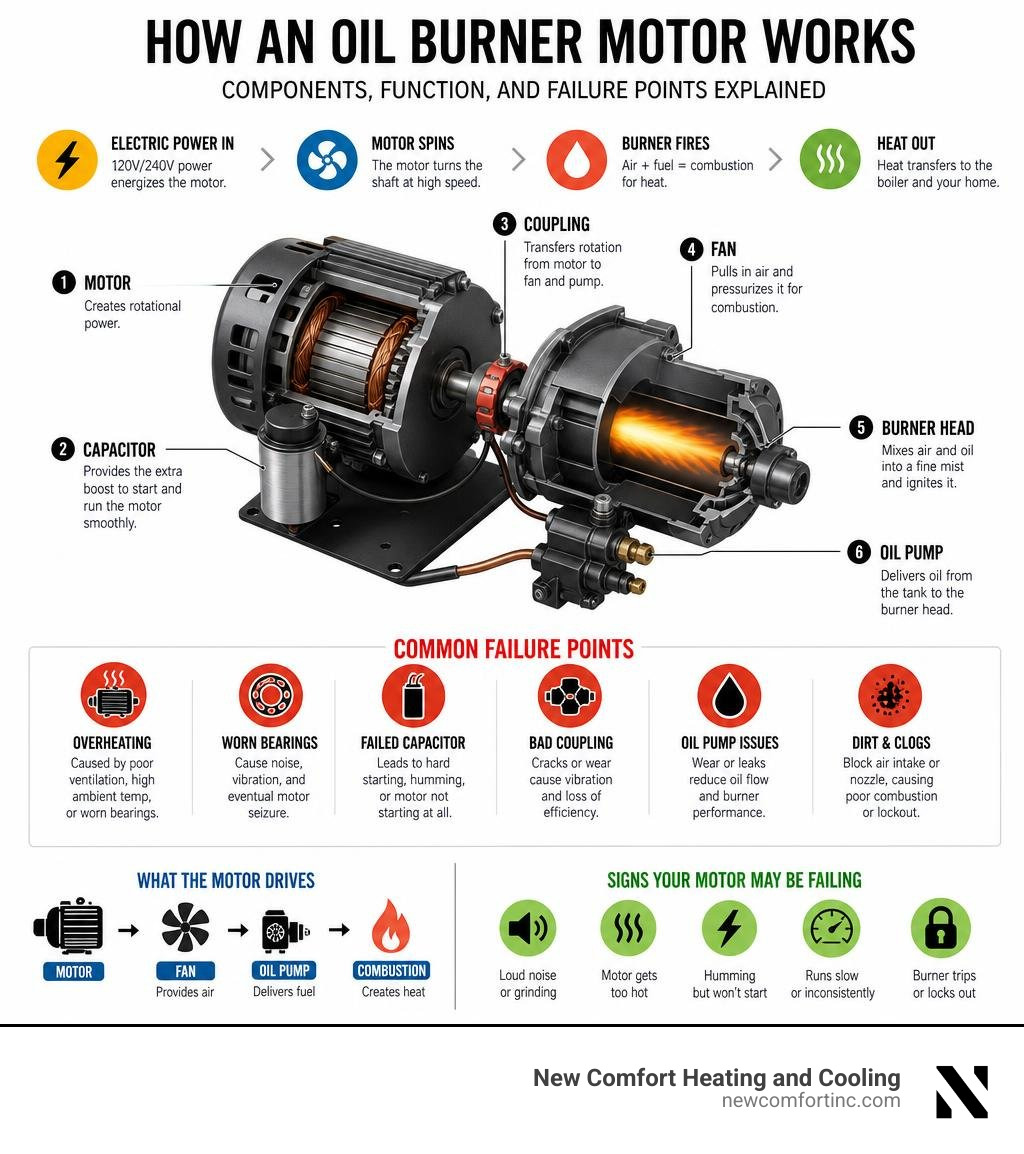
If your Beckett AFG burner has stopped working and you suspect the motor is the cause, you're in the right place. Oil burner motors are the heart of your heating system — they drive both the fan and the oil pump that keep your burner firing. When they fail, your whole heating system shuts down.
The good news: in most cases, a failed motor can be replaced without replacing the entire burner assembly.
In this guide, we'll walk you through everything you need to know — from spotting a failing motor to getting your system back up and running.
Basic boiler motor replacement vocab:
- 24hr hvac repair
- 24hr hvac repair near me
- cost to replace furnace fan
Signs You Need a Boiler Motor Replacement
An oil burner motor rarely dies without warning. Usually, it will send out several SOS signals before it completely gives up the ghost. If you live in Chicago, IL, or Justice, IL, keeping an eye (and ear) on your boiler during the freezing winter months is crucial to avoid emergency no-heat situations.
Here are the most common signs of a failing motor:
- Strange Noises: If you hear screeching, squealing, or grinding noises coming from your boiler cabinet, the bearings inside the motor are likely failing.
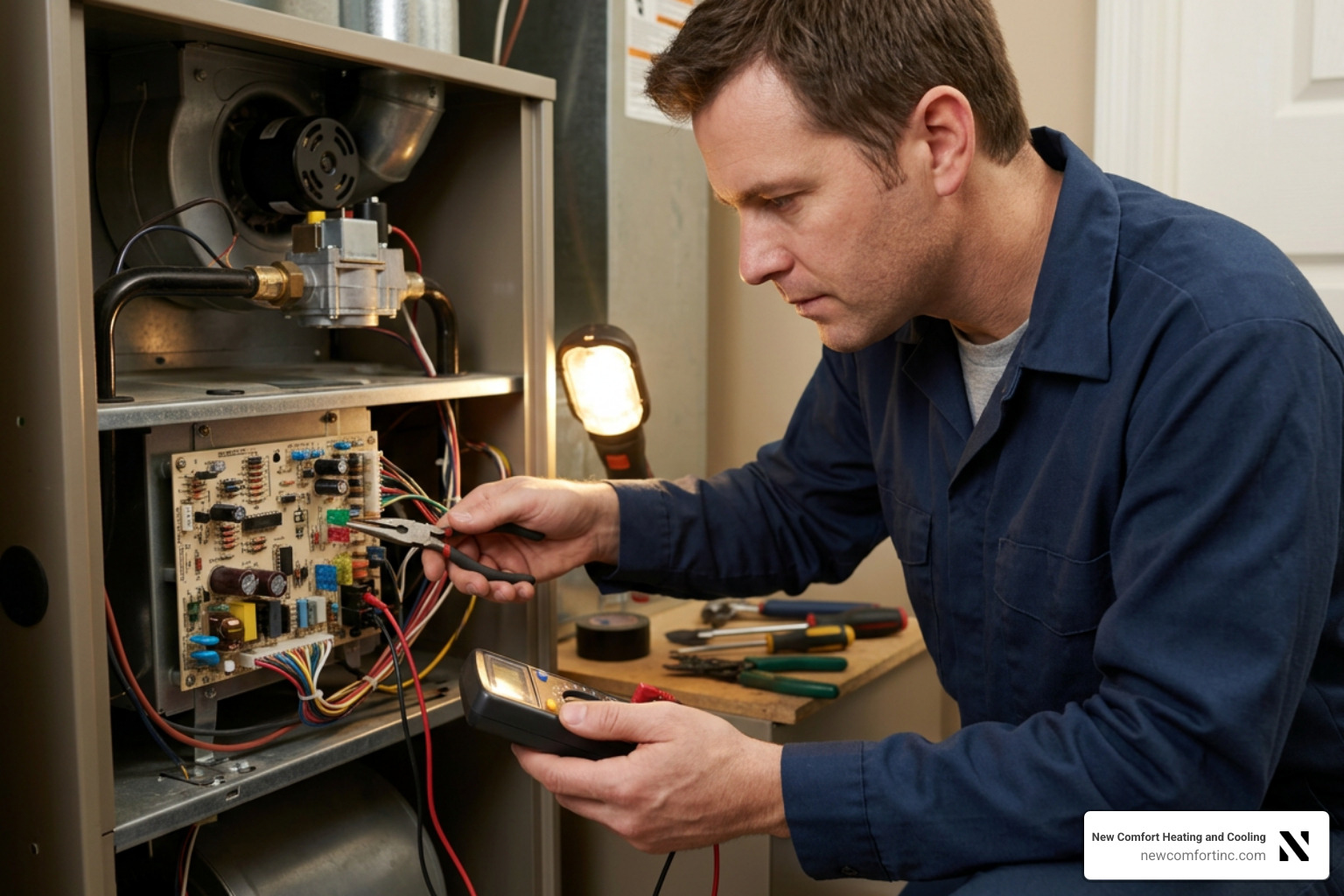
- Loud Humming But No Start: When the thermostat calls for heat, you might hear a distinct electrical hum, but the burner fan won't spin. This is a classic sign of a failed start capacitor or seized motor bearings.
- Frequent Burner Lockouts: Your boiler is designed with safety controls that trigger a system lockout if the burner fails to ignite or operate efficiently. If your motor is struggling to reach its rated speed, it won't spin the oil pump fast enough to create the correct fuel pressure, resulting in a lockout.
- Overheating and Shutting Down: If the motor feels boiling hot to the touch and shuts down shortly after starting, the internal thermal overload protection is tripping to prevent an electrical fire.
While a failing motor is a common culprit, some symptoms can also stem from poor system airflow or clogged fuel filters. Regular Furnace Maintenance is the best way to prevent these components from wearing out prematurely and to catch electrical faults before they leave you in the cold.
Selecting the Right Replacement Motor Specifications
You cannot simply grab any electric motor off the shelf and mount it to your burner. To ensure a safe and proper boiler motor replacement, you must match the exact technical specifications of your existing motor.
Always locate the metal nameplate on your current motor and note the following key specifications:
- Horsepower (HP): Residential oil burners typically use fractional horsepower motors. The Beckett AFG burner, for example, commonly uses a 1/7 HP motor. Other standard residential sizes include 1/8 HP, 1/6 HP, and 1/4 HP.
- RPM (Rotations Per Minute): Oil burner motors generally run at either 1725 RPM or 3450 RPM. Modern burners, including the Beckett AFG, almost exclusively use high-speed 3450 RPM motors to ensure proper fuel atomization. Matching this is non-negotiable; installing a slow motor on a high-speed burner will prevent ignition.
- Voltage: Standard residential burner motors operate on 115V or 120V AC single-phase power.
- Frame Size and Mounting: Most residential oil burners utilize a standard NEMA 48M or 48N flange mount. This specialized flange allows the motor to bolt directly to the burner housing. If you are dealing with a hydronic circulator pump motor instead of a burner motor, you might run into different frame standards, such as the obsolete 57T frame.
For a comprehensive look at physical dimensions and flange patterns, you can consult these Technical specifications for replacement motors.
PSC vs. Split Phase Boiler Motor Replacement
When looking for a replacement, you will encounter two primary motor designs: Permanent Split Capacitor (PSC) and Split Phase.
A split-phase motor is an older, simpler technology. It uses a centrifugal switch to disconnect the start windings once the motor reaches about 75% of its operating speed. While reliable for decades, that mechanical switch is a common failure point.
A PSC motor utilizes an external run capacitor to provide continuous phase-shifting, eliminating the need for a mechanical centrifugal switch. This makes PSC motors highly reliable, quieter, and significantly more energy-efficient.
| Feature | Split Phase Motor | Permanent Split Capacitor (PSC) Motor |
|---|---|---|
| Start Mechanism | Centrifugal Switch | Run Capacitor |
| Energy Efficiency | Standard | High |
| Common Failure Point | Mechanical Switch wear | Capacitor degradation |
| Operation Noise | Moderate | Very Quiet |
| Best Suited For | Older, traditional burners | Modern high-efficiency burners (e.g., Beckett AFG) |
Matching Your Burner Brand for a Boiler Motor Replacement
To streamline the replacement process, many manufacturers offer universal replacement motors. For example, the Carlin universal oil burner motor (model 98022S) is designed to fit a wide range of burner brands.
However, if you have a Beckett AFG burner, we highly recommend using a direct OEM replacement like the Beckett 21805U 1/7 HP PSC motor. This motor is engineered to align perfectly with the Beckett blower wheel and clean-cut oil pumps, ensuring optimal airflow and fuel pressure.
Other brands, like Riello, use highly proprietary European-designed motors with unique shaft lengths and mounting flanges. If you have a Riello burner, a universal motor will not fit; you must source a brand-specific replacement. On the other hand, brands like Marathon produce excellent heavy-duty aftermarket motors that match standard NEMA 48N flange dimensions perfectly.
Step-by-Step Boiler Motor Replacement and Troubleshooting
If you have experience working with electrical wiring and feel confident tackling this project, here is the sequence of steps required to complete a boiler motor replacement.
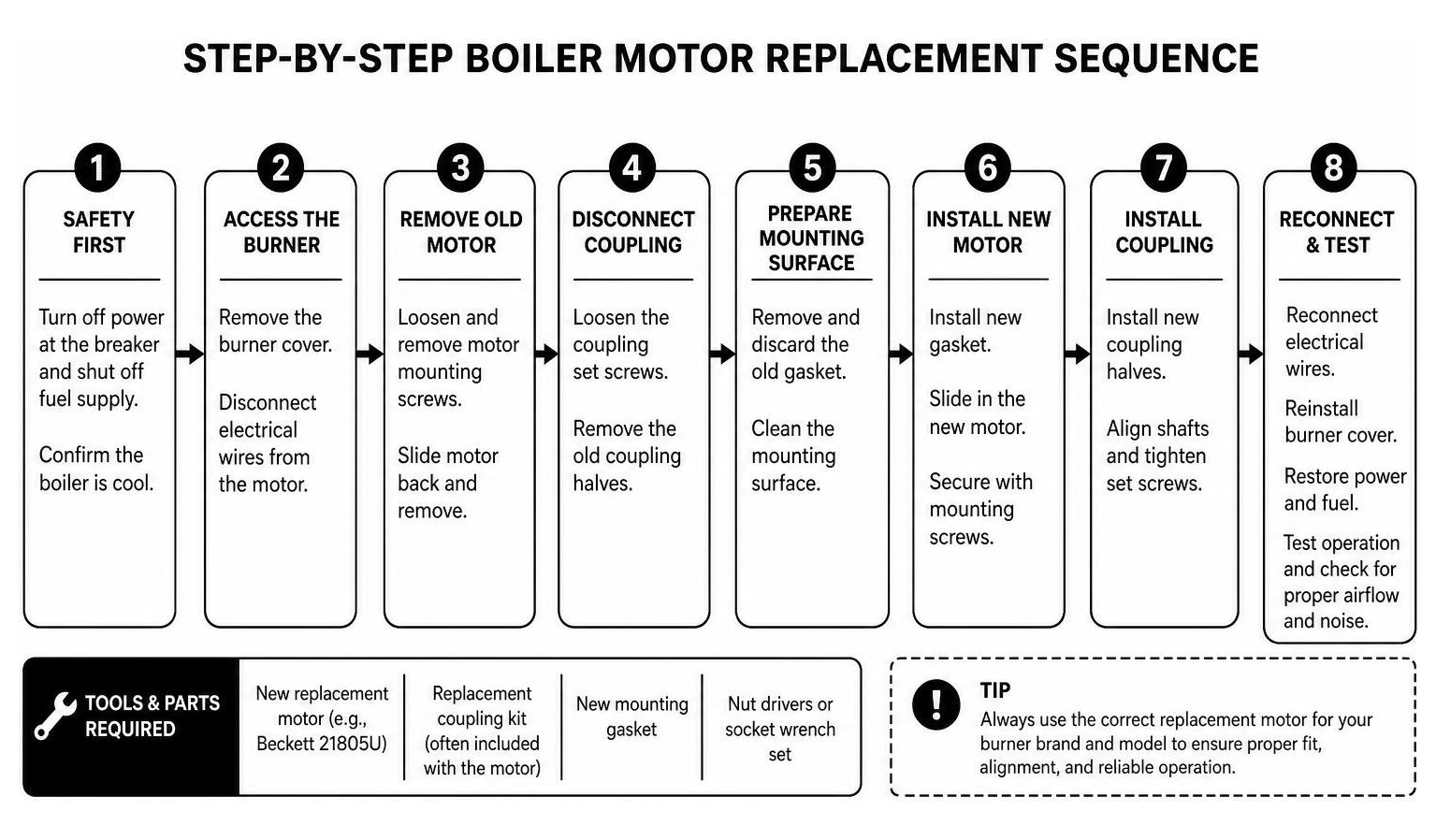
Tools and Parts Required:
- New replacement motor (e.g., Beckett 21805U)
- Replacement coupling kit (often included with the motor, but always good to have fresh)
- New mounting gasket
- Nut drivers or socket wrench set
- Allen wrenches (for the blower wheel and pump coupling)
- Wire strippers and electrical tape/wire nuts
- Multimeter (to verify power is off)
Step 1: Safety First
Before touching any tools, turn off the electrical power supply to the boiler at the emergency switch and the main circuit breaker. Use a multimeter to verify there is absolutely no voltage at the burner. Turn off the fuel oil supply valve at the tank or burner inlet.
Step 2: Disconnect the Wiring
Open the burner junction box. Take a picture of the wiring configuration with your phone for reference. Disconnect the motor leads (typically black/blue to power, white to neutral, and green to ground).
Step 3: Remove the Fuel Pump (If Necessary)
On many Beckett AFG burners, the fuel pump is mounted directly to the opposite side of the burner housing or driven through the motor shaft. You can often leave the fuel lines attached to the pump and simply unbolt the pump from the housing to slide it back, exposing the flexible drive coupling.
Step 4: Unbolt and Extract the Motor
Remove the bolts holding the motor flange to the burner housing. Carefully slide the motor straight out. The plastic or rubber drive coupling that connects the motor shaft to the pump shaft will come out with it. Note the position of the blower wheel inside the housing.
Step 5: Transfer the Blower Wheel and Install the New Coupling
Loosen the set screw on the blower wheel using an Allen wrench and slide it off the old motor shaft. Clean any dust or debris off the blower wheel blades. Slide the blower wheel onto the new motor shaft, ensuring you maintain the exact same spacing as the original setup, then tighten the set screw securely onto the flat spot of the shaft. Install a new flexible coupling kit onto the motor shaft.
Step 6: Mount the New Motor
Position the new gasket on the burner housing. Align the drive coupling with the fuel pump shaft and slide the new motor into place. Secure the motor with the mounting bolts. Reattach the fuel pump if you removed it.
Step 7: Wire and Test
Wire the new motor following your reference photo and the manufacturer's diagram. Close the junction box, restore the oil supply, and turn the electrical power back on. Initiate a call for heat from the thermostat and verify the motor starts smoothly and quietly.
Troubleshooting Post-Replacement Issues
If the new motor runs but the burner does not ignite, check the following:
- The Coupling: Ensure the plastic coupling sleeve is fully engaged with both the motor shaft and the fuel pump shaft. If it's slipping, the pump won't spin.
- System Lockout: If the burner controller is in lockout, press the red reset button once. Do not press it repeatedly, as this can pump excess oil into the combustion chamber.
- Air Pressure Switch: On some systems, a draft inducer or venter motor must close an air pressure switch to allow ignition. If you are working on a commercial system or a duct furnace and replaced a venter motor, verify the wheel gap matches specifications. For reference on venter configurations, check this Venter Motor Replacement Manual.
- Air in the Fuel Line: If you disconnected fuel lines, you may need to bleed air from the pump's bleed valve until a steady stream of oil flows.
For complex electrical issues or persistent lockouts, it is always safest to call for professional Furnace Repair to avoid damaging your equipment.
Frequently Asked Questions About Boiler Motors
Can I replace the boiler motor myself or should I hire a professional?
While a handy homeowner can perform a direct swap, working on an oil boiler carries inherent risks. You are dealing with high-voltage electrical connections and fuel oil lines. A minor misalignment of the motor shaft or blower wheel can lead to rapid coupling wear, vibration, soot accumulation, or fuel leaks.
Additionally, if you are dealing with a hydronic circulator pump motor rather than a burner motor, replacing it often requires isolating and draining the heating system. If you want to see how other homeowners navigate these complex water-side repairs, you can read through these boiler pump motor replacement discussions.
For peace of mind, safety, and to ensure your manufacturer's warranty remains valid, we highly recommend having a licensed HVAC professional perform the installation.
What factors drive the cost of an oil burner motor replacement?
The overall cost of replacing a burner motor depends on several factors:
- Motor Horsepower and Type: High-efficiency PSC motors cost more than basic split-phase motors. Direct OEM parts for brands like Riello are also more expensive than universal motors.
- Ancillary Parts: Replacing the ignition controller, control relays, or the fuel pump at the same time will add to the parts cost.
- Labor and Travel Time: Emergency after-hours service calls during a winter freeze carry higher labor rates.
- System Type: If your system uses a specialized biomass or wood pellet boiler, sourcing specialized components like pellet boiler isolation auger motor kits will impact your overall repair budget.
To understand the broader economic breakdown of these repairs, take a look at this detailed Oil Burner Motor Replacement Cost Guide 2026 | Official Site .
How long does an oil burner motor typically last?
A well-maintained oil burner motor typically lasts between 10 to 15 years. The single best way to extend the lifespan of your motor is to schedule annual heating system tune-ups. During a professional visit, a technician will clean the burner assembly, check electrical draw, inspect the run capacitor, and lubricate the motor bearings (if the motor has oil ports). Keeping your home's air filters clean also prevents dust from clogging the motor's cooling vents, keeping operating temperatures low.
Conclusion
A failing oil burner motor doesn't mean you need a brand-new boiler. By identifying the signs of wear early and matching the correct HP, RPM, and frame specifications, a boiler motor replacement can quickly restore reliable, quiet warmth to your home.
Whether you are trying to swap a standard Beckett AFG motor or dealing with a complex hydronic pump motor swap on a Utica boiler—as detailed in this Utica Pump Motor Replacement Guide—proper installation is key to system efficiency and safety.
At New Comfort Heating & Cooling, we are proud to serve our neighbors in Justice, IL, and the greater Chicago area. We differentiate ourselves with 24/7 live phone support, same-day emergency service, and transparent pricing that consistently beats out the big-box competitors.
Don't spend the night shivering in a cold house. Schedule a professional furnace repair with us today, and let our experienced technicians get your boiler running safely and efficiently!