A Simple Air Filter Maintenance Schedule for Your Home and Car
An air filter maintenance schedule helps protect your comfort, indoor air quality, vehicle performance, and the equipment that moves air through both systems.
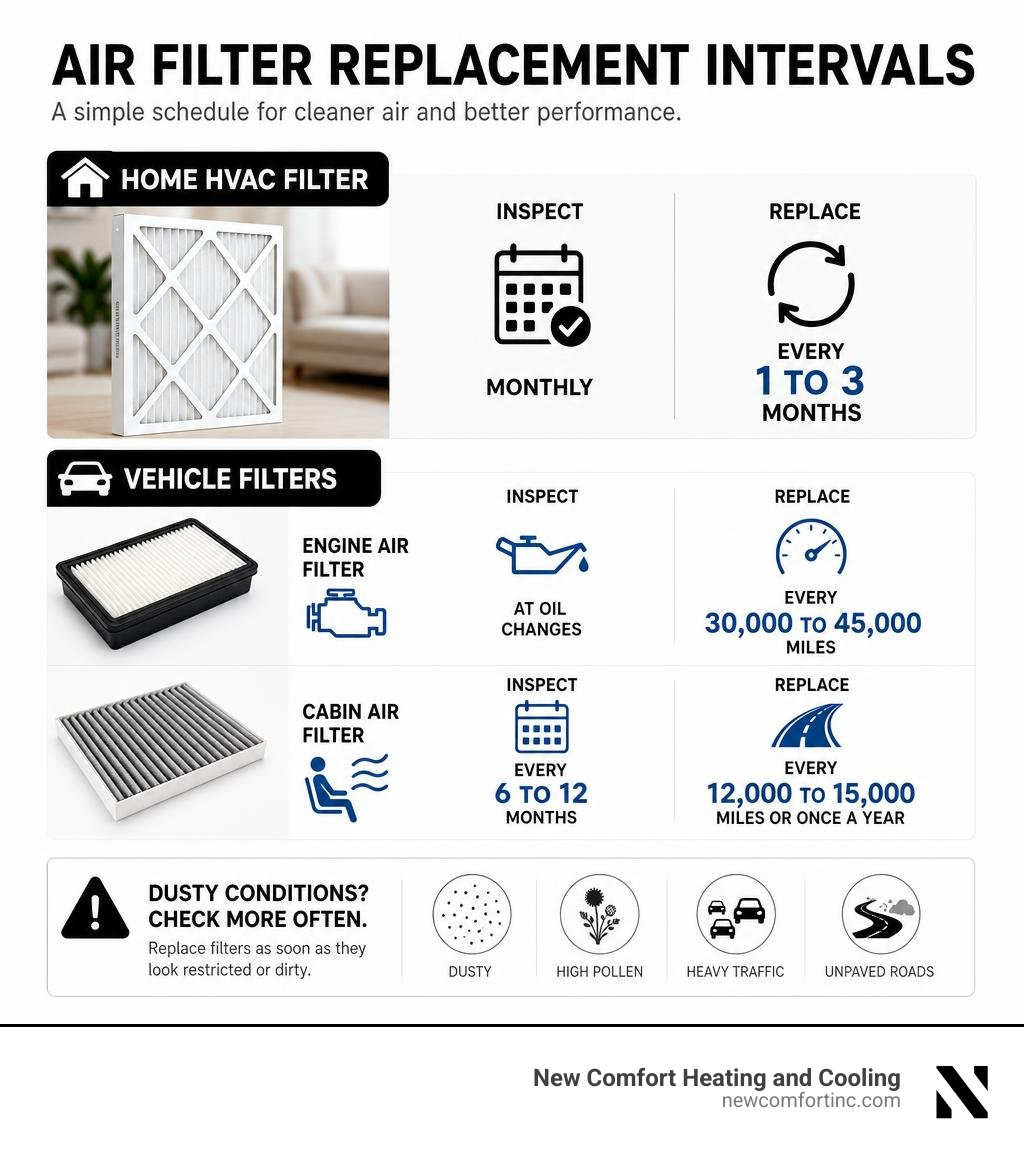
| Filter type | Inspect | Typical replacement schedule |
|---|---|---|
| Home HVAC filter | Monthly | Every 1 to 3 months |
| Car engine air filter | At oil changes | Every 30,000 to 45,000 miles |
| Car cabin air filter | Every 6 to 12 months | Every 12,000 to 15,000 miles or once a year |
| Filters in dusty, high-pollen, or heavy-traffic conditions | More often | Replace as soon as they look restricted or dirty |
For Chicago-area homes, a clogged furnace or AC filter can reduce airflow, raise energy use, and add strain to the blower. For vehicles, dust, stop-and-go traffic, short trips, and unpaved roads can shorten the life of both engine and cabin filters.
The right timing depends on the filter, its environment, and what you see during inspection - not mileage or calendar dates alone.
Understanding Engine vs. Cabin Air Filters and Replacement Intervals
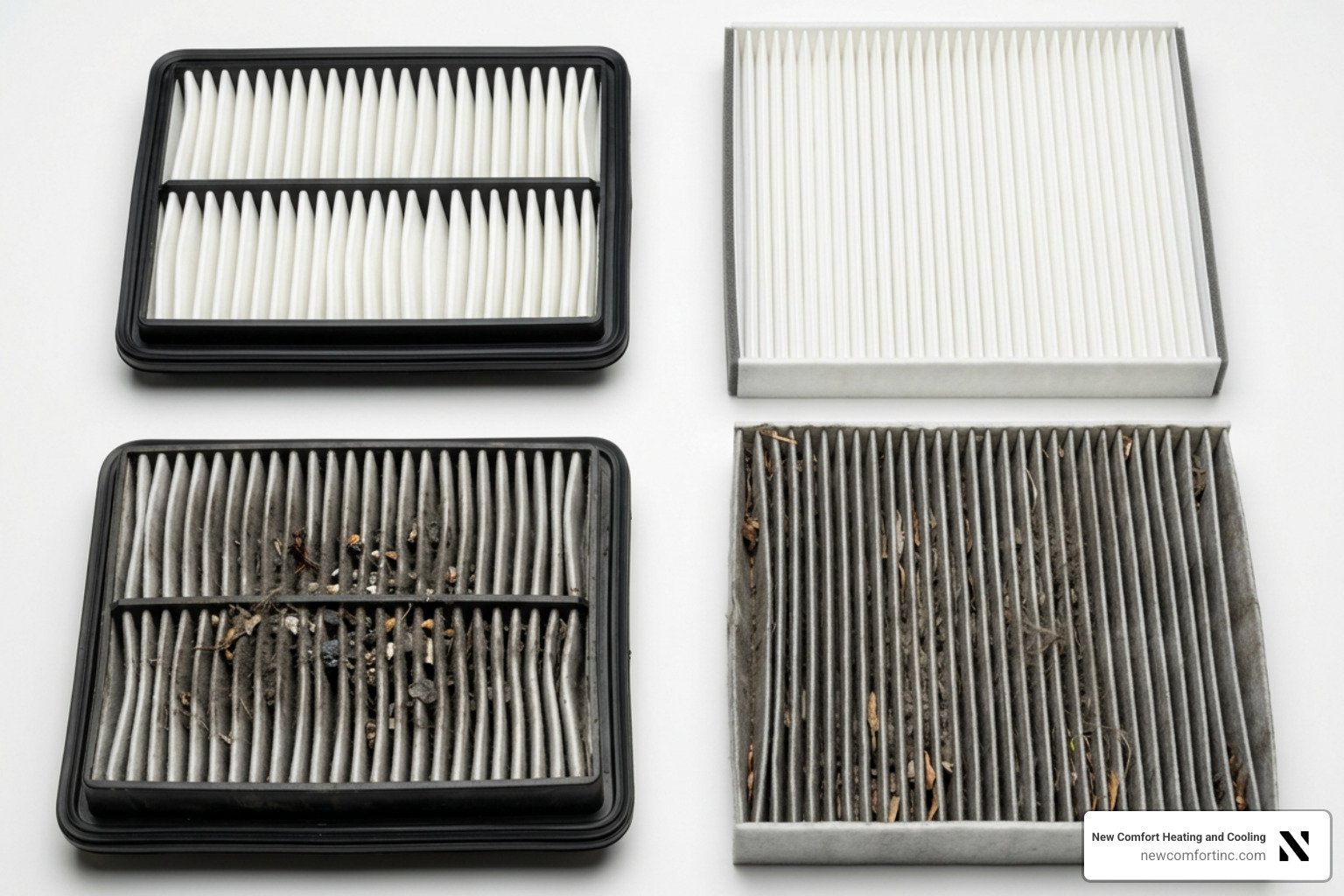
Many drivers know their car contains an air filter, but they are often surprised to learn that modern vehicles actually rely on two completely separate filtration systems: the engine air filter and the cabin climate control filter. While both capture airborne particles, they protect entirely different components and have unique service intervals.
Maintaining a consistent air filter maintenance schedule for both components prevents costly mechanical headaches down the road. An engine air filter keeps abrasive road grime out of your combustion chambers, while a cabin air filter ensures the air you breathe inside the passenger compartment remains clean and free of seasonal allergens.
Differences Between Engine and Cabin Air Filters
The primary difference lies in their location and destination:
- Engine Air Filter: Positioned under the hood inside a sealed plastic airbox, this intake filter cleans air heading directly into your engine's cylinders. Proper airflow is vital because engines require approximately 10,000 gallons of clean air for every single gallon of fuel burned. Under normal driving conditions, baseline replacement intervals range between 30,000 and 45,000 miles.
- Cabin Air Filter: Located behind the glove box or beneath the dashboard, this filter screens outside air entering through your vehicle’s heating, ventilation, and air conditioning (HVAC) system. It traps pollen, dust, soot, and road debris before it reaches your lungs. Standard automotive guidelines recommend replacing the cabin air filter every 12,000 to 15,000 miles or at least once a year.
Neglecting your cabin air filter does more than just make the air smell dusty—it can directly damage your car’s HVAC blower motor. When a cabin filter becomes choked with dirt or nesting materials from outdoor critters, airflow is severely restricted. This forces the blower motor to pull extra electrical current and work significantly harder against high static pressure, often resulting in noisy motor bearings or total blower failure.
Warning Signs of a Dirty or Clogged Air Filter
Recognizing when your filters are overdue for service saves you time and protects your budget. Watch for these common warning signs across both engine and cabin filters:
- Sluggish Acceleration and Power Loss: A choked engine filter starves the intake manifold of oxygen, leading to sluggish throttle response, especially in turbocharged engines that require high air volume.
- Reduced Fuel Economy: In older or forced-induction vehicles, restricted intake airflow disrupts the ideal air-to-fuel ratio, forcing the engine control module (ECM) to burn excess fuel.
- Check Engine Light Activation: Severe air starvation or contamination on the Mass Air Flow (MAF) sensor can cause air-fuel imbalance codes or engine misfires, triggering a dashboard warning light.
- Unusual Engine Noise: You may hear coughing, spitting, or abnormal suction sounds under heavy acceleration when an engine filter is completely plugged.
- Musty Interior Odors: A stale, moldy smell from your dashboard vents usually indicates a moisture-laden cabin filter covered in organic buildup.
- Weak Climate Control Vent Airflow: If turning your AC or heater to maximum speed yields only a gentle breeze, your cabin filter is likely choked with dust.
- Windshield Fogging: Moisture trapped by a filthy cabin filter prevents effective defrosting, creating persistent condensation on the inside of your windshield. Check your vehicle's manual or review official guidance like the Kia Climate Control Filter Manual to locate and replace clogged climate elements.
Establishing Your Automotive Air Filter Maintenance Schedule
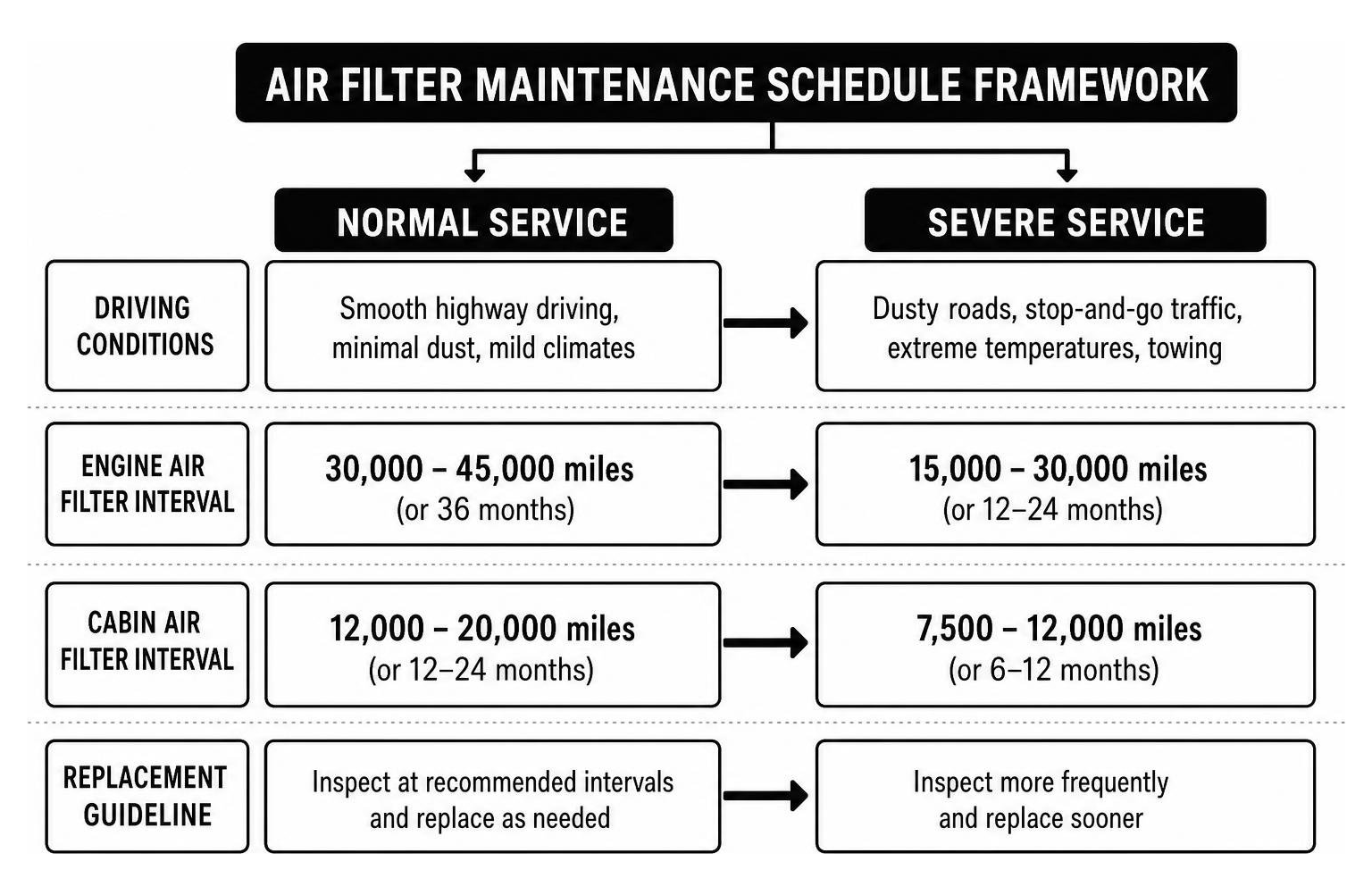
Establishing an accurate air filter maintenance schedule requires moving beyond one-size-fits-all factory estimates. Automobile manufacturers typically provide two distinct maintenance schedules: Schedule 1 for "Normal" driving and Schedule 2 for "Severe" operating conditions.
| Service Condition | Operating Environments | Engine Air Filter Interval | Cabin Air Filter Interval |
|---|---|---|---|
| Normal Maintenance | Smooth highway driving, minimal dust, mild climates | 30,000 – 45,000 miles (or 36 months) | 12,000 – 20,000 miles (or 12–24 months) |
| Severe Maintenance | Unpaved roads, heavy dust, heavy city traffic, extreme weather | 10,000 – 15,000 miles (or 12 months) | 8,000 – 10,000 miles (or 6–12 months) |
Severe Driving Factors That Shorten Your Air Filter Maintenance Schedule
Surprising to many drivers, what auto manufacturers define as "severe driving" actually describes standard daily commuting for millions of suburban and city drivers. The following environmental factors demand a much shorter air filter replacement cadence:
- Unpaved and Dusty Roads: Driving on gravel, dirt, or construction routes forces massive quantities of microscopic particulate matter into your air intake, plugging paper pleats in a fraction of the usual time.
- Stop-and-Go Heavy Traffic: Commuting in bumper-to-bumper traffic exposes your vehicle to concentrated exhaust soot and particulate pollution from neighboring vehicles.
- Extended Idling: Engine idle hours count toward filter wear even when your odometer isn't spinning. In automotive engineering calculations, every 1 hour of engine idling equals roughly 25 miles of highway usage.
- Extreme Temperatures and Pollen: Heavy Midwestern seasonal pollen blooms, combined with intense summer heat, quickly clog fine synthetic mesh in cabin filters.
- Commercial and Fleet Usage: Delivery vans, rideshare vehicles, and taxis experience continuous engine operation that warrants shortened 10,000 to 12,000-mile filter replacement cycles.
Manufacturer Recommendations Across Brands
Vehicle manufacturers vary slightly in their baseline maintenance intervals, but all emphasize adjusting for severity.
According to Ford Scheduled Maintenance Guidelines, gasoline engines running under normal maintenance intervals require engine air filter replacements every 30,000 miles, while cabin air filters are slated for replacement every 20,000 miles.
In comparison, the Mazda Scheduled Maintenance Manual outlines an engine air filter interval of up to 36 months or 37,500 miles (60,000 km) under normal conditions, with cabin filters recommended every 24 months or 30,000 miles. However, Mazda explicitly mandates shifting to accelerated intervals if the vehicle is operated in dusty environments or subjected to frequent short trips under 5 miles.
Always remember the time vs. mileage rule: service intervals are driven by whichever threshold is reached first. If you drive only 5,000 miles a year in suburban Chicago traffic, your cabin filter should still be changed annually because organic materials inside the filter paper degrade over time regardless of mileage.
How to Inspect, Clean, and Replace Automotive Air Filters
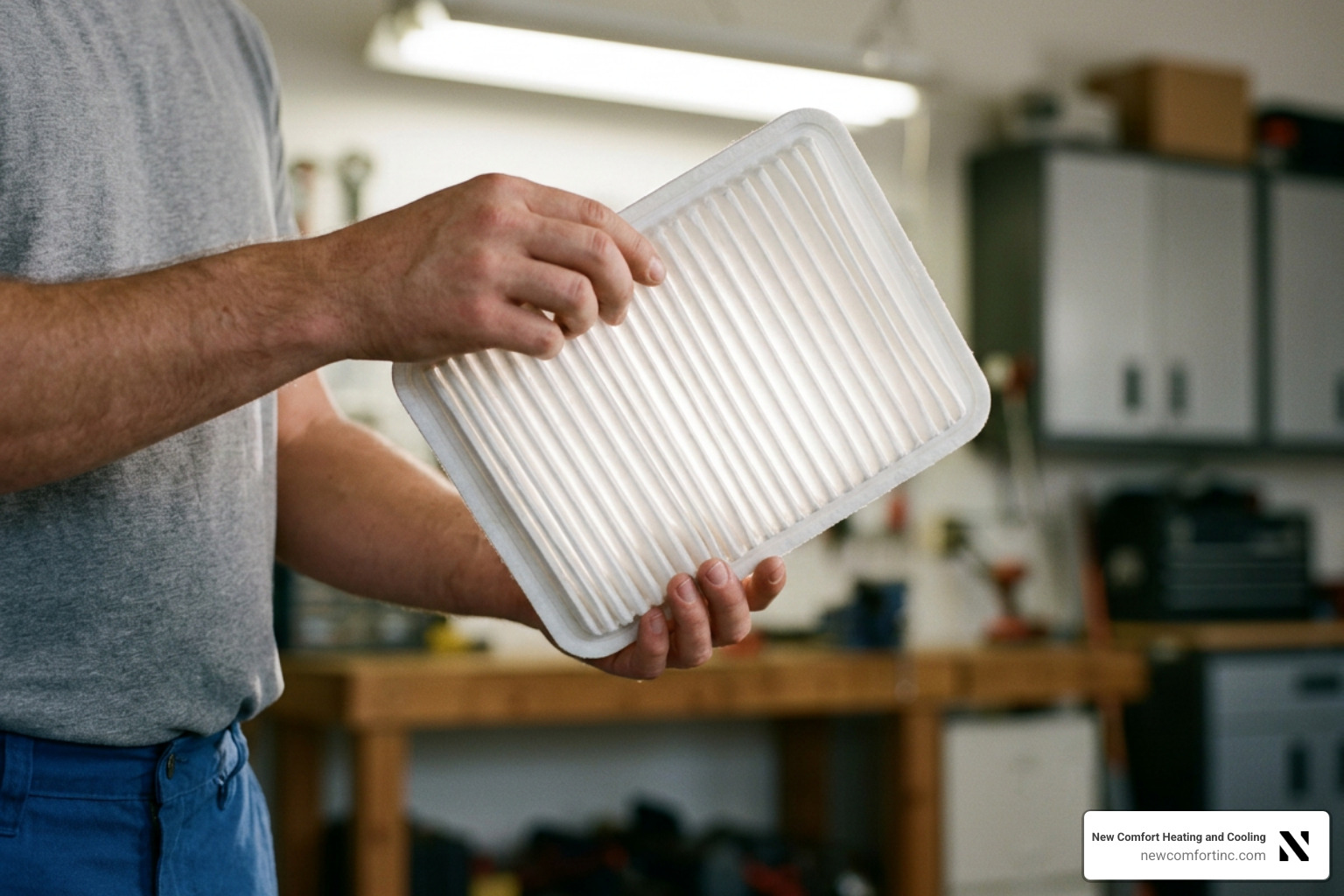
Performing periodic visual inspections keeps you in total control of your car's maintenance needs, preventing premature component wear and avoiding unnecessary service fees.
Visual Inspection Steps for Air Filters
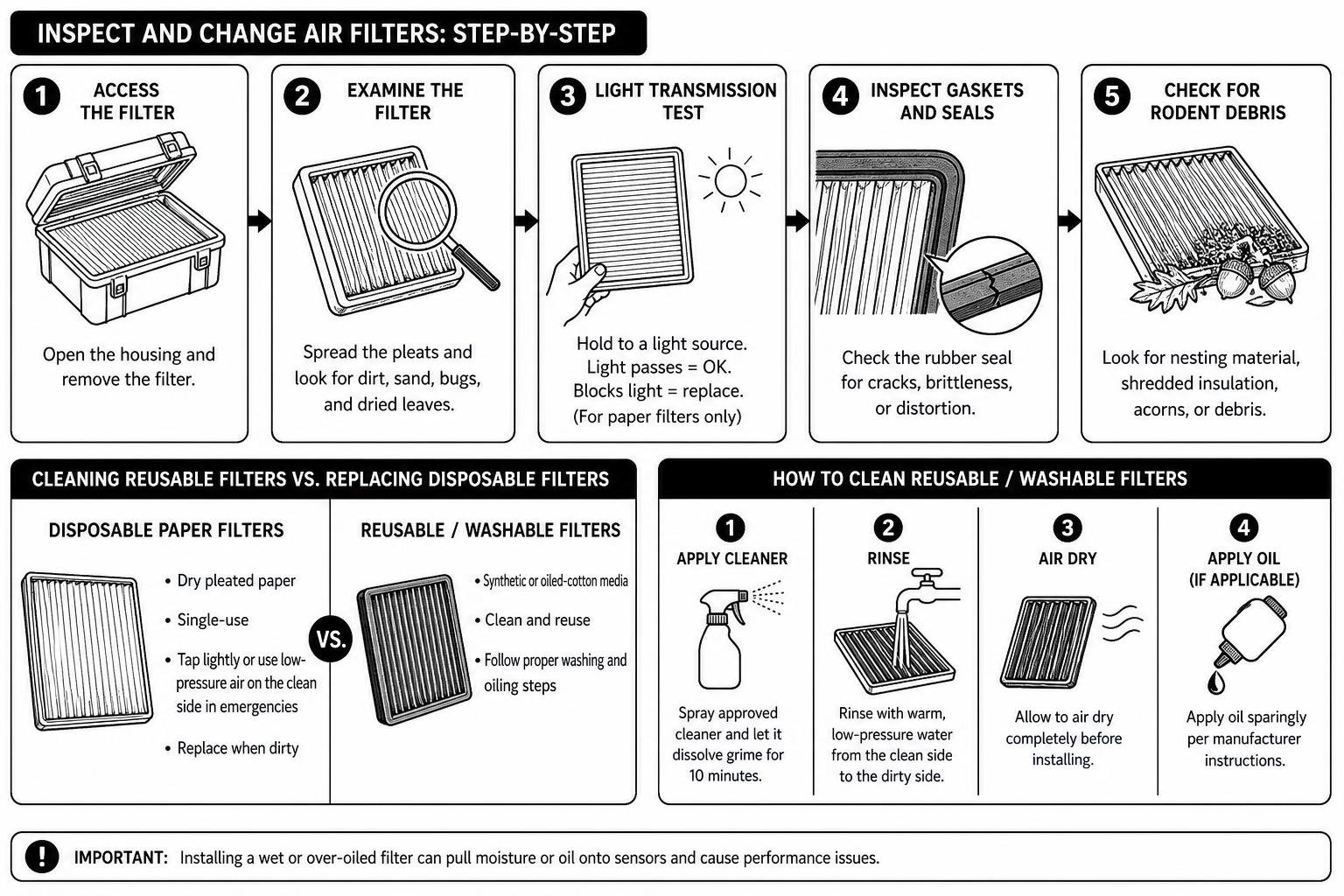
Inspecting an engine air filter is a straightforward 5-minute process that requires no special mechanical background:
- Locate the Filter Housing: Open your vehicle hood and identify the black plastic airbox. It is typically secured by metal tension clips, plastic snaps, or a few Phillips-head screws.
- Remove and Examine the Filter: Pop open the housing snaps and lift the filter out. Spread the accordion pleats apart to look deeply between the folds where heavy dirt, sand, bugs, and dried leaves collect.
- The Light Transmission Test: Hold the filter up toward a bright light source or the sun. If light easily shines through the paper pleats, the filter still offers adequate airflow. If the paper filter blocks light completely and appears dark gray or black, it is thoroughly restricted and must be replaced. (Note: this test applies to paper media, as foam-lined filters naturally restrict direct light).
- Inspect Gaskets and Seals: Check the rubber perimeter seal around the filter edge. If the rubber is cracked, brittle, or distorted, unfiltered bypass air can slip around the sides directly into your engine.
- Check for Rodent Debris: Mice frequently target warm engine airboxes and cabin filter housings as nesting sites. Look closely for shredded insulation, acorns, or acorns that could be sucked into your intake system.
Cleaning Reusable Filters vs. Replacing Disposable Filters
Depending on your vehicle's setup, you will handle air filter maintenance using one of two methods:
- Disposable Paper Filters: Most standard vehicles use dry pleated paper filters. These are single-use components. While you can tap them lightly on a hard surface or blow low-pressure compressed air across the clean side to remove loose surface dust in an emergency, they cannot be washed and should be replaced when dirty.
- Reusable / Washable Performance Filters: Aftermarket synthetic or oiled-cotton filters (such as K&N or dry performance media) can be cleaned and reused. To wash them correctly:
- Apply an approved filter cleaner spray and let it dissolve grime for 10 minutes.
- Rinse with warm, low-pressure tap water from the clean side to the dirty side so debris washes away from the filter matrix rather than being pushed deeper into the fibers.
- Allow the filter to air dry completely. Installing a wet air filter can pull moisture onto your Mass Air Flow (MAF) sensor, triggering engine error codes and promoting internal mold growth inside the housing.
- If using an oiled filter media, apply oil sparingly according to manufacturer specs—over-oiling can contaminate electronic sensors downstream.
Comparing Home HVAC vs. Vehicle Filter Schedules and Spark Plug Timing
While keeping your vehicle breathing smoothly is essential for getting around town, keeping your home’s heating and cooling system clean is just as important for healthy indoor living and manageable monthly utility bills.
Home HVAC Air Filter Maintenance Schedule vs. Automotive Care
The basic physical principle behind home HVAC filters and car air filters is identical: dirt buildup restricts airflow, forcing mechanical blowers and motors to work much harder. However, home system filter schedules operate on a much tighter calendar than automotive systems.
For Chicago homeowners navigating freezing winters and humid summers, we recommend inspecting your residential air filter monthly and replacing or cleaning it every 1 to 3 months.
A clean residential furnace filter protects the heat exchanger from overheating and guards the air conditioning evaporator coil against freezing up. For a deeper breakdown of how routine filter changes preserve home heating equipment, read The Ultimate Guide to Filter Replacement for Furnace Longevity.
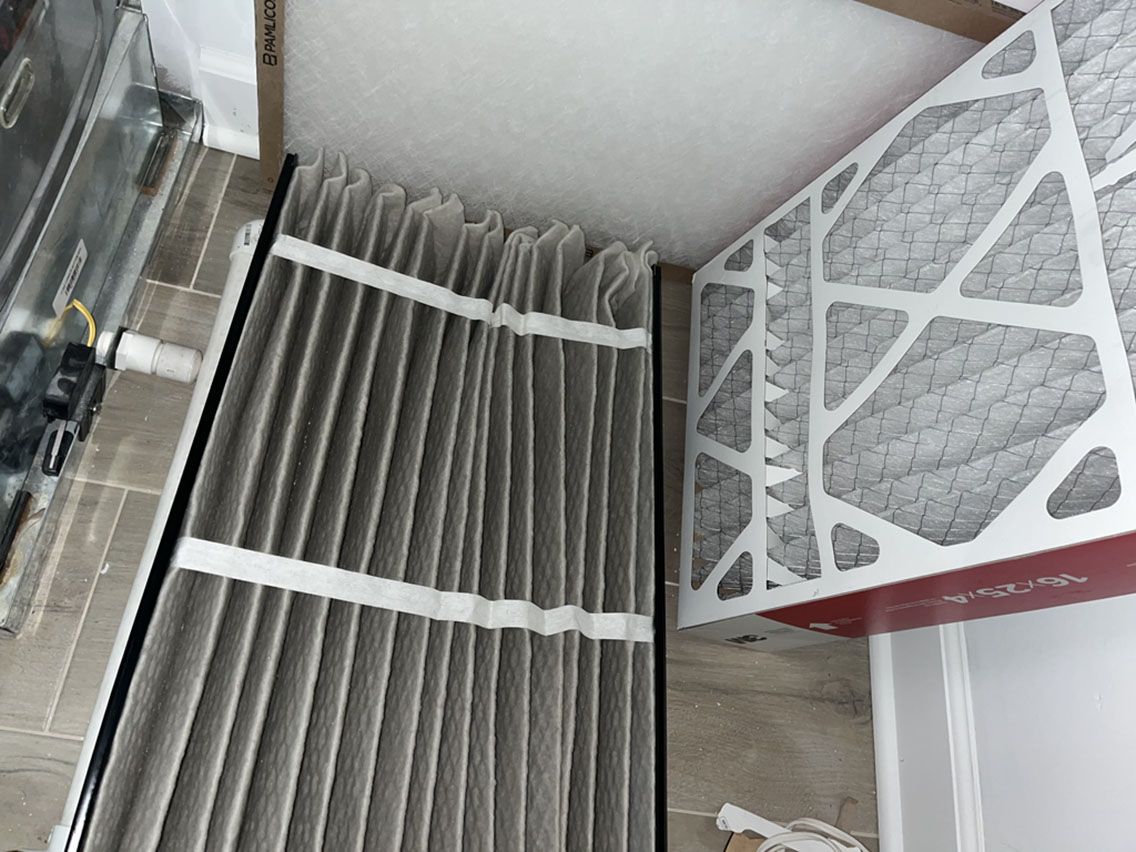
When home air filters become clogged, airflow across the furnace or heat pump drops rapidly. The system must run longer heating and cooling cycles to keep up with your thermostat settings, causing energy consumption to spike.
To learn more about keeping your energy usage in check throughout local Chicago seasons, explore our tips on HVAC Maintenance Lower Energy Bills Chicago.
Spark Plug Replacement Intervals: Stock vs. Modified Vehicles
Air filters aren't the only engine intake components that rely on strict routine service schedules—spark plugs are equally vital for maintaining complete fuel combustion. Much like air filters, spark plug replacement intervals depend heavily on engine configuration and performance tuning:
- Stock Gasoline Engines: Modern OEM iridium or platinum spark plugs typically boast factory service intervals of 60,000 to 100,000 miles. Under normal driving, they deliver reliable spark energy for efficient combustion.
- Modified Vehicles (Stage 1 / Stage 2 Tunes): Modified engines operating higher turbocharger boost levels or aggressive ECU tuning demand far tighter spark plug maintenance intervals. Modified stage 2 vehicles often require spark plug replacement every 10,000 to 15,000 miles.
- Heat Range Adjustments: Tuned vehicles frequently run "colder" heat range spark plugs with reduced electrode gaps to prevent high-boost spark blowout, knocking, or engine misfires. Pairing a fresh air filter with crisp spark plugs ensures optimum engine power and clean burning.
Building a Year-Round Air Filter Replacement Schedule for Chicago Homes
A written air filter replacement schedule takes the guesswork out of filter changes. Instead of waiting until the furnace sounds strained or the vents feel weak, you check the filter on a set day each month and replace it when it is due. Many homeowners tie the check to a recurring date, such as the first of the month or the day the utility bill arrives.
Chicago's western and southwest suburbs put filters through two very different seasons. Long heating runs from November through March pull dry, dusty indoor air through the system for hours each day, while humid summers bring pollen, cottonwood fluff, and outdoor dust in through doors and windows. Your schedule should tighten during those peak months.
Seasonal Air Filter Maintenance Schedule Checklist
- Fall (September–October): Install a fresh filter before the first cold night so the furnace starts the heating season with full airflow.
- Winter (November–March): Inspect monthly. Homes with pets, recent remodeling, or a wood-burning fireplace often need a new 1-inch filter every 30 to 45 days.
- Spring (April–May): Replace the filter after the heating season and again before you switch the system to cooling, especially during heavy pollen weeks.
- Summer (June–August): Inspect monthly. Long AC runtimes during heat waves load filters faster than most people expect.
Thicker 4- or 5-inch media filters usually last longer than standard 1-inch filters, but they still belong on your calendar. Write the installation date on the filter frame with a marker so you always know how long it has been in place.
Pairing Your Home Schedule with Cabin Air Filter and Engine Air Filter Checks
If you already track household maintenance, it is easy to add your vehicle to the same list. A practical approach is to inspect the cabin air filter each spring, when pollen counts climb, and to have the engine air filter checked at every oil change. Drivers who commute on construction-heavy routes or gravel roads may find the engine air filter needs attention sooner than the owner's manual suggests.
Keeping both schedules side by side also helps you spot patterns. If your home filter and your cabin air filter both clog quickly in the same season, outdoor dust or pollen is likely the cause, and a higher-efficiency home filter may be worth discussing with an HVAC professional.
Choosing the Right Filter Rating
The U.S. Environmental Protection Agency explains how filter efficiency ratings work in its guide What Is a MERV Rating?. Higher ratings capture smaller particles, but not every residential blower is designed for a dense filter. If you are unsure which rating fits your furnace, our team can check your system's airflow and recommend a filter that balances air quality and efficiency. You can reach New Comfort Heating and Cooling at (708) 717-9995 or through our contact page.
Frequently Asked Questions About Air Filters
Can a dirty engine air filter trigger the check engine light?
Yes, a severely clogged or dirty engine air filter can trigger your vehicle's check engine light. Modern electronic engine control units rely on the Mass Air Flow (MAF) sensor and manifold pressure sensors to calculate the exact amount of fuel needed for clean combustion.
When a restricted air filter limits incoming air volume, the air-to-fuel ratio becomes unbalanced. This can lead to unburned fuel in the exhaust, incomplete combustion, engine misfire codes (such as P0300), or fuel trim warning codes (such as P0171 or P0172).
Cleaning or replacing the air filter—and gently cleaning the MAF sensor with dedicated MAF spray—often resolves these performance codes quickly.
How does driving on dusty roads affect filter lifespan?
Driving on unpaved dirt, gravel, or construction roads drastically shortens air filter lifespan. Microscopic soil particulates and sand accumulate rapidly within the filter pleats, quickly reducing the available surface area for air passage.
While standard driving allows an engine air filter to last 30,000 to 45,000 miles, continuous exposure to heavy dust can plug an air filter in as little as 10,000 miles or less.
If you regularly travel on unpaved roads, inspect both your engine and cabin air filters monthly and follow a severe maintenance schedule to prevent excessive dirt intake.
How often should home HVAC filters be inspected compared to car air filters?
Home HVAC air filters should be inspected much more frequently than automotive air filters.
We recommend checking your home furnace and AC filter once every 30 days. Depending on whether you have indoor pets, family members with allergies, or high summer cooling demand, replace disposable pleated filters every 1 to 3 months.
Automotive air filters, by contrast, are typically inspected during routine oil change intervals (roughly every 5,000 to 7,500 miles) and replaced every 12,000 to 45,000 miles depending on filter type and driving conditions.
Conclusion
Establishing a disciplined air filter maintenance schedule is one of the easiest, most cost-effective ways to safeguard your home comfort, maintain healthy indoor air quality, and keep your vehicle running smoothly.
By taking a proactive approach—inspecting home filters monthly and automotive filters at every oil change—you protect sensitive equipment like HVAC blowers, furnace heat exchangers, and vehicle engines from avoidable wear and tear.
Whether you need expert assistance selecting high-efficiency indoor air filters, setting up a seasonal preventive maintenance program, or ensuring your home heating and cooling systems operate at peak energy efficiency, our experienced team is here to help.
Contact New Comfort Heating and Cooling today or explore our dedicated Indoor Air Quality Services to keep your family breathing clean, fresh air all year round!