The Ultimate Guide to Filter Replacement for Furnace Longevity
Why Regular Filter Replacement for Furnace Systems Is the Key to a Healthy Home
Filter replacement for your furnace is one of the simplest — and most overlooked — maintenance tasks a homeowner can do. Done right, it keeps your heating system running efficiently, protects expensive components, and keeps the air your family breathes clean.
Here's what you need to know at a glance:
| Question | Quick Answer |
|---|---|
| How often should I replace my furnace filter? | Every 1–3 months for most homes |
| What MERV rating is best? | MERV 8–13 for most households |
| Best for allergies or pets? | MERV 11 or MERV 13 |
| Does a dirty filter hurt my system? | Yes — restricted airflow strains the blower motor |
| Can a filter look clean but still need replacing? | Yes — fine particles clog it invisibly |
A clogged filter doesn't just hurt your air quality. It forces your furnace to work harder, drives up your energy bill, and can lead to costly breakdowns — exactly the kind of surprise no busy Chicago-area family needs in the middle of January.
The good news? Replacing your furnace filter takes about five minutes. This guide walks you through everything: picking the right filter, knowing when to swap it, and installing it correctly.
At New Comfort Heating and Cooling, years of hands-on HVAC experience show that neglected filter replacement for furnace systems is the number one cause of avoidable repairs. Let's make sure your system never becomes one of those stories.
Selecting the Correct Filter Replacement for Furnace Units
Finding the right filter replacement for furnace setups boils down to understanding dimensions, efficiency ratings, and your specific HVAC equipment requirements. Placing an ill-fitting or improperly rated filter inside your furnace return cabinet can cause unfiltered air to bypass the filter completely or suffocate your blower motor with excess static pressure.
Understanding Nominal vs. Actual Sizing
When you buy an air filter, the dimensions printed on the outer cardboard frame in large numbers are known as the nominal size. For example, a filter frame might read "16 x 25 x 5". However, if you pull out a tape measure, you will find that the physical dimensions — the actual size — are slightly smaller.
For instance, a standard 16 in. x 25 in. x 5 in. Replacement Filter often measures around 15¾ in. x 24¾ in. x 4⅜ in. Manufacturers undercut actual dimensions slightly so the filter easily slides into the cabinet rack without tearing or bending.
Always check both the printed nominal size and the physical measurements of your current filter box or rack before buying replacements. If you choose a frame that is even half an inch too small, dust, pet hair, and dander will bypass the media around the edges, settling directly onto your furnace components.
Decoding MERV Ratings and Static Pressure
Filter performance is graded on the MERV scale (Minimum Efficiency Reporting Value), which spans from 1 to 20. MERV ratings measure how efficiently a filter captures particles of varying sizes passing through the HVAC system:
| MERV Rating | Particle Size Captured | Target Pollutants Captured | Recommended Use Case |
|---|---|---|---|
| MERV 1–4 | > 10.0 microns | Dust, lint, carpet fibers, standing dust | Low-cost basic protection; older budget systems |
| MERV 5–8 | 3.0 to 10.0 microns | Mold spores, dust mites, hair, cement dust | Standard residential households |
| MERV 9–12 | 1.0 to 3.0 microns | Pollen, pet dander, fine dust, auto emissions | Homes with pets, mild allergies, or deep media cabinets |
| MERV 13–16 | 0.3 to 1.0 microns | Wildfire smoke, bacteria, virus carriers, smog | Allergy sufferers, asthma relief, high IAQ demand |
While higher MERV ratings deliver cleaner air, denser filter media creates greater static pressure (resistance to airflow). If your residential HVAC blower is not engineered to push air through a tight MERV 16 weave, airflow drops significantly. This lack of circulation causes heating coils to overheat, air conditioning coils to freeze solid, and blower motors to fail prematurely. For the vast majority of Chicago homes, filters rated between MERV 8 and MERV 13 strike the optimal balance between high particle capture and healthy system airflow.
Comparing Filter Types: Fiberglass, Pleated, Carbon, and HEPA
Choosing the best filter material depends on your indoor air quality goals, family health requirements, and equipment setup.
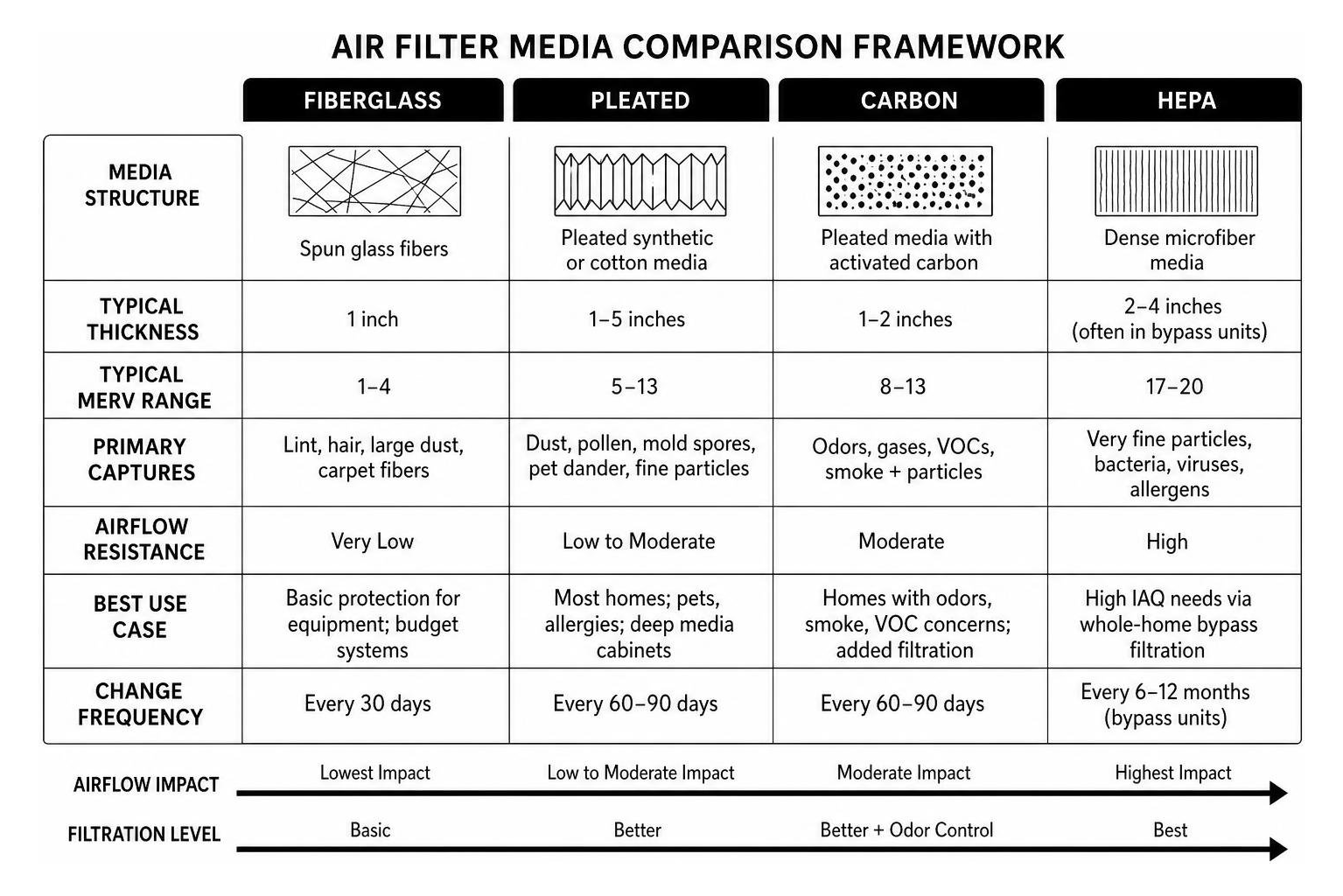
We break down the four primary filter media types used in residential heating systems:
- Fiberglass Filters: Simple 1-inch flat screens made from spun glass strands. Options like a 16 in. x 25 in. x 1 in. Fiberglass Furnace Air Filter or a 20 in. x 25 in. x 1 in. Fiberglass Furnace Air Filter are typically rated MERV 1 to 4. They are exceptionally low in airflow resistance, protecting furnace components from large debris like hair and lint, but they allow smaller airborne dust, pollen, and allergens to pass through freely.
- Standard Pleated Media Filters: Constructed from synthetic polyester or cotton blends folded into accordion pleats. A 20 in. x 20 in. Premium Pleated Filter or high-efficiency options like Filtrete™ MPR 1550 Allergen, Bacteria & Virus Air Filters provide significantly more surface area to trap microscopic particulates without severely hindering air delivery. Deep 4-inch to 5-inch pleated media filters offer even greater surface area, lasting much longer between replacements while providing superior MERV 11 to MERV 13 performance.
- HEPA Filters: High-Efficiency Particulate Air filters trap 99.97% of particles down to 0.3 microns. True HEPA filters are rarely installed directly inside standard residential furnace filter slots because their intense density chokes normal residential blower motors. Instead, HEPA technology is utilized through dedicated whole-home bypass filtration units.
Carbon and Activated Charcoal Filter Replacement for Furnace Odor Control
For households dealing with stubborn persistent odors, active cooking aromas, indoor pets, or urban environmental pollutants, a standard dust-trapping filter is only half the solution. Standard particulate filters capture physical particles, but gaseous molecules, volatile organic compounds (VOCs), and odors slip right through fiber weaves.
This is where activated carbon media steps in. Activated charcoal undergoes a specialized oxygen treatment that opens up millions of microscopic pores between carbon atoms. These microscopic crevices chemically adsorb gaseous molecules, trapping smoke smells, pet odor compounds, and chemical fumes through molecular binding. Selecting a hybrid pleated filter that combines MERV 11 or MERV 13 particulate media with an embedded activated charcoal layer cleans dust from your air while actively neutralizing household odors throughout every heating cycle.
Replacement Frequency: When to Change Your Furnace Air Filter
A common question homeowners ask us is: "How often should I really perform a filter replacement for furnace units?"
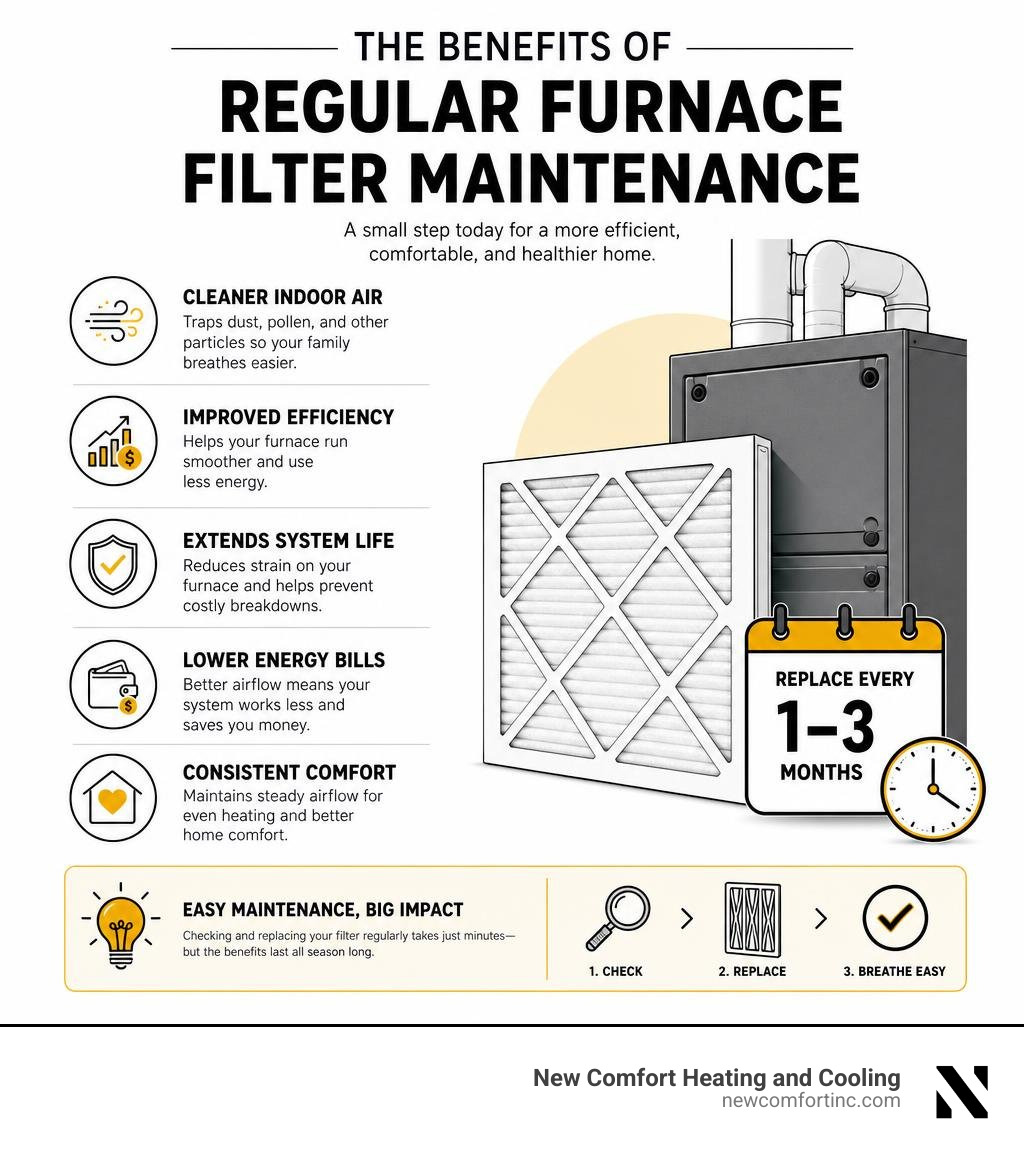
The short answer is every 1 to 3 months for standard 1-inch filters, and every 3 to 6 months for deep 4-inch or 5-inch media filters. However, rigid calendar dates don't account for real-world living conditions.

Several lifestyle and environmental factors dramatically accelerate filter loading:
- Pets in the Home: Furry family members shed fine hair, dander, and dried saliva. If you have two or more cats or dogs, plan on replacing 1-inch filters every 30 to 45 days.
- Allergies and Respiratory Conditions: Allergy sufferers require clean air year-round. Changing MERV 11 or MERV 13 filters every 30 days during spring and fall pollen surges keeps indoor triggers low. Explore our full range of whole-home Indoor Air Quality options to complement your regular filter changes.
- Wildfire Smoke Events: During summer months when wildfire smoke drifts across the Midwest, airborne particulate levels spike. Fine PM2.5 ash particles quickly blind filter media. During heavy smoke warnings, filters should be inspected weekly and replaced as soon as discoloration or airflow drops occur.
- Invisible Particle Buildup: Never judge a filter solely by whether it looks dark grey or brown. Microscopic viral carriers, bacteria, mold spores, and ultrafine dust embed deep within electrostatically charged pleats, choking airflow while leaving the surface looking surprisingly light.
Adhering to a scheduled routine protects your heating equipment and keeps operating costs down. Learn more about routine professional heating care by reviewing our complete Furnace Maintenance services.
Step-by-Step Guide to Replacing Your Furnace Filter
Replacing your filter takes just a few minutes when you follow a structured procedure. For regional context and local guidelines, check out this helpful Guide to Cleaning or Replacing Furnace Filters.
Here is the straightforward procedure we recommend:
- Power Down the System: Locate the emergency switch (which looks like a standard light switch nearby on the furnace cabinet or wall) and turn it OFF. You can also turn off power to the unit at your main circuit breaker box. Safety comes first, and turning off the power ensures the blower fan won't kick on unexpectedly while your hand is inside the cabinet rack.
- Locate the Filter Access Door: The filter is positioned in the return air side of the system — where cool air enters the furnace cabinet to be heated. Common locations include inside a slide-in rack adjacent to the furnace housing, inside the blower cabinet behind a removable panel, or inside a wall-mounted return air grille ceiling assembly.
- Remove the Old Filter: Slide out the old clogged filter carefully to avoid shaking dust, pet hair, and lint onto your floor or into the open air duct. Inspect the cabinet cavity for loose dust and wipe down the slot edges with a damp cloth if necessary.
Step 3: Installing the New Filter Replacement for Furnace Airflow

The most crucial detail during installation is aligning the filter with the system's directional airflow.
Look closely at the outer cardboard edge of your replacement filter frame. You will see printed arrows marked AIRFLOW alongside the size dimensions. These arrows show the physical path air must take through the pleated media.

Air always flows from your living spaces, through the return ductwork, into the furnace, and out through the supply vents. Therefore, the printed arrows must point toward the furnace blower motor and heating cabinet, away from the cold air return duct.
If you install a pleated filter backwards, the high velocity of incoming return air can collapse the internal wire mesh backing, causing air to bypass the filter while dumping collected dust straight into your indoor air streams. Once verified, push the filter snugly into the slot, reattach the access door, and switch power back ON.
Protecting Your HVAC System from Airflow Resistance and Equipment Failures
A dirty filter does far more than drop your home's indoor air quality — it acts like a physical barrier choking off your furnace's respiratory system.
When air can no longer freely pass through clogged media pleats, internal system static pressure rises dramatically. The blower fan motor must work twice as hard to draw air through the restriction, causing electrical draw to surge while internal motor windings overheat.
Simultaneously, the lack of sufficient airflow across your furnace heat exchanger prevents generated thermal energy from dispersing into your home. The heat exchanger quickly overheats, tripping internal high-limit safety switches that shut the system down completely. Over time, these repeated thermal expansion and contraction shocks crack the metal heat exchanger — a catastrophic safety hazard that mandates complete equipment replacement.
Understanding these mechanical dynamics helps prevent unexpected repair bills. Read our detailed guide on The Most Common HVAC System Failures and How to Avoid Them to protect your equipment. If your unit is already displaying signs of strain, noise, or short-cycling, schedule a prompt diagnostic visit through our Furnace Repair team.
A Seasonal Plan for Filter Replacement for Furnace Systems in Chicago Homes
Chicago's western and southwest suburbs ask a lot of a furnace. Heating season often runs from late October into April, and during cold snaps the blower may run for most of the day. That steady airflow loads a furnace filter much faster than the calendar on the package suggests, so it helps to plan filter changes around the seasons rather than a single reminder.
- Early fall: Install a fresh furnace filter before you turn the heat on for the first time. Starting the season with clean media protects the blower and heat exchanger from day one.
- Mid-winter: Pull the filter and hold it up to a light around January. If light barely passes through, it is time for a replacement furnace filter, even if the recommended interval has not passed.
- Early spring: Replace the filter at the end of heating season. Winter dust, pet hair, and fireplace soot tend to peak just as pollen season begins.
- Summer: Remember that your central air conditioner uses the same furnace air filter. Long cooling runs during humid July and August weeks load it just as quickly.
For a printable approach to timing, see our post on building the right air filter replacement schedule.
Common Furnace Filter Mistakes to Avoid
Even homeowners who change filters regularly can lose efficiency through small installation errors. Watch for these common problems:
- Buying by habit instead of by measurement: Always confirm the size printed on the old furnace filter frame, and measure the slot if the old filter fit loosely.
- Leaving gaps around the frame: Air takes the path of least resistance. A filter that is too small lets dirty air slip around the edges and coat the blower and coil.
- Choosing the highest MERV rating available: A dense filter can restrict airflow on systems that were not designed for it. The U.S. EPA explains the trade-offs in What Is a MERV Rating?.
- Washing disposable filters: Only filters labeled as washable or reusable should be rinsed. Water damages the fibers and electrostatic charge in disposable media.
- Forgetting a second filter location: Some homes have a filter at the furnace and another behind a return air grille. Check both so you are not running a fresh filter behind a clogged one.
When to Call a Professional
A filter replacement for furnace equipment is a simple homeowner task, but some situations call for an expert. If the filter clogs within a few weeks, the furnace short-cycles after a fresh filter is installed, the filter slot is bent or missing its cover, or you notice soot on the filter surface, have the system inspected. These signs can point to duct leaks, blower problems, or combustion issues that a new filter will not fix.
Our team at New Comfort Heating and Cooling can check airflow, recommend the right furnace air filter for your system, and handle seasonal maintenance in one visit. Call (708) 717-9995 to schedule service anywhere in Chicago's western and southwest suburbs.
Frequently Asked Questions About Furnace Filter Replacement
Can a high MERV rating damage my furnace?
Yes, if the MERV rating exceeds what your HVAC blower motor was designed to accommodate. Filters rated MERV 14 to 16 feature extremely dense media fibers. When installed in standard residential systems, this density acts like a physical dam, causing high static pressure resistance. Blower motors overheat, cooling coils freeze up in summer, and heat exchangers short-cycle in winter. Stick to MERV 8 through MERV 13 filters unless your system was specifically installed with a high-static variable-speed motor or deep media cabinet.
What should I do regarding filter changes during wildfire smoke events?
During active wildfire smoke episodes, fine particulate matter (PM2.5) concentrates in ambient air. Upgrade your standard filter to a MERV 13 rated model, such as high-efficiency 1-inch or deep 4-inch pleated options, which capture ultrafine combustion particles and smoke. Keep your furnace thermostat fan setting switched to "ON" rather than "AUTO" to maintain continuous air circulation through the filter, and inspect the filter every two weeks. Replace it immediately as soon as dark smoke residue accumulates on the media.
How do I know if a filter is compatible with my specific furnace brand?
Filter compatibility is determined by cabinet dimensions and slot width, rather than brand exclusivity. Major furnace brands like Lennox, Carrier, Trane, Bryant, and York do not require proprietary filters unless you have a specialized deep-media cabinet. You can easily cross-reference OEM replacement parts, such as finding a compatible "Lennox X0583 Furnace Filter" or generic media alternatives. Simply match the exact actual length, width, and depth measurements of your existing filter slot to guarantee a snug, seamless fit.
Conclusion
Regular filter replacement for furnace systems is the single most cost-effective routine task you can perform to protect your home heating setup. By selecting the correct frame size, choosing a balanced MERV rating between 8 and 13, aligning airflow installation arrows correctly, and replacing media on a reliable 1 to 3-month schedule, you ensure consistent warm comfort, lower monthly energy bills, and clean indoor air for your whole family.
When you need professional heating tune-ups, system diagnostics, indoor air quality upgrades, or complete system upgrades, our team at New Comfort Heating and Cooling is here to help with 24/7 live support, same-day service, and honest pricing. If your current furnace is aging out or suffering from years of restricted airflow strain, explore your options for an energy-efficient Furnace Replacement with our experienced team today!