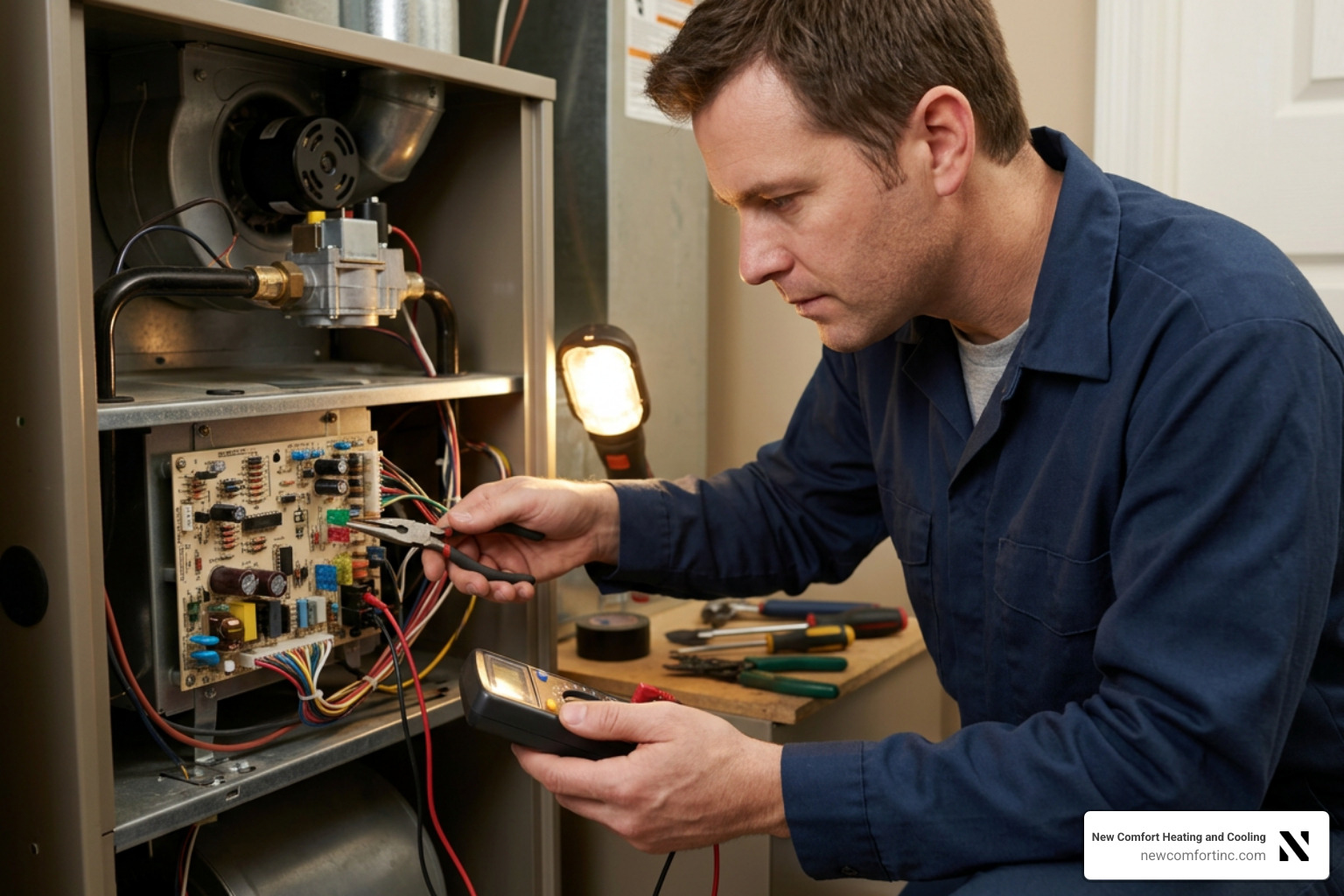
Master Gas Hot Water Heater Maintenance in One Afternoon
Gas Hot Water Heater Maintenance Starts With a Safe Check
Once a year, check your gas water heater for leaks, rust, blocked air openings, and vent damage. Flush the tank to remove sediment, inspect the anode rod, and have the temperature and pressure (T&P) relief valve checked. Before draining hot water, follow your unit's manual to turn off the heat and let the water cool. Leave gas connections, burner repairs, and vent work to a qualified professional.
Popping sounds, rusty water, or a pilot that keeps going out are reasons to book service sooner. The checklist below shows what you can safely do yourself and when to call for help.
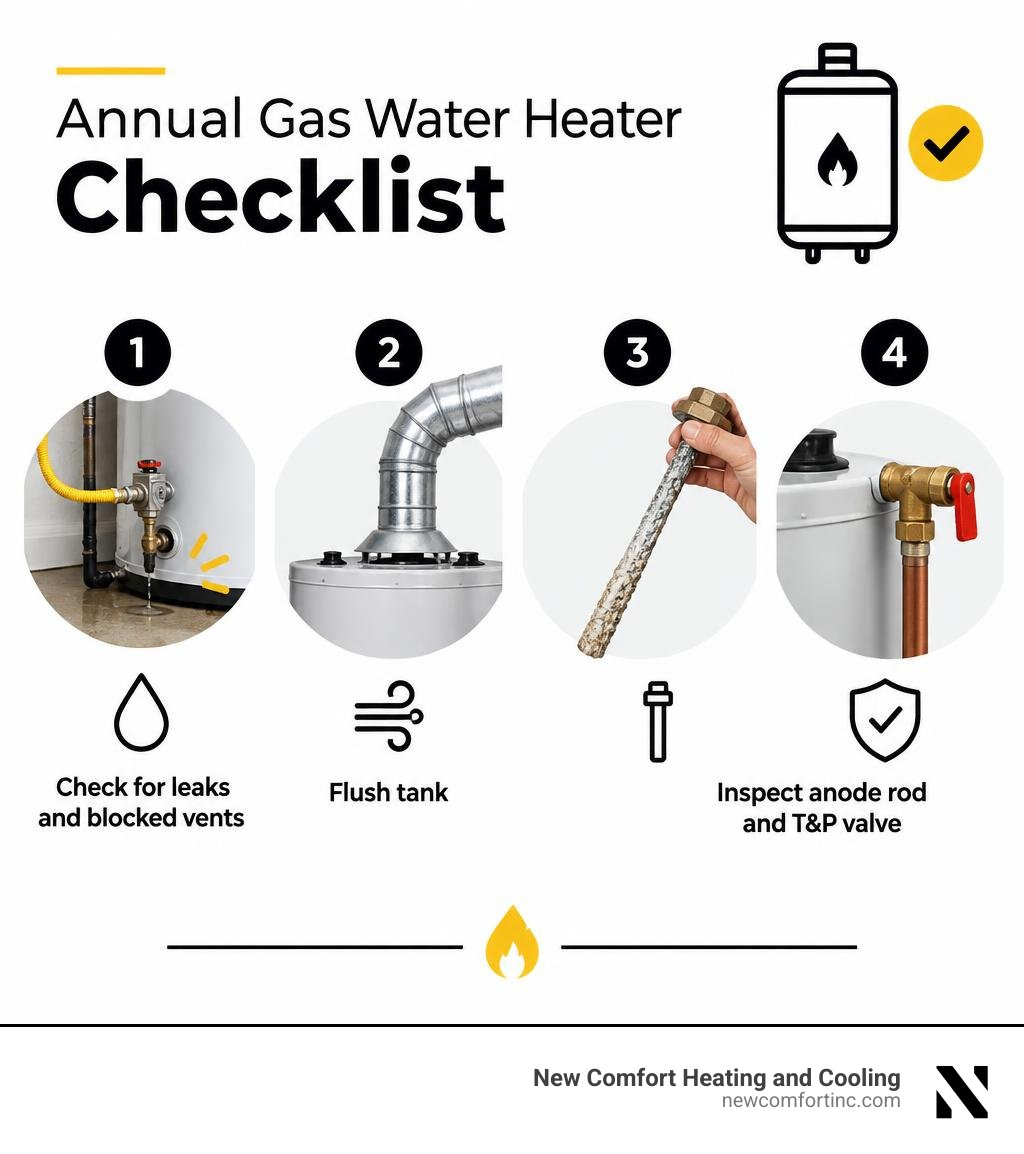
Handy gas hot water heater maintenance terms:
Why Routine Care Matters for Gas Water Heaters
Water heaters work quietly behind the scenes. From morning showers to evening loads of laundry, we expect steaming hot water on demand. Heating water accounts for approximately 15 percent of your home's total energy use, making it one of the largest utility expenses you manage. When neglected, storage tank systems accumulate thick layers of mineral sediment that settle along the bottom of the tank.
This sediment acts as an insulating barrier between the natural gas burner and the water inside. The burner has to fire longer and work harder to heat the water through a layer of calcified stone. That extra heat strains the steel tank, degrades protective glass linings, and spikes fuel consumption.
Routine care prevents premature failure, restores heating efficiency, and ensures safety controls function properly. Consulting an established Water Heater Maintenance Guide and reviewing answers to common home heating questions can help you keep your essential systems operating smoothly.

Warning Signs Your Unit Needs Immediate Attention
Water heaters often give warning signs before breaking down. Watch for these red flags:
- Popping or Rumbling Sounds: When steam bubbles get trapped underneath hard mineral sediment at the bottom of the tank, they burst violently. If your heater sounds like a boiling tea kettle or popping popcorn, severe sediment buildup is present.
- Discolored or Rusty Water: Brown, yellow, or murky hot water indicates internal corrosion or failing sacrificial rods.
- Lukewarm Showers: If your hot water runs out quickly, the burner may be failing, the dip tube could be cracked, or sediment may have displaced usable tank capacity.
- Burner Soot or Yellow Flames: A healthy gas flame burns a crisp, bright blue. Lazy yellow or orange flames mean incomplete combustion, dirty orifices, or improper ventilation, creating soot and carbon monoxide risks.
- Foul Odors: A distinct rotten egg or sulfur smell often stems from bacteria reacting with a degrading magnesium anode rod inside the tank.
- Moisture or Drips Around Fittings: Any pooling water around the base, T&P discharge pipe, or plumbing connections signals failing gaskets, thermal expansion stress, or tank breaches.
How Routine Gas Hot Water Heater Maintenance Protects Your Warranty
A new storage water heater comes with a manufacturer warranty spanning anywhere from 6 to 12 years. Many homeowners assume this warranty is an unconditional guarantee. In reality, nearly every major manufacturer requires documented routine maintenance to honor warranty claims.
If a tank rusts out or cracks because the sacrificial anode rod was never inspected, the manufacturer can deny coverage for replacement parts or complete unit replacements. Keeping a dedicated maintenance log with receipts, service dates, and notes protects your investment and ensures your claim remains eligible if an unexpected defect occurs.
Step-by-Step Gas Hot Water Heater Maintenance Checklist
Setting aside an afternoon to service your water heater keeps it running reliably. Before starting, gather the necessary gear:

- Heavy-duty garden hose (short length preferred)
- Large bucket
- Pipe wrench or large adjustable wrench
- 1-1/16-inch deep socket and breaker bar (for the anode rod)
- Safety goggles and heat-resistant work gloves
- Teflon thread-seal tape
- Screwdrivers
Step 1: Safety Preparations for Gas Hot Water Heater Maintenance
Working with gas appliances requires strict safety protocols. Taking time to shut off power and fuel sources prevents accidents and scalding.
- Adjust the Gas Control: Turn the gas control valve knob on the front of the thermostat from the ON position to PILOT. If you are doing extensive disassembly or inspecting components, turn it completely to OFF and shut the manual gas supply valve on the incoming fuel pipe.
- Cut Cold Water Supply: Turn the cold water shutoff valve located above the water heater clockwise until it stops.
- Allow the Water to Cool: Tank water reaches 120°F to 140°F, which can cause severe scalds in seconds. Allow the water inside to sit and cool before draining, or exercise extreme caution by wearing protective gloves and eye gear.
- Ensure Proper Room Ventilation: Verify the area is clear of combustible materials, paint cans, or gasoline containers. Ensure draft hoods and venting ducts are clear of obstructions.
Step 2: Draining and Flushing the Storage Tank
Flushing removes loose mineral sediment, sand, and scale before it hardens into an impenetrable layer at the base of your unit.
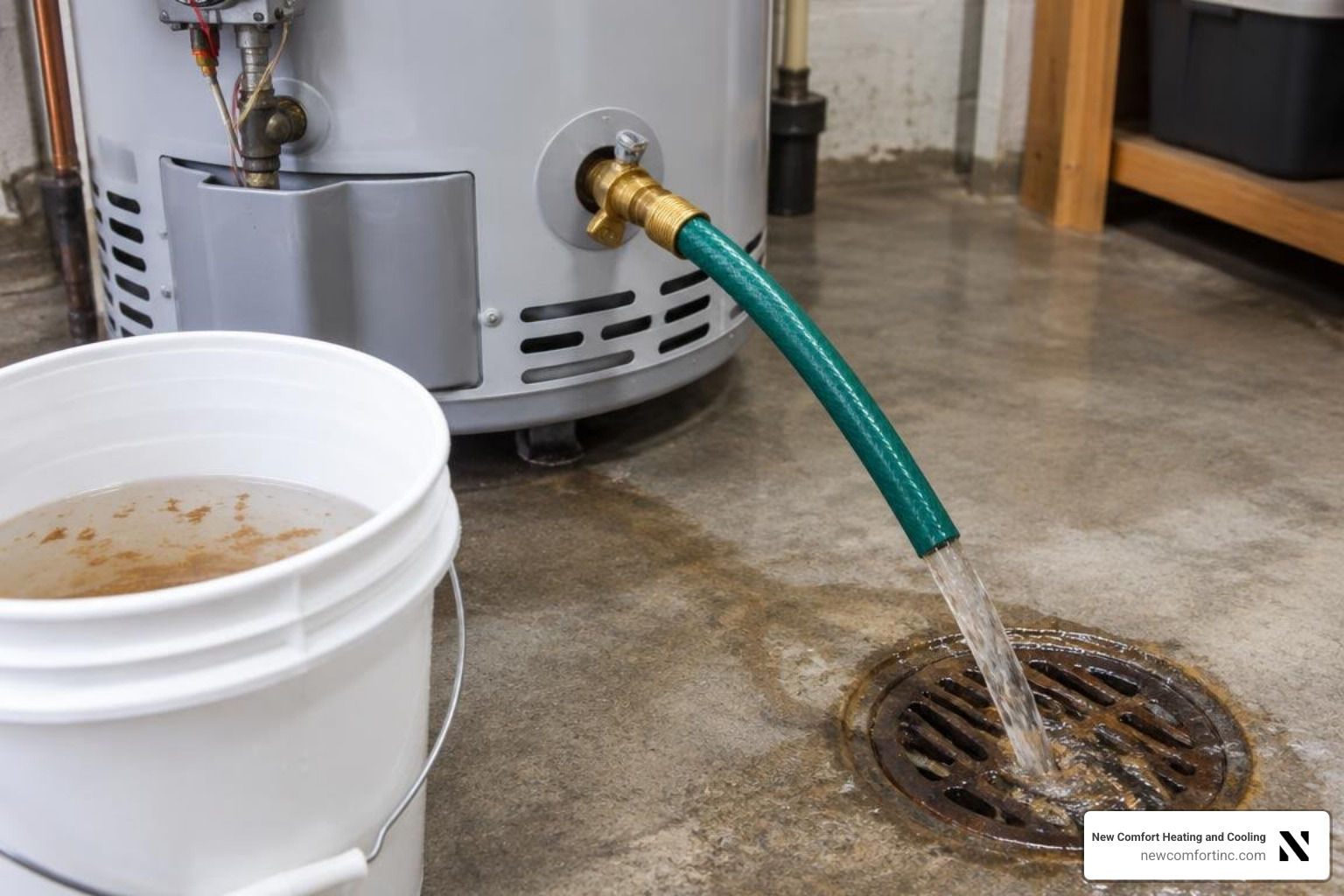
- Attach the Hose: Thread your garden hose securely onto the brass or plastic drain valve at the base of the water heater. Run the other end to a floor drain, sump basin, or outside driveway.
- Open a Hot Water Tap: Open a hot water faucet at the highest point in your home (such as an upstairs bathroom). This breaks the vacuum inside the plumbing and allows water to flow freely from the bottom drain.
- Open the Drain Valve: Use a flathead screwdriver or wrench to open the drain valve. Let the water drain out into your collection area.
- Perform a Force Flush: Once the tank empties, leave the drain valve open and turn the cold water supply valve back on in short, powerful bursts. The incoming pressurized water stirs up settled sediment flakes and washes them through the hose.
- Inspect the Runoff: Let the water run until it flows clear and free of grit. Close the drain valve tightly, disconnect your hose, and reopen the cold water supply valve to refill the tank completely. Never relight the burner until the tank is full of water and flowing steadily from household taps.
Step 3: Inspecting and Replacing the Sacrificial Anode Rod
The sacrificial anode rod is a metal rod suspended inside the tank. Made of magnesium or aluminum around a steel core wire, it attracts corrosive elements in the water through galvanic action, corroding away so the steel tank does not.
- Locate the Hex Head: Find the hex head bolt on top of the water heater. It may be exposed or hidden under a plastic cover cap.
- Loosen the Rod: With the water supply off and a small amount of water drained from the tank to relieve pressure, fit a 1-1/16-inch socket onto the hex head. Use a breaker bar to turn the bolt counterclockwise.
- Inspect the Metal: Pull the rod straight up out of the tank. If your ceiling clearance is low, you may need a flexible, segmented replacement rod.
- Evaluate Condition: If the rod is coated in chalky buildup, has thinned to less than 1/2-inch thick, or shows exposed steel core wire, replace it immediately.
- Install the New Rod: Wrap the threads of the new anode rod with Teflon tape, insert it into the tank port, and torque it securely into place.
Step 4: Testing the Temperature and Pressure (T&P) Relief Valve
The T&P valve is an essential safety component on your water heater. If internal temperatures exceed 210°F or water pressure exceeds 150 psi, this mechanical valve springs open to release water and prevent excess pressure buildup. Safety standards like the FVIR Gas Water Heater Standards highlight the importance of operational safety features on residential units.
- Locate the Valve and Discharge Tube: The T&P valve sits on top or high on the side of the tank, connected to a copper or metal discharge pipe that extends toward the floor.
- Position a Bucket: Place a clean bucket underneath the open end of the discharge tube.
- Lift the Test Lever: Gently lift the small metal test lever on the valve. You should hear a distinct rush of water and see hot water and vapor discharge into the bucket.
- Release the Lever: Let the lever snap back down. The water flow should stop immediately with no lingering drips.
- Check for Leaks: If the valve fails to release water, remains stuck open, or continues dripping after closing, mineral deposits have compromised the seal. Replace the valve before continuing regular operation.
Step 5: Checking the Burner Assembly, Pilot Light, and Flame Arrestor
A clean burner assembly ensures safe operation and proper fuel consumption.
- Inspect the Pilot and Main Burner: Look through the sight glass at the base of the water heater. The flame should burn steady, sharp, and predominantly blue. Yellow, flickering, or rolling flames point to clogged burner ports, dirt accumulation, or improper air-to-fuel ratios.
- Examine the Thermocouple: The thermocouple or flame sensor sits right next to the pilot flame. Ensure it is clean, free of heavy carbon buildup, and positioned directly in the pilot flame path.
- Clean the Flame Arrestor and Base Filter: Flammable Vapor Ignition Resistant (FVIR) tanks feature a base ring air filter and a metal flame arrestor beneath the combustion chamber. Over time, household dust, lint, and pet dander get pulled against the screen, starving the burner of oxygen. Use a soft brush or vacuum hose attachment to gently clean lint and debris from the air intake screens around the bottom perimeter of the tank.
Gas Hot Water Heater Maintenance for Chicago-Area Water and Winters
Local conditions change how often gas water heater maintenance should happen in your home. Many Chicago-area suburbs draw treated Lake Michigan water, which is moderately hard, while homes on private wells often deal with much harder water. The harder the water, the faster scale builds up on the tank bottom and the sooner you will hear that telltale popping.
Winter adds another layer. Incoming water can be very cold in January and February, so the burner runs longer to reach the same temperature. Every extra minute of burn time on a sediment-coated tank adds stress, which is why fall is a smart time for your annual flush and inspection - right before the hardest months of the year.
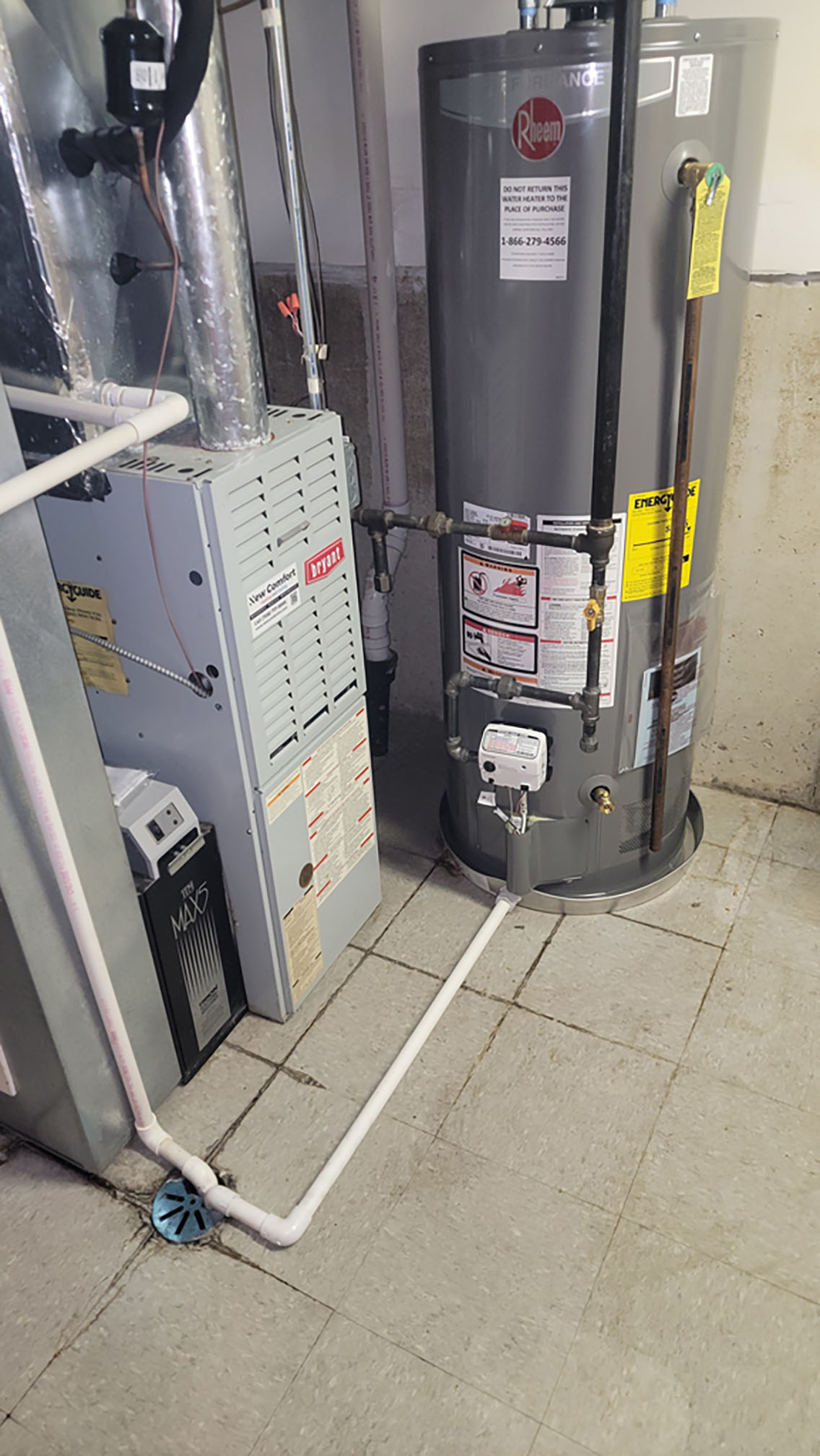
Basement and garage installations also need a clear zone around the unit. Storage boxes, laundry, and paint cans pushed against the base can block combustion air and the flame arrestor screen. Keep at least a couple of feet open on all sides, and never store flammable liquids in the same room as a gas appliance.
A Simple Water Heater Maintenance Calendar
Breaking water heater maintenance into small, regular tasks makes it easy to stay on top of. Use this schedule as a starting point and adjust for your water quality and the manufacturer's instructions:
- Monthly: Glance at the base for moisture, rust, or drips, and listen for new rumbling or popping sounds.
- Every 6 months: Check the temperature setting (about 120°F for most households) and vacuum dust and lint from the air intake screen.
- Every 12 months: Flush the tank, test the T&P valve, and check the vent connector for rust, gaps, or loose screws.
- Every 2 to 3 years: Pull and inspect the anode rod. In homes with a water softener, check it every year, because softened water wears an anode rod down faster.
- Every fall: Have a professional check gas connections, draft, and combustion, ideally during the same visit as your furnace tune-up.
Choosing the Right Anode Rod Replacement
Not every anode rod is the same. Magnesium rods offer strong corrosion protection and are common in areas with softer water. Aluminum or aluminum-zinc rods last longer in hard water, and the zinc blend can help reduce the rotten egg odor some homeowners notice. Powered anode rods use a small electrical current instead of sacrificial metal and do not wear away, which makes them a good fit for homes with stubborn odor problems or limited overhead clearance.
Whichever type you choose, match the length and thread size to your tank, and keep the receipt in your maintenance log. A healthy anode rod is the single most important part protecting the steel tank, so regular gas hot water heater maintenance should always include it.
When Maintenance Is No Longer Enough
Even with consistent water heater maintenance, every tank eventually wears out. If your water heater is past 10 years old, has rust at the base, or leaks from the tank body itself, start planning a replacement rather than investing in more repairs. When you shop, compare efficiency ratings on the ENERGY STAR water heater guide and ask whether your venting, gas line, and thermal expansion protection need updates for the new unit.
If your hot water disappears in the middle of the night, our guide to finding reliable 24-hour water heater services explains what to check first and when to call for help.
DIY vs. Professional Service: What You Can Handle
While homeowners can handle tasks like annual flushing and visual inspections, certain procedures require specialized diagnostic instruments and licensing. Dealing with natural gas, high-voltage igniters, and toxic exhaust fumes carries inherent safety risks.
| Maintenance Task | DIY Friendly | Requires Licensed Professional | Reason & Skill Requirement |
|---|---|---|---|
| Tank Draining & Flushing | Yes | Optional | Standard garden hose operation; removes loose sediment. |
| Thermostat Temperature Check | Yes | No | Setting the dial to 120°F requires no tools or disassembly. |
| T&P Valve Lever Test | Yes | No | Quick manual check to confirm discharge line path is open. |
| Anode Rod Inspection | Yes | Optional | Requires breaker bar and overhead clearance. |
| Gas Line Leak Detection | No | Yes | Requires calibrated combustible gas sniffing tools and bubble tests. |
| Flue Draft & CO Testing | No | Yes | Demands specialized combustion analyzers to verify safe venting. |
| Burner & Orifice Overhaul | No | Yes | Disassembling gas manifolds and sealed combustion chambers requires licensing. |
| Thermal Expansion Tank Repair | No | Yes | Involves calibrating system pressure and rebuilding closed-loop plumbing. |
If you encounter gas smells, soot around the draft hood, or electrical faults, rely on professional home comfort solutions. You can also check our guide on gas water heater service cost considerations to help budget for major repairs.
Frequently Asked Questions About Gas Water Heater Care
How often should I schedule maintenance for my gas water heater?
Standard storage tank water heaters should receive a complete inspection and tank flush at least once every 12 months. In areas with exceptionally hard water, semi-annual flushing (every 6 months) helps prevent rapid mineral buildup. Tankless gas systems should be descaled with a circulating vinegar solution once a year to keep their compact copper heat exchangers free of scale.
What happens if I skip maintenance on my gas water heater?
Skipping maintenance accelerates component failure. Sediment collects at the bottom of the tank, acting as an insulator that causes the metal base to overheat and stress the protective glass lining. Over time, this leads to tank fractures, rusted bottoms, and sudden water leaks.
Neglected anode rods dissolve completely, allowing corrosive elements to attack the tank shell. Failing to test the T&P valve leaves your home without protection against dangerous pressure buildups, while clogged air intakes lead to incomplete combustion and higher utility bills.
How do I know whether to repair or replace my gas water heater?
The standard lifespan of a residential gas storage water heater is 8 to 12 years. If your water heater is within that age range and develops a leaking tank body, replacement is the safest and most practical choice.
However, if a relatively young heater has a faulty thermocouple, a worn-out drain valve, or a depleted anode rod, replacing those individual parts is straightforward and cost-effective. Coordinating your water heater checkups alongside your annual furnace maintenance ensures all your home's gas-fired equipment stays in safe, working order.
Conclusion
Taking time to perform seasonal maintenance on your gas water heater pays off with dependable hot water, lower utility bills, and longer equipment life. Whether flushing away sediment buildup, testing critical safety relief valves, or checking the burner flame, simple preventative tune-ups protect your home from sudden leaks and costly breakdowns.
When maintenance calls for gas line diagnostics, combustion vent repairs, or complex system overhauls, our team is here to assist. New Comfort Heating & Cooling delivers dependable residential and commercial HVAC and hot water solutions with 24/7 live phone support and same-day service across Justice, IL, Chicago, IL, and nearby communities. Schedule expert heating services today to keep your home's essential systems running safely and efficiently.