The Differences Between Appliance and HVAC Repair Services Explained
Why Appliance and HVAC Repair Are Not the Same Thing
When something breaks at home, knowing who to call matters. Appliance and HVAC repair are two distinct trades — and mixing them up can cost you time and money.
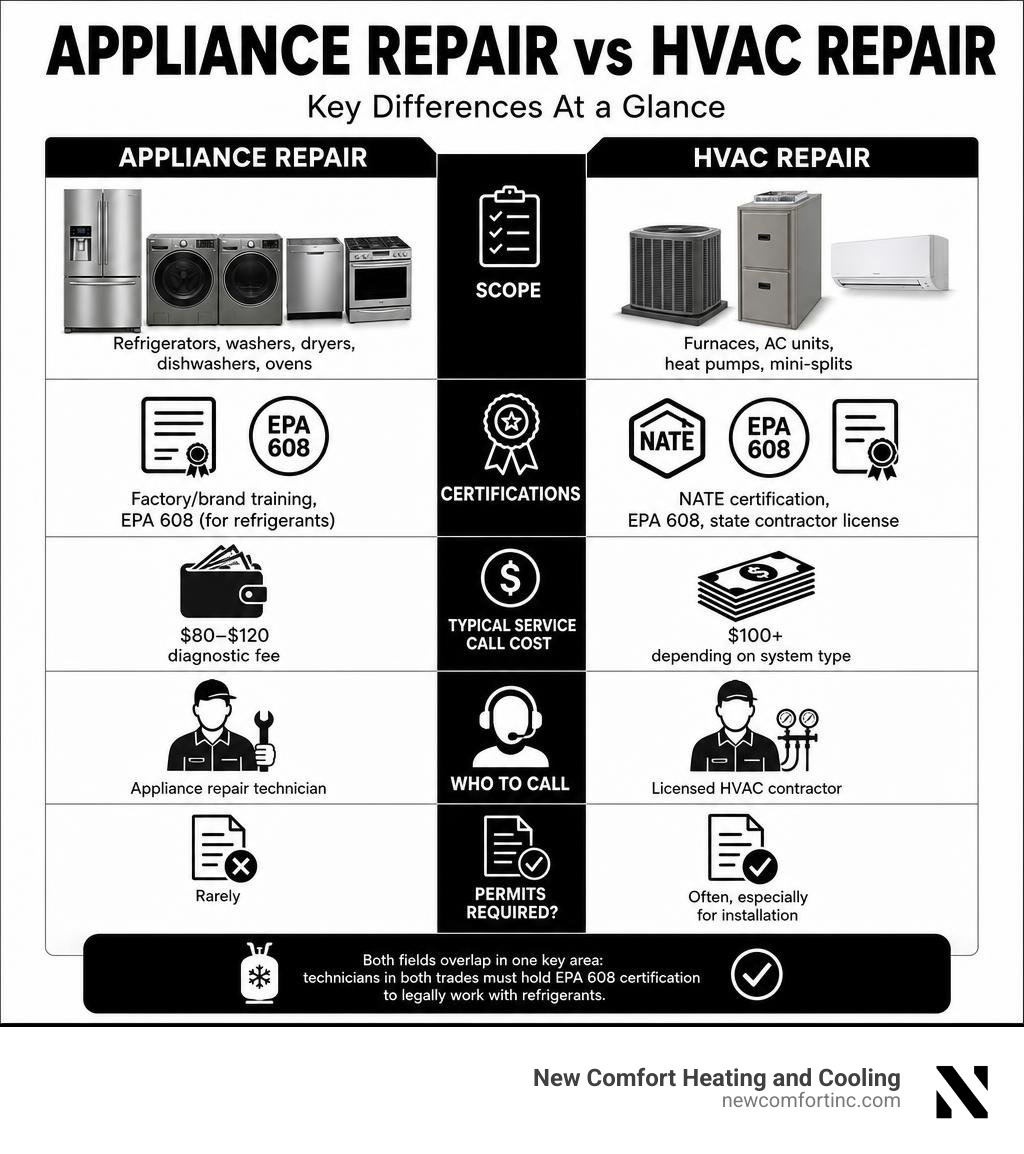
Here is a quick breakdown of the key differences:
| Factor | Appliance Repair | HVAC Repair |
|---|---|---|
| What it covers | Refrigerators, washers, dryers, dishwashers, ovens | Furnaces, AC units, heat pumps, mini-splits |
| Common certifications | Factory/brand training, EPA 608 (for refrigerants) | NATE certification, EPA 608, state contractor license |
| Typical service call cost | $80–$120 diagnostic fee | $100+ depending on system type |
| Who to call | Appliance repair technician | Licensed HVAC contractor |
| Permits required? | Rarely | Often, especially for installation |
Both fields overlap in one key area: refrigerant handling. Technicians in both trades must hold EPA 608 certification to legally work with refrigerants.
But beyond that, the training, tools, licensing, and scope of work are very different — and so is what you should expect from a service call.
At New Comfort Heating and Cooling in Justice, Illinois, we bring nearly a decade of operations experience in appliance and HVAC repair to help you navigate these differences. This guide will walk you through exactly how these two trades compare — so you can make smarter decisions when something stops working at home.
Scope of Work: Appliance and HVAC Repair Compared
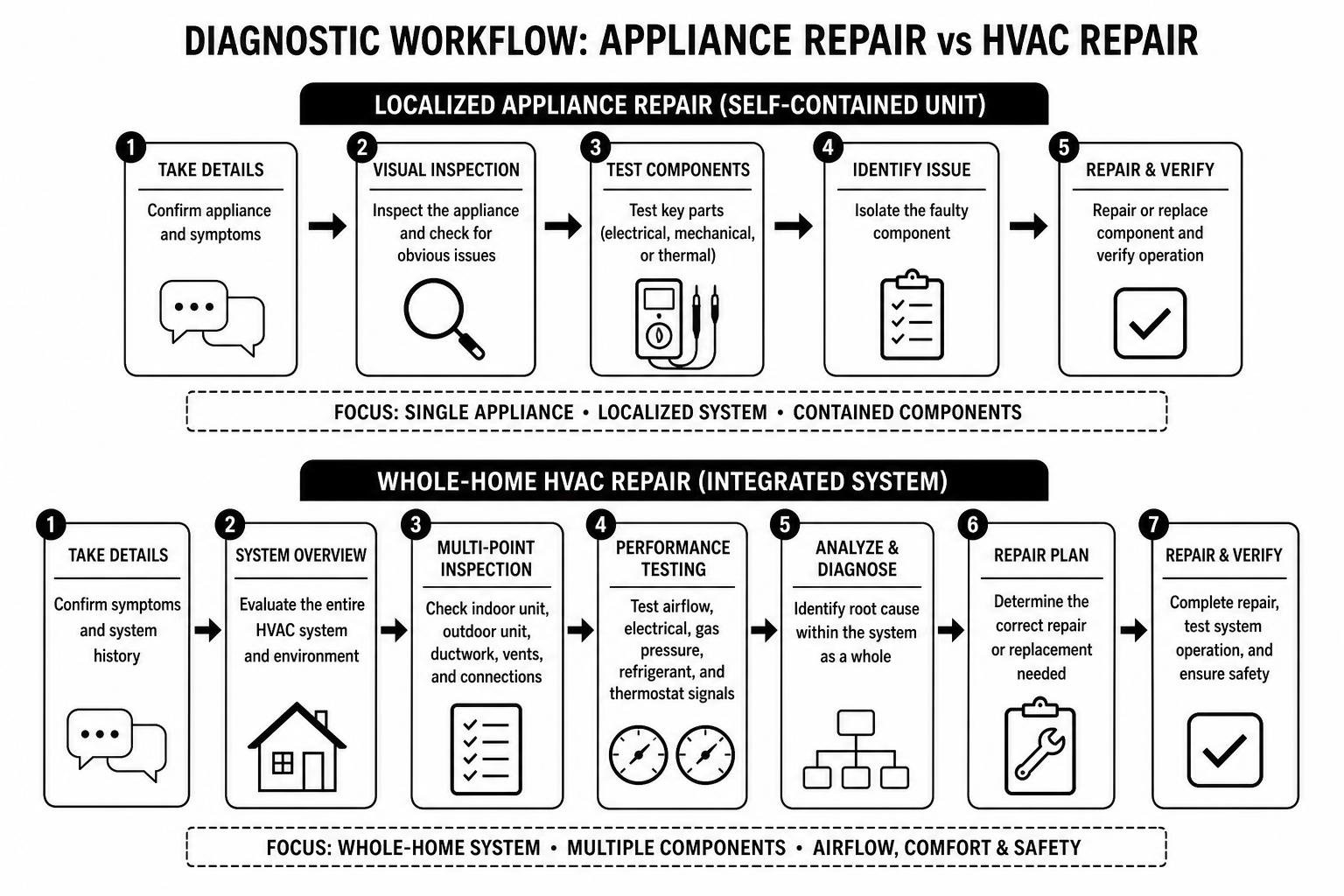
To understand the core differences between these two fields, we must look at how each system functions within your home. Appliance repair deals with self-contained, localized systems. A refrigerator, dishwasher, or washing machine is essentially a "plug-and-play" unit. It plugs into a wall outlet, connects to a local water line or vent, and performs its task entirely within its own metal cabinet.
HVAC (Heating, Ventilation, and Air Conditioning) systems, on the other hand, are complex, whole-house networks. An HVAC system is not a single appliance; it is an integrated web of electrical wiring, high-voltage power supplies, ductwork, gas lines, ventilation flues, and outdoor condenser units. Because of this, diagnosing an HVAC issue requires looking at the entire home's thermal envelope, airflow dynamics, and thermostat communication. If you want to dive deeper into how we pinpoint these complex issues, you can read our guide on How to Diagnose HVAC Issues.
From a legal and regulatory standpoint, the scope of work also dictates different licensing. While appliance repair technicians often need specialized factory training and an EPA Section 608 certification (if they handle refrigerants in fridges or freezers), they rarely require municipal or state-level contractor licenses.
In contrast, HVAC technicians must comply with strict local building codes. In the Chicago and Justice, IL areas, working on gas furnaces and high-voltage central air systems requires extensive licensing, municipal permits, and strict adherence to safety codes to prevent carbon monoxide poisoning, gas leaks, or electrical fires.
Key Differences in Appliance and HVAC Repair Training
The educational pathways for these two careers highlight their differing scopes of work. Appliance repair technicians typically focus on mechanical assemblies, water valves, computer control boards, and brand-specific mechanics. They often receive direct training from manufacturers to handle specific appliances.
HVAC technicians undergo a broader, more rigorous training regimen. A premier standard in our industry is NATE (North American Technician Excellence) certification, which tests a technician's deep understanding of heating, ventilation, and air conditioning systems.
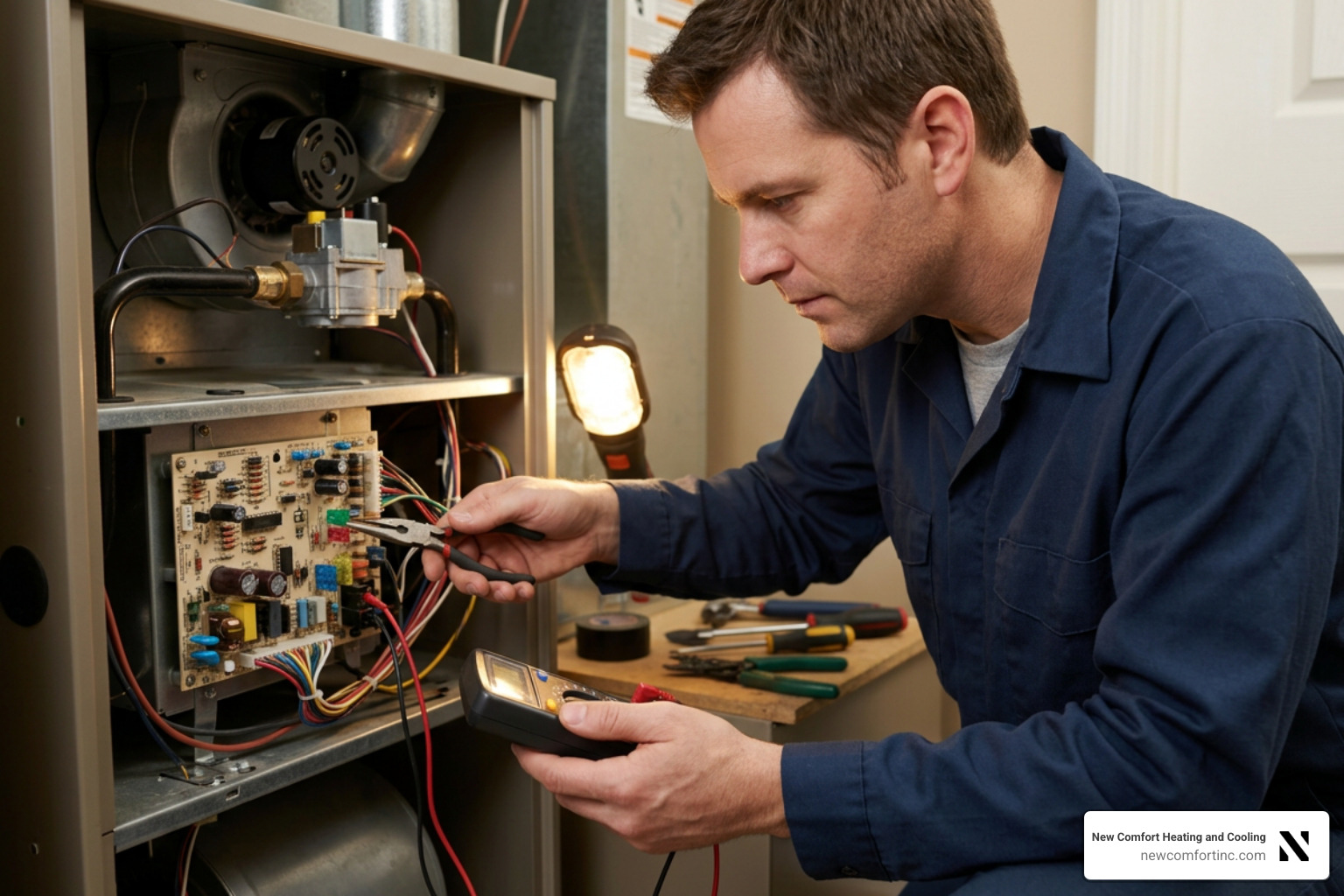
Furthermore, because HVAC systems draw massive amounts of power, our technicians must have advanced electrical training. We regularly work with dedicated 240V breakers and complex electrical panels. While an appliance technician might check a standard 120V wall outlet, an HVAC professional must safely navigate the main electrical panel to assess breaker capacities, run heavy-gauge wire, and ensure the home's electrical infrastructure can support the heating and cooling load.
Common Failures in Appliance and HVAC Repair Fields
While both fields deal with mechanical wear and tear, the specific components that fail differ significantly. In both appliance and HVAC systems, compressor issues are common, but they occur on vastly different scales. A failed compressor in a refrigerator means your food goes warm; a failed compressor in a central AC unit means your entire home becomes a sauna.
Refrigerant leaks are also shared headaches. In appliances, particularly certain refrigerator brands, sealed system leaks require highly specialized, delicate torch work. In HVAC systems, refrigerant leaks often occur in the outdoor condenser coils or the indoor evaporator coils, demanding precise pressure testing and system evacuation.
Other common failures we see in the HVAC field include:
- Blower Motors: The heart of your air distribution system, which can burn out due to restricted airflow.
- Failed Capacitors: Small electrical components that kick-start your AC compressor or fan motor.
- Ignition Problems: Dirty burners or faulty ignitors in furnaces that prevent your heating system from firing up.
To understand why these failures happen and how you can prevent them, check out our detailed breakdown of The Most Common HVAC System Failures and How to Avoid Them. If your air conditioner is currently acting up, you can also read our troubleshooting resource, AC Not Working? Here's What Might Be Wrong.
Repair vs. Replacement: Making the Right Call for Your Home
When a major home system fails, every homeowner faces the same dilemma: do you patch it up with a repair, or is it time to invest in a brand-new installation?
To make this decision easier, we recommend using the 50% Rule. If the cost of the repair exceeds 50% of the value of a new system, and the equipment is past its prime, replacement is almost always the smarter financial move.
| Decision Factor | Choose Repair | Choose Replacement |
|---|---|---|
| Age of Equipment | Under 10 years (HVAC) / Under 6 years (Appliance) | Over 15 years (HVAC) / Over 10 years (Appliance) |
| Repair Cost | Less than 50% of replacement cost | More than 50% of replacement cost |
| Frequency of Breakdowns | First or second minor issue | Frequent service calls, rising utility bills |
| Energy Efficiency | System still runs efficiently | Low SEER/AFUE ratings compared to modern units |
Equipment age is a major factor. Standard household appliances typically last 8 to 12 years. Meanwhile, a well-maintained furnace or air conditioner can last 15 to 20 years.
Energy efficiency is another critical piece of the puzzle. Older cooling systems operate on outdated, lower SEER (Seasonal Energy Efficiency Ratio) standards, and older furnaces have lower AFUE (Annual Fuel Utilization Efficiency) ratings. Upgrading to a modern, high-efficiency system can slash your monthly utility bills so dramatically that the new system eventually pays for itself. For an in-depth analysis of this decision, read our guide on Furnace Repair vs Replacement: How to Make the Right Call.
Financing and Installation Options for Major Upgrades
We understand that replacing a central heating and cooling system is a major financial investment. Unlike buying a new microwave, installing a new furnace or heat pump is not something most homeowners plan for in their monthly budget. That is why flexible financing options are so important. Qualifying homeowners can access low-interest payment plans that turn a daunting upfront cost into a manageable monthly payment.
For homeowners in the Chicagoland area looking to maximize their efficiency, we often recommend dual fuel systems. By pairing an electric heat pump with a high-efficiency gas furnace, you get the best of both worlds. The heat pump handles the cooling in the summer and mild heating in the spring and fall, while the gas furnace kicks in during our brutal, sub-zero Chicago winters. To explore these advanced climate control options, visit our dedicated Heating Services page.
What Expect During a Professional Service Call
Whether you are booking an appliance fix or an HVAC diagnostic, knowing what happens during a service call helps prevent surprises. A professional visit should always start with a clear, diagnostic-first approach.
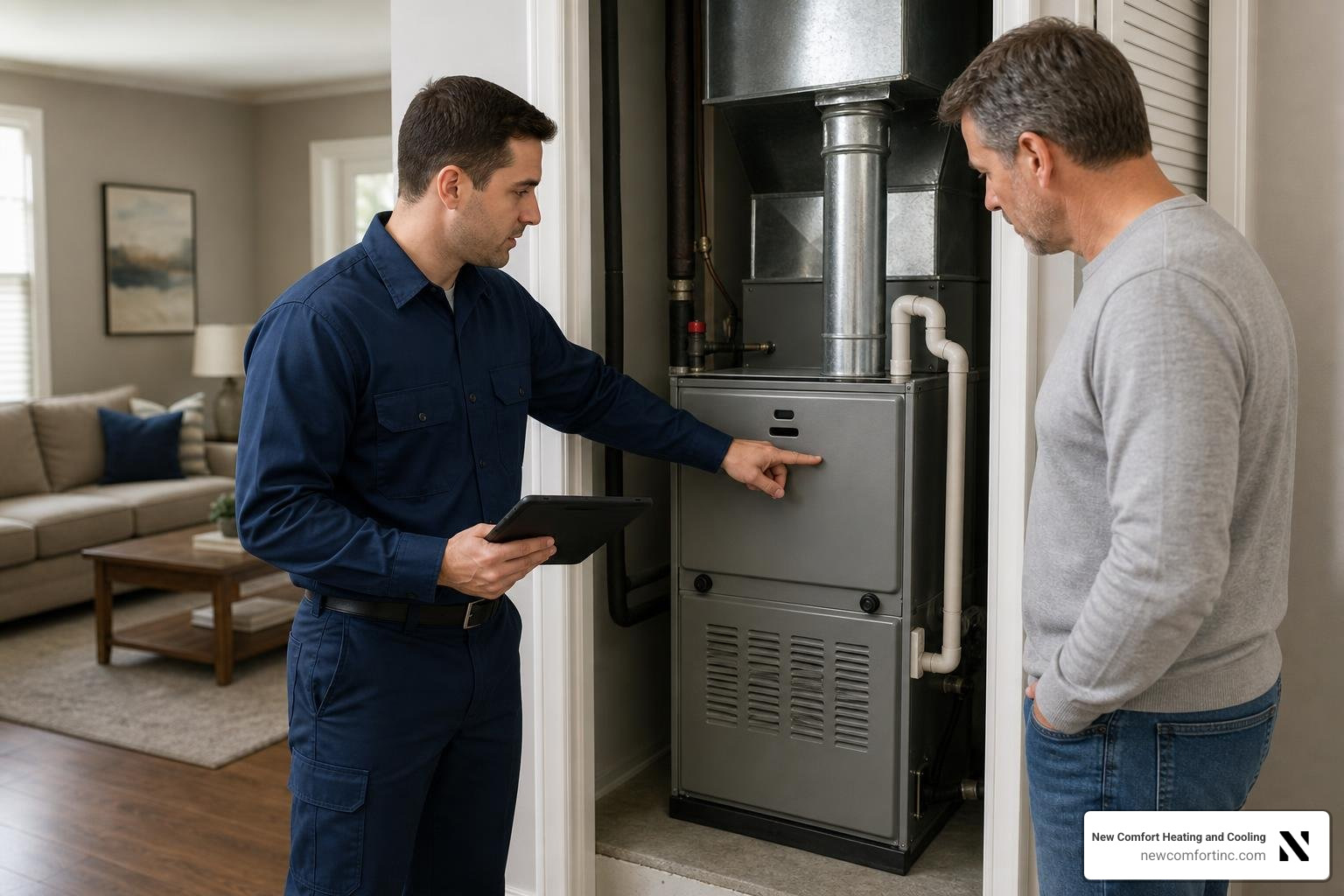
When a technician arrives, they should perform a comprehensive inspection of the symptoms, run diagnostic tests, and present you with a clear, upfront explanation of the issue before turning a single wrench.
Pricing structures can vary:
- Diagnostic Fees: Most companies charge a flat fee (ranging from $80 to $120) just to send a technician to your home and diagnose the problem. Some companies will waive this fee if you agree to proceed with the recommended repair.
- Flat-Rate Pricing: Rather than billing by the hour, reputable service providers use flat-rate pricing guides. This ensures you pay a fixed, fair price for the specific repair, regardless of how long it takes the technician to complete it.
Understanding these costs upfront helps you budget effectively. For more details on how choosing the right professional saves you money over time, read about the HVAC Repair Cost Saving Benefits.
Vetting Local Service Providers and Certifications
Your home is your largest investment, so you should never let an uncertified, uninsured handyman touch your mechanical systems. When vetting a local company in Justice or Chicago, IL, always look for:
- Valid Licensing and Insurance: Ensure they hold the proper municipal licenses and liability insurance to protect your property.
- Verified Customer Reviews: Look at independent platforms like Google and Thumbtack to see what your neighbors are saying.
- Industry Certifications: Look for NATE certification for heating and cooling, and EPA 608 certification for any refrigerant work.
Choosing a reputable service provider ensures that your home systems are handled safely and efficiently. High-quality companies often hold advanced credentials, such as manufacturer-specific certifications or multi-trade expertise, which demonstrate a commitment to ongoing training and superior service standards.
For local advice on when to bring in the pros, check out our guide on When to Call HVAC Technician Justice IL.
Emergency Troubleshooting and Preventive Maintenance
When a major home system fails suddenly, panic can set in. However, taking a few immediate, calm steps can prevent property damage and keep your family safe:
- Refrigerator Failure: Keep the doors closed to preserve the cold air. If the outage will last more than a few hours, placing blocks of dry ice inside can save your expensive groceries.
- Water Leaks: If your dishwasher or washing machine starts flooding your kitchen or laundry room, immediately locate the local water shutoff valve behind or under the unit and turn it clockwise to stop the flow.
- Electrical Issues: If an electric stove or oven refuses to turn off, do not try to pull it away from the wall to unplug it. Go straight to your home's main electrical panel and flip the dedicated 240V breaker (usually a double-pole breaker rated for 40 amps or more) to cut the power safely.
Once the emergency is stabilized, the best way to avoid future crises is through consistent, preventive maintenance. Just like changing the oil in your car, scheduling seasonal tune-ups for your furnace in the fall and your air conditioner in the spring keeps your systems running efficiently and catches minor wear before it turns into an expensive breakdown. If your cooling system is overdue for a professional check-up, visit our AC Repair page to get it sorted out before the summer heat hits.
Gray-Area Equipment: Appliance and HVAC Repair Overlaps
Some household equipment sits right on the line between the two trades, and that is where most of the confusion happens. Before you book a visit, it helps to know which professional is usually the right fit for the equipment in question.
- Window and portable air conditioners: These plug-in units are generally treated as appliances. Many homeowners replace them rather than repair them, but appliance repair shops sometimes service larger models.
- Ductless mini-splits: Although they hang on the wall like an appliance, mini-splits are refrigerant-based heating and cooling systems connected to an outdoor unit. They belong with an HVAC repair technician.
- Water heaters: Tank and tankless water heaters are often handled by plumbers and HVAC companies rather than appliance repair technicians, especially when gas lines and venting are involved.
- Whole-home humidifiers and dehumidifiers: Units installed on the furnace or ductwork are part of the HVAC system. Stand-alone portable dehumidifiers are typically appliances.
- Dryer vents: The dryer itself is an appliance, but the vent duct running through walls and the roof is often cleaned by duct and vent specialists.
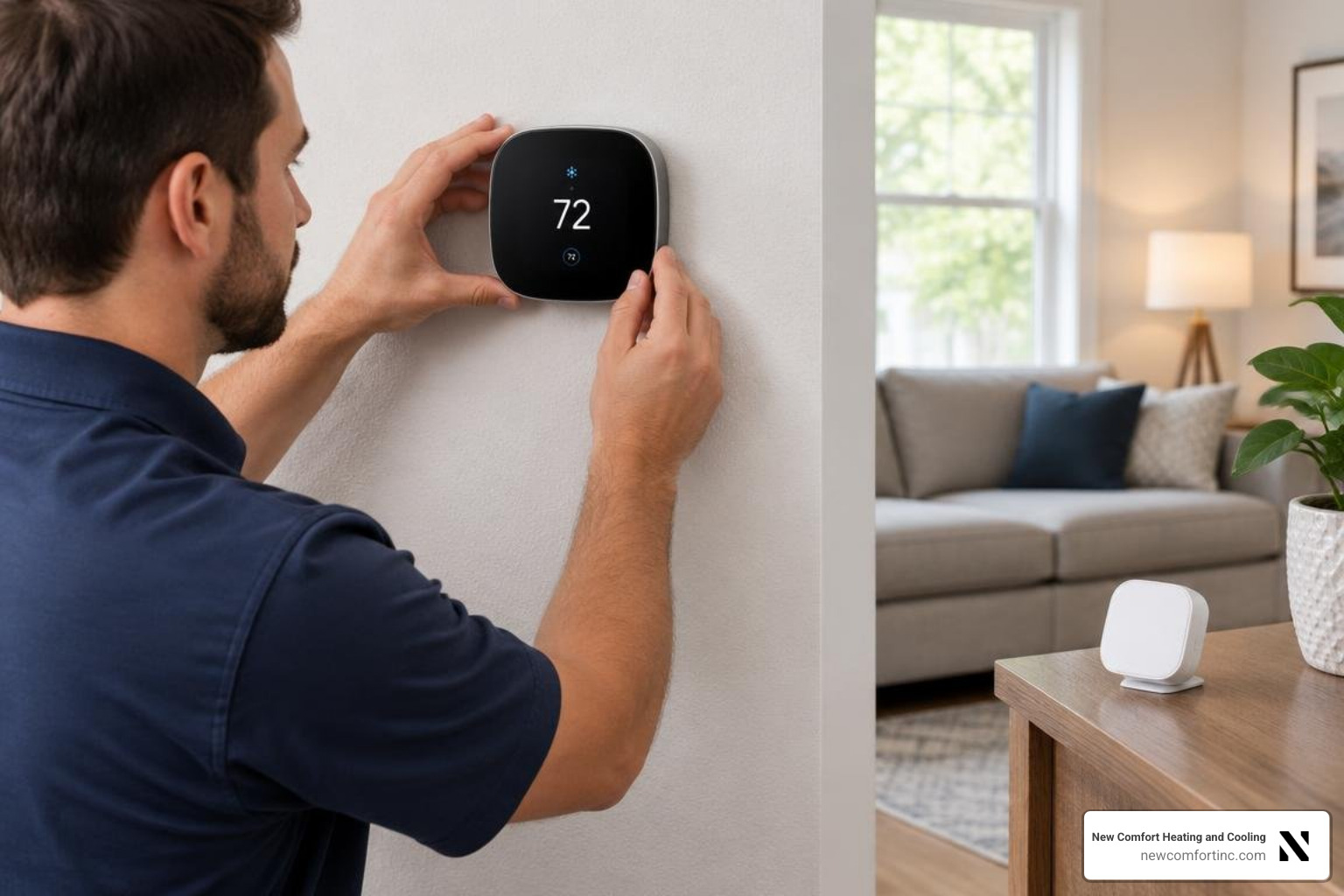
- Thermostats and smart controls: Thermostats are wired to the furnace, air conditioner, or heat pump, so troubleshooting them is HVAC work.
- Kitchen range hoods: The fan and lights are appliance parts, while long exhaust duct runs and makeup air questions may involve a mechanical contractor.
Quick Rule of Thumb for Appliance and HVAC Repair
If the equipment plugs into a wall outlet and works on its own, start with appliance repair. If it is connected to ductwork, refrigerant lines to an outdoor unit, a gas flue, or the thermostat on your wall, call for HVAC repair. When you are unsure, describe the problem to the company before booking. A reputable office will tell you honestly whether the job falls within their trade.
Why Getting It Right Saves Money
Calling the wrong trade usually means paying a diagnostic fee only to be told you need someone else. It can also delay the real fix. In Chicago's western and southwest suburbs, where a furnace failure in January or an AC breakdown in a July heat wave quickly becomes an emergency, those lost hours matter. Knowing the difference between appliance and HVAC repair ahead of time means your first call goes to the right person.
How to Describe the Problem When You Call
Whichever trade you contact, a clear description speeds up the visit and helps the technician bring the right parts:
- The brand, model, and approximate age of the equipment, usually found on a label inside the door or on the side of the cabinet.
- What the equipment is doing, or not doing, and when the problem started.
- Any error codes, unusual sounds, smells, or water leaks you have noticed.
- Whether you have already tried resetting a breaker, replacing a filter, or changing thermostat batteries.
For HVAC repair questions anywhere in Chicago's western and southwest suburbs, New Comfort Heating and Cooling is available 24/7 at (708) 717-9995. If you want to understand common heating and cooling breakdowns before you call, the U.S. Department of Energy shares homeowner guidance at energy.gov.
Frequently Asked Questions about Home System Repairs
What are the typical diagnostic fees for appliance and HVAC services?
Most professional companies charge a flat diagnostic fee to cover the cost of travel and the technician's time to locate the source of the problem. For household appliances, this fee typically ranges from $80 to $120. For complex HVAC systems, diagnostic fees can start around $100. Many reputable companies will waive this fee entirely if you proceed with the recommended repair.
How can I temporarily handle a sudden appliance or HVAC emergency?
If a refrigerator fails, keep the doors closed and use dry ice to preserve your food. For leaking dishwashers or washing machines, turn off the local water shutoff valve immediately. If an electric stove fails to shut off, flip its dedicated 240V breaker at your main electrical panel. For HVAC failures during extreme weather, ensure your family's safety first, and call for emergency 24/7 service.
What certifications should a reliable technician hold?
Any technician handling refrigerants (in air conditioners, refrigerators, or freezers) must hold an EPA Section 608 certification. For HVAC technicians, NATE (North American Technician Excellence) certification is the gold standard for technical skill. Additionally, always verify that the company is fully licensed, bonded, and insured in your local municipality.
Can one company handle both appliance and HVAC repair?
Some companies offer both, but most specialize. Appliance repair shops focus on kitchen and laundry equipment, while HVAC repair contractors focus on furnaces, air conditioners, heat pumps, ductwork, and related equipment. For anything tied to your heating and cooling system, choose a licensed HVAC company. For a refrigerator, washer, or oven, an appliance repair technician with factory training on your brand is usually the better fit.
Conclusion
Understanding the difference between appliance repair and HVAC services ensures you call the right specialist for the job. While appliances are self-contained and localized, your HVAC system is a complex, whole-home network that requires specialized licensing, NATE-certified expertise, and strict adherence to local building codes.
At New Comfort Heating and Cooling, we specialize in keeping your home comfortable year-round. We proudly serve Justice, IL, Chicago, IL, and the surrounding suburbs with 24/7 live phone support, same-day service, and transparent, honest pricing that beats out the big-box competitors.
If you have more questions about your home’s climate systems, browse our comprehensive FAQ page. And if your heating system is struggling to keep up with the cold, do not wait for a total breakdown — request our professional Furnace Repair services today to keep your home warm, safe, and energy-efficient.