Emergency Heater Repair: What to Do When the Heat Stops
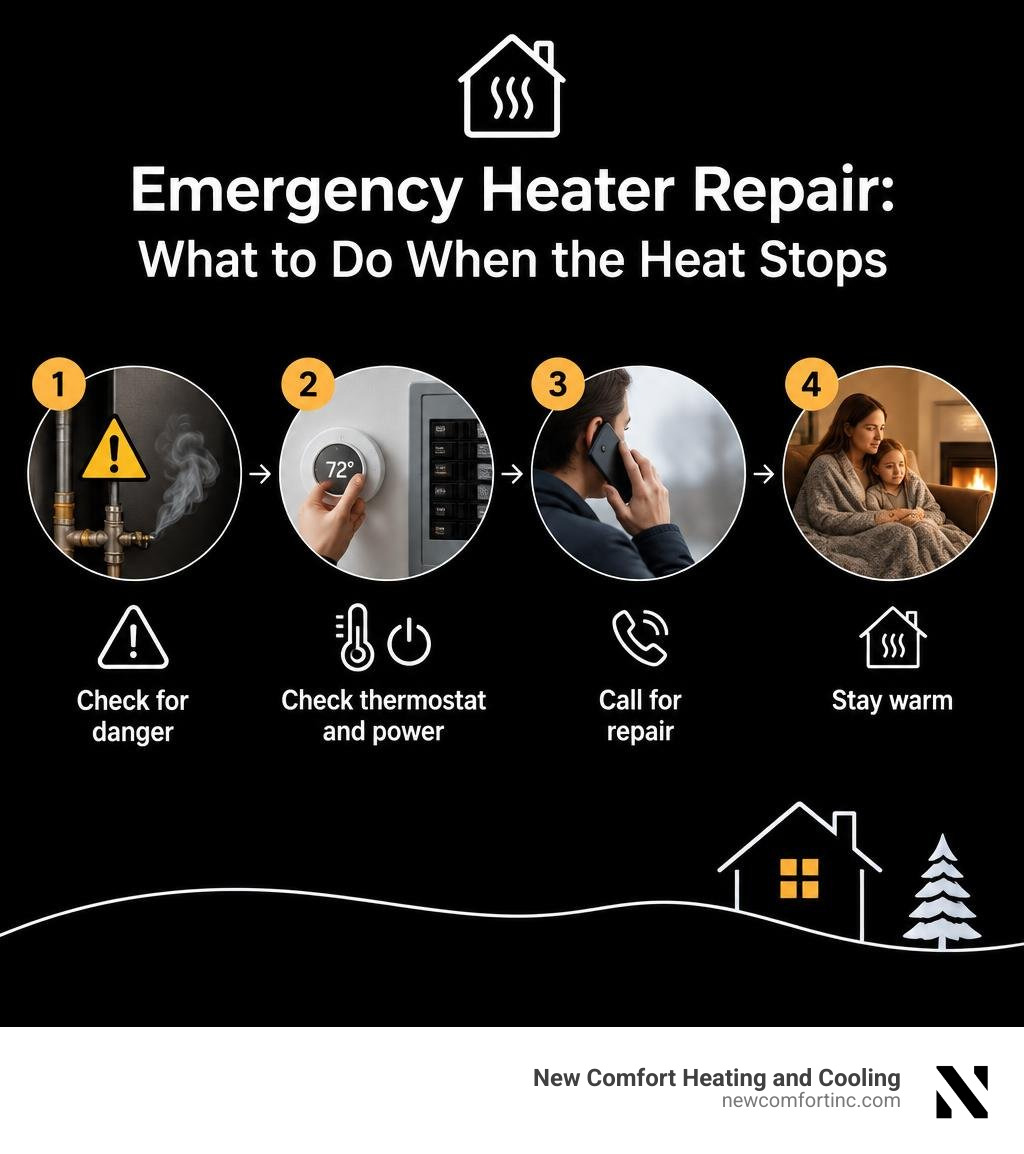
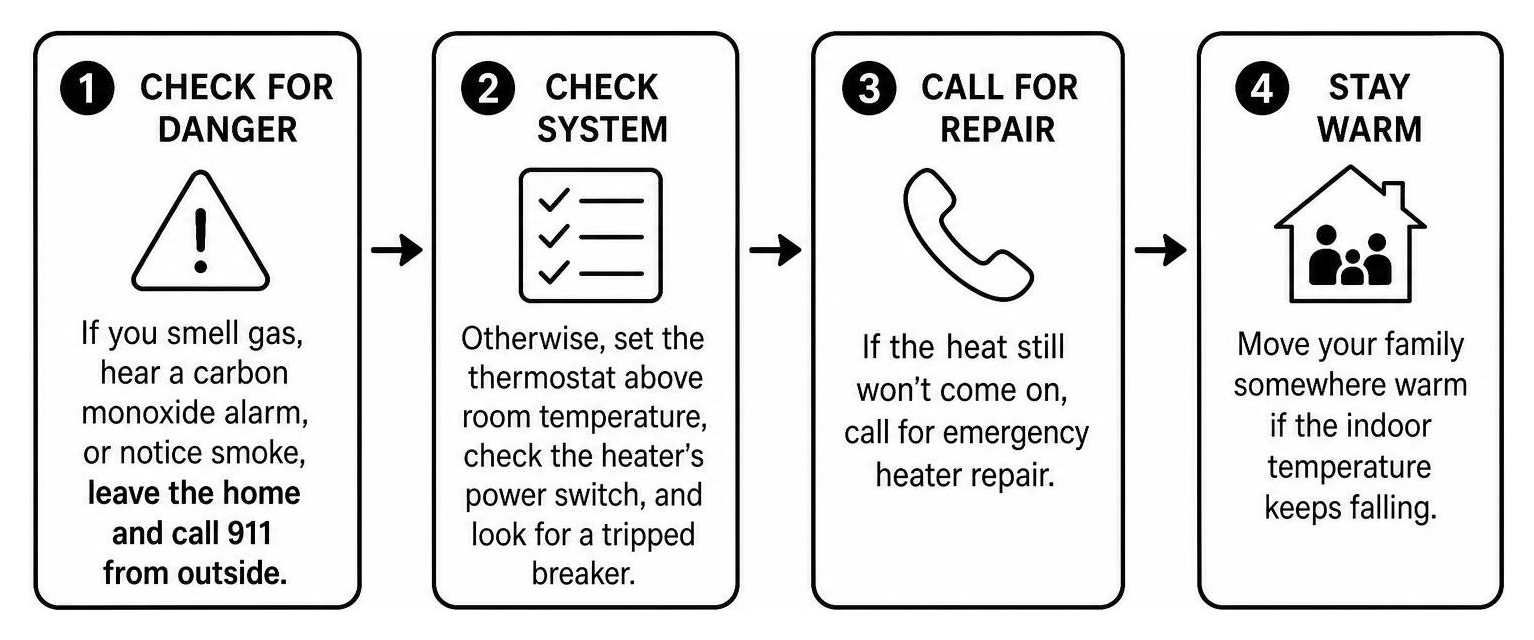
If your heat stops, check for danger before troubleshooting. If you smell gas, hear a carbon monoxide alarm, or notice smoke, leave the home and call 911 from outside. Otherwise, set the thermostat above room temperature, check the heater's power switch, and look for a tripped breaker. If the heat still won't come on, call for emergency heater repair. Move your family somewhere warm if the indoor temperature keeps falling.
Quick look at emergency heater repair:
Immediate Steps: What to Do in a Heating Emergency
When freezing temperatures strike, losing heat turns your cozy sanctuary into an icebox fast. The drop in indoor temperature is not just uncomfortable; it can freeze your domestic water pipes and put your household at serious risk.
Before panic sets in, we recommend running through a quick triage process. You need to identify whether you are dealing with a life-safety issue, a simple electrical hiccup, or a mechanical breakdown that requires professional attention.
Critical Safety First: Gas Leaks and Electrical Hazards
Your safety is always the number one priority. Malfunctioning heating equipment can produce fire hazards, toxic gas buildup, or dangerous electrical shorts.
Take immediate action if you notice any of these warning signs:
- The Smell of Rotten Eggs or Sulfur: Natural gas utilities add mercaptan so leaks are easy to detect. If you smell gas, do not touch any light switches, do not attempt to turn off appliances, and do not use a phone inside. Evacuate everyone immediately, leave the door open behind you, and call your gas utility and 911 from a safe distance outside.
- Active Carbon Monoxide Alarms: Carbon monoxide is an invisible, odorless byproduct of incomplete combustion. If your alarm sounds, get fresh air immediately and seek medical attention if anyone experiences dizziness, headaches, or nausea.
- Electrical Smoke or Acrid Burning Smells: If you see smoke or smell burning plastic or wire insulation coming from the furnace cabinet, immediately cut power at the main electrical panel if it is safe to approach, and call emergency services.
Fast Troubleshooting Before Calling for Emergency Heater Repair
If there are no safety hazards, you can run through a few basic checks to determine if the system simply tripped a control or ran out of fuel:
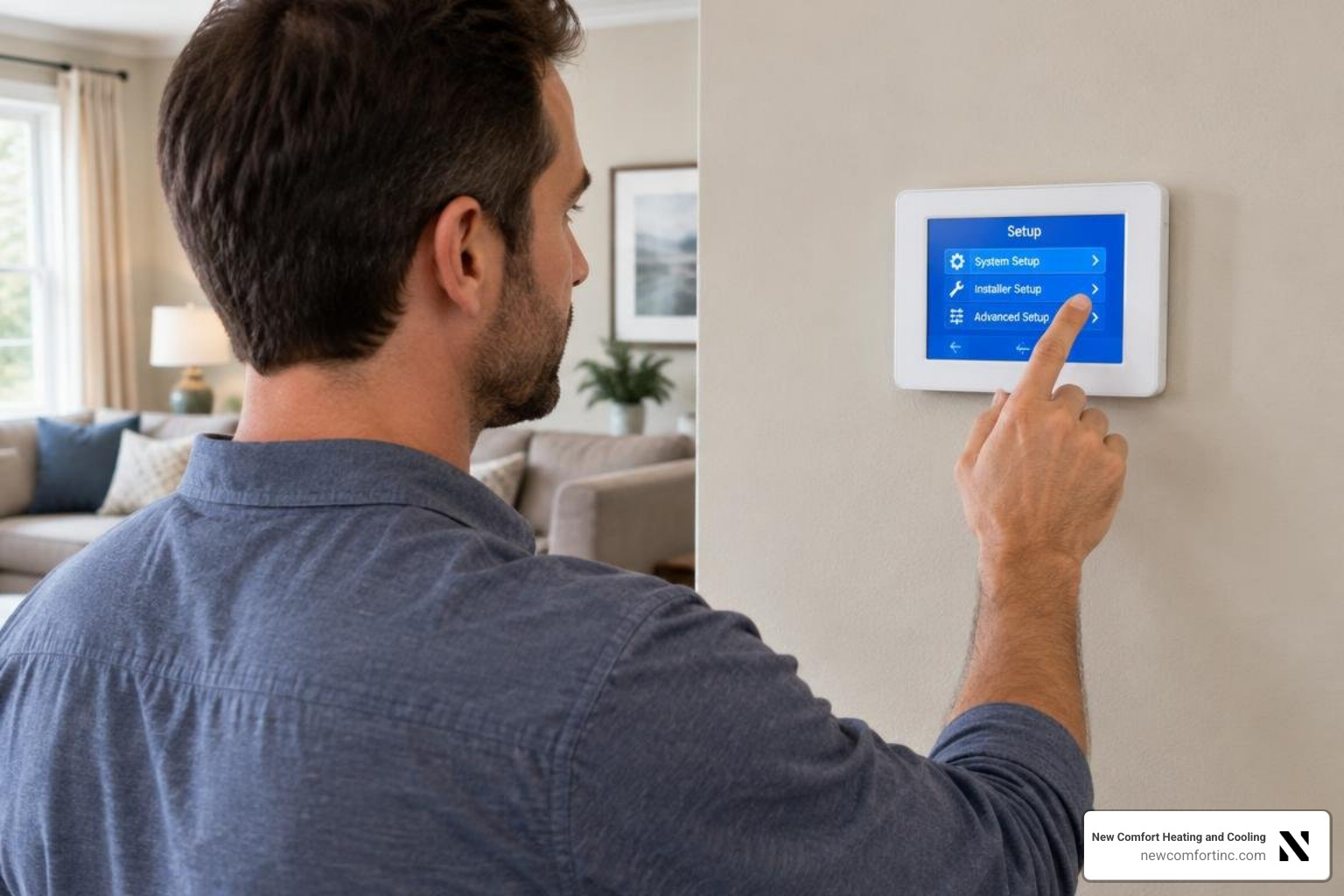
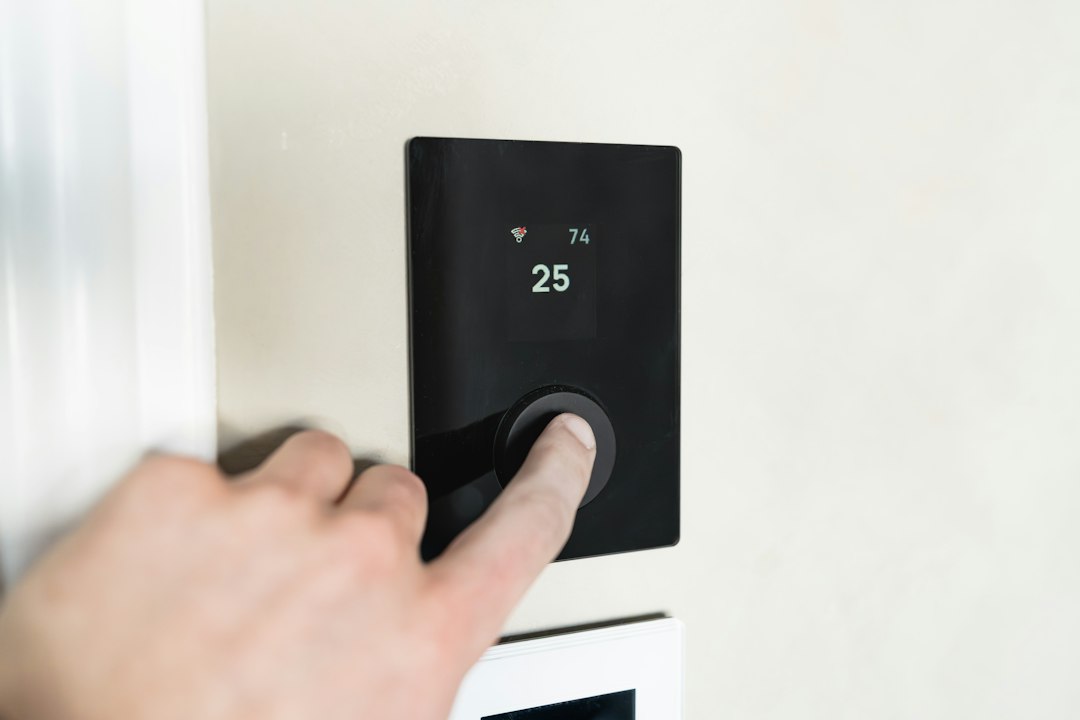
- Recalibrate and Test the Thermostat: Ensure the thermostat is set to "Heat" mode and the target temperature is at least 5 degrees above the current room temperature. If the screen is blank, replace the batteries. If you recently had a power surge, digital controls may have reset to factory defaults.
- Inspect Emergency Power Switches: Heating systems utilize master electrical cutoffs. On furnaces, this switch looks like a standard light switch mounted on or near the side of the unit. In homes with oil boilers or basement setups, check for an emergency shutoff switch inspection point at the top of the basement stairs as well as near the heater. Make sure both switches are flipped to "ON."
- Check the Electrical Panel: Furnaces and boilers typically operate on dedicated 15-amp circuit breakers. Check your main panel for a tripped breaker. Reset it firmly once. If it trips again immediately, stop and call a professional to prevent electrical damage.
- Inspect the Standing Pilot Light: On older gas units with continuous pilot lights, check the sight glass to see if the flame has extinguished. Only attempt to relight the unit if clear instructions are printed on the furnace panel and you feel completely comfortable doing so. Never force a gas valve open.
- Check Fuel Levels and Condensate Lines: For oil-fired systems, verify that the fuel tank has oil; running dry pulls sediment into fuel lines and requires line bleeding. For modern high-efficiency condensing gas furnaces, inspect the external plastic PVC drain line. During severe cold snaps, freezing condensate pipes back up water into the unit, triggering an automatic safety shutoff.
If these initial checks do not get warm air flowing, you are likely dealing with an internal component failure that requires specialized tools and diagnostic equipment.
When to Call a 24/7 Professional for Emergency Heater Repair
When DIY checks fail and the indoor temperature is rapidly falling toward freezing, waiting until normal business hours is not an option. Prolonged exposure to sub-freezing indoor conditions can crack plumbing, burst hydronic heating loops, and cause severe structural water damage.

Calling for professional assistance ensures an experienced technician can accurately diagnose the breakdown. If you have never had to call a technician in the middle of a winter night, our guide explains what to expect during an emergency service visit, from initial safety triage to final system testing. For around-the-clock service, explore reliable 24 hour emergency HVAC services designed to restore your heat as fast as possible.
Restoring Essential Components vs. Heater Replacement
During an emergency callout, our technicians focus on restoring heat safely and quickly. However, certain equipment failures require deciding between an immediate component repair and a full system replacement.
- Blower Motors and Capacitors: A failed blower motor prevents heated air from distributing throughout your home. Replacing a capacitor or motor can often be completed on the spot if common parts are stocked on the service vehicle.
- Gas Control Valves and Electronic Igniters: Cracked hot surface igniters or faulty gas solenoids prevent combustion. These parts are readily replaceable to restore heat quickly.
- Circulator Pumps: For boiler-based systems, seized or failed circulator pumps prevent hot water from reaching your radiators. Technicians can free stuck impellers or swap in a new pump assembly.
- Cracked Heat Exchangers: A fractured heat exchanger is a critical safety failure that allows toxic flue gases, including carbon monoxide, to leak directly into the living space. Technicians must immediately red-tag and shut down the system. In this situation, evaluating heating furnace replacement options is the safest path forward.
| Heating Issue | Recommended Action | Typical Resolution Time | Safety Severity |
|---|---|---|---|
| Failed Hot Surface Igniter | Component Replacement | 1 to 2 hours | Low (System locks out safely) |
| Seized Blower Motor | Motor / Capacitor Swap | 1 to 3 hours | Moderate (Risk of overheating) |
| Faulty Gas Valve | Valve Replacement | 2 to 4 hours | High (Requires precise pressure calibration) |
| Frozen Condensate Line | Thawing & Drain Reroute | 1 to 2 hours | Low (Triggers float switch shutoff) |
| Cracked Heat Exchanger | Full System Replacement | 4 to 8+ hours | Critical (Carbon monoxide danger) |
| Burnt Control Board | Circuit Board Swap | 1 to 3 hours | Moderate (Complete electrical shutdown) |
Free and Grant-Assisted Emergency Heating Programs
If you are facing a severe heating breakdown during winter but are constrained by household income, municipal and state-level assistance programs offer emergency repair grants, fuel support, and full equipment replacements.
Municipal and State Energy Assistance Programs: LIHEAP and EHRP
Several public programs help keep families warm during winter crises:
- Low-Income Home Energy Assistance Program (LIHEAP): A federally funded initiative that operates seasonally from November to April. LIHEAP provides direct grants to assist with utility bills, emergency fuel deliveries, and crisis heating repairs or replacements for eligible low-income homeowners and renters.
- Chicago Emergency Heating Repair Program (EHRP): Operated by the City of Chicago Department of Housing, the Emergency Heating Repair Program provides service grants to income-eligible owner-occupants of 1- to 4-unit residential buildings. Applicants must have a household income at or below 80% of the Area Median Income (AMI), have been on the property deed for at least one full year, and have current utility accounts. EHRP funds heating system repairs and replacements, but explicitly excludes hot water tanks. Funding is distributed on a first-come, first-served basis.
If you are outside these specific service boundaries, your local community action agency can connect you to regional crisis intervention programs that dispatch licensed HVAC contractors to restore non-working heating systems.
Preventing Future Breakdowns with Heating System Care
While our emergency response teams are always ready to help when disaster strikes, the best emergency repair is the one you never have to make. Most winter heating failures stem from cumulative wear, dirty sensors, or restricted airflow that could have been resolved during routine maintenance.
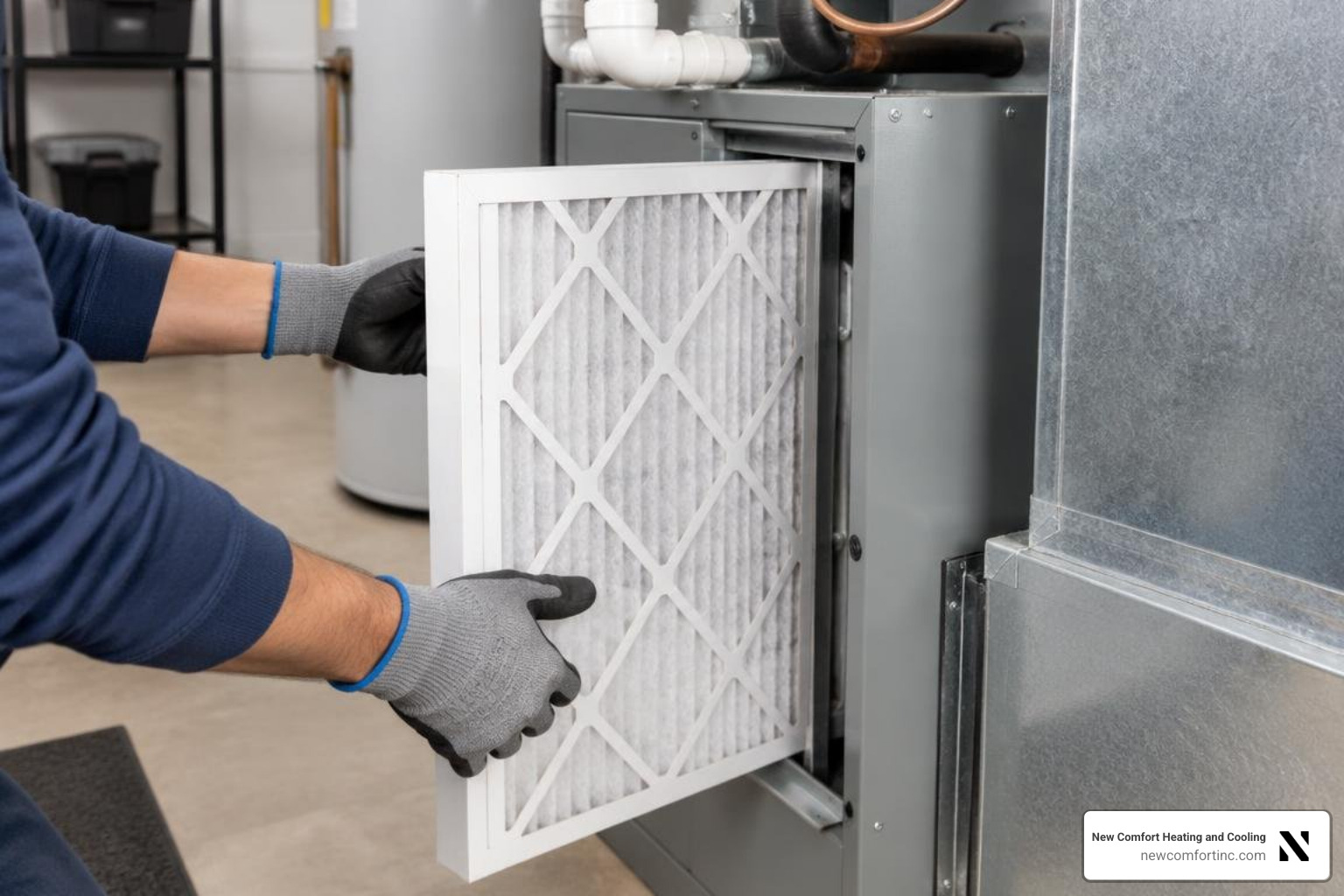
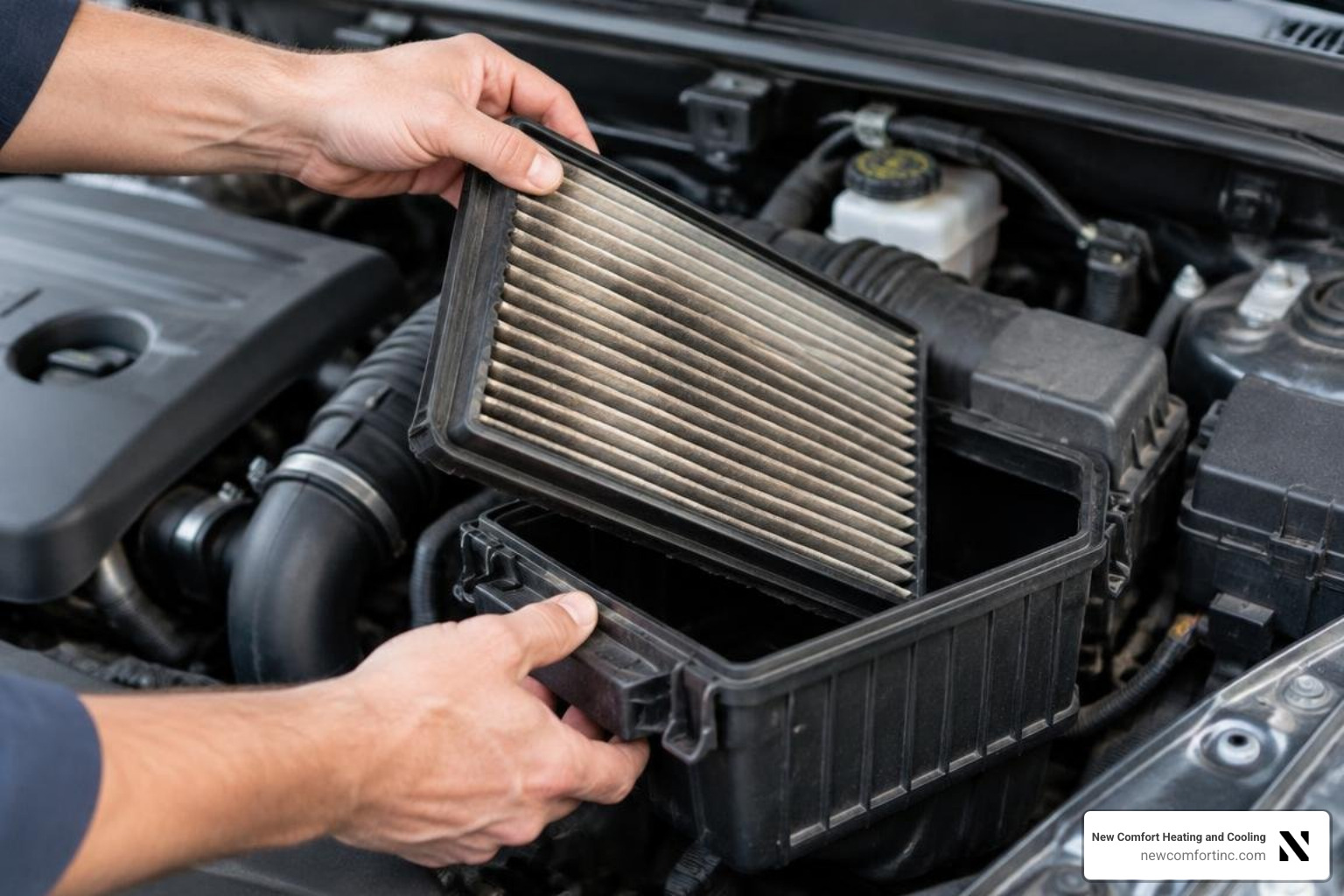
A clogged air filter restricts airflow across the heat exchanger, driving internal temperatures up until the high-limit safety switch trips. If the switch trips repeatedly, it can warp components or burn out the blower motor entirely. Checking your air filters every 30 to 90 days is one of the easiest ways to protect your heating system.
In addition to filter changes, scheduling regular heating furnace maintenance ensures your system is clean, lubricated, and operating safely. If an unexpected breakdown happens despite your best efforts, you can rely on local 24hr emergency HVAC support to get your heat back on quickly.
Scheduling Timely Emergency Heater Repair and Tune-Ups
An annual professional tune-up is a comprehensive diagnostic checkup that addresses minor wear before it turns into a midnight heating failure.
During a seasonal service visit, our certified technicians perform several critical tasks:
- Clean and test the flame sensor and electronic ignition assembly
- Inspect the heat exchanger for hairline fractures, rust, and corrosion
- Measure electrical draw on the blower motor and inducer fan
- Calibrate the gas manifold pressure and check the fuel supply line for leaks
- Inspect and flush condensate lines and safety traps
- Verify the operation of all safety limit switches and draft sensors
By keeping up with proactive system care and exploring our complete residential heating solutions, you can keep your home warm, energy-efficient, and dependable all winter long.
Frequently Asked Questions About Emergency Heating
What should I do immediately if I smell gas near my heater?
If you smell natural gas or a rotten-egg sulfur odor, treat it as an immediate emergency. Do not flip light switches, light matches, or operate electrical appliances, as any spark can ignite accumulated gas. Evacuate everyone from the building immediately, leaving doors open behind you to help ventilate the area. Once you are safely away from the home, call 911 and your gas utility company to shut off the gas supply and inspect for leaks.
Who qualifies for free emergency heating assistance grants?
Qualification for municipal heating assistance programs—such as Chicago's EHRP or state LIHEAP crisis grants—is generally based on household income, homeownership status, and residency. For example, Chicago's EHRP requires applicants to be owner-occupants of a 1- to 4-unit property, have been on the property deed for at least one year, and earn 80% or less of the Area Median Income (AMI). Federally funded LIHEAP programs provide heating crisis relief to qualifying low-income households based on federal poverty guidelines.
Can renters access emergency heating repair programs?
Under municipal building codes and state tenant laws, landlords are legally obligated to maintain working heating equipment and provide safe, habitable living conditions. If your heat fails, notify your landlord or property management company immediately in writing and via phone. If a landlord fails to restore heat promptly during winter conditions, tenants can report the violation to local housing authorities or call 311. Renters may also be eligible for utility bill assistance and energy crisis grants through the federal LIHEAP program.
Conclusion
Losing your heat during a bitter winter freeze is stressful, but taking prompt action protects both your home and your family. By running through basic safety checks, inspecting your thermostat and power switches, and knowing when to call a professional, you can resolve heating emergencies safely and efficiently.
At New Comfort Heating & Cooling, we deliver fast, dependable, and energy-efficient solutions when you need them most. With 24/7 live phone support, same-day service, and transparent service, we work hard to keep you comfortable through every winter storm. If your furnace is acting up or has shut down completely, don't wait in the cold—schedule professional heating furnace repair with our experienced team today.