Why a Routine Air Filter Change Is Essential for Peak Performance
To change an air filter, first turn off the engine or HVAC system and let it cool. Locate the filter housing, unclip or unscrew the lid, remove the old filter, and note its orientation. Wipe out any loose debris from the housing, seat the new filter with the airflow arrow pointing in the correct direction, and secure the lid. This simple process restores clean airflow and protects your equipment from unnecessary wear.
Whether inside an automobile engine or throughout a home heating and cooling system, clean airflow is the foundation of mechanical health. Internal combustion engines and residential air handlers function essentially as massive air pumps. When intake pathways become choked with dust, pollen, and road grime, equipment must fight against restricted airflow just to operate.
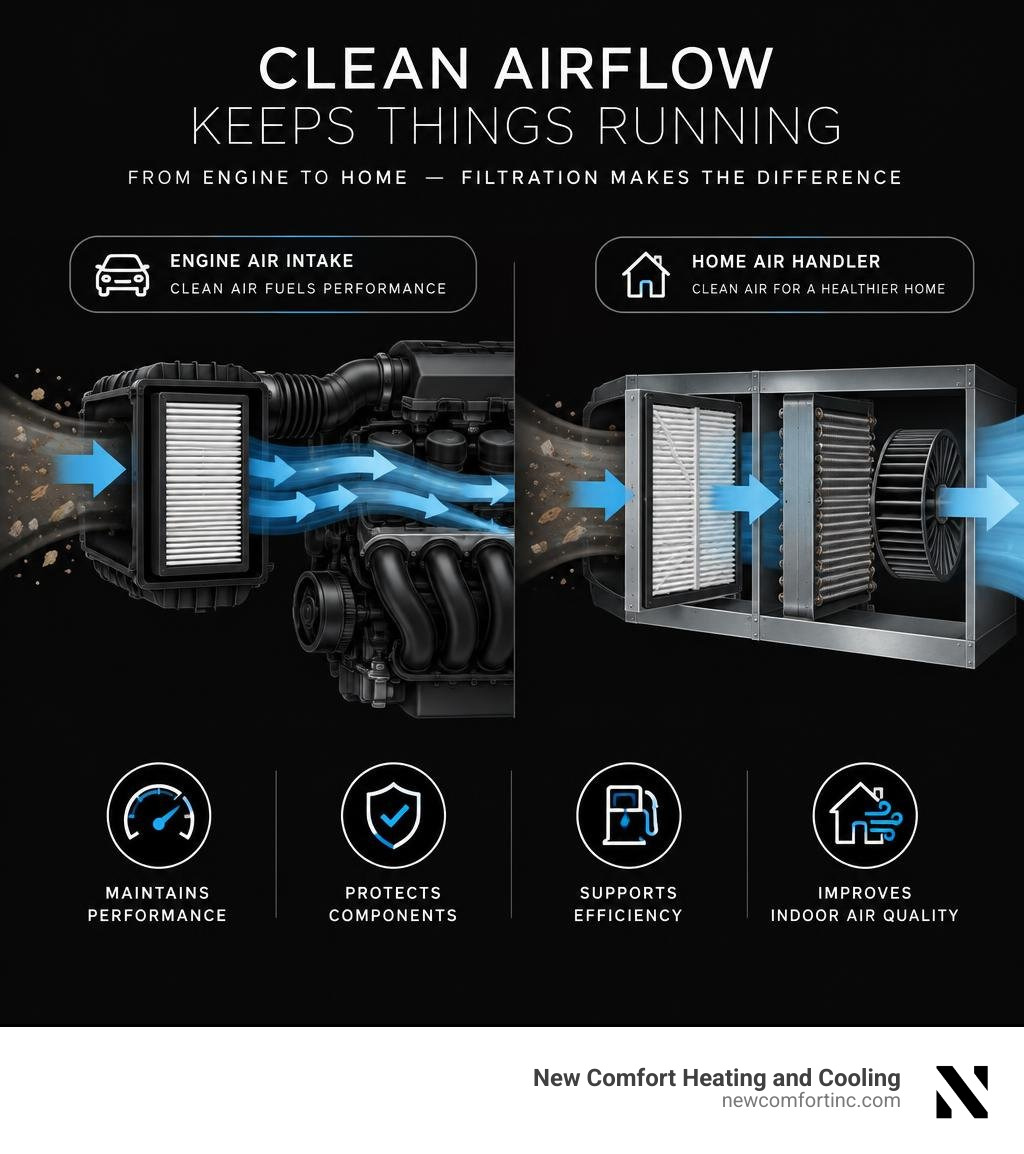
In vehicles, an engine draws in thousands of gallons of air for every gallon of fuel burned. A severely restricted filter can reduce peak engine power output by 6% to 11%. Modern vehicle engine control units (ECUs) automatically adjust fuel delivery when sensors detect reduced airflow, protecting emissions at the cost of horsepower and acceleration. On older carbureted engines, a dirty filter directly ruins fuel efficiency, and swapping in a clean one can improve gas mileage by 6% to 14%.
Beyond performance, filtration is your primary defense against physical component wear. A compromised or heavily packed filter allows fine silica dust into the engine cylinders, acting like liquid sandpaper on piston rings and cylinder walls. In both automotive and residential settings, filtration also protects sensitive monitoring equipment—such as the vehicle mass airflow (MAF) sensor or the indoor evaporator coils—from heavy contamination.
For property owners, clean filtration directly supports improving indoor air quality by trapping airborne particulates before they cycle through living spaces.
| Filter Category | Primary Purpose | Standard Lifespan | Key Risk of Neglect |
|---|---|---|---|
| Engine Air Filter | Traps road grit, soot, and debris before combustion | 12,000 to 15,000 miles | Loss of engine power, cylinder wall abrasion |
| Cabin Air Filter | Purifies air entering passenger compartment via HVAC | 15,000 to 25,000 miles | Musty odors, weak defroster airflow, allergy flare-ups |
| Home HVAC Filter | Protects blower/coils and cleans circulating indoor air | 30 to 90 days | Blower motor strain, frozen coils, high utility bills |
Understanding Filter Types: Engine, Cabin, and Home HVAC
Many first-time DIYers confuse the different filters inside their cars and homes.
- Engine Air Filters: Housed in a sealed plastic intake box beneath the hood, these pleated paper or synthetic elements catch large road debris, sand, and fine soot before air enters the intake manifold.
- Cabin Air Filters: Located behind the glove box or beneath the windshield cowl, cabin filters clean the air you breathe while driving. Many modern versions use activated carbon layers to neutralize traffic exhaust, industrial odors, and seasonal smoke. This maintenance guide on engine and cabin filtration highlights how managing both keeps your vehicle running smoothly and your cabin air fresh.
- Home HVAC Filters: Installed at the return air duct or central air handler, home filters use Minimum Efficiency Reporting Value (MERV) ratings (ranging from 1 to 20) to balance particulate capture against system airflow resistance.
Crucial Signs Your Vehicle Needs an Air Filter Change
Roughly 25% of vehicles on U.S. roads operate with dirty air filters that are past their prime. Keep an eye out for these telltale signs:
- Sluggish Acceleration: The vehicle feels unresponsive or hesitates when you step on the gas pedal.
- Audible Whistling or Sucking Sounds: Air struggling to push past packed pleats creates distinct intake noises.
- Visually Darkened Pleats: A clean filter is white, cream, or light blue. A clogged filter is caked in dark grey soot, leaves, and insect debris.
- Rough Engine Idle or Misfires: Restricted air prevents an optimal fuel-air mixture, leading to jerky idling.
- Check Engine Light: An airflow imbalance can trigger engine sensor trouble codes.
- Musty Cabin Odors: If the cabin filter is full of trapped organic moisture, turning on your vehicle air conditioning will release an earthy, stale smell.
Step-by-Step DIY Guide for Replacing Your Filters
Swapping an air filter is one of the simplest maintenance tasks you can handle. Whether under the hood or inside your utility room, the process requires only basic tools and a few minutes of your time.
Before ordering parts, spend a moment finding a compatible air filter replacement by verifying your equipment dimensions or vehicle make, model, and engine displacement. Reviewing federal resources like the HVAC Proper Installation of Filters guide from Building Science Education can also help you understand how proper sealing prevents bypass.
Tools and Materials Required for the Job
You will only need a few common items:
- Flathead and Phillips-head screwdrivers (or JIS screwdrivers for certain Asian-manufactured imports)
- Basic ratchet and socket set (typically 8mm to 10mm for automotive intake boxes)
- Microfiber shop rag or clean towel
- Work gloves
- Correctly sized replacement filter element
Five Steps to Complete Your DIY Air Filter Change
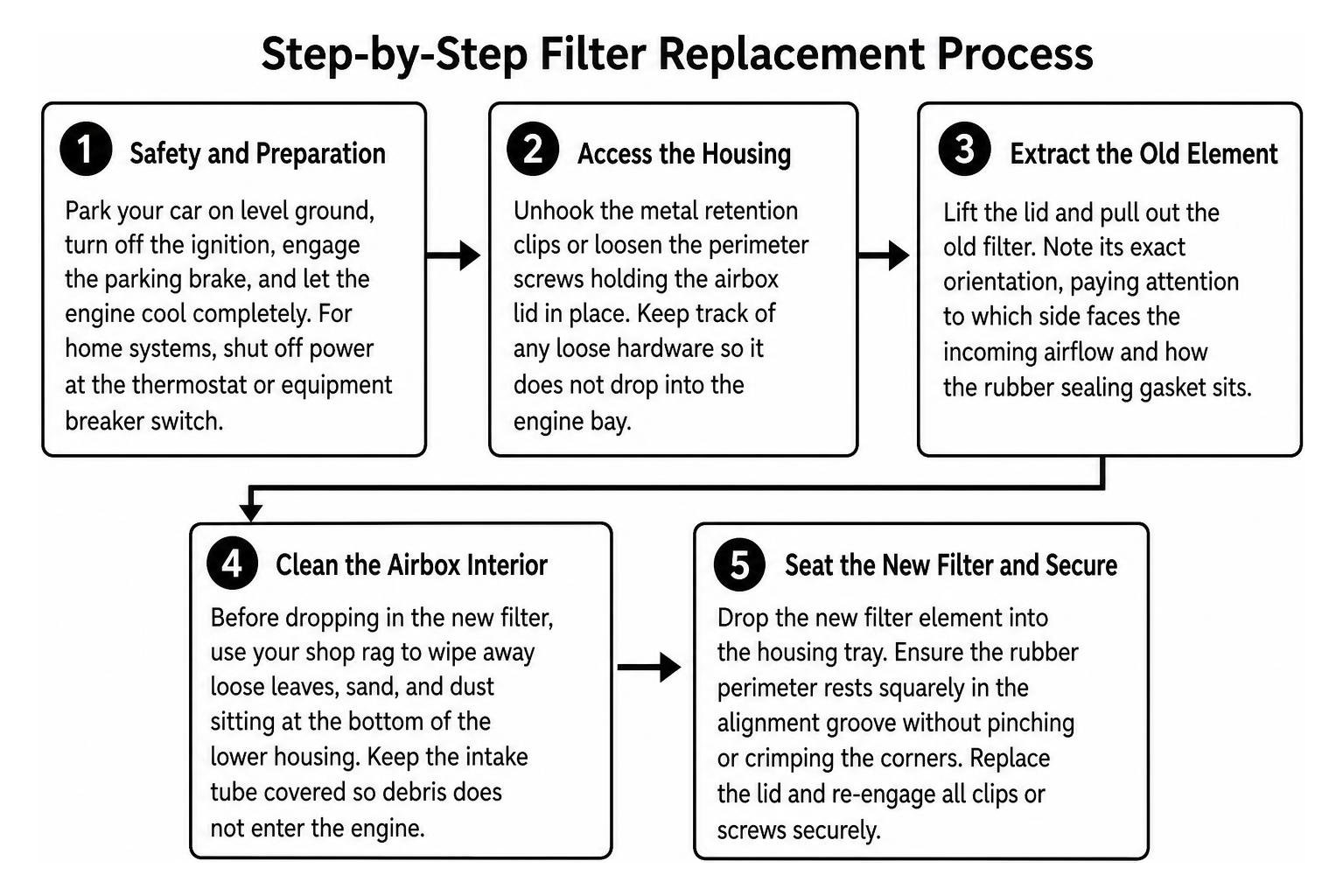
- Safety and Preparation: Park your car on level ground, turn off the ignition, engage the parking brake, and let the engine cool completely. For home systems, shut off power at the thermostat or equipment breaker switch.
- Access the Housing: Unhook the metal retention clips or loosen the perimeter screws holding the airbox lid in place. Keep track of any loose hardware so it does not drop into the engine bay.
- Extract the Old Element: Lift the lid and pull out the old filter. Note its exact orientation, paying attention to which side faces the incoming airflow and how the rubber sealing gasket sits.
- Clean the Airbox Interior: Before dropping in the new filter, use your shop rag to wipe away loose leaves, sand, and dust sitting at the bottom of the lower housing. Keep the intake tube covered so debris does not enter the engine.
- Seat the New Filter and Secure: Drop the new filter element into the housing tray. Ensure the rubber perimeter rests squarely in the alignment groove without pinching or crimping the corners. Replace the lid and re-engage all clips or screws securely.
For detailed vehicle-specific procedures, consult the official vehicle filter replacement instructions.
Replacing Your Home HVAC and Cabin Air Filters
Replacing your home and cabin filters follows a very similar rhythm:
- Cabin Filters: Most modern passenger vehicles store the cabin filter directly behind the lower glove compartment. Empty the glove box, squeeze the side stopper tabs inward to let the door drop down, unclip the filter tray cover, slide the old filter out, and slide the new one in. Ensure the printed airflow arrow points downward toward the floorboards (or in the direction specified on the housing).
- Home HVAC Systems: Locate your return air grille on a hallway wall or the filter slot next to the blower cabinet. Check out our guide on mastering a home AC filter change for tips on getting a tight seal and choosing the right filtration level for your system.
Common Mistakes to Avoid and Maintenance Best Practices
Even simple maintenance jobs can go wrong if you rush. Avoiding a few common mistakes will protect your equipment and keep air flowing freely:
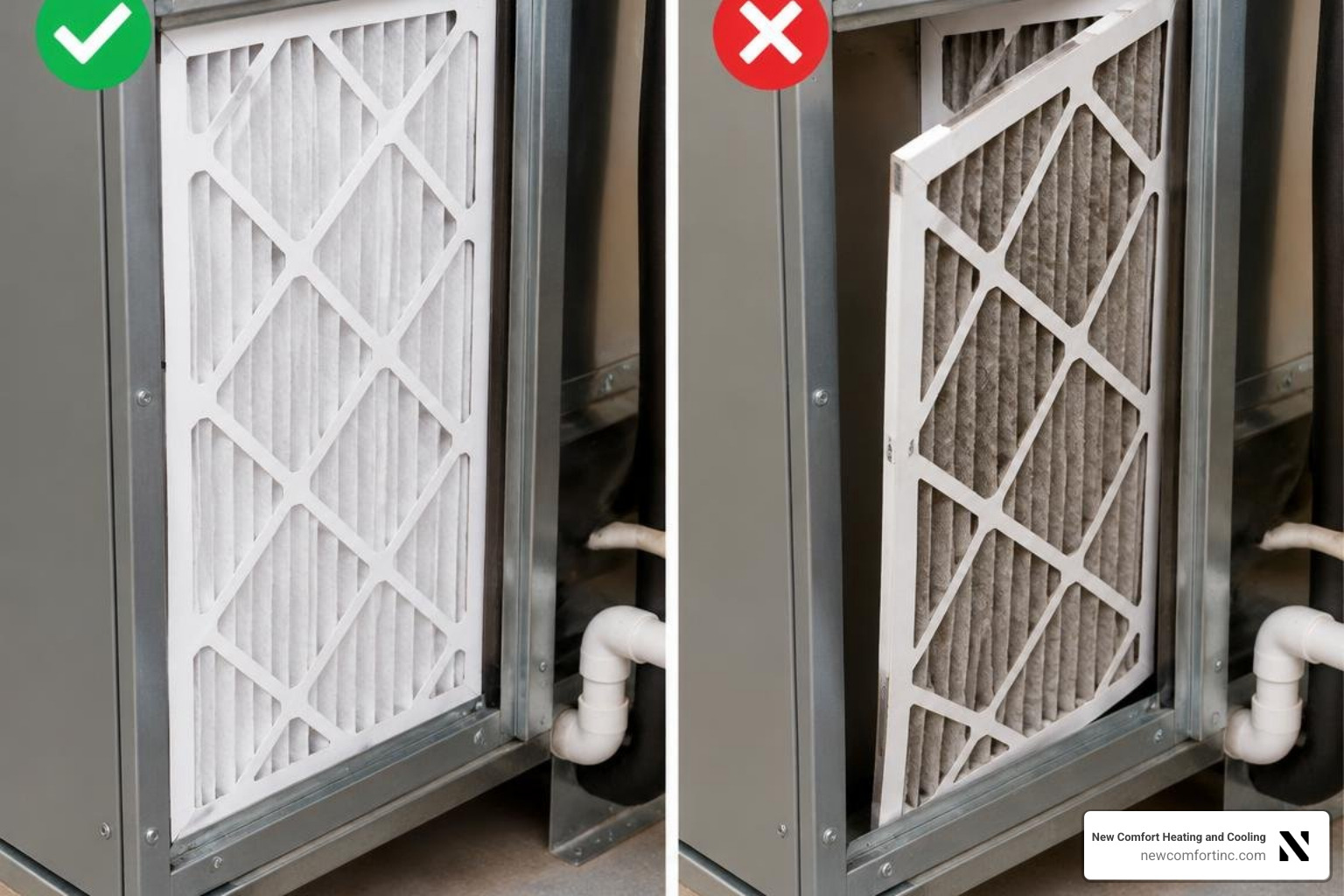
- Installing Filters Backward: Air filters are engineered to catch particles on one side while providing structural support on the other. Installing a filter against the airflow direction can cause the media to collapse inward, starving your system of air.
- Forgetting to Clean the Housing: Dropping a pristine filter into a tray full of sand, dead leaves, and pine needles immediately clogs the lower pleats.
- Using Compressed Air on Paper Filters: Never use high-pressure air nozzles to "blow out" a standard disposable paper filter. Compressed air tears microscopic pathways through the paper fibers, allowing abrasive dirt to pass straight through.
- Pinching the Perimeter Gasket: If the rubber sealing edge is crushed outside the housing lip, dirty air will bypass the filter entirely through the gaps.
Regular maintenance protects your mechanical systems over the long haul. You can read more about protecting furnace longevity with regular filter replacement to see how proper airflow prevents heat exchanger stress and blower motor failure.
Cleaning vs. Replacing: Paper, Foam, and Synthetic Media
Understanding your filter's media type helps you decide whether to clean it or throw it away:
- Standard Disposable Paper Filters: These are single-use elements made from compressed cellulose fibers. They cannot be washed with water or blown out with air; replace them once they become discolored or clogged.
- Washable Foam Elements: Common in small power equipment, lawnmowers, and some specialty HVAC units, foam can be washed with mild soapy water, thoroughly dried, and lightly oiled if required by the manufacturer.
- High-Performance Reusable Cotton Gauze: Specialty automotive intake filters use oiled cotton gauze layers. These can be washed with dedicated cleaning solutions, allowed to air dry completely, and lightly re-oiled. Take care not to over-oil them, as excess oil can coat the hot wire on your vehicle's mass airflow sensor and cause engine performance issues.
Recommended Inspection and Replacement Intervals
Filtration lifespans depend directly on local environmental conditions:
- Automotive Engine Filters: Standard intervals range between 12,000 and 15,000 miles (or up to 30,000 miles for extended-life synthetic media). If you commute on unpaved gravel roads, drive through agricultural areas, or deal with heavy stop-and-go construction traffic, inspect the element every 6,000 miles.
- Automotive Cabin Filters: Replace every 15,000 to 25,000 miles, or at least once a year in spring before peak pollen season.
- Residential HVAC Filters: Check 1-inch disposable pleated filters every 30 days and replace them within 90 days. Homes with multiple shedding pets, family members with respiratory allergies, or active remodeling projects should swap filters every 30 to 45 days.
Frequently Asked Questions About Filter Replacements
How often should I replace my car's engine air filter?
Under normal driving conditions, vehicle manufacturers recommend changing your engine air filter every 12,000 to 15,000 miles or roughly once every 12 months. If you regularly drive on dirt roads, through dusty industrial corridors, or in dry desert climates, inspect the filter at every oil change and replace it sooner if the pleats are dark and full of debris.
What happens if I never replace my dirty air filter?
Neglecting a clogged filter restricts airflow, which leads to sluggish acceleration, reduced peak engine horsepower, and rough idling. Over time, a heavily loaded filter can deform or tear, allowing abrasive sand and road grit into the combustion chambers. This particulate matter scratches cylinder bores and damages piston rings, potentially causing severe internal engine wear.
How do I know which replacement filter size to buy?
For vehicles, consult your owner's manual for the OEM part number or use an automotive parts lookup tool with your vehicle's year, make, model, and engine displacement. For home heating and cooling equipment, look at the outer cardboard edge of your existing filter, where the nominal dimensions (Length x Width x Thickness, such as 16x25x1) are printed.
Conclusion
Taking care of your air filters is one of the easiest, most cost-effective ways to protect your engines, safeguard your home comfort systems, and keep indoor air fresh. By spending just a few minutes every few months checking pleats, clearing away loose debris, and installing fresh replacement elements, you ensure that both your vehicles and your home mechanical systems operate at peak efficiency.
If you ever need help with your residential heating, cooling, or indoor air filtration systems, our team at New Comfort Heating & Cooling is here for you. We provide personalized, energy-efficient solutions, 24/7 live phone support, and same-day service across the Justice and Chicago areas to keep your home running comfortably in every season. For more tips on building a solid home maintenance routine, check out our guide to maintaining the right air filter replacement schedule.