Master Your Home AC Filter Change Without Calling a Pro
How to Change Your Home AC Filter
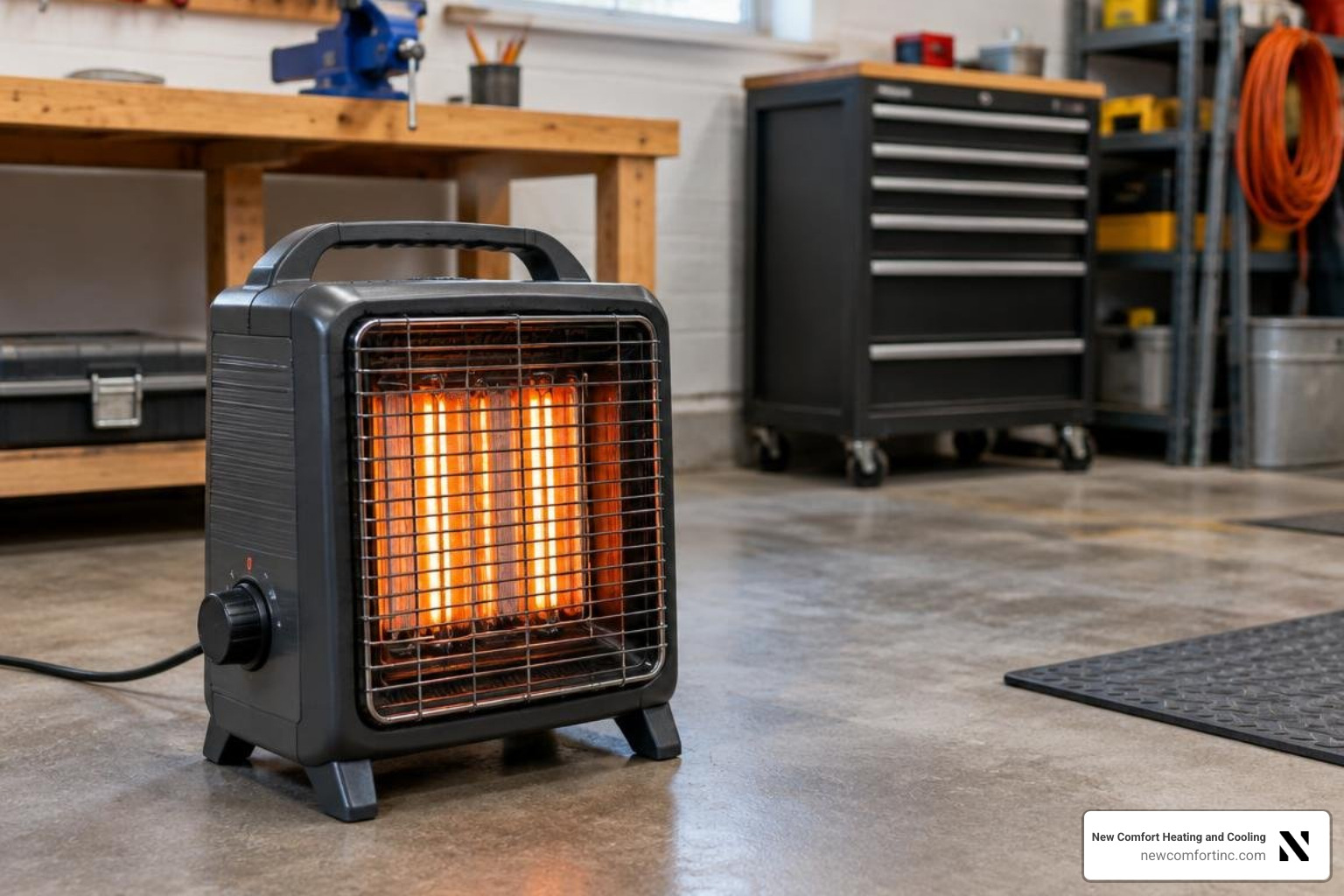
For a home AC filter change, turn off your system, find the filter at a return-air grille or near the indoor air handler, and check the size printed on its frame. Slide out the old filter. Insert a new filter of the same size with its airflow arrow pointing toward the air handler or furnace. Close the cover, restart the system, and check the filter again in a month.
A clean, properly fitted filter helps air move through your system and keeps dust from building up inside it. This guide will help you choose the right filter, change it safely, and know when a problem needs an HVAC technician.
Selecting the Right Filter: Sizing, Types, and MERV Ratings
Getting the right fit and media type is essential before you slide anything into your system's filter rack. An incorrect size allows dirty air to slip right around the edges—a problem known as air bypass—which coats your internal components in grime.
Sizing: Nominal vs. Actual Dimensions
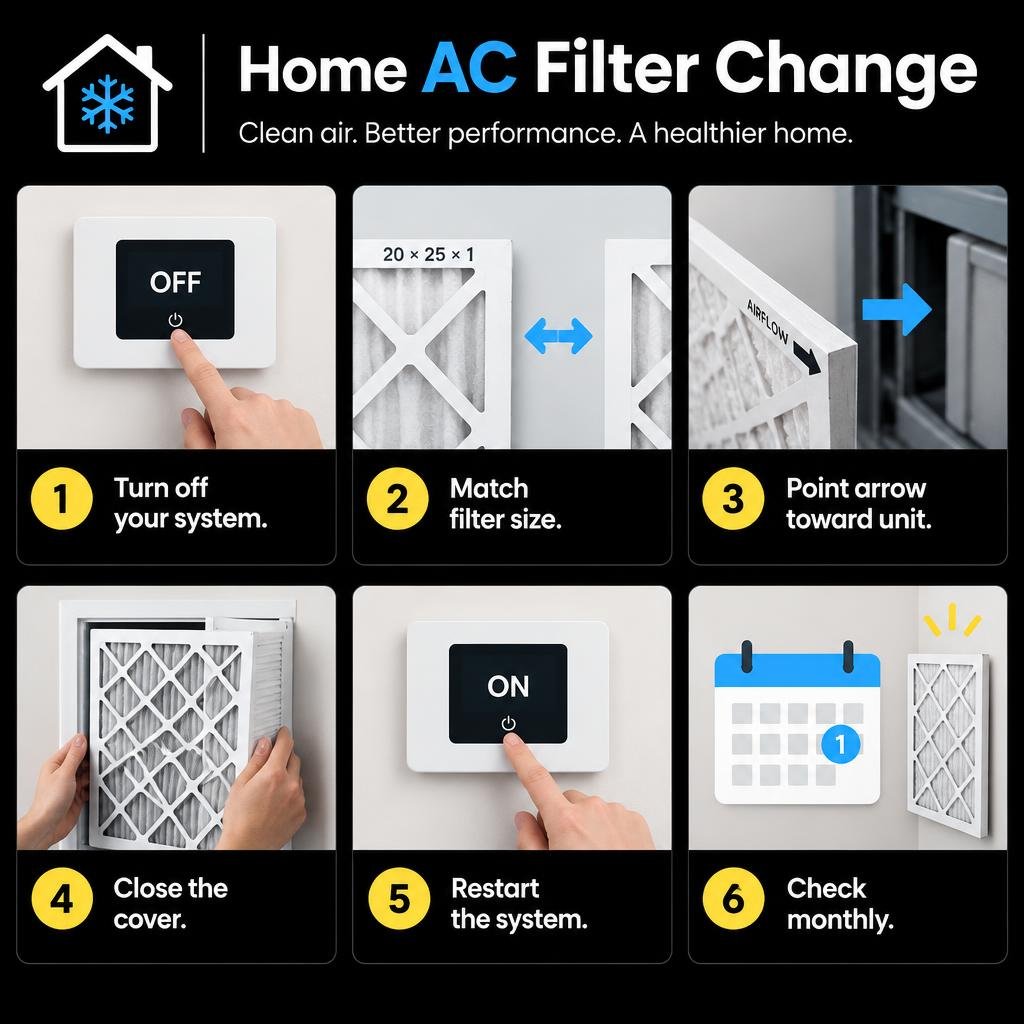
Air filter frames display two sets of numbers: the nominal size and the actual size.
- Nominal Size: The rounded measurement printed in large bold numbers on the cardboard frame (such as 16x25x1 or 20x20x1).
- Actual Size: The precise physical measurement down to an eighth or sixteenth of an inch (for example, a 16x25x1 filter might measure 15.5 x 24.5 x 0.75 inches).
Always order filters based on their nominal size, but measure the interior slot with a tape measure if the writing on your old frame is unreadable. You can review our step-by-step approach for finding a compatible air filter replacement to guarantee an airtight fit.
Filter Media Types
- Fiberglass (Non-Pleated): These thin, flat panels protect equipment from large debris like lint and hair. However, they capture very little microscopic dust and need replacement every 30 days.
- Pleated Media (Synthetic/Cotton): Built with deep folds that create a larger surface area, pleated filters trap smaller particles (including pollen, pet dander, and mold spores) without choking system airflow. They generally last 1 to 3 months for 1-inch models and up to 6 to 12 months for 4- or 5-inch media cabinets.
- Washable/Reusable Filters: These feature aluminum or plastic frames with electrostatic media. While they produce less waste, they must be cleaned every month and thoroughly air-dried before reinstalling to prevent mold growth inside your ductwork.
| Filter Type | Typical Lifespan | Filtration Efficiency | Best For |
|---|---|---|---|
| Fiberglass | 30 days | Basic (Large particles only) | Equipment protection on tight budgets |
| Pleated Synthetic | 1–3 months (1") / 6–12 months (4"+) | Moderate to High (Dust, pollen, dander) | Most residential homes & allergy control |
| Washable/Electrostatic | Several years (Clean monthly) | Low to Moderate | Low-waste households without severe allergies |
Decoding MERV Ratings
MERV stands for Minimum Efficiency Reporting Value, rated on a scale from 1 to 16 for residential equipment:
- MERV 1–4: Basic protection against carpet fibers and large dust bunnies.
- MERV 8: The standard sweet spot for most households, trapping dust mites, pollen, and lint.
- MERV 11: Upgraded filtration for homes with shedding pets or seasonal allergies, capturing fine pet dander and auto emissions.
- MERV 13–16: Hospital-level filtration capable of capturing bacteria and smoke particles.
Be cautious: selecting an excessively dense filter (such as MERV 14+) in a standard residential blower can create high static pressure, restricting airflow and straining the motor. Following verified guidelines from ENERGY STAR on HVAC efficiency helps ensure your equipment runs smoothly without unnecessary energy waste.
Step-by-Step Guide to a Home AC Filter Change
Replacing your filter requires no special tools and takes less than five minutes when done systematically.
Preparing for Your Home AC Filter Change
Before opening any access panels, take these preparatory steps:
- Shut Down the System: Turn your thermostat to the "OFF" position. This prevents loose dust and debris from being sucked directly into the blower wheel while the filter slot is exposed.
- Locate the Filter Compartment: Look for the intake slot in one of two main areas:
- At the Return Air Grille: A large intake vent mounted on a central hallway ceiling or wall.
- At the Indoor Air Handler/Furnace: An integrated slide-in slot located in the blower cabinet (often found in a basement, utility closet, or attic).
- Inspect the Housing: Check the metal housing for gaps or air leaks. Sealing minor duct joints with foil tape ensures all incoming air passes directly through your filter media.
Step-by-Step Filter Replacement Instructions
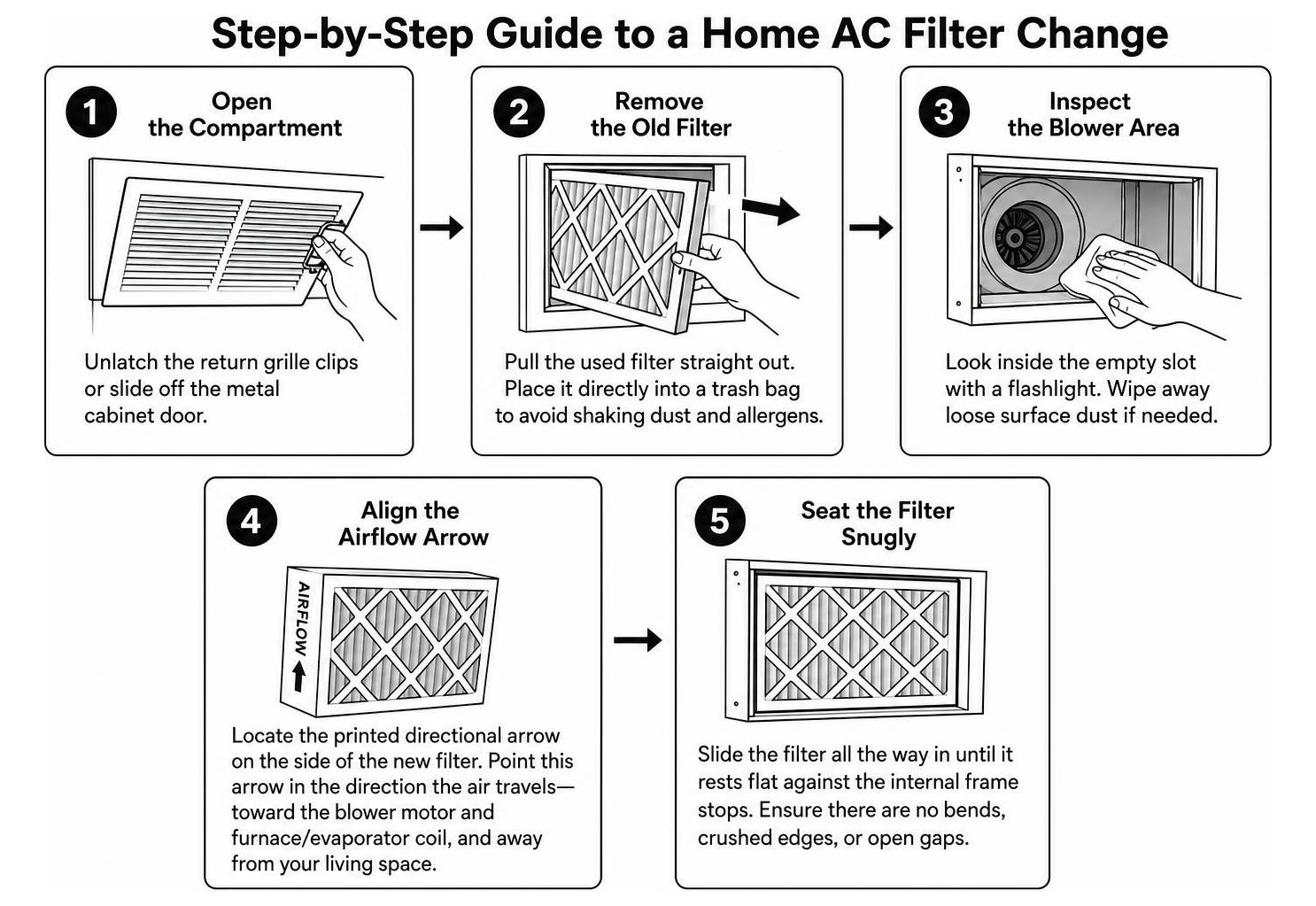
- Open the Compartment: Unlatch the return grille clips or slide off the metal cabinet door on your indoor unit.
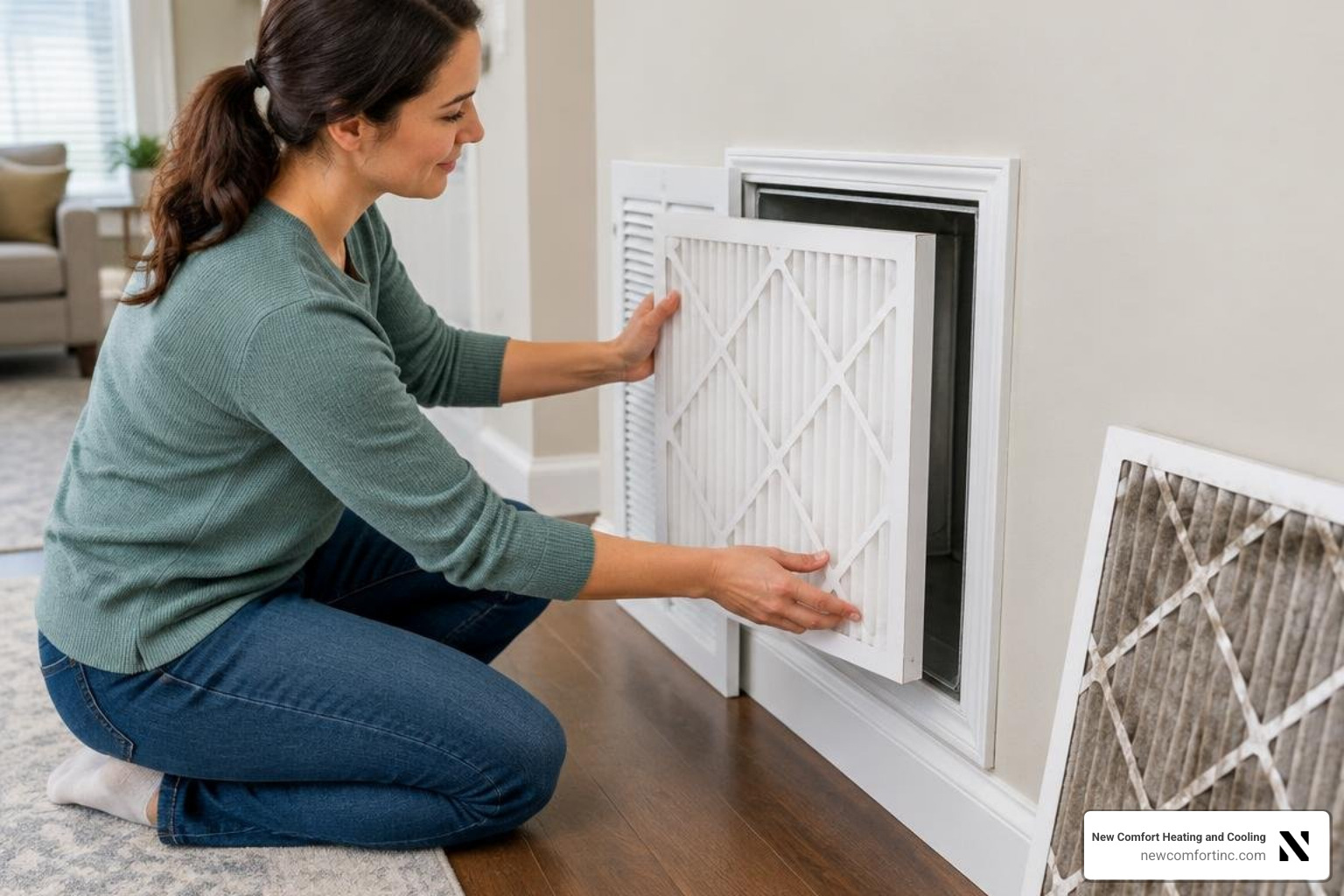
- Remove the Old Filter: Carefully pull the used filter straight out. Place it directly into a trash bag to avoid shaking trapped dust, pet fur, and allergens back into your living area.
- Inspect the Blower Area: Look inside the empty slot with a flashlight. Wipe away loose surface dust using a dry microfiber cloth if needed.
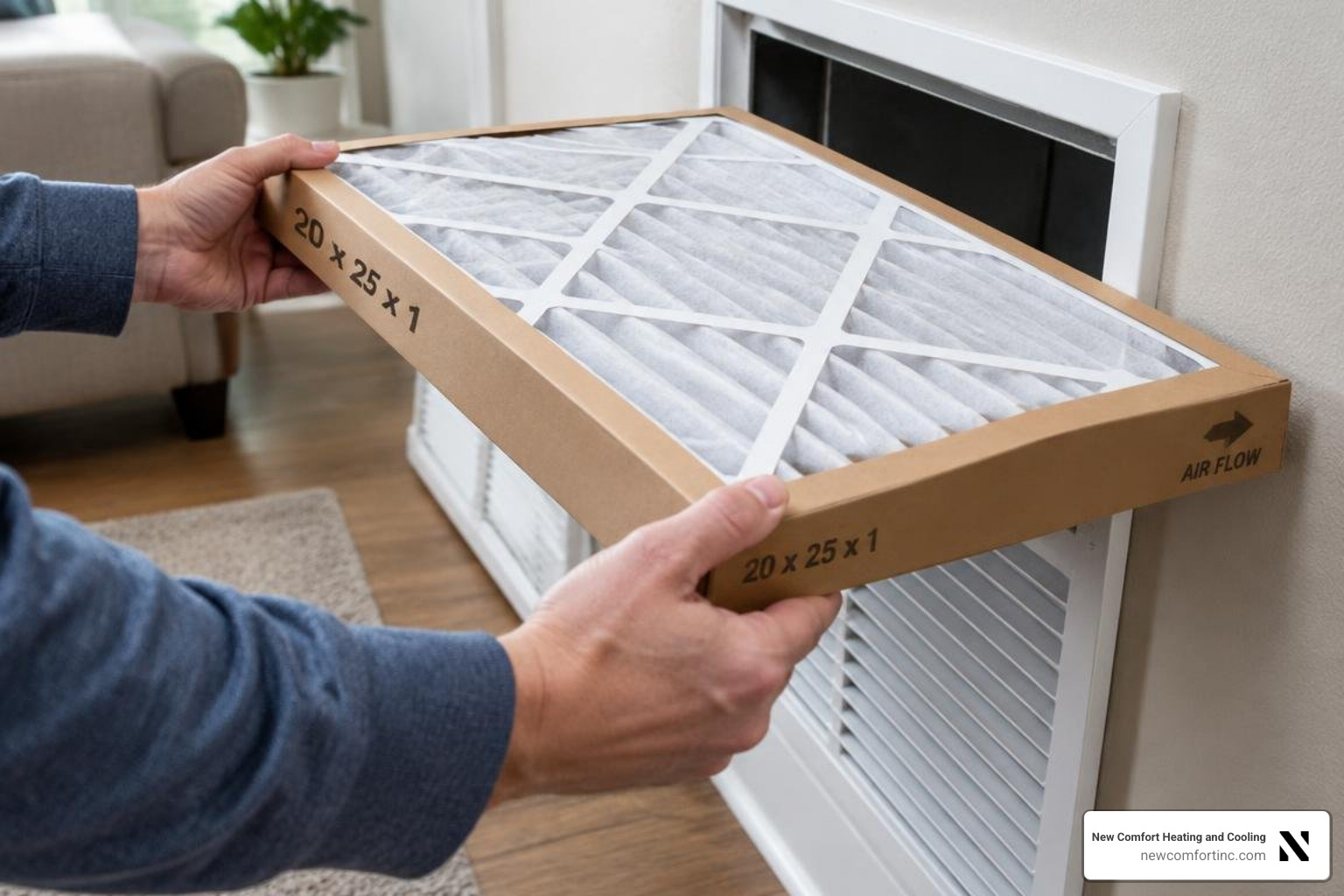
- Align the Airflow Arrow: Locate the printed directional arrow on the side of your new filter's frame. Point this arrow in the direction the air travels—toward the blower motor and furnace/evaporator coil, and away from your living space.
- Seat the Filter Snugly: Slide the filter all the way in until it rests flat against the internal frame stops. Ensure there are no bends, crushed edges, or open gaps.
- Latch and Restart: Fasten the access cover securely, return to your thermostat, and switch it back to "COOL" or "HEAT."
Taking time to install your filter properly is key to protecting furnace longevity and keeping your blower motor free of debris.
Signs and Schedules: When to Swap Your Filter
Relying solely on memory often leads to forgotten filters. Establishing a dependable routine prevents emergency breakdowns during peak summer and winter weather.
Clear Signs You Need a Home AC Filter Change
If you aren't sure whether your filter is ready for replacement, look for these telltale indicators:
- Visual Inspection (The Light Test): Hold the filter up toward a bright lamp or window. If light cannot pass through the pleated material, the filter is saturated and needs immediate replacement.
- Weak Airflow at Vents: Registers blowing sluggish, tepid air often point to a clogged filter choking system intake.
- Extended Run Cycles: When your air conditioner struggles to reach the set temperature on moderate days, a dirty filter may be restricting heat transfer.
- Excess Dust on Furniture: A noticeable increase in dust settling on flat surfaces within hours of cleaning indicates your filtration media is full.
- Frost or Ice on Copper Lines: Restricted airflow stops the evaporator coil from absorbing heat, causing condensation to freeze. Keeping airflow clear is a primary defense in preventing common HVAC system failures.
How Often to Replace Filters Based on Household Needs
Every home has different filtration demands depending on occupants, pets, and local environment:
- Single Occupant / Vacation Home (No Pets): Every 6 to 12 months for 1-inch pleated filters.
- Average Suburban Home (No Pets): Every 90 days.
- Home with One Dog or Cat: Every 60 days.
- Multiple Pets or Family Members with Asthma/Allergies: Every 30 to 45 days.
- High-Pollution or Wildfire Smoke Periods: Inspect every 14 to 21 days; replace immediately when surface graying occurs.
Upgrading your filtration and keeping a consistent swap schedule plays a major role in improving indoor air quality throughout the entire home.
Frequently Asked Questions About HVAC Air Filters
Why is my new air filter turning black or gray after only two weeks?
Rapid discoloration usually indicates an excessive dust load, leaky return ductwork pulling in unconditioned attic or crawlspace air, burning scented candles, or using unvented fireplaces. In rare cases, soot buildup can stem from furnace exhaust leaks.
Can I vacuum or wash a disposable pleated air filter?
No. Disposable filters rely on specialized electrostatically charged paper and synthetic fibers. Vacuuming tears these delicate microscopic fibers, while water damages the cardboard frame and creates a breeding ground for mold. Always discard and replace disposable units.
When should I call an HVAC technician instead of just changing the filter?
If you insert a fresh filter but continue experiencing ice on the refrigerant lines, strange motor humming, burning odors, or constant short cycling, shut the system off. These symptoms point to deeper mechanical or electrical issues that require scheduling routine AC maintenance with a certified professional.
Conclusion
Managing your air filters is one of the easiest, most impactful DIY maintenance tasks you can perform as a homeowner. By matching your nominal filter size, selecting an appropriate MERV rating, and seating the frame with the airflow arrow pointing toward the blower, you protect your system from unnecessary strain.
Take a moment today to inspect your return grilles, write the date on your filter frame, and stay on track by establishing the right air filter replacement schedule. For comprehensive system inspections, duct evaluations, or emergency repairs, our team at New Comfort Heating and Cooling is always ready to keep your home running comfortably all year long.