Finding Central Heater Repair Near Me

If you're searching for central heater repair near me, start with a local HVAC company that can confirm when a technician can arrive, explain how it diagnoses the problem, and give you a clear quote before repairs begin. If your heater has stopped working or blows cold air, check the thermostat settings, air filter, and circuit breaker first. Leave gas, wiring, and internal furnace repairs to a qualified technician.
New Comfort Heating and Cooling serves homeowners in Justice, Illinois, and nearby Chicago suburbs with same-day service and 24/7 live phone support. The guide below will help you spot warning signs, choose a repair service, and know when to ask for urgent help.
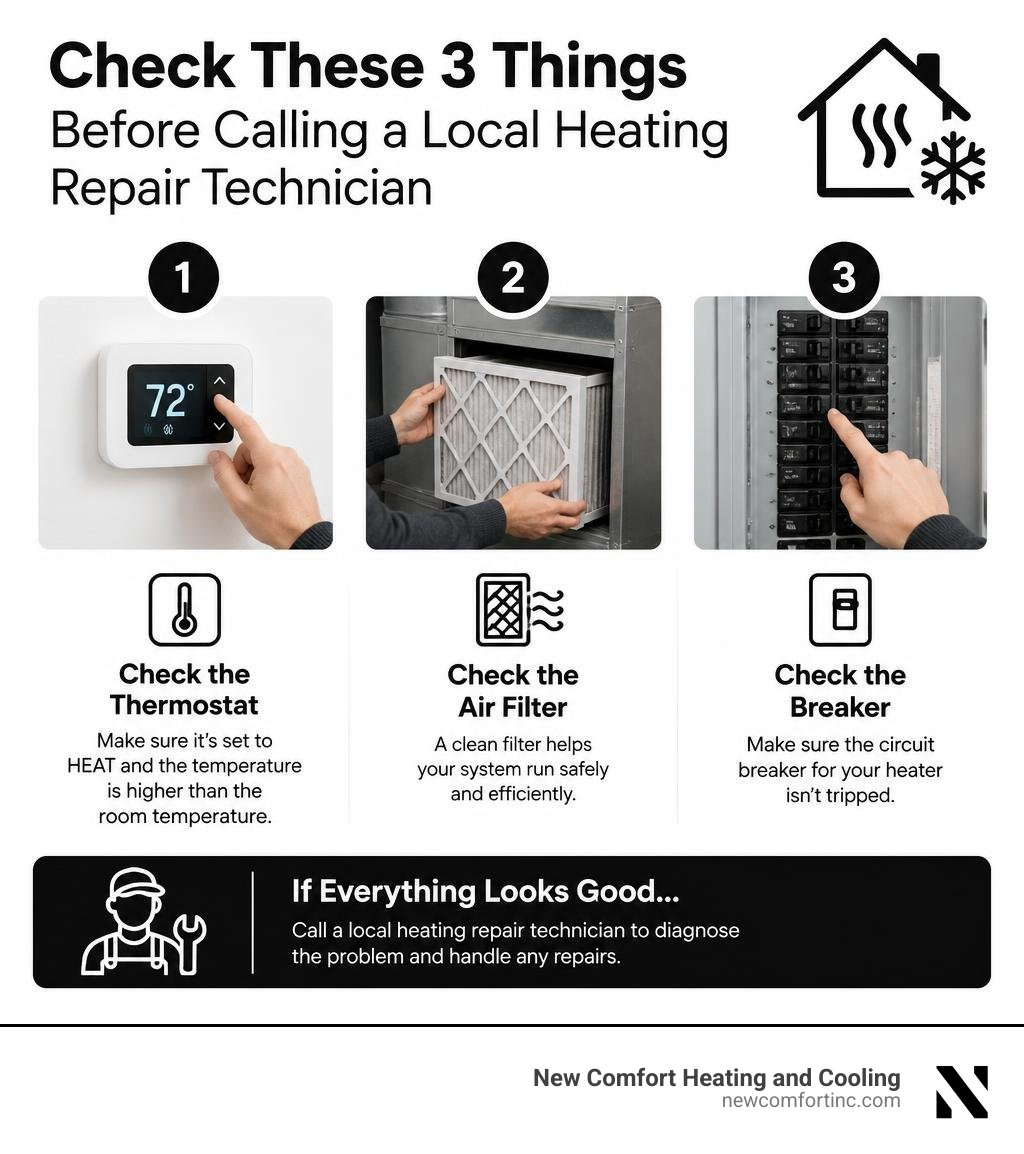
Basic central heater repair near me vocab:
Signs You Need Central Heater Repair Near Me
When winter settles over northern Illinois, your central heating system becomes the heart of your home. Recognizing early warnings of equipment failure prevents minor mechanical problems from snowballing into complete breakdowns during sub-zero cold snaps. Ignoring subtle shifts in system performance can lead to excessive energy waste, severe component damage, or potential safety hazards like carbon monoxide leaks.
When indoor comfort begins to slip, relying on professional heating services ensures that every safety control, burner assembly, and electrical connection is thoroughly evaluated. Common symptoms of system distress include:
- Frequent System Cycling: The unit turns on and off rapidly without reaching the set temperature.
- Uneven Room Temperatures: Certain rooms remain cold while others overheat.
- Weak Airflow: Supply registers produce barely noticeable air movement throughout living spaces.
- Persistent Yellow Burner Flames: A healthy gas furnace displays a crisp blue flame; a yellow or flickering flame suggests incomplete combustion.
- Unexplained Energy Spikes: Your utility bills climb significantly even though household heating habits haven't changed.
Diagnosing a Unit That Stops Working or Blows Cold Air
Discovering that your central heater has quit or is pushing chilly air through your supply vents is frustrating. While major mechanical failures require professional diagnostic tools, a few preliminary checks can help identify simple issues before you call in the pros.
Start with the thermostat. Verify that the system mode is set to "Heat" rather than "Cool" and that the fan setting is set to "Auto" instead of "On." When the fan runs continuously, it blows ambient room air between heating cycles, creating the false impression of a broken unit.
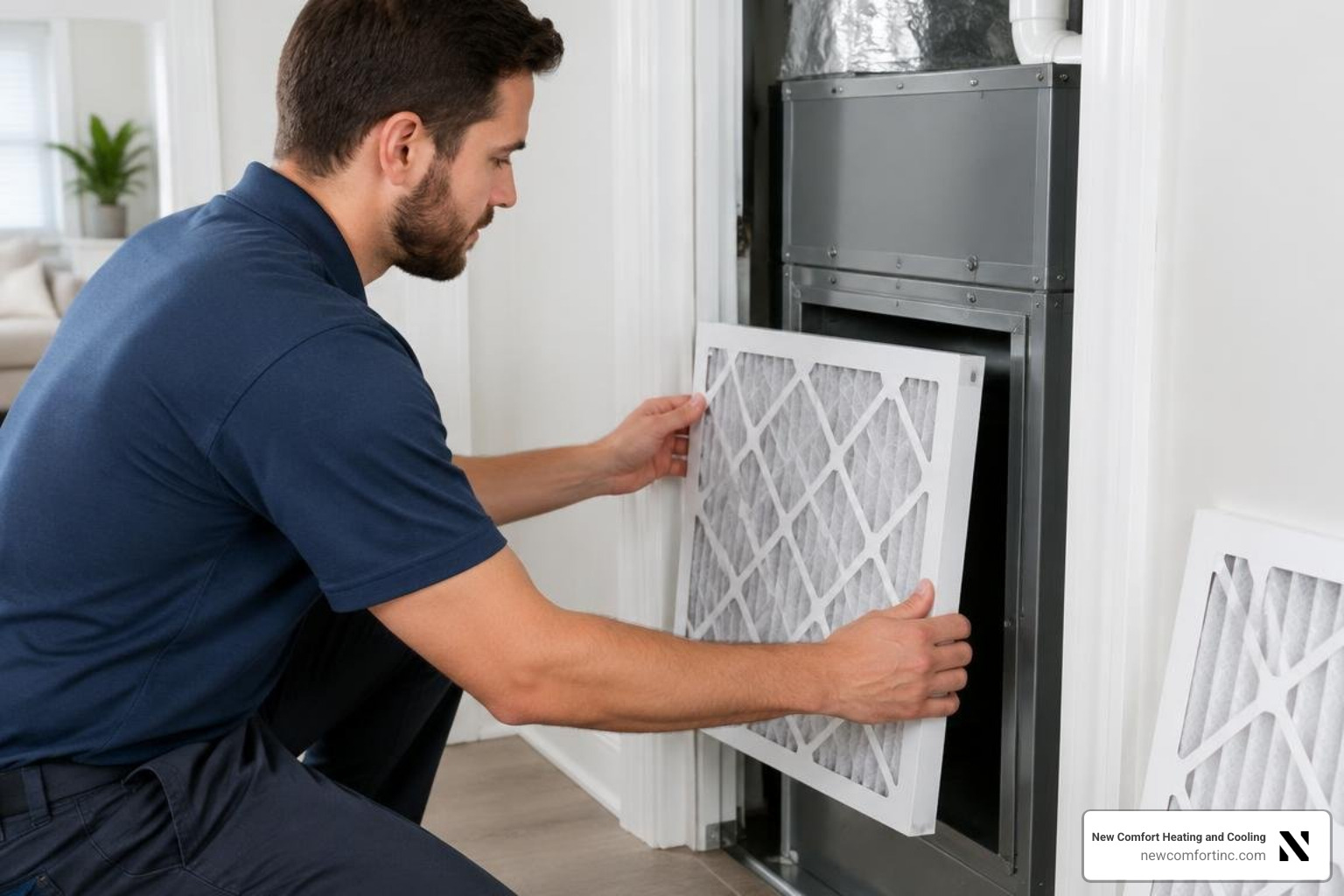
Next, inspect your furnace filter. A clogged filter severely chokes airflow, trapping heat inside the cabinet. When internal temperatures exceed safe thresholds, the high-limit switch automatically shuts down the burners to prevent system damage.
For additional troubleshooting guidance, explore our guide on what to do when your heater is blowing cold air. If basic resets, filter swaps, and electrical breaker checks fail to restore warmth, an internal component such as a cracked hot surface ignitor, faulty flame sensor, or malfunctioning gas valve requires professional repair.
Unusual System Noises and Burning Odors
A central heating system should operate with a gentle, consistent hum. Sudden, loud, or unfamiliar sounds usually point to mechanical wear or airflow restrictions:
- Squealing or Screeching: Indicates a worn blower motor bearing or a slipping fan belt that requires immediate lubrication or replacement.
- Loud Banging or Popping: Often occurs due to expanding and contracting metal ductwork, but a sharp bang at startup points to delayed ignition—where gas accumulates before igniting.
- Scraping or Metal-on-Metal Grinding: A clear sign of a broken blower wheel or loose motor mount. Shut the unit off immediately to prevent catastrophic internal damage.
Unusual smells also provide vital clues. While a slight dusty odor is normal when you turn on the heat for the first time in autumn, strong chemical, plastic, or electrical burning smells suggest overheated wiring or failing motor components. Most importantly, if you ever detect a rotten-egg sulfur odor—the additive used to identify natural gas—evacuate your home immediately, leave the doors open, and call your local gas utility from a safe distance.
How to Select a Qualified Heating and Cooling Contractor
Finding the right contractor involves more than just picking the first name that pops up online. A reputable heating service should deliver transparent communication, licensed technicians, and upfront explanations of all diagnostic findings before any work begins.
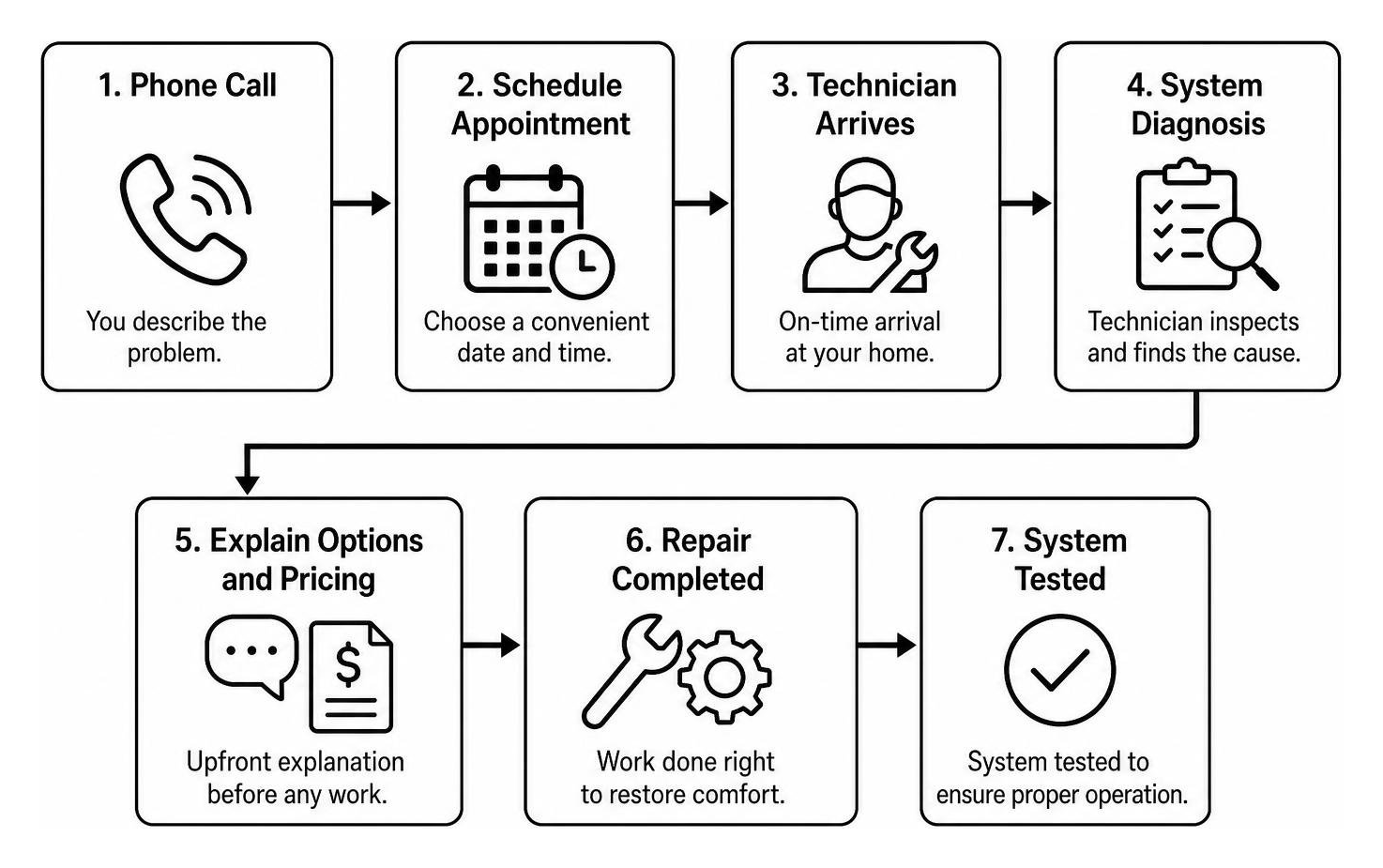
A dependable HVAC partner avoids high-pressure sales tactics, provides straightforward appointment windows, and staffs live customer support representatives who answer your calls around the clock.
Choosing Reliable Central Heater Repair Near Me
When evaluating local contractors across Justice and the greater Chicago area, take the time to verify their technical credentials and standing in the community. You can streamline your search by learning how to find reliable heater repair service in three steps.
Look for service providers who employ NATE-certified technicians, maintain active municipal licenses, carry comprehensive liability insurance, and conduct thorough employee background checks. Checking verified customer feedback and seeking local HVAC recommendations helps ensure you choose a team with a proven track record of punctuality, cleanliness, and technical excellence.
Checking Warranties, Guarantees, and Technician Credentials
Trustworthy heating companies stand firmly behind their craftsmanship. When booking a repair, ask about the specific warranties and guarantees protecting your investment:
- Upfront Pricing Guarantees: You receive a clear, flat-rate quote before the technician picks up a wrench, ensuring no surprise fees if the job takes longer than anticipated.
- Labor and Workmanship Warranties: The company covers all labor for a specified period (such as 30 to 90 days) following the repair.
- Manufacturer Parts Coverage: Replacement components, including control boards, blower motors, and gas valves, carry original equipment manufacturer (OEM) warranties.
- Property Protection Guarantees: Technicians utilize floor coverings and shoe covers, leaving your mechanical room clean and undamaged.
Deciding Between Heating System Repair vs. Replacement

When an older heating system experiences a significant mechanical breakdown, homeowners face a critical choice: fix the existing unit or invest in modern equipment? Striking the right balance depends on system age, overall reliability, and long-term operating costs.
Understanding the key differences in furnace repair versus replacement decisions helps you determine when continuing to fix an aging unit stops making financial sense.
Evaluating Long-Term System Performance and Efficiency
Central furnaces and heat pumps generally feature an operational lifespan of 15 to 20 years. As equipment crosses the 12-to-15-year mark, internal components suffer fatigue, efficiency drops, and replacement parts become increasingly difficult to source.
| Decision Factor | Keep and Repair System | Replace with New System |
|---|---|---|
| Equipment Age | Under 10 to 12 years old | Exceeds 15 years old |
| Repair Frequency | First breakdown in several seasons | Multiple service calls over the last two winters |
| Energy Efficiency | Stable monthly utility bills | Noticeable drop in seasonal AFUE performance |
| Critical Parts | Minor components (capacitors, sensors) | Major failure (cracked heat exchanger, compressor) |
| Home Comfort | Even heat distribution throughout rooms | Persistent cold spots and humidity imbalances |
If an extensive repair is needed on an older unit with a low Annual Fuel Utilization Efficiency (AFUE) rating, upgrading to modern equipment can provide significant monthly utility savings. Reviewing modern furnace replacement options and system types gives you a clear look at how high-efficiency two-stage and variable-speed systems improve indoor comfort. When you are ready to upgrade, our team provides complete furnace replacement solutions tailored to your home's square footage and heating load.
Scheduling Emergency Central Heater Repair Near Me
Freezing temperatures pose serious risks to both household comfort and structural plumbing. When winter storms hit, a furnace failure can cause indoor temperatures to plummet rapidly, putting water pipes at risk of freezing and bursting.
Having access to dependable 24-hour emergency HVAC services provides critical peace of mind when your heater fails outside of standard business hours. Homeowners in the southwest suburbs can count on dedicated Emergency HVAC Service in Justice, IL for fast dispatch, prompt diagnostics, and immediate safety interventions.
Essential Maintenance and Heating Assistance Programs
Routine preventative care is the single most effective way to extend equipment life, maintain manufacturer warranty compliance, and avoid unexpected mid-winter breakdowns. Maintaining a clean combustion chamber and calibrated airflow allows your system to deliver reliable warmth while keeping fuel consumption as low as possible across our entire HVAC service areas.
Preventative Service Schedules and Safety Inspections
We recommend scheduling professional heating maintenance once every year, ideally in early autumn before firing up the system for daily use. A comprehensive maintenance visit covers critical safety and performance checks:
- Inspecting the heat exchanger for hairline cracks, rust, and carbon buildup.
- Testing safety limit switches, flame rollout sensors, and combustion draft pressure switches.
- Cleaning and adjusting gas burner assemblies for optimal fuel combustion.
- Checking electrical connections, measuring motor amp draws, and lubricating moving bearings.
- Calibrating the thermostat and measuring temperature rise across supply and return plenums.
- Conducting electronic carbon monoxide testing around the furnace cabinet and flue pipe.
Enrolling in regular furnace maintenance plans ensures your system stays in peak condition year after year while giving you priority scheduling during busy winter months.
Low-Income and Emergency Heater Repair Assistance
If you or a loved one is facing a heating emergency during extreme weather but struggling with financial constraints, various public and community resources can help keep your home safe.
Federal programs such as the Low-Income Home Energy Assistance Program (LIHEAP) and the Weatherization Assistance Program (WAP) help qualifying households handle winter energy costs and urgent furnace safety repairs. Major municipalities and utility companies often provide crisis grants or subsidized emergency tune-ups for vulnerable residents. When heating equipment fails unexpectedly during severe cold, our guide to finding emergency furnace and boiler repair help offers useful resources and safety tips to keep your household safe while seeking assistance.
Frequently Asked Questions About Local Heating Repairs
How often should my central heating system be serviced?
Central heating systems should receive a professional tune-up at least once a year. Annual maintenance cleans internal burners, tests safety controls, verifies electrical connections, and ensures efficient, safe combustion. Homeowners should also inspect standard air filters monthly and replace them whenever dust and debris accumulate.
What brands of heating systems do repair technicians work on?
Experienced HVAC technicians are trained to diagnose and service all major heating brands and configurations. Whether your home relies on a Carrier, Trane, Lennox, Rheem, Goodman, York, Bryant, or Ruud system, the underlying mechanical principles—such as ignition controls, safety limit circuits, gas valves, and blower assemblies—follow standardized diagnostic protocols.
What factors influence the cost of an urgent heating repair?
The overall investment required for an urgent repair depends on several practical factors:
- Type and Accessibility of Failed Components: Basic electrical parts like ignitors, flame sensors, or capacitors take less time to replace than complex components like blower motors or inducer assemblies.
- Time of Dispatch: After-hours, weekend, or holiday service calls may involve specialized emergency diagnostic fees.
- Age and Brand of Equipment: Sourcing specialized or discontinued OEM replacement parts for legacy furnaces can require additional research and shipping time.
- Secondary System Damage: An issue caused by a neglected filter or electrical surge may impact multiple interconnected components.
For a deeper breakdown of emergency service variables, read our analysis on the factors that influence emergency HVAC repair costs.
Conclusion
A dependable central heating system is essential for surviving freezing winter weather in comfort. Knowing how to troubleshoot basic airflow problems, identifying early mechanical warning signs, and partnering with a trusted local HVAC provider helps you protect your home against unexpected heating emergencies.
At New Comfort Heating and Cooling, we take pride in delivering fast, dependable, and personalized comfort solutions for families throughout Justice, Illinois, and surrounding Chicago communities. With our 24/7 live phone support, prompt same-day service, and transparent pricing, you can always count on us to restore warmth safely and efficiently. Contact us today to schedule your professional furnace repair and keep your home cozy all season long.