Air Heater Repair: What to Check When It Blows Cold Air
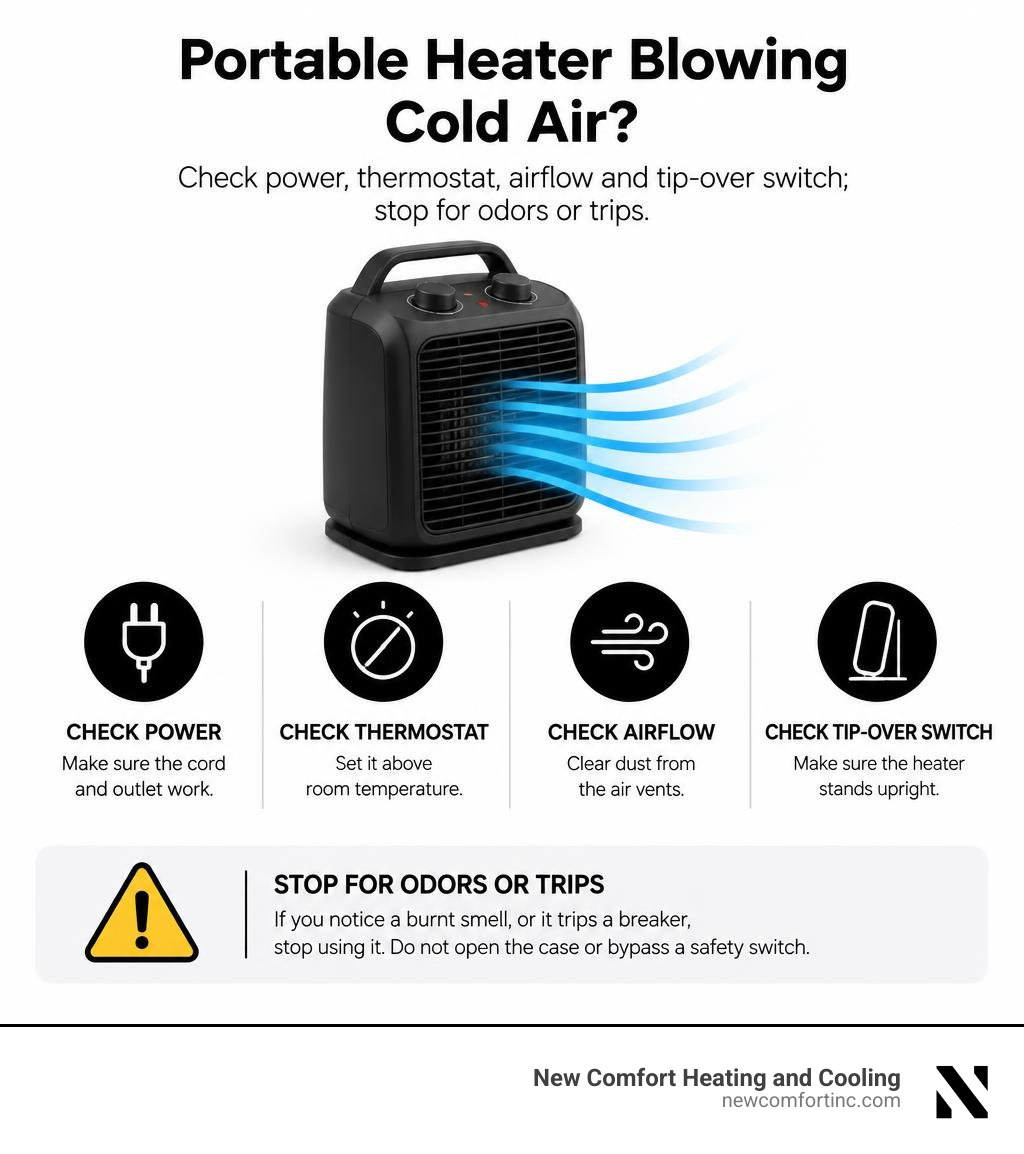
For basic air heater repair, turn off and unplug your portable heater, then let it cool. Check that the cord is undamaged, the outlet works, and the thermostat is set above room temperature. Clear dust from the air vents and make sure the heater stands upright so its tip-over switch can reset. Plug it back in and try again.
If it still blows cold air, trips a breaker, or smells burnt, stop using it. Do not open the case or bypass a safety switch. The checks below will help you spot simple problems and know when a heater needs professional attention.
Air heater repair terms made easy:
Essential Safety Precautions Before Servicing Any Air Heater
Before you turn a single screw or test an electrical terminal, safety must come first. Air heaters generate intense thermal energy and draw substantial electrical currents. Servicing a hot or energized unit creates serious risks of severe burns, electrical shock, or fire.

Whenever you inspect or service any heating equipment, follow these fundamental safety protocols:
- Complete Power Disconnection: Always unplug portable electric units from the wall outlet. For hardwired units, vehicular heaters, or garage industrial units, disconnect the battery bank or switch off the main circuit breaker. Apply lockout/tagout procedures so no one accidentally re-energizes the circuit while you are working.
- Mandatory Cooling Period: Allow the unit to sit idle for at least 20 to 30 minutes after operation. Components like ceramic heating elements, combustion chambers, glow plugs, and heat exchangers can reach temperatures exceeding 300 degrees Fahrenheit and will cause severe burns on contact.
- Personal Protective Equipment (PPE): Wear safety glasses to protect your eyes from debris, insulated gloves when handling mechanical parts, and work gloves when handling sharp sheet metal or cleaning soot.
- Atmospheric and Ventilation Checks: If you are troubleshooting a fuel-burning unit (diesel, kerosene, or propane air heaters), never run test cycles in an enclosed space without dedicated exhaust venting. Ensure the area is completely free of volatile paint fumes, gasoline vapors, or combustible dust.
- Never Bypass Safety Controls: Safety devices like thermal high-limit cutoffs and tip-over switches exist to protect life and property. According to the Industrial Air Heater Maintenance Manual, high-limit switches are precision safety components rated for thousands of operational cycles; bypassing them turns a minor malfunction into an extreme fire hazard.
Common Warning Signs Your Air Heater Needs Immediate Attention
Heaters rarely fail without warning. Paying attention to early operational changes allows you to address mechanical wear before you are left with zero heat during a freezing night. If you want to learn how to diagnose HVAC issues systematically, watch for these common red flags:
- Cold or Lukewarm Air Discharge: The fan spins normally, but the air coming out of the louvers feels room-temperature or barely warm.
- Unusual Noises: Grinding, squealing, or loud clicking sounds often point to a failing blower motor bearing, an unbalanced fan impeller, or a misaligned rotor blade.
- Pungent Burning or Diesel Smells: While a light dusty odor is normal when firing up a unit for the first time in autumn, strong plastic, electrical, or unburnt diesel smells indicate severe overheating, wiring damage, or incomplete combustion.
- Frequent Short-Cycling: If the heater turns on, runs for 60 to 90 seconds, and shuts down abruptly, it is likely tripping its internal high-limit thermostat due to restricted airflow or component failure.
- Tripped Breakers or Blown Fuses: Repeatedly blowing internal fuses or tripping your home's breaker panel means the heater is pulling excessive current due to a shorted element or locked motor.
Step-by-Step Air Heater Repair: Troubleshooting Common Failures
Diagnosing an air heater requires a structured process of elimination. Whether you are troubleshooting a workshop space heater or a diesel parking heater, use this diagnostic reference table to match symptoms with their root causes:
| Symptom | Probable Cause | Recommended Action |
|---|---|---|
| No power / Completely unresponsive | Blown fuse, damaged power cord, tripped high limit, or low DC battery supply | Test supply voltage with a multimeter; check and replace blown fuses; reset thermal cutoffs. |
| Blower runs, but blows cold air | Failed heating element, defective glow plug, or open-circuit high-limit switch | Test element continuity; check glow plug resistance; verify thermostat settings. |
| Starts, smokes, then shuts down | Low startup voltage, restricted air intake/exhaust, or clogged glow plug screen | Ensure startup voltage meets minimum thresholds; clear intake/exhaust ducts; clean screen. |
| Loud clicking or buzzing noise | Failing contactor, worn rotor blades, or loose fan housing | Inspect contactor points; check rotor gap (.003" to .004"); tighten loose sheet metal. |
| Heater shuts down after 1-2 minutes | Overheating due to restricted airflow or dirty heat exchanger fins | Clean intake filters; vacuum internal fins; verify blower motor RPM. |
When tackling advanced repairs on fuel-fired units, consulting a comprehensive Diesel Air Heater Fault Finding Guide can provide precise diagnostic procedures for specific electronic controllers.
Power and Voltage Checks for Portable Air Heater Repair
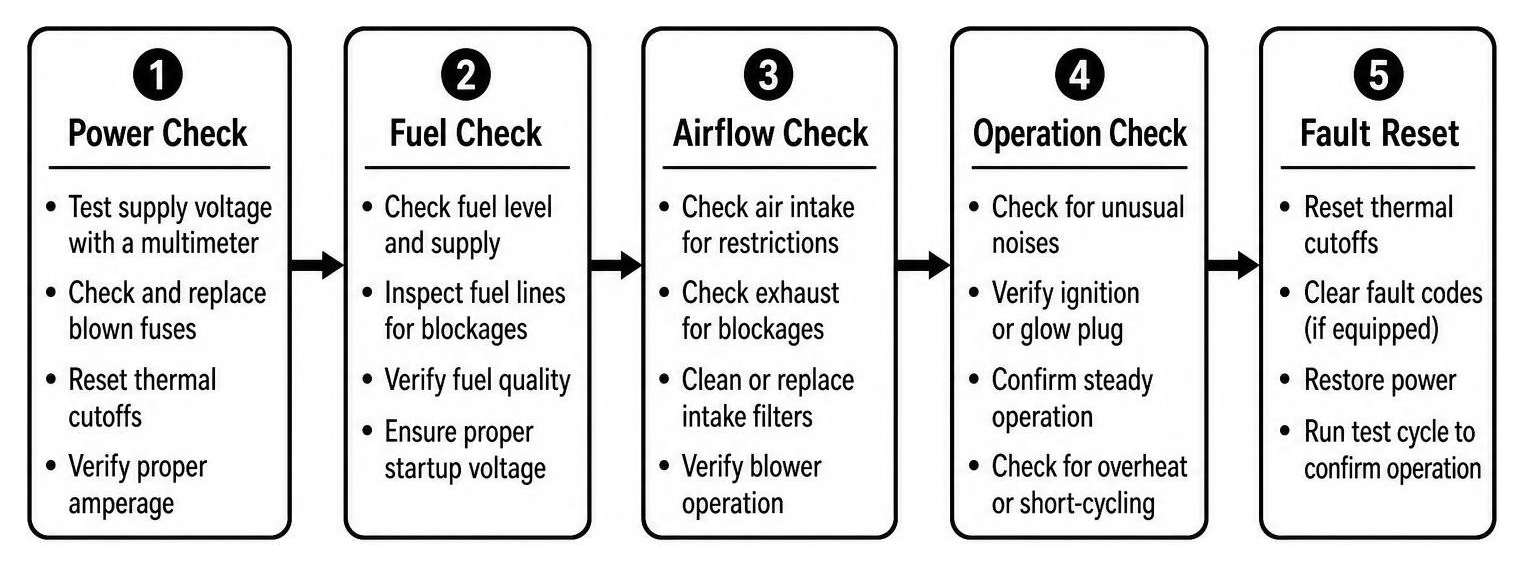
Electrical problems are the most common reason an air heater fails to run. A heater requires stable voltage and proper amperage to operate safely and effectively.
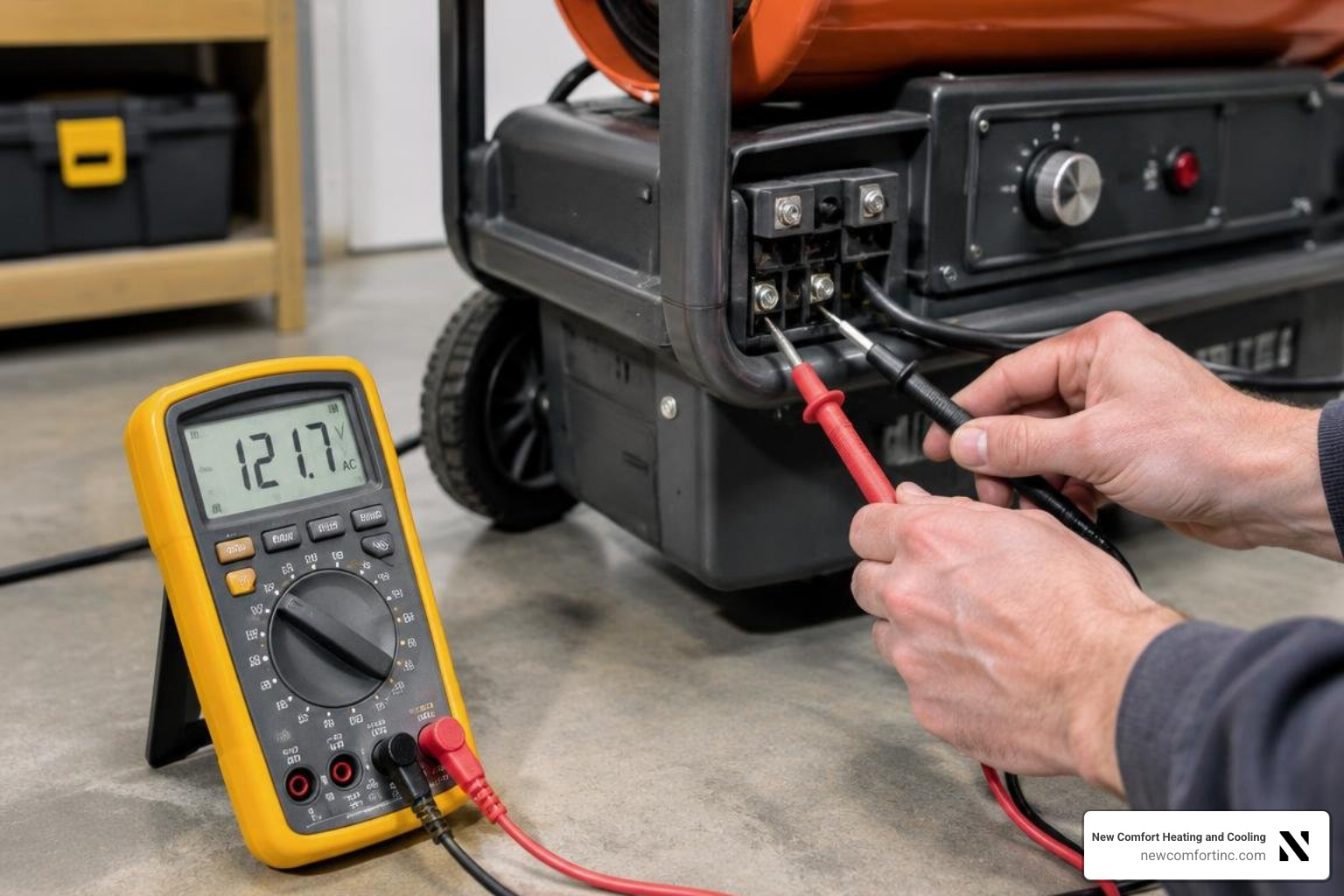
Start by inspecting the power source. For 120V portable space heaters, plug a lamp or test meter into the wall outlet to confirm power delivery. Inspect the entire length of the power cord for fraying, bent prongs, or melting around the plug head. Never power an air heater through an undersized extension cord, as voltage drop can cause the cord to overheat and starve the heater of current.
For 12V diesel air heaters, voltage drop during startup is the leading cause of failed ignition. During the initial startup phase, the internal glow plug energizes, drawing a heavy load of 6 to 10 amps. For reliable ignition, the voltage measured directly at the heater's wiring harness during startup should be approximately 12.4 volts or higher. If the battery bank rests at 12.6V but drops below 11.5V when the glow plug kicks on, the unit will abort the start sequence. Use heavy-gauge wiring and ensure all battery terminals are clean and free of corrosion.
In heavy-duty electric air heaters, check the internal magnetic contactor. Industrial contactors are typically rated for around 100,000 cycles, but over time, electrical arcing can pit or burn the contact points, preventing current from reaching the heating elements.
Fuel Supply, Priming, and Ignition Diagnostics
If your fuel-fired air heater powers up and spins its blower but fails to establish a flame, the issue lies within the fuel delivery or ignition circuit.
When firing up a new installation or a unit that has run dry, air trapped in the fuel line prevents diesel from reaching the combustion chamber. The fuel metering pump must pulse steadily to push fuel up the line. You should hear a distinct, rhythmic ticking sound from the pump.
If you are performing practical DIY HVAC repair steps, observe these fuel delivery guidelines:
- Limit Start Cycles: Fuel line priming may require several cycles to push fuel through a dry line. However, if the heater does not prime the line and start after 6 to 8 start cycles, stop attempting restarts. Repeated cranking risks pooling raw fuel in the combustion chamber.
- Safety Lockout Timing: Modern heaters, such as Eberspächer models, feature built-in safety lockouts. For example, if combustion is not detected within 90 seconds after fuel delivery begins, or if the flame extinguishes and fails to re-ignite within 90 seconds, the control box automatically shuts down the fuel pump to prevent hazards.
- Inspect the Glow Plug Screen: Unburnt fuel or low-quality diesel can foul the fine mesh glow plug screen with sticky carbon deposits. Remove the glow plug, extract the cylindrical screen, and clean it with brake cleaner or replace it if clogged.
Resolving Smoke, Odors, and Airflow Blockages
Smoke and foul smells are clear indicators of incomplete combustion or restricted thermal transfer.
- White Smoke on Startup: This indicates unburnt fuel vaporizing against a glow plug that is not reaching full operating temperature, usually caused by low voltage or an air leak in the fuel line.
- Black Smoke During Operation: Black soot indicates an overly rich fuel-to-air mixture. Check the combustion air intake pipe for insect nests, dirt, or crushed tubing. Ensure the exhaust pipe is entirely clear of soot or physical obstructions.
- Overheating Odors in Electric Heaters: In forced-air electric units, a burning smell accompanied by rapid cycling occurs when dust coats the heating elements or when the blower fan slows down. Industrial units equipped with high-limit thermostats rated for 6,000 cycles will nuisance-trip if the heater core fins become clogged with dust or if ambient temperatures exceed operating limits.
- Rotor and Pump Clearances: In portable torpedo-style forced-air heaters, ensure the carbon rotor blades inside the air pump housing are clean and dry. Never lubricate carbon rotor blades with oil; clean them exclusively with brake cleaner. When reassembling, set the gap between the top of the rotor and the pump housing between .003 inches and .004 inches using a feeler gauge, and tighten the cover screws in a staggered pattern.
Reading and Clearing Diagnostic Fault Codes
Modern digital air heaters incorporate microprocessor control units that log operating parameters and output specific fault codes when a malfunction occurs.
To retrieve diagnostic codes on digital controllers, access the settings menu or observe the blinking LED indicator sequence on basic controllers. For instance, according to standard Planar Air Heater Diagnostic Codes, specific numeric sequences correspond to direct component faults:
- Codes indicating overheating (such as overheat sensor trigger codes) point to restricted ducting, a failed circulation fan, or heavy carbon buildup inside the heat exchanger.
- Codes indicating open or short circuits frequently highlight oxidized terminal pins or broken wiring to the fuel pump or flame sensor.
- Codes indicating voltage thresholds occur when system voltage climbs above 16V/32V (overvoltage) or falls below 10.5V/21V (undervoltage).
Once you have identified the fault and completed the physical repair, use the controller's diagnostic interface to clear the fault memory. If a control box enters a hard safety lockout after repeated ignition attempts, you may need to perform an electronic reset procedure or disconnect main power for several minutes to restore functionality.
Routine Maintenance to Prevent Future Heater Breakdowns
Preventive maintenance is the single most effective way to ensure reliable heating and avoid unexpected breakdowns. Integrating basic inspections into your seasonal routine extends equipment life significantly.
- Clean Air Intakes and Louvers: Vacuum dust, pet hair, and workshop lint from the intake grates monthly. Restricted intake air is the number one cause of premature thermal fuse failure.
- De-Soot the Combustion Chamber: On fuel-fired heaters, remove the burner insert every 500 operating hours to clean out carbon deposits from the heat exchanger using a wire brush.
- Inspect Electrical Connections: Annually inspect wiring harnesses for signs of heat discoloration, loose terminal screws, or pin oxidation. Tighten terminal lugs and apply dielectric grease where appropriate.
- Flush Fuel Systems: If storing a fuel-burning heater for the summer, run the unit on clean, fresh kerosene or premium diesel treated with a stabilizer for 20 minutes to prevent gummy fuel varnish from clogging the internal metering pump.
Just as space heaters require attention, scheduling regular furnace maintenance for your central heating system ensures your entire home stays warm and safe throughout the winter months.
Air Heater Repair vs. Replacement: When to Upgrade
When an air heater malfunctions, deciding whether to invest in replacement parts or purchase a new unit comes down to age, cost, and safety.
A solid rule of thumb: a heater under 10 years old can usually be repaired rather than replaced for most problems, including ignition failures, blower motor issues, thermostat errors, worn contactors, or broken belts.
However, replacement is the smarter choice when:
- The Heat Exchanger is Cracked: A compromised combustion chamber or cracked heat exchanger can release dangerous carbon monoxide into your living or working space.
- Repair Costs Exceed 50% of Replacement Value: If sourcing control boards, blowers, and element assemblies approaches the cost of a modern, more efficient model, replacement is the better financial move.
- Obsolete Safety Features: Older space heaters lacking modern tip-over switches, overheat thermal cutoffs, or cool-touch exteriors pose unnecessary hazards.
To explore this decision in greater detail for whole-home systems, read our comprehensive furnace repair vs replacement guide.
DIY vs. Professional Air Heater Repair: Making the Right Call
While clearing air vents, replacing an inline fuse, or cleaning a glow plug screen are well within the scope of a handy DIYer, certain repairs require professional expertise.
- Safe for DIY: Cleaning dust from fan grates, changing accessible filters, replacing simple power cords, resetting external safety switches, and cleaning glow plug screens.
- Requires Professional Service: Testing internal gas valves, repairing cracked heat exchangers, calibrating combustion pressure, servicing high-voltage commercial 240V/480V circuits, and resolving persistent electrical short-circuits.
When complex electrical or combustion issues arise, trusting certified HVAC professionals guarantees that repairs meet stringent safety codes and manufacturer specifications.
Frequently Asked Questions About Space and Air Heater Repair
Why is my air heater blowing cold air instead of heat?
An air heater blowing cold air is typically caused by a tripped high-limit thermal switch, a blown thermal fuse, a failed heating element, or an unignited burner. If the blower runs but the heating mechanism fails to engage, the unit shuts off heat generation as a safety precaution while keeping the fan running to cool down internal components.
Can I perform a full heater tune-up myself safely?
You can safely perform basic maintenance tasks such as vacuuming dust filters, clearing intake grilles, and checking external wiring for damage. However, a full technical tune-up—which involves measuring internal gas pressures, testing flame rectification circuits, analyzing combustion gases, and verifying electrical safety limits—should be handled by a certified HVAC technician.
How many priming attempts are safe before checking for fuel faults?
You should not exceed 6 to 8 priming or start cycles if the heater fails to ignite. Attempting repeated starts beyond this threshold can flood the internal combustion chamber with raw fuel, leading to excessive white smoke, ignition backfires, or hard safety lockouts that require disassembling the unit to drain unburnt fuel.
Conclusion
A malfunctioning heater does not have to leave you out in the cold. By following a methodical diagnostic approach—checking supply power, verifying fuel delivery, clearing airflow restrictions, and interpreting fault codes—you can quickly solve common heating problems. Regular seasonal maintenance is the best defense against unexpected breakdowns.
When simple troubleshooting steps do not resolve the issue, or if you are dealing with central heating systems, electrical faults, or cracked heat exchangers, our team at New Comfort Heating & Cooling is here to help. Contact us today for dependable professional furnace repair services and keep your space warm, comfortable, and safe all winter long.