What to Expect from a 24-Hour HVAC Service
When You Need 24-Hour HVAC Near Me: What to Expect
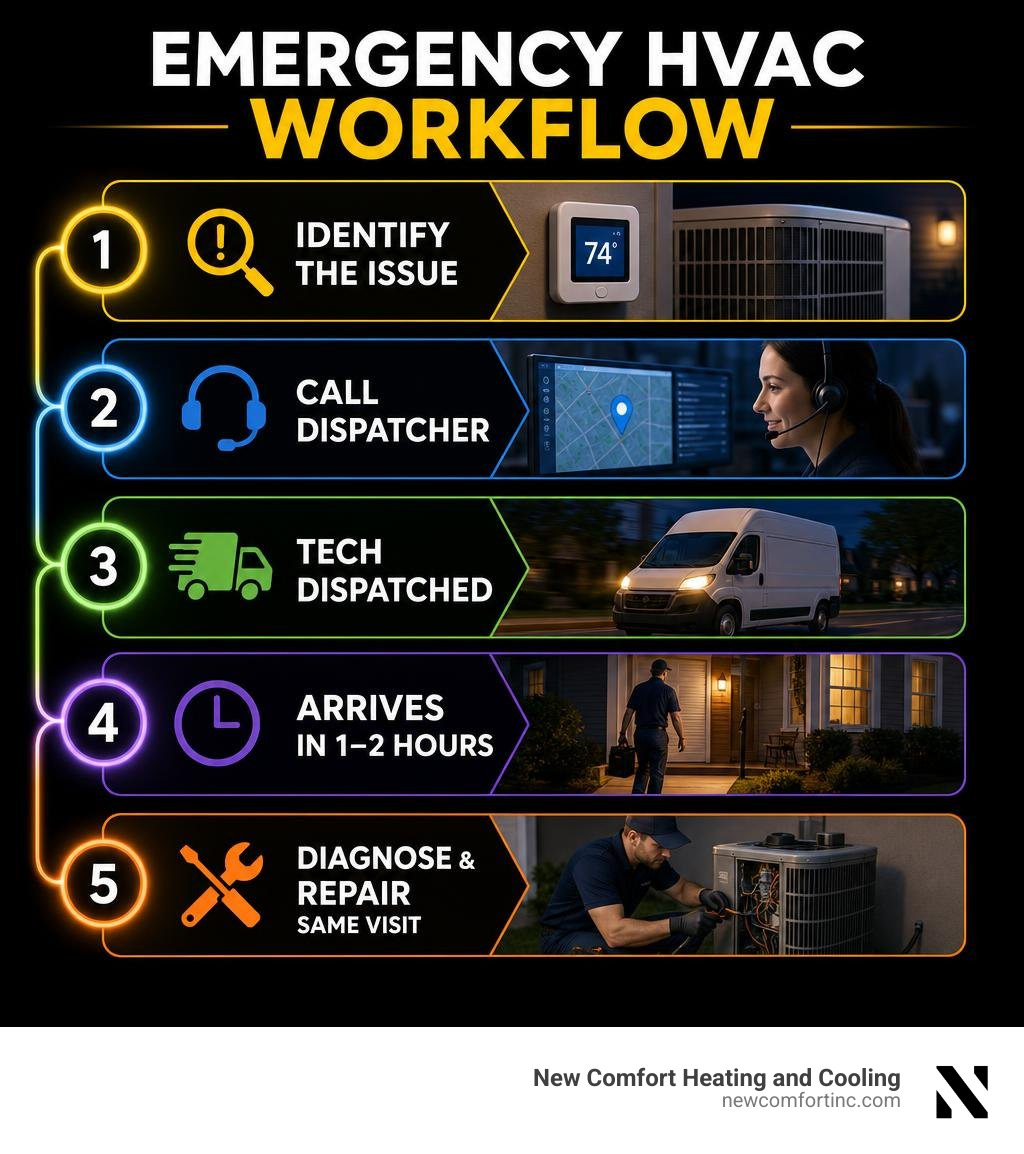
If you're searching for 24 hour HVAC near me, here's what you need to know right now:
- Call first — a live dispatcher can triage your situation immediately
- Turn off your system if you smell gas, see sparks, or notice burning smells
- Check the basics — thermostat settings and your circuit breaker before the tech arrives
- Expect arrival within 1–2 hours for most emergency calls
- Repairs are often completed same-visit when technicians carry stocked trucks
Your heating or cooling system doesn't care what time it is. It can fail at 2 AM on the coldest night in January or on a sweltering summer weekend when every tech in the Chicago suburbs seems to be booked solid. When that happens, you need to know exactly what to do and who to call — fast.
This guide walks you through the full picture of 24-hour HVAC service: what counts as a true emergency, how long you'll wait, what it costs, and how to pick a company you can actually trust.
At New Comfort Heating and Cooling, our experienced team has handled hundreds of after-hours HVAC emergencies that required exactly the kind of 24 hour HVAC near me response this guide covers. In the sections ahead, we'll share what we've learned so you can make smart, confident decisions — even at midnight.
Identifying True HVAC Emergencies vs. Standard Repairs

When your heating or cooling system goes on strike in the middle of the night, it is completely natural to feel an immediate wave of panic. However, not every heating or cooling issue warrants an immediate midnight service call. Distinguishing between a critical emergency and a issue that can wait until standard morning business hours saves time, stress, and unnecessary after-hours disruption.
A true emergency is generally defined as any failure that threatens property safety, presents a health hazard, or causes dangerous indoor temperature extremes during harsh Chicagoland weather. If you are experiencing loss of climate control during sub-zero winter temperatures or a heatwave, that qualifies as an urgent situation. On the other hand, minor annoyances—such as a slightly uneven temperature between bedrooms or a minor noise during start-up—can typically be evaluated during normal business hours.
If you are dealing with a severe heating shutdown during freezing weather, review our guide on No Heat at 2 AM? Your Guide to 24 Hour Emergency HVAC Services to help determine whether you need immediate dispatch.
What Qualifies as an Emergency Requiring a 24 Hour HVAC Near Me?
How do you know when it is time to grab your phone and look for a 24 hour hvac near me? Here are the primary red flags that require immediate 24/7 professional assistance:
- Extreme Weather Conditions: When exterior temperatures drop below freezing in Chicago or Justice, IL, a furnace failure can cause household pipes to freeze and burst within hours. Similarly, during severe summer heatwaves, indoor temperatures can spike to dangerous levels, posing severe health risks to infants, elderly family members, and pets.
- Gas Smells or Rotten Egg Odors: A distinct natural gas odor near your furnace or boiler is an extreme safety emergency. Natural gas is naturally odorless, but utility companies add mercaptan to give it a distinct sulfur/rotten egg scent. If you smell this, immediately evacuate the property and contact your gas utility and emergency services before calling an HVAC provider.
- Electrical Hazards and Burning Smells: Burning plastic, electrical acrid odors, visible sparks, or active smoke coming from your air handler or outdoor condenser mean electricity is shorting or components are melting. Shut off the breaker switch immediately.
- Complete System Failure with Risk of Secondary Damage: Massive water leaks flooding from clogged condensate drain pans or frozen evaporator coils thaw quickly and can destroy ceilings, drywall, and flooring if left unaddressed.
- Repeated Breaker Trips: If your HVAC system immediately trips your home circuit breaker every time it attempts to ignite or engage, do not keep flipping the switch back on. This indicates an internal electrical ground fault or locked compressor motor.
When your cooling system breaks down completely during peak summer weather, review our breakdown on AC Not Working? Here's What Might Be Wrong to help identify primary failure points before reaching out.
Common Repairs Handled During Late-Night Service Calls
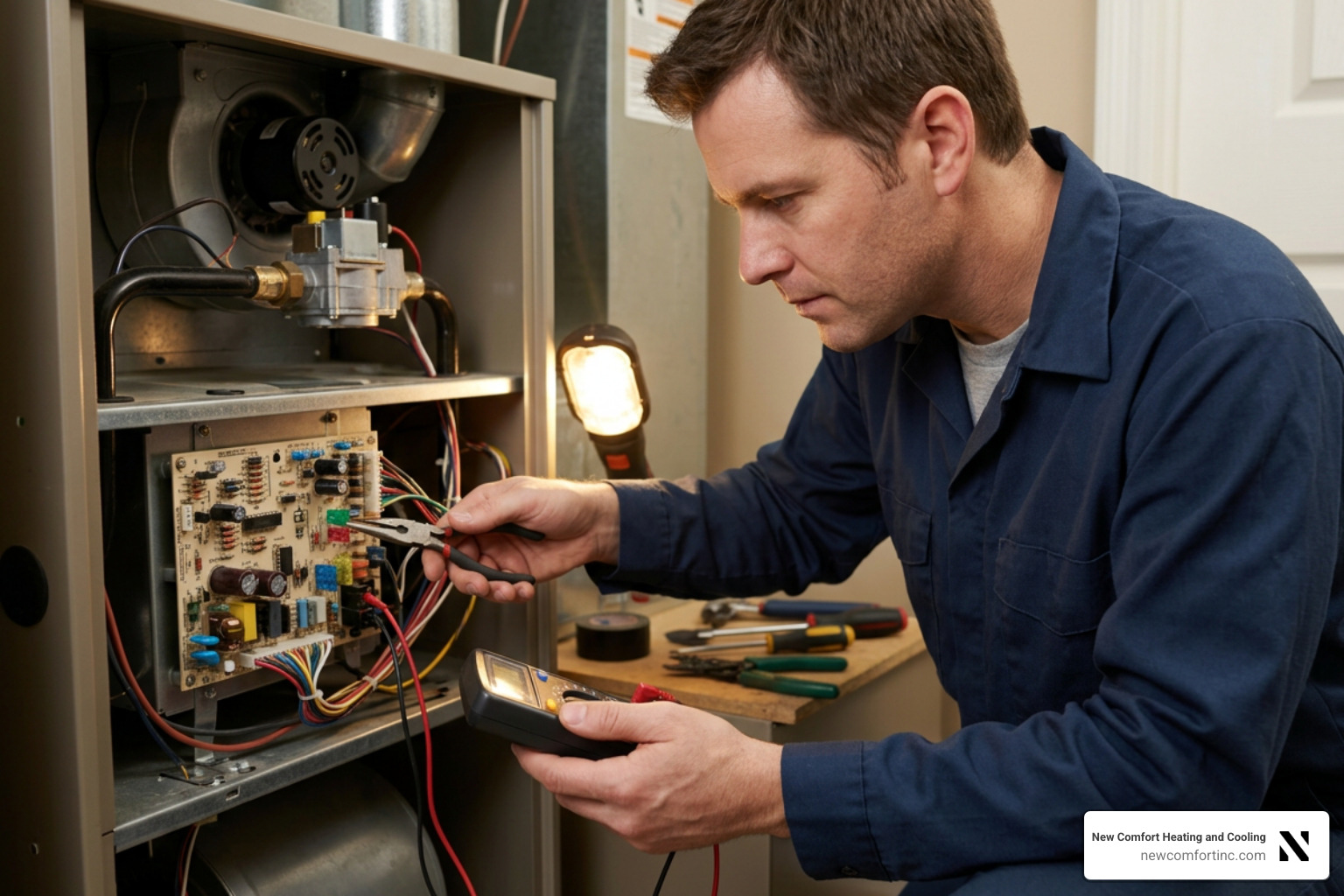
When an emergency technician arrives at your door, they are prepared to diagnose and fix a wide range of sudden mechanical and electrical breakdowns on the spot. Some of the most frequent middle-of-the-night fixes include:
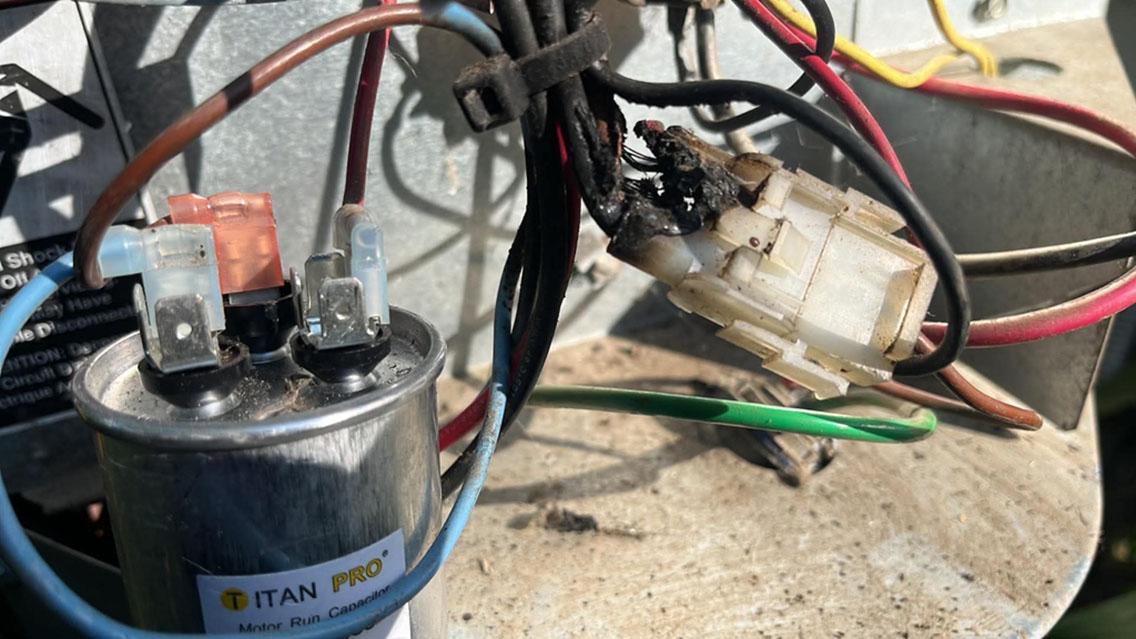
- Capacitor Replacements: Capacitors store and release electrical power to start and run the compressor and fan motors. Extreme heat causes capacitors to swell, leak, or fail, bringing the entire cooling system to a halt.
- Blower Motor and Contactor Fixes: Contactor switches control electrical flow to your outdoor compressor. When contactors pit, burn out, or get stuck, the system fails to start or refuses to shut off. Blower motors can also overheat or lock up, stopping airflow entirely.
- Drain Valve and Condensate Drain Clearing: A blocked drain line triggers safety float switches that shut down your unit automatically to prevent major indoor water damage. Clearing line blockages or replacing improperly installed drain valves restores system functionality quickly.
- Ignitor and Flame Sensor Cleaning or Replacement: Modern gas furnaces rely on electronic hot-surface ignitors and flame sensors. Dirt build-up or cracked ignitors prevent your furnace from lighting safely, causing instant system shutdown.
To better understand why these components fail without warning, explore our article on The Most Common HVAC System Failures and How to Avoid Them.
Response Times, Preparation, and Cost Structure for Emergency Repairs
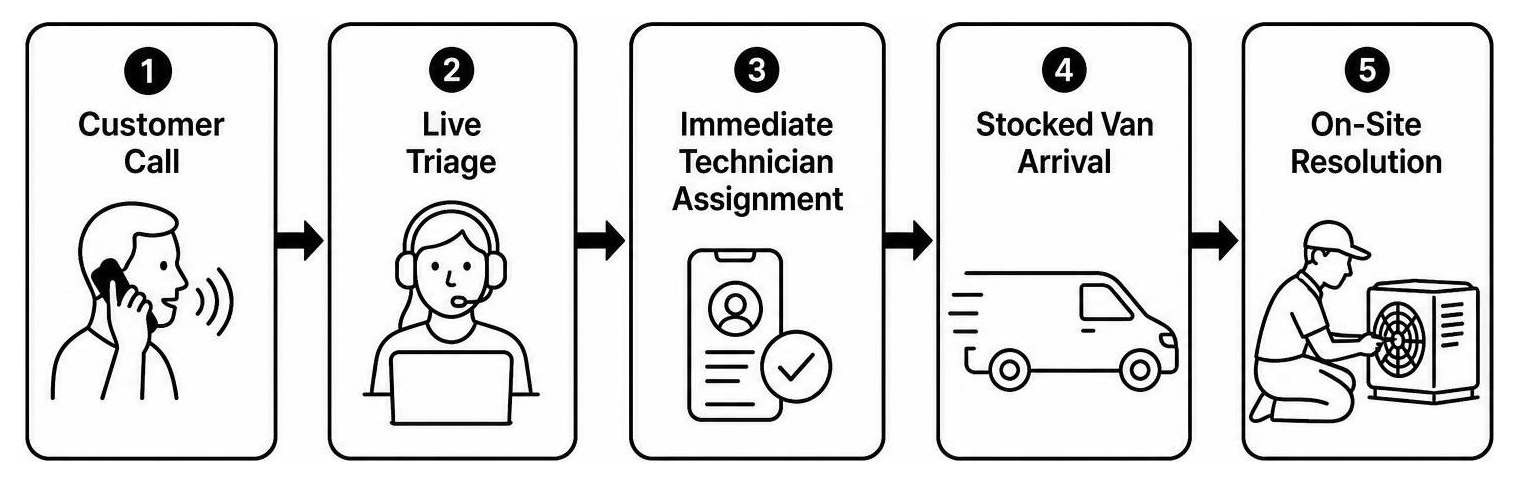
Understanding what happens behind the scenes after you place an emergency call helps set clear expectations. When you contact a dedicated 24-hour service provider, your call does not land in an unmonitored voicemail inbox. Instead, a live dispatcher evaluates your situation, determines priority levels based on safety and weather conditions, and immediately alerts an on-call technician.
How Fast Will a Tech Arrive When Searching for 24 Hour HVAC Near Me?
When you place a call for a 24 hour hvac near me, realistic response times depend on several factors, including weather severity, time of night, traffic conditions, and current call volume.
- Average Dispatch Window: For urgent service calls across Chicago and Justice, IL, typical arrival times range between 1 to 2 hours from the moment you confirm the dispatch.
- Triage Scheduling: During extreme weather events—such as winter blizzards or 95-degree heatwaves—dispatchers prioritize calls involving vulnerable individuals (elderly residents, infants, or residents with medical conditions) or acute hazards like active water leaks and electrical burning odors.
- Communication: A reliable emergency provider keeps you updated. You should expect a phone call or text notification when the technician is en route to your home, along with an accurate estimated time of arrival.
If you are located in the southern suburbs and need prompt local service, read about Local 24hr HVAC Repair Services to Save Your Day and Night to see how local technicians coordinate rapid emergency dispatches.
Safety Steps to Take While Waiting for Your Technician
While you wait for your emergency technician to arrive, taking proactive safety steps protects your household and helps make the repair process smooth and efficient:
- Turn Off the System: If you detect burning smells, screeching metal sounds, electrical shorting, or water pooling around your furnace/air handler, turn off the system at the thermostat and switch off the dedicated circuit breaker in your electrical panel.
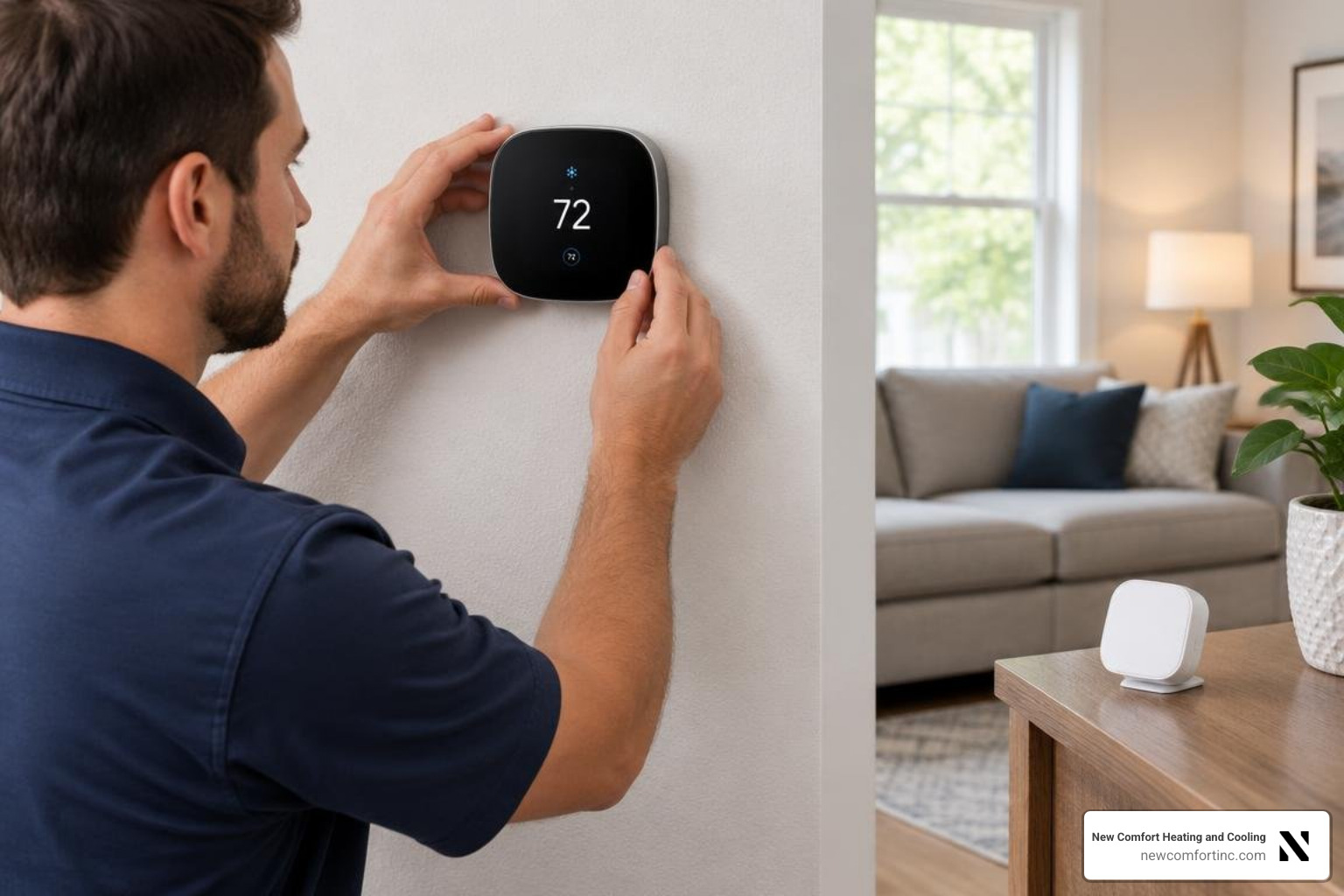
- Check the Thermostat: Double-check that your thermostat is powered on, has fresh batteries (if battery-operated), and is set to the correct mode ("Heat" or "Cool") with the setpoint temperature adjusted properly.
- Clear Access Paths: Make sure the paths leading to your indoor air handler, furnace, attic access, basement, and outdoor condenser unit are clear of personal belongings, boxes, snow, or overgrown yard debris.
- Keep Pets and Children Safe: Secure pets in a closed room and ensure family members remain at a safe distance from the workspace so the technician can carry tools and heavy equipment safely.
- Gather System Information: If accessible, locate the model and serial numbers on your equipment casing. Having this information ready can help the technician verify part compatibility even faster.
For a helpful checklist on simple pre-arrival diagnostics, read our step-by-step guide on How to Diagnose HVAC Issues.
Understanding Emergency Rates and Stocked Truck Inventory
Emergency after-hours HVAC services differ from standard daytime appointments in terms of logistics and cost structure. Because emergency services require dedicated technicians to be on call throughout the night, on weekends, and during major holidays, service providers apply after-hours fee structures.
Key aspects of emergency pricing and service availability include:
- Transparent Billing: A trustworthy provider communicates dispatch fees and evaluation costs upfront during your initial call. There should never be hidden surcharges or surprise fees added after work is completed.
- Flat-Rate Pricing: Top-tier companies utilize flat-rate pricing structures for standard repairs. This means you pay a consistent rate for specific repair tasks regardless of how many hours the technician spends resolving the issue.
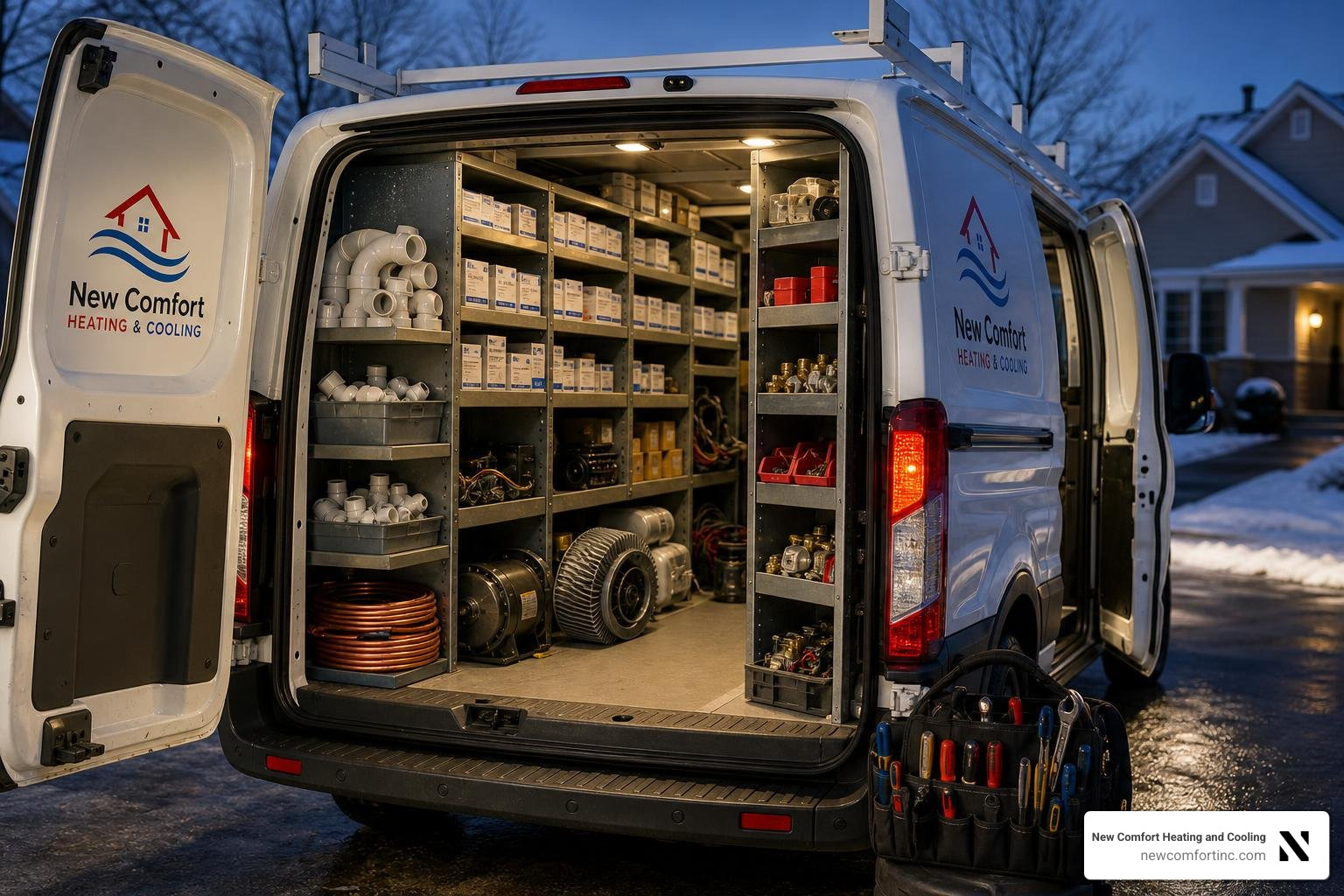
- Fully Stocked Trucks: Emergency technicians drive service vehicles loaded with high-grade replacement parts, including dual-run capacitors, universal fan motors, contactors, flame sensors, hot surface ignitors, expansion valves, and control boards. Carrying standard parts ensures that the majority of emergency repairs are completed on the very first visit.
How to Choose a Reliable 24 Hour HVAC Near Me
When an HVAC failure happens in the middle of the night, searching frantically for a 24 hour hvac near me can leave you vulnerable to untrustworthy contractors or unlicensed handymen who take advantage of urgent situations. Selecting a reputable, licensed, and transparent contractor guarantees high-quality workmanship and protects your home investment.
Essential Licensing and Certifications to Look For
Before allowing any technician into your home - especially during late-night hours - verify that the company meets strict industry standards:
- Proper Licensing: Verify that the company holds valid state and local HVAC contractor licensing. Legitimate licensing ensures the business complies with building codes, safety regulations, and technical execution standards.
- Insurance and Bonding: Never hire an uninsured contractor. Verified liability insurance and workers' compensation coverage shield you from financial liability in the event of accidental property damage or worker injury on your premises.
- EPA Section 608 Certification: Any technician handling refrigerants must hold official EPA certification to purchase, test, recover, and handle chemical refrigerants legally and safely. You can review the federal requirements on the EPA Section 608 Technician Certification page.
- Background-Checked Personnel: Reputable 24/7 HVAC operations require thorough background checks and drug screenings for all field personnel so you can feel completely secure letting a technician into your home at 2 AM.
Evaluating Upfront Guarantees and Free Replacement Estimates
Emergency situations require quick decision-making, but that does not mean you should sacrifice transparency or consumer protections:
- Upfront Pricing Guarantees: A reliable company provides clear, written estimates before starting any repair work. You should never be subjected to vague verbal quotes that double when the final invoice is handed to you.
- Free Estimates on System Replacements: If your existing unit has suffered a catastrophic mechanical breakdown that cannot be safely repaired, the company should offer free in-home replacement estimates with transparent, no-obligation options.
- Workmanship Guarantees: Top contractors stand behind their emergency repairs with robust warranties covering both replacement parts and labor.
Repair vs. Replacement: Making the Right Decision in an Emergency
One of the most challenging decisions a homeowner can face during an after-hours emergency call is deciding whether to perform an expensive repair on an aging system or replace the equipment entirely.
To help evaluate this decision rationally—even in the middle of a high-stress breakdown—consider the following comparison table:
| Decision Factor | Immediate Emergency Repair | Full System Replacement |
|---|---|---|
| System Age | Ideal for systems under 10–12 years old. | Recommended for systems 12–15+ years old. |
| Component Condition | Isolated electrical or mechanical part failure (e.g., capacitor, ignitor). | Major component failure (e.g., cracked heat exchanger, dead compressor). |
| Refrigerant Type | System uses modern R-410A or R-454B refrigerant. | System relies on phased-out R-22 refrigerant. |
| Energy Efficiency | Restores original efficiency level. | Upgrades home to modern high-efficiency SEER2/AFUE standards. |
| Warranty Coverage | Covered by new part warranty (typically 1–2 years). | Full manufacturer equipment warranty (10+ years options). |
| Long-Term Reliability | Quick fix; future breakdowns still possible on older units. | Eliminates unexpected emergency service calls for years. |
When Emergency Replacement Makes More Sense Than Repair
While our primary goal during an emergency call is always to restore safe heating or cooling as quickly as possible, there are specific scenarios where repairing an old, degraded system is inefficient or unsafe:
- Cracked Heat Exchanger: In a gas furnace, a cracked heat exchanger allows deadly carbon monoxide gas to leak directly into your indoor ductwork. Because heat exchangers cannot be safely patched, immediate system replacement or shutdown is mandatory for home safety.
- Seized or Burnt-Out Compressor: Replacing a burnt-out AC compressor on a 15-year-old outdoor unit is rarely cost-effective. Investing heavy capital into an outdated system often leads to subsequent component failures shortly after.
- Phased-Out Refrigerant Systems: Older air conditioners utilizing R-22 refrigerant are increasingly expensive to service due to refrigerant phase-outs. Converting to modern, energy-efficient cooling systems offers long-term financial savings and environment-friendly operation.
- The "50% Rule": If the estimated repair cost approaches 50% of the value of a brand-new heating or cooling unit—and your equipment is over 10 years old—investing those funds toward a new installation is typically the smarter financial decision.
For homeowners in the Cook County region, consult our local guide on When to Call HVAC Technician Justice IL for tailored insights on regional system lifecycle considerations.
24 Hour AC Repair: Handling a Summer Breakdown
Most people think of 24 hour HVAC service as a winter lifeline, but Chicago summers create their own emergencies. A stretch of 90-degree days with high humidity can push an older air conditioner past its limits, and the failure often happens in the evening, when the system has been running hard since morning. For infants, seniors, and anyone with a heart or breathing condition, a hot house overnight is a genuine health risk, which is when 24 hour AC repair matters most.
Signs You Need 24 Hour AC Repair Tonight
- The outdoor unit is humming but the fan is not spinning, or the compressor keeps clicking on and off.
- Ice is building up on the refrigerant lines or the indoor coil, and the airflow from the vents is weak.
- A breaker trips again right after you reset it.
- You smell burning plastic or see scorch marks near the outdoor disconnect.
- Water is leaking from the indoor unit faster than the drain can handle.
If you notice electrical warning signs, shut the system off at the thermostat and the breaker and leave it off until a technician arrives. Restarting a failing compressor repeatedly can turn a capacitor or contactor replacement into a much bigger emergency repair.
Staying Cool While You Wait
While you wait for emergency HVAC help, close blinds on sun-facing windows, move to the lowest level of the house, and run ceiling or portable fans to keep air moving. Drink water and check on vulnerable family members and neighbors. The City of Chicago and many suburbs open cooling centers during heat advisories, which is worth knowing if the 24 hour AC repair cannot be completed the same night.
What a 24 Hour HVAC Visit Looks Like in Summer
When the technician arrives, expect a quick conversation about what you heard or saw, followed by checks of the thermostat, breaker, outdoor disconnect, capacitor, contactor, and refrigerant pressures. Many common emergency repairs can be finished on the spot with parts carried on the truck. If the system needs a major component or a full replacement, a reputable 24 hour HVAC company will explain your options, put the estimate in writing, and help you get the house cool safely in the meantime.
The U.S. Environmental Protection Agency explains why only certified technicians may handle refrigerant on its Section 608 program page, one more reason to rely on a qualified emergency HVAC provider rather than a quick fix.
Preventing the Next Late-Night Emergency Repair
Most after-hours calls trace back to small problems that were already developing. A spring AC tune-up and a fall furnace check give a technician the chance to catch weak capacitors, dirty coils, clogged drains, and cracked components before they fail on the hottest or coldest night of the year. Pair those visits with regular filter changes, and you will need to search for 24 hour HVAC near me far less often.
If something does go wrong after hours, New Comfort Heating and Cooling offers 24/7 emergency HVAC service across Chicago's western and southwest suburbs. Save (708) 717-9995 in your phone now so you are not scrambling for a 24 hour HVAC number when the system fails.
Frequently Asked Questions About 24-Hour HVAC Services
Can I get a free estimate for emergency HVAC replacement or repair?
While diagnostic service calls—where a technician travels to your location, performs safety testing, and locates electrical or mechanical faults—involve a diagnostic fee, reputable companies offer free in-home estimates for system replacements. If your equipment is beyond repair or unsafe to operate, the technician or sales specialist will provide detailed, multi-option replacement quotes at zero obligation to you.
Do emergency HVAC technicians carry common replacement parts on their trucks?
Yes! Service vehicles operating for true 24-hour emergency providers act as mobile parts warehouses. They are routinely stocked with standard universal components, including dual-run capacitors, fan blades, blower motors, contactors, relays, transformer coils, flame sensors, hot surface ignitors, condensate pumps, and drain valves. This commitment to inventory management allows technicians to complete the overwhelming majority of emergency repairs during the initial visit.
Are emergency HVAC services more expensive than regular repairs?
Emergency after-hours services involve distinct operational overhead, as technicians remain on active call status through nights, weekends, and holidays. While dispatch or diagnostic fee structures reflect after-hours dispatching, established HVAC contractors maintain flat-rate billing models and transparent upfront pricing. You will always receive a clear price quote for approval before any repair work begins.
Conclusion
When your furnace stops heating on a sub-zero night or your air conditioner fails in the middle of a summer heatwave, waiting until Monday morning is simply not an option. Searching for a reliable 24 hour hvac near me should lead you directly to experienced, honest professionals who respond quickly, communicate clearly, and fix the problem right the first time.
At New Comfort Heating & Cooling, we take pride in delivering fast, dependable emergency support across Justice, IL, Chicago, and the surrounding communities. We differentiate ourselves by providing 24/7 live phone support, same-day emergency dispatch, transparent pricing that beats larger competitors, and personalized, energy-efficient climate solutions. Whether you need an emergency capacitor replacement at midnight or a complete high-efficiency system upgrade, our licensed team is ready to restore your home's safety and comfort.
Don't spend another uncomfortable hour waiting in extreme temperatures. Contact our team right now or Schedule Emergency AC Repair Today for fast, reliable, 24/7 service!