No Cool Air? When to Call for 24x7 AC Repair
When Your AC Stops Working: What to Do Right Now
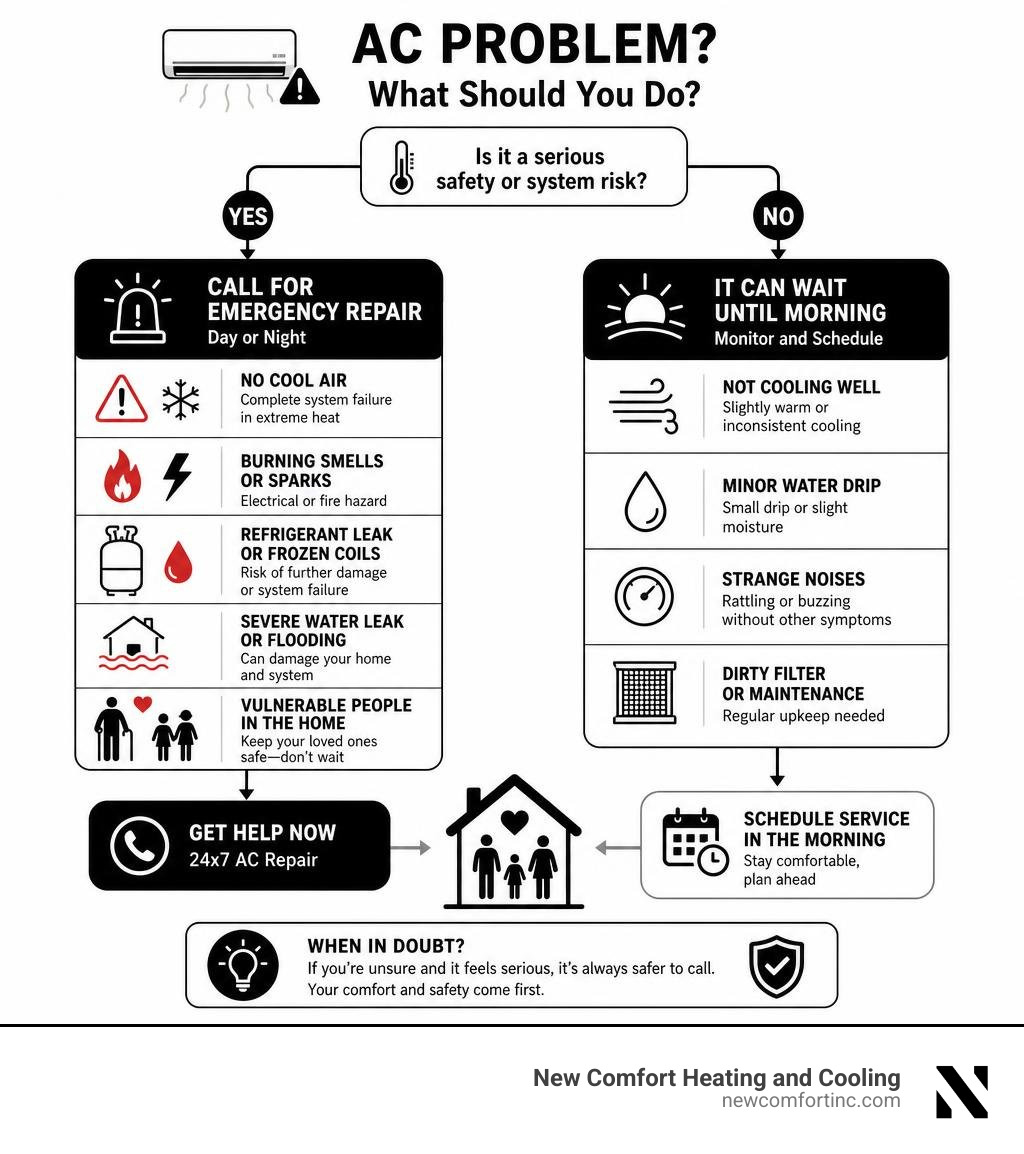
If you need 24x7 AC repair, here's what matters most:
- Total system failure in extreme heat = call for emergency repair immediately
- Burning smells or electrical sparks = shut off power and call now
- Refrigerant leak or frozen coils = don't run the unit, get help fast
- Severe water leak or flooding = turn off the system and clean up standing water
- Vulnerable people in the home (elderly, infants, anyone with health conditions) = don't wait, call right away
Summer in the Chicago suburbs hits hard. When your 24x7 AC repair need strikes at 11 PM on a 95-degree night, you don't have time to scroll through forums or guess whether it's serious. Some AC problems can wait until morning. Others — burning smells, complete system failure, refrigerant leaks — cannot.
This guide helps you tell the difference fast.
Not every AC issue is an emergency. But when it is, acting quickly protects your family, your home, and your cooling system from bigger damage.
With years of hands-on HVAC industry experience, our team at New Comfort Heating and Cooling has seen how fast a 24x7 AC repair situation can go from uncomfortable to unsafe. This guide will walk you through exactly what to watch for, what to do, and how to get the right help.
Critical Signs You Need 24x7 AC Repair
When summer temperatures climb across Chicagoland, your central air conditioner works under tremendous pressure. When a system breaks down in the middle of a heatwave, indoor temperatures can surge past 85 or 90 degrees in a matter of hours. High heat combined with Midwest humidity isn't just uncomfortable—it can quickly become a health and safety risk according to the National Weather Service.
Knowing when to request immediate 24x7 AC repair saves you from unnecessary stress while ensuring that true emergencies get addressed before causing catastrophic home or equipment damage. If you're wondering why your cooling dropped suddenly, check out our guide on AC Not Working? Here's What Might Be Wrong to identify basic symptoms.
Here are the most urgent red flags that require immediate professional attention:
Burning Smells and Electrical Hazards
If you smell a pungent burning odor coming from your supply vents or outdoor condenser unit, treat it as an active emergency. Electrical burning smells often indicate melted wire insulation, overheated fan motors, or an arc fault inside the electrical panel.
- Tripped Circuit Breakers: If your air conditioner trips the breaker once, resetting it once is reasonable. However, if it trips repeatedly, do not reset it again. Flipping the switch repeatedly can cause severe electrical short circuits, melt internal wiring, or spark a house fire.
- Acrid Chemical or Plastic Smells: A burning plastic or ozone smell points toward failing capacitors, shorted relays, or damaged circuit boards.
- Grinding or Screeching Noises: Mechanical friction from a seized motor bearing can quickly overheat the motor windings, leading to electrical shorts.
If you observe any of these symptoms, immediately turn off the thermostat and flip the dedicated breaker switch off at your main panel before calling for 24x7 AC repair. Read more about avoiding major mechanical breakdowns in our article on The Most Common HVAC System Failures and How to Avoid Them.
Refrigerant Leaks and Ice Accumulation
A common misconception among homeowners is that air conditioners "use up" refrigerant like fuel in a car. In reality, your air conditioner operates on a closed chemical loop. If refrigerant levels are low, it means there is a leak somewhere in your copper lines, indoor evaporator coil, or outdoor condenser.
Key indicators of a refrigerant leak include:
- Hissing or Bubbling Sounds: A high-pitched hiss near the indoor or outdoor unit usually indicates pressurized refrigerant escaping a tiny hairline crack.
- Lukewarm Airflow: The blower fan runs continuously, but the air coming out of the registers feels warm or lukewarm.
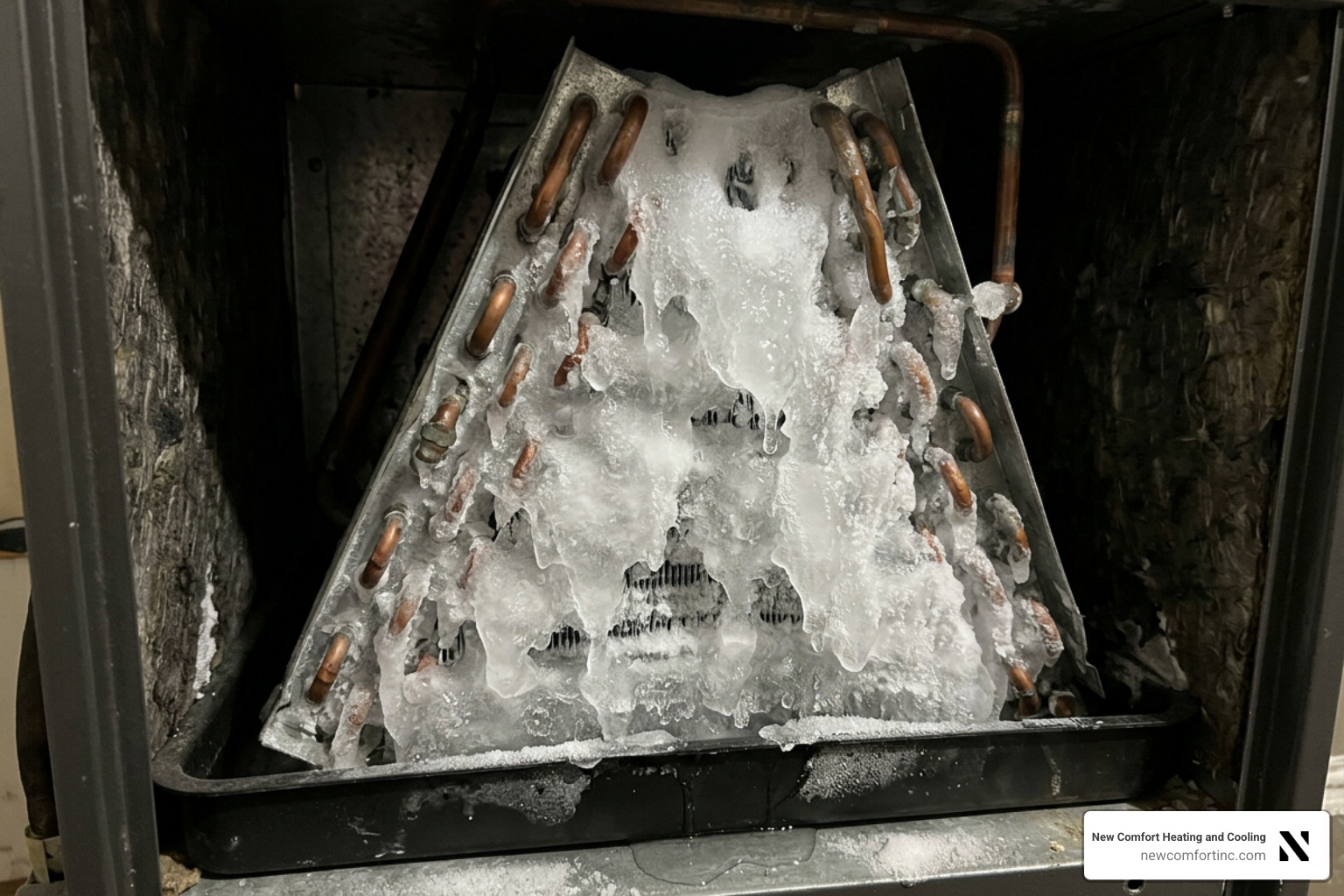
- Ice Accumulation on the Coils: When refrigerant levels drop, the remaining liquid can't absorb heat effectively, causing the temperature of the evaporator coil to plunge below freezing. Moisture in the air freezes on contact, building thick layers of ice over the coils and liquid line.
When ice builds up, running the air conditioner forces liquid refrigerant back into the compressor. Liquid is non-compressible, so this quickly destroys the motor, resulting in a costly replacement. If you spot ice, turn off the system immediately and contact our experts for emergency AC Repair.
Severe Water Leaks and Standing Moisture
Air conditioners double as powerful dehumidifiers. As warm indoor air passes over the icy evaporator coil, moisture condenses into water droplets, dripping into a drain pan and flowing out through a PVC condensate drain line.
When that drain line gets clogged with algae, dust, or mold, the condensate pan quickly overflows. If your air handler is installed in an attic, closet, or main-floor utility room, overflowing water can cause massive structural damage:
- Water bubbling through drywall ceiling boards
- Mold growth in floor joists and insulation within 24 to 48 hours
- Electrical shorts in the unit's lower control board
If you see water pooling rapidly around your indoor air handler or leaking through your ceiling, switch the cooling system off and request an emergency technician immediately. You can read step-by-step diagnostic advice in our post on How to Diagnose HVAC Issues.
What to Do While Waiting for Help
Once you have scheduled a 24x7 AC repair call, taking prompt action at home helps protect your equipment, prevents structural property damage, and keeps your household safe while our technicians are en route.
Essential Safety Steps Before 24x7 AC Repair Techs Arrive
While waiting for our technician to arrive at your door, follow this priority safety checklist:
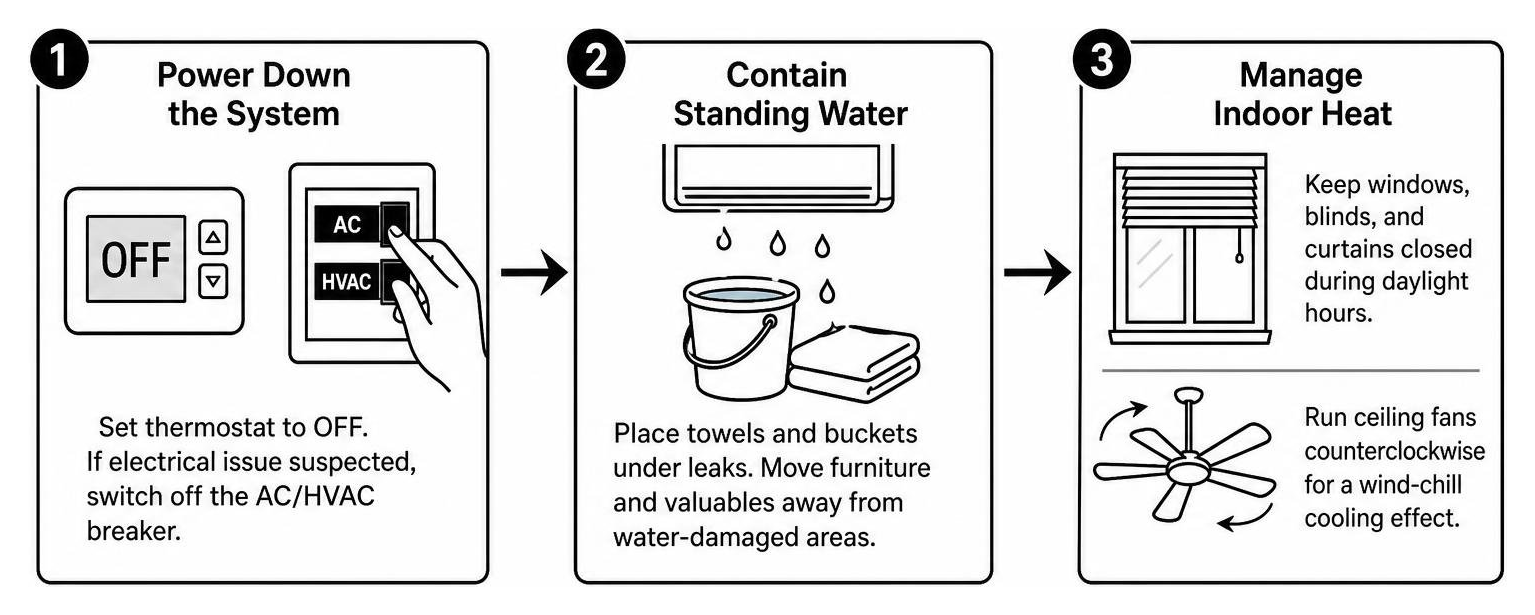
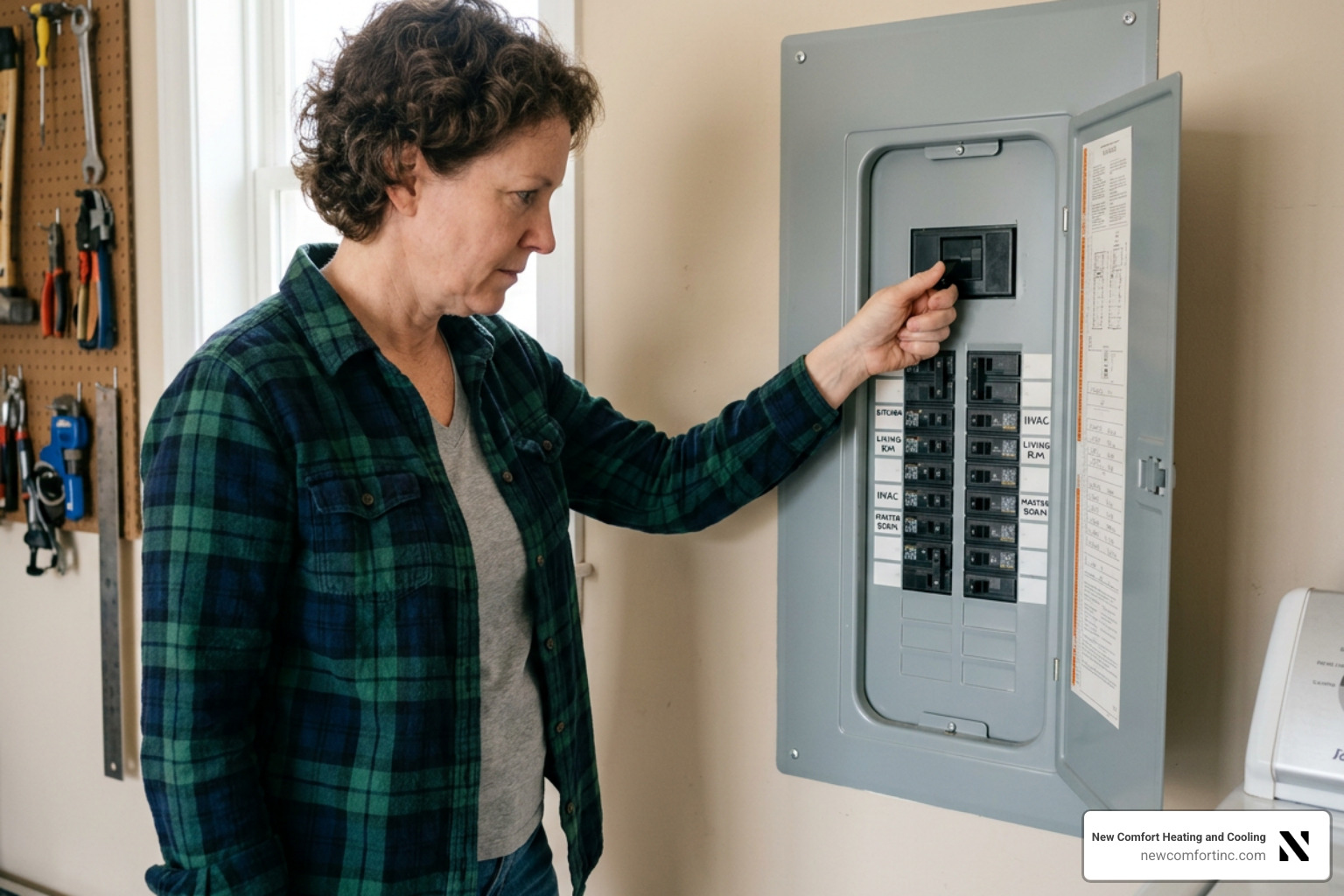
- Power Down the System completely: Switch your thermostat to the "OFF" position. If you suspect an electrical fault or hear buzzing/sparking, go directly to your home's breaker panel and flip the circuit breaker labeled "AC" or "HVAC" off.
- Contain Standing Water: If water is leaking from the indoor air handler, lay down towels and place buckets beneath active drips. If possible, clear furniture and valuables away from water-damaged ceilings.
- Manage Indoor Heat:
- Keep windows, blinds, and curtains tightly closed during daylight hours to block direct solar radiant heat.
- Run ceiling fans in a counterclockwise direction to create a wind-chill cooling effect.
- Limit the use of heat-generating appliances such as ovens, stoves, clothes dryers, and large dishwashers.
- Stay well-hydrated with cold water, and move vulnerable family members or pets to the coolest room in the house (typically the basement or lowest level).
- Clear Tech Access Paths: Move boxes, storage bins, or yard debris away from both the outdoor condenser unit and the indoor furnace/air handler so our technician can immediately begin diagnostic work upon arrival.
For additional night and weekend tips, check out our guide on Local 24hr HVAC Repair Services to Save Your Day and Night.
What to Expect During the Emergency Repair Visit
When our technician arrives, you can expect a systematic and professional diagnostic process aimed at restoring your home's air conditioning safely and efficiently.
Here is what a standard emergency service visit includes:
- Initial Consultation: The technician will ask you about the specific symptoms you observed (noises, odors, thermal loss, or water accumulation) and when the breakdown began.
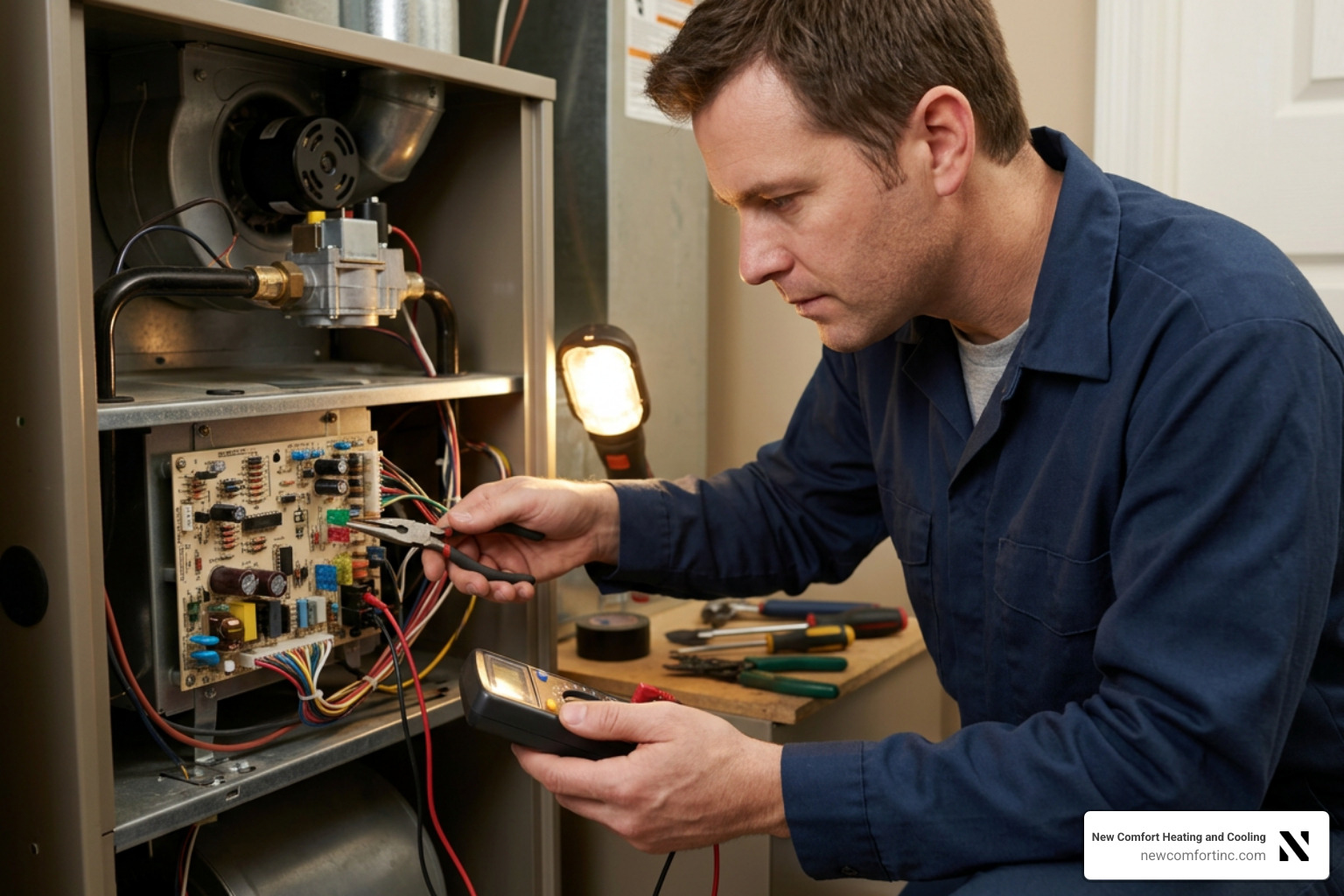
- Safety Check & Diagnostics: Equipped with specialized digital meters, pressure gauges, and leak detectors, the technician examines high-voltage electrical connections, compressor capacitors, contactors, refrigerant line pressure, and drain lines.
- Transparent Diagnosis: Before performing any repairs, the technician explains the exact root cause of the failure and outlines the necessary repairs clear and upfront.
- Component Repair or Replacement: Modern service vans are stocked with common universal parts including heavy-duty capacitors, contactors, fan motors, relays, and refrigerant, allowing most emergency issues to be resolved on the spot during the initial visit.
- System Verification & Performance Testing: After fixing the issue, the technician restarts the system, measures the supply and return air delta temperature, monitors electrical draw, and verifies that drain lines flow freely before leaving.
Learn more about what goes into a standard troubleshooting visit in Don't Sweat It: A Homeowner's Guide to AC Repair.
How to Avoid Nighttime AC Emergencies
While 24x7 AC repair services are always here to save the day when unexpected failures occur, the best emergency is the one that never happens in the first place. Over 80% of summer air conditioning breakdowns result from dirt accumulation, loose electrical wiring, or unaddressed component wear that could have been identified months earlier.
Regular maintenance protects key cooling components, improves energy efficiency, and prevents sudden late-night service calls.
| Factor | Emergency 24x7 AC Repair | Routine Preventive AC Maintenance |
|---|---|---|
| Timing | Unexpected, often late at night or during heatwaves | Scheduled conveniently in spring before summer heat |
| System Status | Unit completely stopped or posing immediate hazard | Unit operating smoothly and optimized for peak demand |
| Common Causes | Seized compressor, blown capacitor, heavy water leak | Normal wear, dirty coils, clogged drain line caught early |
| Impact on Home | High indoor heat spikes, potential water/electrical damage | Continuous indoor comfort, reduced energy consumption |
| Lifespan Impact | Increases risk of premature secondary component failure | Maximizes system longevity and protects equipment warranty |
To protect your system year-round, schedule annual spring tuning with our certified team through our dedicated AC Maintenance page.
Selecting a Reliable Provider for 24x7 AC Repair
When your air conditioner breaks down late at night or on a holiday weekend, you need a contractor you can count on for prompt, honest, and high-quality service. Not all emergency providers offer the same speed or quality.
When choosing a 24x7 AC repair service in Chicagoland, ensure they offer:
- Live 24/7 Dispatch: You should speak directly with a representative who can dispatch a qualified tech immediately, not an automated system or answering service.
- Local Service Coverage: Choosing a company located directly in your community—such as Justice, IL or Chicago—ensures rapid transit times during severe heatwaves.
- Transparent Pricing: A trustworthy HVAC partner provides clear, honest upfront evaluations without hidden surprises. Discover more money-saving tips in our guide to Keep Your Cool and Cash: Guide to Affordable HVAC Repair.
Vetting Technicians and Asking the Right Questions
When an emergency technician arrives at your property, don't hesitate to ask key questions to ensure high-grade craftsmanship:
- "Are you licensed, bonded, and insured to work on residential HVAC systems in Illinois?"
- "What caused this specific component failure, and is it indicative of a broader underlying issue?"
- "Do you carry the necessary OEM or high-grade replacement parts on your service vehicle right now?"
- "Do your repairs include a written warranty covering both parts and labor?"
If your cooling unit is old, inefficient, or requiring constant fixes, read our localized insight on When to Call HVAC Technician Justice IL to evaluate whether repair or full AC Replacement is your most practical long-term option.
Frequently Asked Questions About Emergency AC Services
How can I tell if my AC issue requires emergency service?
An AC issue requires emergency 24x7 AC repair if it poses an immediate safety hazard, risks causing major property damage, or leaves vulnerable individuals without cooling during dangerous weather conditions.
Call for immediate service if you notice:
- Burning electrical smells, smoke, or visible sparks
- Rapidly pooling water near ceilings, walls, or electrical boxes
- Complete system shutdown when outdoor temperatures exceed 85–90°F
- Loud grinding, screaming, or metal-on-metal mechanical noises
- High heat conditions inside a home with infants, elderly family members, or individuals with respiratory conditions
If your system is simply blowing slightly warmer air on a mild 70-degree evening, it is usually safe to turn the system off and book a standard morning appointment.
Does emergency HVAC service cost more than standard scheduled appointments?
Emergency services require HVAC contractors to maintain dedicated 24-hour dispatch teams, weekend staff, and fully stocked service trucks ready at all hours of the night. Because technicians work outside standard business hours, late-night and holiday calls involve specialized scheduling and priority dispatch.
However, resolving critical faults immediately often saves you money in the long run by preventing secondary damage—such as compressor failure caused by running frozen coils, or thousands of dollars in water damage from overflowing condensate drain pans. For more insight on long-term cost benefits, check out our post on HVAC Repair Cost Saving Benefits.
How long does an emergency cooling repair typically take?
A typical emergency repair visit takes between 1 to 2 hours once the technician arrives on-site.
The diagnostic phase generally takes 20 to 30 minutes, during which the technician uses electrical diagnostic equipment and manifold gauges to isolate the fault. Standard emergency repairs—such as replacing a burned-out capacitor, installing a new fan motor, clearing a blocked drain line, or fixing an electrical relay—are typically completed during that initial visit because technicians carry universal parts in their service vans.
If your system has suffered an extensive breakdown requiring specialized OEM factory parts, the technician will make the system safe and arrange for fast-track part delivery first thing the next business morning.
Conclusion
A sudden air conditioner failure during a muggy summer night can derail your home's comfort and safety. Whether you're dealing with electrical burning smells, frozen evaporator coils, overflowing water, or complete cooling loss in extreme heat, quick action keeps your property protected and gets cold air flowing again fast.
At New Comfort Heating & Cooling, we pride ourselves on providing responsive 24x7 AC repair, live phone support, transparent communication, and personalized solutions tailored to home and business owners across Justice, IL, Chicago, and the surrounding suburbs.
Don't spend the night sweating through a heatwave or worrying about electrical hazards. Reach out to our expert team through our Contact page or call us immediately for immediate assistance.
Looking to keep your indoor comfort system optimized year-round? Explore our complete range of home comfort solutions, including high-efficiency furnace and heat pump options, on our Heating Services page!