When Your Home Stops Cooling: What You Need to Know About AC Repair
When you need AC repair, the most important thing is knowing what's wrong, what to check yourself, and when to call a pro. Here's a quick overview:
Common reasons your AC isn't working:
- Unit runs but doesn't cool — often a refrigerant issue, clogged filter, or failed capacitor
- Unit won't turn on — usually a tripped breaker, faulty thermostat, or bad capacitor
- Weak airflow — commonly caused by a dirty filter, blocked vents, or duct problems
Before calling a technician, check:
- Your thermostat settings (mode, temperature, fan setting)
- Your circuit breaker (look for a tripped switch)
- Your air filter (if it's clogged, replace it)
- Any visible water pooling near the indoor unit
When to call immediately:
- Strange grinding or squealing noises
- Water leaking from the unit
- AC short-cycling (turning on and off repeatedly)
- Home feels humid even when the system is running
Imagine coming home on a scorching summer day, opening your front door, and being hit by a wall of hot, humid air. That moment of dread — wondering how long it's been off, what it will take to fix, whether the whole system needs to go — is exactly what this guide is designed to help you navigate.
Delaying repairs almost always makes things worse. Small problems like a worn capacitor or a slow refrigerant leak can quietly turn into full compressor failures if left unaddressed. And a compressor failure is one of the most serious mechanical issues in the HVAC world.
This guide walks you through everything: how to spot trouble early, what to do before the technician arrives, how to decide between repairing and replacing, and how to find a service provider you can actually trust.
At New Comfort Heating and Cooling, our experienced HVAC team has seen how a timely AC repair can save homeowners from unnecessary system replacements and the stress that comes with them. Read on for the practical, no-fluff guidance every homeowner should have before their next cooling emergency.
Common Air Conditioner Problems Requiring Urgent AC Repair
Air conditioning systems are complex mechanical networks that rely on precise airflow, electrical timing, and chemical refrigerant cycles. When one component falters, the entire system feels the strain. In our years serving homeowners across Chicago, IL and Justice, IL, we've found that three service calls dominate summer schedules: systems that turn on but fail to cool, units that won't start at all, and systems plagued by drastically reduced airflow.
When your cooling system breaks down, understanding The Most Common HVAC System Failures and How to Avoid Them helps you recognize whether you are facing a quick fix or an urgent electrical hazard.
Major air conditioning issues generally fall into four core categories:
- Refrigerant Leaks: Contrary to popular belief, air conditioners do not "use up" refrigerant like gas in a car. It operates in a closed loop. If levels are low, there is a leak. Low refrigerant prevents heat absorption, causes evaporator coils to freeze over, and puts tremendous thermal strain on the compressor.
- Electrical Control Failures: Capacitors, contactors, and relays start and regulate the motors driving your fan and compressor. Capacitors act like short-term batteries to kickstart heavy motors. Over time, heat degradation weakens them, leading to hard starts, clicking noises, or total electrical failure.
- Restricted Airflow: Dirt and dust are the arch-enemies of indoor comfort. Constricted airflow forces your system to run longer cycles, leading to overheating, ice buildup on coils, and poor indoor air movement.
- Mechanical Component Wear: Fan blades, blower motors, and compressor valves wear down after seasons of heavy operation. When these parts lose efficiency, energy consumption skyrockets while indoor comfort plummets.
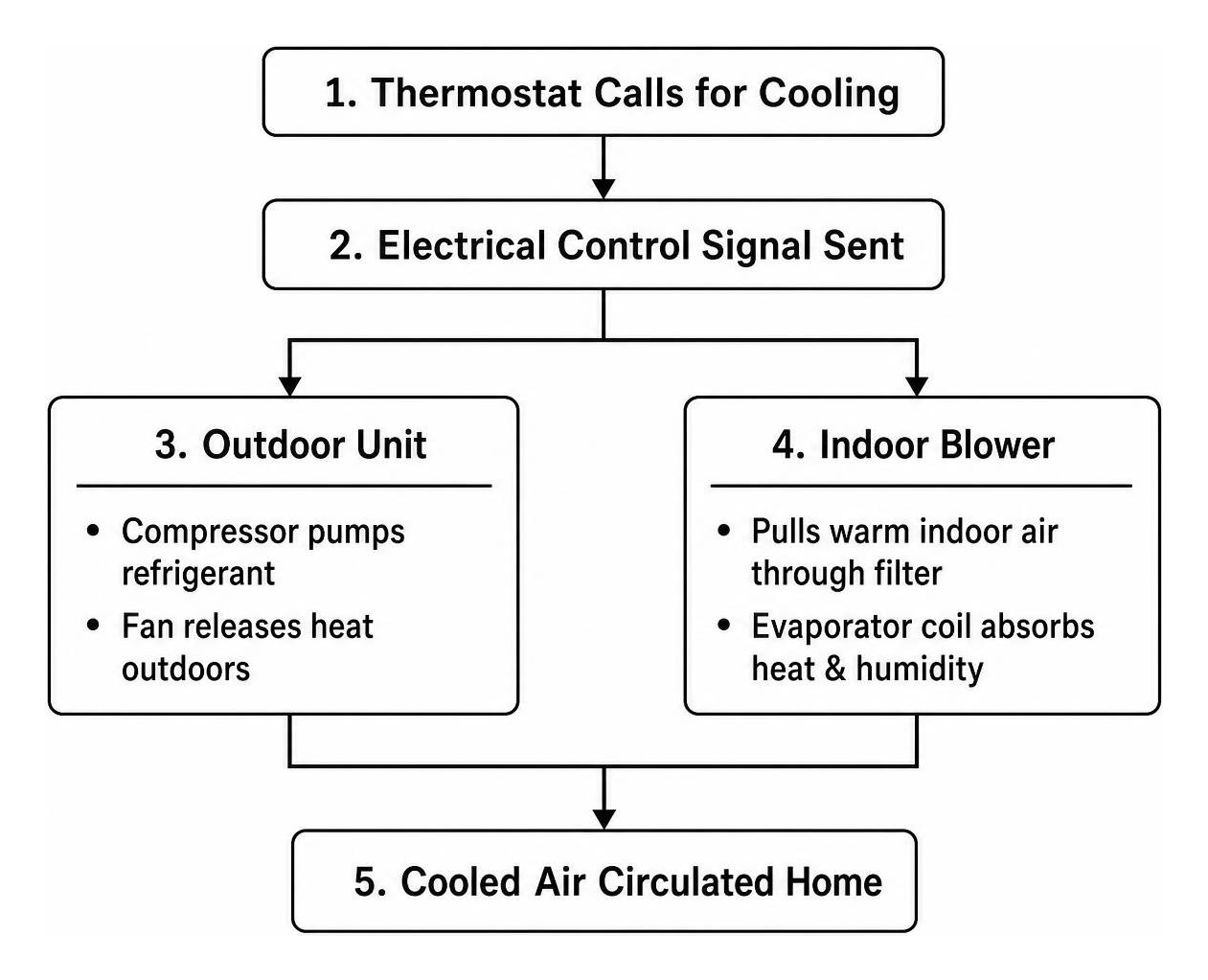
Signs You Need Professional AC Repair
Your central air conditioner rarely breaks down without giving subtle warning signs first. Recognizing these red flags early lets you schedule ac repair before a minor hiccup spirals into a complete mechanical failure. For a deeper breakdown of system warnings, consult our guide on AC Not Working? Here's What Might Be Wrong.
Watch out for these classic symptoms:
- Reduced Airflow Velocity: If conditioned air barely trickles out of your supply registers, you may be dealing with a failing blower motor, a collapsed air duct, or a severely clogged air filter.
- Strange Mechanical Noises: A healthy AC operates with a low, consistent hum. High-pitched squealing suggests a slipped belt or worn motor bearing. Metal-on-metal grinding points to motor assembly failure, while rapid clicking signals an electrical relay or capacitor failure.
- Frequent Short-Cycling: If your unit fires up, runs for two minutes, shuts off, and repeats the cycle continuously, it is short-cycling. This behavior rapidly degrades compressor life and is typically caused by severe filter clogs, low refrigerant, or an oversized unit.
- Water Leakage Around Indoor Unit: Finding pools of standing water near your furnace or indoor air handler is a clear indicator of a blocked condensate drain line or a broken condensate pump.
- Uncontrolled Indoor Humidity: Your air conditioner is designed to dehumidify as it cools. If your living room feels sticky, clammy, or warm even while the system runs continuously, heat removal is compromised.
Why Your Air Conditioner Isn't Cooling Properly
When your thermostat is set to 70°F but the indoor temperature hovers stubbornly at 78°F, the system is telling you it cannot perform adequate heat exchange. Troubleshooting this problem requires looking closely at heat absorption components. You can learn more details on system diagnostics by reading How to Diagnose HVAC Issues.
Here are the primary culprits behind poor cooling performance:
- Clogged Air Filters: Dust accumulation restricts airflow across the evaporator coil. Without sufficient air passing over it, the coil cannot absorb indoor heat, eventually dropping below freezing temperatures and encasing itself in solid ice.
- Dirty Evaporator Coils: Dirt and grime act as thermal insulators. When a layer of grime coats the evaporator coil, refrigerant inside cannot absorb heat from the air passing over it, resulting in lukewarm air blowing from your vents.
- Failed Run or Start Capacitors: If your capacitor fails, the compressor or outdoor fan motor will struggle or freeze entirely, blowing unconditioned, room-temperature air through your ducts.
- Damaged Fan Controls: Corroded wiring, worn contacts, or failing fan blades prevent outdoor heat from dissipating into the outside atmosphere, sending heat right back into your living space.
- Leaking or Constricted Ductwork: Holes, loose seams, or collapsed flex ducts in unconditioned attics or basements suck in humid air and leak cooled air before it ever reaches your bedrooms.
Troubleshooting Checklist Before Calling an HVAC Technician

Before picking up the phone to book a service visit, taking five to ten minutes to complete a quick diagnostic checklist can save you time and frustration. Simple oversights like a bumped thermostat switch or a tripped circuit breaker happen to everyone. Reviewing our checklist for When to Call HVAC Technician Justice IL helps clarify whether a problem requires an emergency dispatch or a basic adjustment.
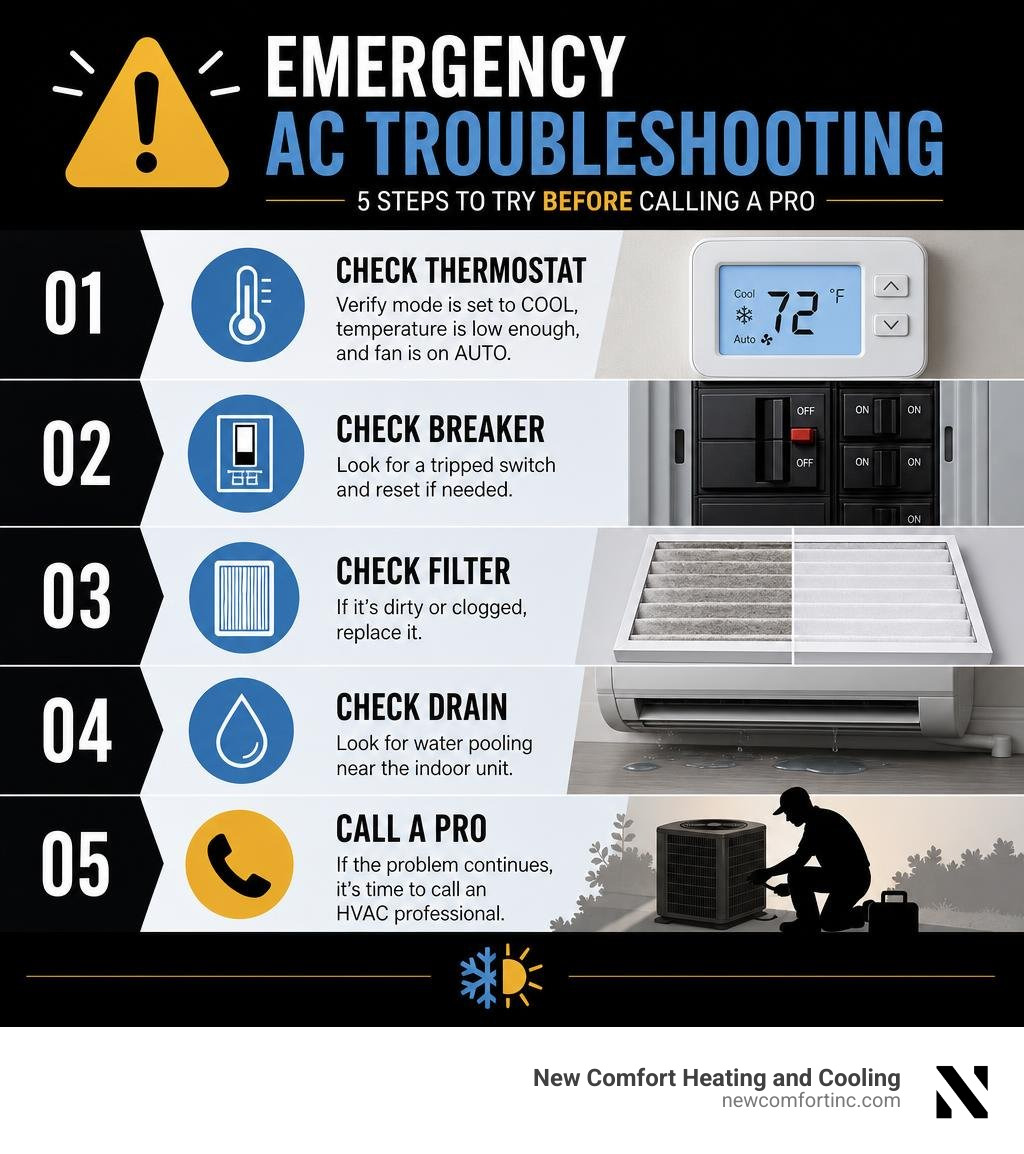
DIY Checklist Before Calling for AC Repair
Go through these basic troubleshooting steps before calling for professional assistance:
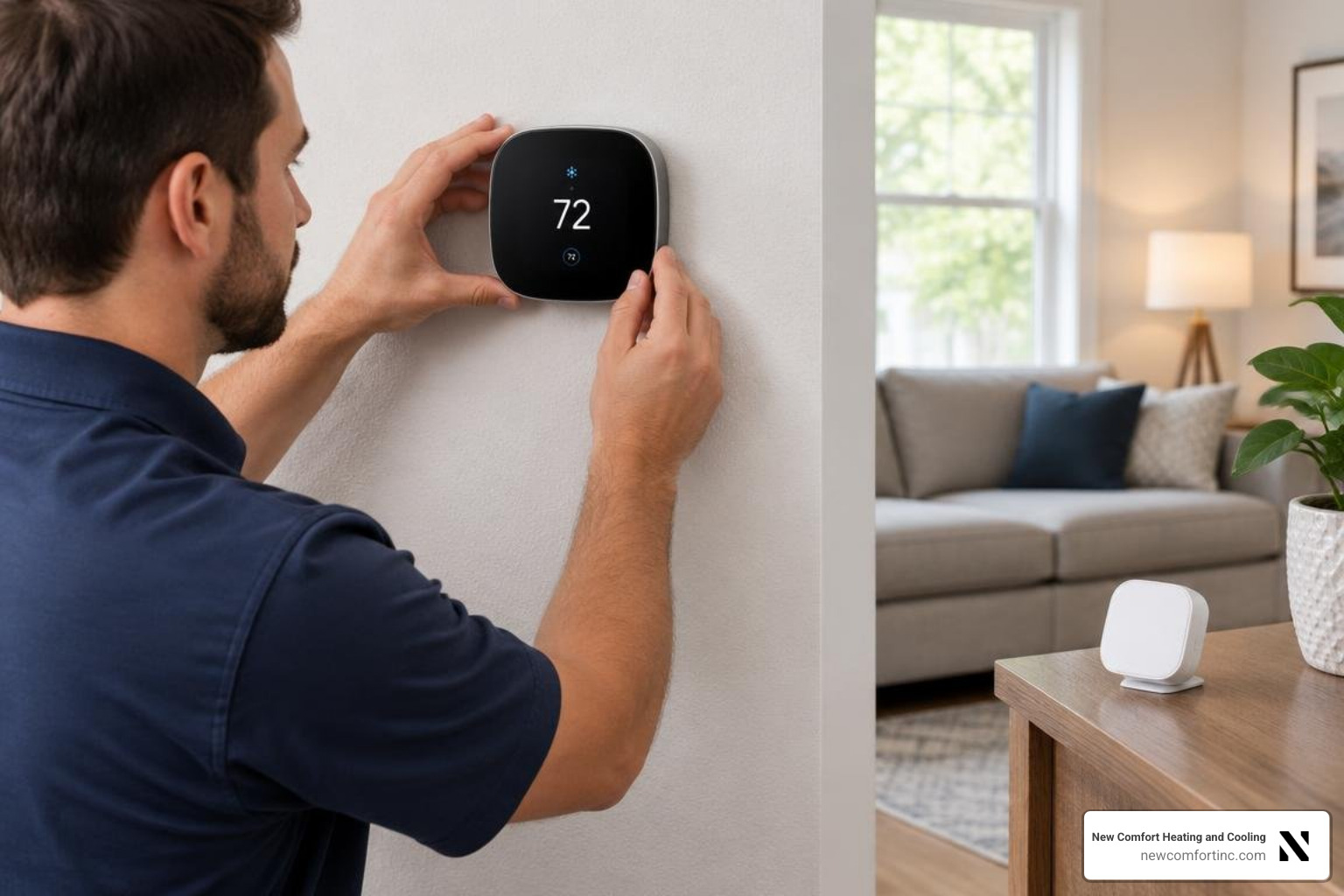
- Verify Thermostat Settings: Ensure your thermostat is set to "COOL" rather than "OFF" or "HEAT." Set the target temperature at least 3 to 5 degrees below the current room temperature. Check that the fan mode is set to "AUTO" rather than "ON" (which keeps the fan blowing even when cooling isn't actively occurring). If the display is blank, replace the internal batteries.
- Check Circuit Breakers: Central AC systems rely on two separate breakers: one for the indoor blower unit and one for the outdoor condenser. Locate your main electrical panel and check if either switch has tripped to the middle or "OFF" position. Reset a tripped breaker once. If it trips a second time immediately, do not reset it again—this indicates a dangerous electrical short requiring professional diagnosis.
- Inspect the Air Filter: Slide out your HVAC air filter and hold it up to a light source. If light cannot pass through it, replace it immediately. A completely choked filter can shut down your entire system on high-pressure safety switches.
- Examine the Condensate Drain Line: Check the plastic PVC drain line coming from your indoor unit. If you see water overflowing from the drain pan or pooling around the base of the furnace, the float switch may have tripped to prevent water damage to your floor.
- Inspect Supply Vents and Returns: Ensure return grilles and supply registers throughout your rooms aren't covered by heavy drapes, rugs, or furniture. Restricting airflow through too many vents creates backpressure that harms the system.
Gathering Equipment Details Safely
If simple troubleshooting doesn't restore cool air, preparing key system information before placing your service call speeds up the diagnostic process significantly. For more details on preparing for a service visit safely, check out Don't Sweat It: A Homeowner's Guide to AC Repair.
To gather your system details safely, keep these guidelines in mind:
- Locate Paperwork First: Look through your home closing documents, service stickers on the unit, or original sales receipts to find the manufacturer name, model number, and serial number.
- Avoid Opening Cabinets: Never unscrew metal panels or reach inside electrical cabinets to look for serial tags. High-voltage connections and charged capacitors carry severe electrical risks, and opening cabinet doors can void active manufacturer warranties.
- Verify Limited Warranty Coverage: Check whether your equipment is covered under a manufacturer parts warranty or an installer labor warranty. Communicating this to your technician right away helps streamline parts sourcing.
Repair vs. Replacement: Making the Right Choice for Your AC Unit
When faced with a major mechanical issue, deciding whether to invest in ac repair or proceed with total system replacement is one of the biggest homeownership decisions you will make. Balancing short-term decisions against long-term operational efficiency requires evaluating equipment age, operating costs, and refrigerant availability.
| Evaluation Factor | Consider Repair | Consider Replacement |
|---|---|---|
| System Age | Under 10 years old | 10 to 15+ years old |
| Repair Frequency | First breakdown or rare minor issues | Frequent repairs required over consecutive seasons |
| Refrigerant Type | Modern R-410A or R-454B / R-32 systems | Phased-out R-22 Freon systems |
| Energy Efficiency | Low monthly utility bills; steady cooling | High energy bills; struggles on hot days |
| Overall Condition | Well-maintained with clean coils and ducts | Severe rust, compressor failure, or burned motor |
Evaluating System Age and Efficiency
Air conditioners operating in Northern Illinois endure extreme weather swings, from freezing winters to humid, hot summers. Most modern residential cooling systems have a design life of 12 to 15 years.
When evaluating an aging unit, consider these factors:
- SEER2 Efficiency Standards: Older systems were installed under outdated efficiency guidelines. Modern systems adhering to current SEER2 (Seasonal Energy Efficiency Ratio 2) standards consume significantly less electricity to deliver the same cooling output, providing noticeable savings on monthly electric bills.
- Refrigerant Phase-Outs: Older air conditioners utilizing R-22 Freon are increasingly difficult to service due to production bans. Transitioning to a modern cooling system uses environmentally friendlier, readily available refrigerants.
- The Age vs. Repair Rule: A common industry rule of thumb is to evaluate system age against repair needs; if repair expenses multiplied by the unit's age exceed a significant threshold relative to replacement value, replacing the unit is generally the smarter financial choice.
To explore replacement options and modern energy standards, review our guides on AC Replacement: What to Consider When You're Considering and our dedicated AC Replacement service page.
Long-Term Cost Benefits of Timely Repairs
Choosing to repair an air conditioner promptly offers significant financial and performance advantages. Small mechanical issues rarely fix themselves; instead, they compound. A worn motor bearing forces the fan to draw double its rated amperage, overheating electrical controls and destroying capacitors.
Addressing minor glitches early restores peak operating efficiency, lowers summer electrical costs, and prevents unexpected emergency breakdowns on the hottest days of the year. To learn more about maximizing your system's life, read our article on HVAC Repair Cost Saving Benefits. Always feel confident seeking a professional diagnostic second opinion if you are ever advised to replace a system when a straightforward repair might be all you need.
How to Find and Choose a Reliable Service Provider

Finding an HVAC contractor who values craftsmanship, honest communication, and prompt service shouldn't feel like a gamble. Whether you need immediate emergency response or routine maintenance, selecting a provider with deep roots in your local community ensures long-term comfort and peace of mind.
When researching reliable contractors, keep these standard quality markers in mind:
- 24/7 Live Support and Fast Dispatch: Cooling emergencies don't stick to normal business hours. Look for companies offering live phone support around the clock. You can learn more about round-the-clock options in our guide to Local 24hr HVAC Repair Services to Save Your Day and Night.
- Transparent Service Commitments: Reputable technicians offer upfront diagnostic evaluations and explain required work clearly before starting any repair. For tips on managing repair costs, explore our guide: Keep Your Cool and Cash: Guide to Affordable HVAC Repair.
- Verified Credentials and Licensing: Ensure your contractor holds state licensing, EPA refrigerant certification, and adequate liability insurance. For additional guidance on maintaining cooling efficiency and equipment standards, review the ENERGY STAR heating and cooling maintenance checklist.
What to Expect During a Professional Service Visit
Knowing what happens during a professional repair visit helps you prepare for the appointment. A thorough technician won't just swap a part and leave; they will perform a complete diagnostic assessment of your system.
Here is what a standard service call involves:
- System Diagnostic Evaluation: The technician inspects thermostat communication, checks air handler wiring, and evaluates safety controls.
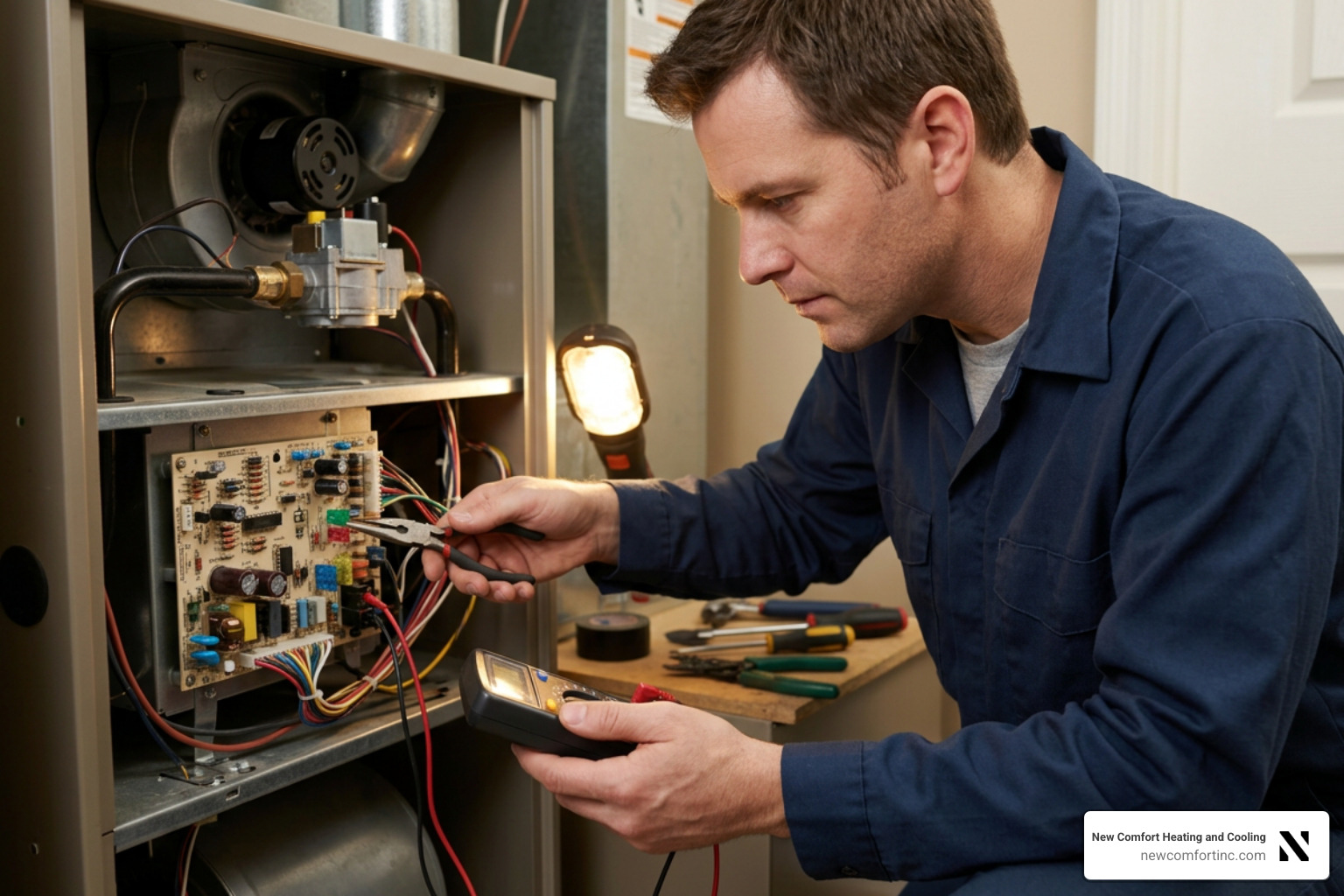
- Electrical Safety Checks: Measuring voltage and amperage draw across capacitors, fan motors, and the compressor ensures components operate within manufacturer tolerances.
- Refrigerant Level & Pressure Testing: Using digital manifold gauges, the technician measures subcooling and superheat levels to confirm proper refrigerant charge.
- Airflow & Temperature Delta Checks: Measuring the temperature difference between supply and return air confirms heat exchange performance across the evaporator coil.
- Clear Explanation of Findings: Before performing work, the technician clearly explains the root cause of the issue, outlines options, and answers any questions.
Essential Routine Maintenance to Extend System Lifespan
The best ac repair is the one you never have to make. Consistent preventive care treats your cooling system with the same attention you give your automobile.
To keep your air conditioner operating smoothly season after season, prioritize these maintenance steps:
- Monthly Air Filter Changes: Inspect filters every 30 days during high-use summer months and replace them as soon as dust accumulates.
- Seasonal Condenser Coil Cleaning: Keep the outdoor unit free from lawn clippings, leaves, and cottonwood fuzz. Gently rinse coil fins with a garden hose annually.
- Condensate Line Flushing: Pour a cup of plain white vinegar down your indoor condensate drain line every few months to prevent algae buildup and drain line clogs.
- Clear Clearance Around Outdoor Unit: Maintain at least two feet of clear space around your outdoor condenser by trimming back bushes, grass, and garden flowers.
- Schedule Annual Professional Tune-Ups: Have an HVAC technician inspect electrical connections, verify refrigerant charge, clean delicate internal coils, and lubricate moving parts every spring.
For comprehensive detail on preventative tune-ups, visit our main AC Maintenance page and check out Five Proven Ways to Extend the Lifespan of Your Air Conditioner in Chicago.
Frequently Asked Questions About HVAC Service
What are the most common reasons an air conditioner stops cooling?
The most common causes of cooling failure are dirty, restricted air filters, low refrigerant levels from system leaks, frozen evaporator coils, and failed start/run capacitors. When a capacitor fails, the compressor cannot pump refrigerant, leaving the fan blowing warm air through your vents.
What simple steps should I take before scheduling a service appointment?
Before scheduling a service visit, check that your thermostat is set to "COOL" with the fan set to "AUTO," verify that your circuit breakers haven't tripped, check if your air filter is dirty, and ensure all supply vents are open and unblocked.
How does routine maintenance lower monthly energy bills?
Routine maintenance ensures clean heat-transfer coils, unimpeded airflow, and properly calibrated refrigerant charges. When components are clean and lubricated, the electrical draw on fan motors and the compressor drops, keeping operating costs low and lowering utility bills.
Conclusion
Maintaining indoor comfort across Chicago, IL and Justice, IL doesn't have to be overwhelming. By learning to spot early signs of system trouble, carrying out basic troubleshooting steps before picking up the phone, and keeping up with seasonal maintenance, you can protect your air conditioner from premature failure and keep utility costs under control.
When mechanical issues do arise, choosing an experienced, reliable technician ensures accurate diagnostics, honest recommendations, and long-lasting repairs. Whether your system needs a quick component replacement or you are looking for proactive maintenance to prevent summer breakdowns, our team at New Comfort Heating and Cooling is here to help keep your home comfortable year-round.
If you are experiencing cooling issues or want to schedule your annual tune-up, explore our complete AC Repair services or reach out to us today on our Contact page to speak with our friendly team.