Furnace and Air Conditioning Repair: What to Check First
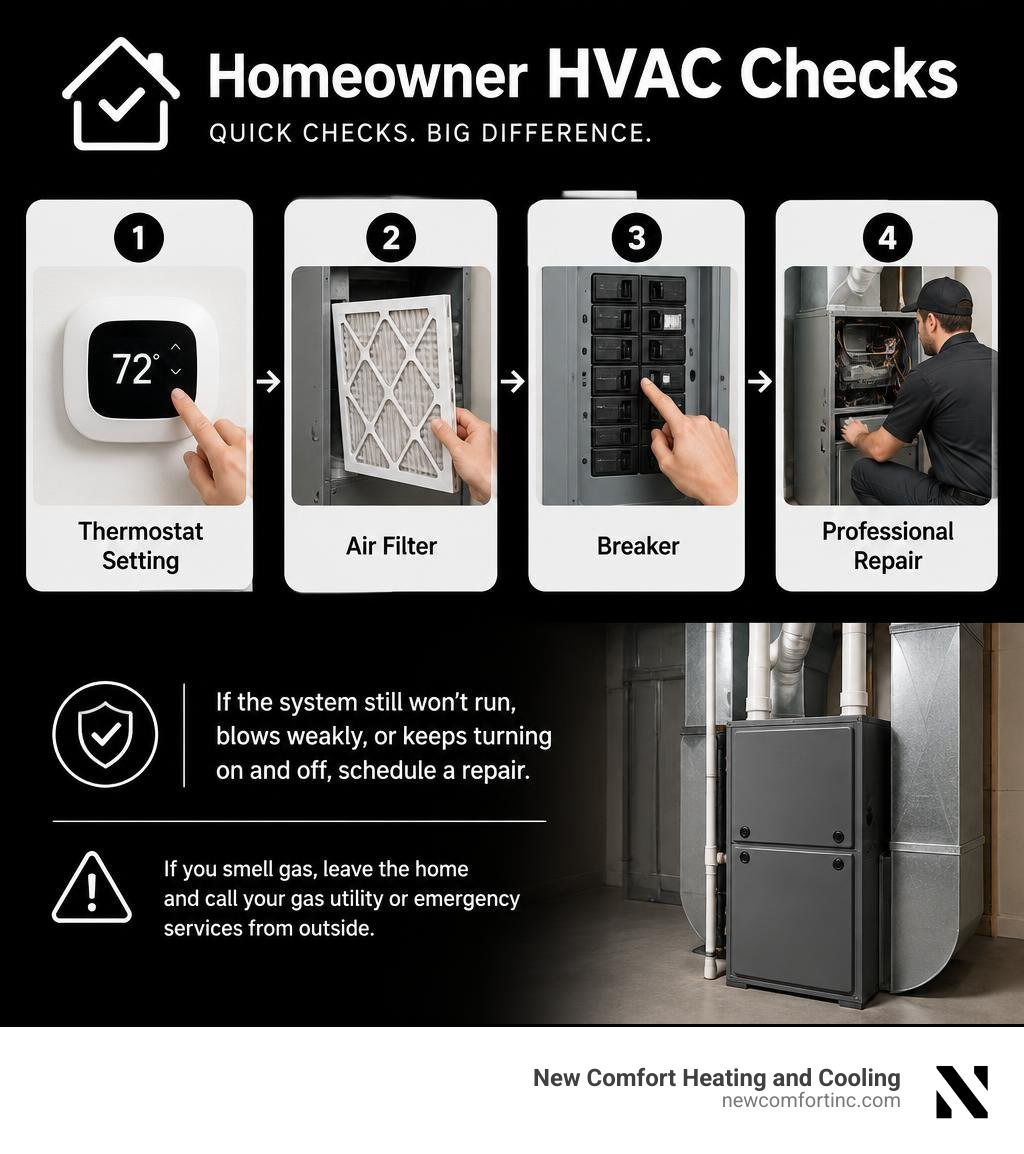
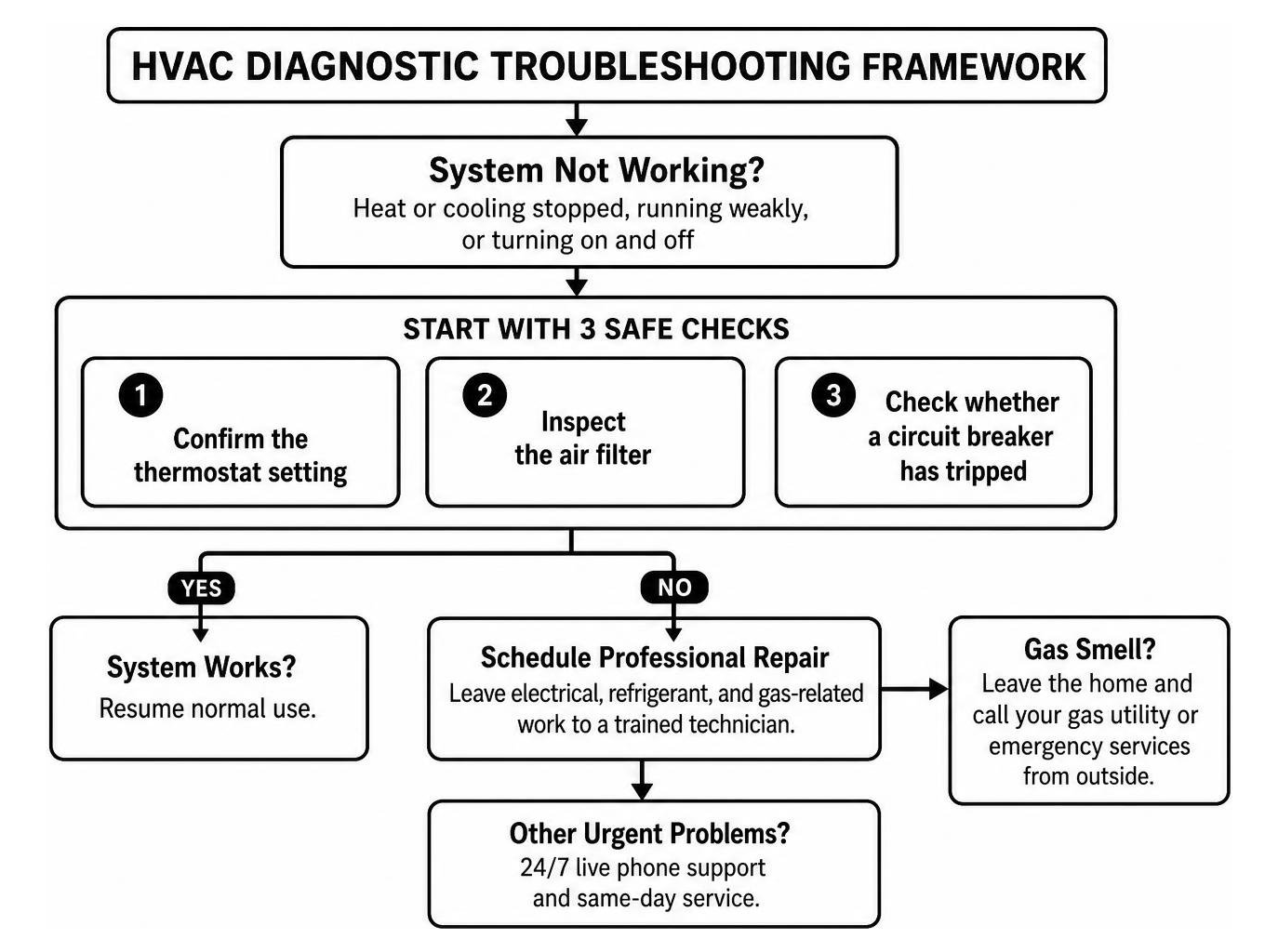
If your heat or cooling stops working, start with three safe checks: confirm the thermostat setting, inspect the air filter, and check whether a circuit breaker has tripped. If the system still will not run, blows weakly, or keeps turning on and off, schedule furnace and air conditioning repair. Leave electrical, refrigerant, and gas-related work to a trained technician.
If you smell gas, leave the home and call your gas utility or emergency services from outside. For other urgent problems, New Comfort Heating and Cooling offers 24/7 live phone support and same-day service.
Basic furnace and air conditioning repair terms:
Recognizing the Warning Signs: When You Need Furnace and Air Conditioning Repair
Your central heating and cooling setup rarely breaks down without warning. Long before a complete loss of climate control leaves you shivering in mid-January or sweating in July, your equipment drops subtle clues that internal components are wearing out. Learning how to spot these indicators early saves you from emergency interruptions and prevents minor mechanical stress from spiraling into catastrophic equipment failure.
Homeowners can use practical methods to diagnose HVAC issues by paying attention to the three primary sensory signals: unusual sounds, strange odors, and uneven temperature output across rooms.
Furnace and Air Conditioning Repair for Unusual Noises and Weak Airflow
When an HVAC system runs smoothly, it produces a steady, unobtrusive hum. Sudden mechanical noises, however, usually point to loose, worn, or obstructed parts within the air handler or outdoor condenser:
- Squealing or Screeching: Often caused by a slipping or frayed blower motor belt, or failing motor bearings that require lubrication or replacement.
- Banging or Clanking: Indicates an out-of-balance blower wheel, a loose internal rod, or physical interference in the motor assembly.
- Booming Upon Ignition: Signals delayed ignition in gas furnaces, where unburned fuel builds up before lighting. This requires immediate professional attention.
- Bubbling or Hissing: Typically points to a refrigerant leak in your cooling coils or a cracked condensate line.
Diminished airflow is another classic symptom of internal trouble. If your supply registers are barely producing a breeze, inspect the system for clogged air filtration, crushed flexible ductwork, or a failing blower assembly. Reviewing common HVAC system failures helps clarify why prompt attention to a struggling blower motor prevents the entire motor winding from burning out completely.
Inconsistent Temperatures and Rapid Cycling Diagnostics
Does your central system turn on, run for two minutes, shut off, and then restart moments later? This frustrating behavior is known as short-cycling. Short-cycling places tremendous electrical and mechanical strain on your compressor and heat exchanger while leaving your indoor environment full of uncomfortable hot and cold spots.
Common culprits behind rapid cycling and temperature swings include:
- Restricted Air Intake: A dust-choked air filter prevents heat exchange, tripping high-limit safety switches on furnaces or freezing evaporator coils on air conditioners.
- Thermostat Calibration Errors: A thermostat exposed to direct sunlight, drafts, or failing internal sensors will send erratic signals to the control board.
- Oversized Equipment: Systems too large for a home's square footage heat or cool the air near the sensor too quickly without properly dehumidifying or circulating air through peripheral rooms.
If your home stays warm despite the condenser running continuously, follow these basic steps for troubleshooting an AC that is not working before requesting an on-site service call.
Step-by-Step Guide to Diagnosing Central HVAC Issues

Tackling an HVAC malfunction begins with a calm, systematic diagnostic procedure. Modern central heating and cooling systems rely on an interconnected network of high-voltage wiring, low-voltage control circuits, airflow pathways, and fuel or refrigerant lines. Understanding how these elements interact allows you to rule out simple operational oversights before calling in our certified technicians.
Essential DIY Checks Before Calling a Professional
Before scheduling an on-site evaluation, work through these safe, non-invasive checks:
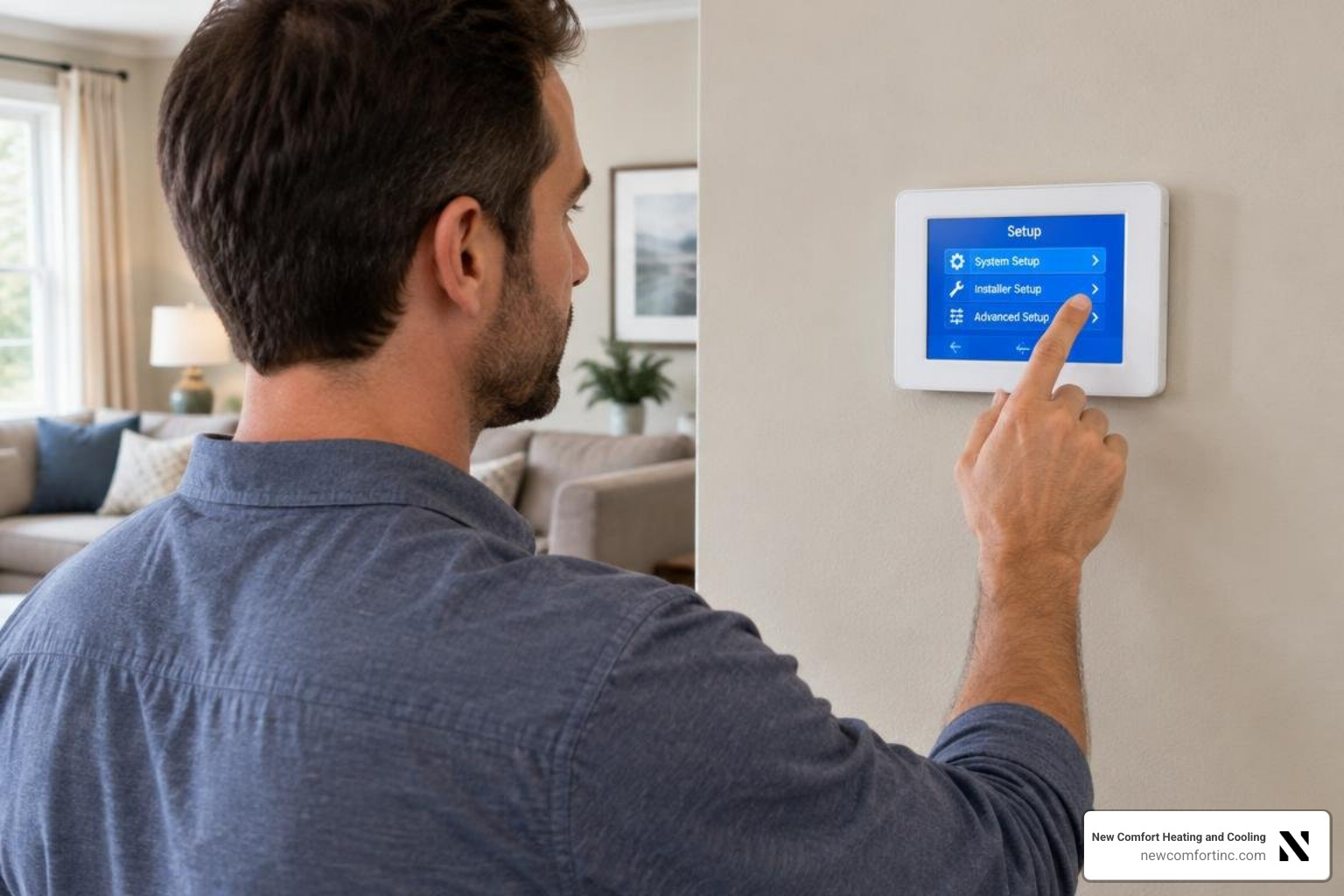
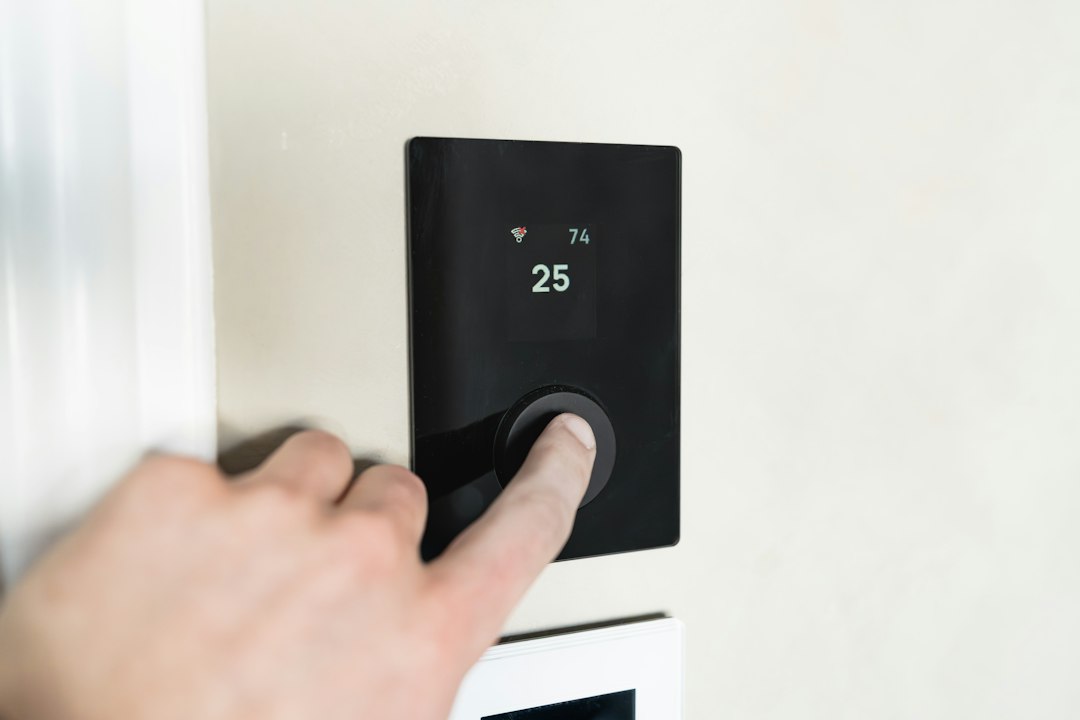
- Inspect the Thermostat: Verify that the thermostat is set to the correct mode ("Heat" or "Cool") and that the target temperature is set at least five degrees away from the ambient room reading. Replace standard alkaline batteries if the screen is dim or flashing low-battery warnings.
- Examine Circuit Breakers: HVAC systems use dedicated 240-volt circuits for outdoor condensers and electric heat strips, alongside 120-volt circuits for indoor air handlers. Check your main service panel for tripped breakers and reset them once. If a breaker trips a second time immediately, leave it off to prevent electrical damage.
- Check Safety Switches: Most modern units feature a door safety switch on the blower compartment. If the access panel was bumped loose during filter replacement, the system will cut all power. Similarly, inspect your condensate drain pan; if the overflow float switch has risen due to standing water, it will cut power to prevent water damage.
- Evaluate the Air Filter: A completely blocked filter starves the system of return air. Pull the filter out and hold it up to a light source. If light cannot pass through, replace it immediately.
For a deeper dive into safe homeowner troubleshooting protocols, consult our homeowner guide to AC repair.
Professional Furnace and Air Conditioning Repair for Complex Electrical and Mechanical Faults
When basic checks do not restore performance, the problem lies within specialized mechanical or electrical subsystems. Attempting complex repairs without proper licensing and diagnostic tools exposes you to high-voltage electrical shocks, dangerous refrigerant discharges, and hazardous combustion gases.
Our technicians utilize calibrated digital manifolds, dual-port manometers, and multimeters to measure static duct pressures, check electrical capacitance, and verify safe gas pressure settings. Discover our full range of comprehensive HVAC cooling services designed to protect your home's mechanical equipment through accurate, long-lasting repairs.
Repair vs. Replacement: Making the Right Call for Your System
Deciding whether to continue repairing an aging unit or invest in a modern replacement is one of the most significant equipment decisions a homeowner faces. While restoring existing machinery keeps upfront costs lower, sinking recurring repair expenses into an inefficient, end-of-life unit often wastes resources over time.
| Evaluation Metric | Favor Repair | Favor Replacement |
|---|---|---|
| System Age | Under 10–12 years old | Exceeds 15 years old |
| Repair History | First or second minor breakdown | Annual or semi-annual component failures |
| Cumulative Expense | Low overall lifetime repair costs | Repair exceeds 50% of a new system's value |
| Energy Efficiency | Modern SEER2/AFUE compliant | Outdated, obsolete efficiency ratings |
| Refrigerant Type | Uses modern, accessible R-410A / R-454B | Relies on phased-out, costly R-22 Freon |
| Safety Status | Clean combustion, intact heat exchanger | Compromised burner assembly or cracked exchanger |
For detailed evaluation frameworks, explore our guide on navigating furnace repair vs replacement decisions.
Evaluating System Age, Efficiency, and Cumulative Wear
HVAC technology has advanced considerably over the last decade. As of 2026, regulatory standards mandate stricter SEER2 (Seasonal Energy Efficiency Ratio 2) ratings for cooling and higher AFUE (Annual Fuel Utilization Efficiency) baselines for gas furnaces.
If your air conditioning unit is over a decade old, its actual operational efficiency has likely degraded significantly below its original factory rating. Worn motor windings, pitted contactors, and corroded aluminum coil fins force the compressor to draw more electrical amperage to deliver the same thermal output.
When your system requires frequent part replacements, review key factors in AC replacement alongside modern furnace replacement options to understand the long-term utility savings of upgrading to multi-stage or variable-speed equipment.
Climate and Regional Considerations for Equipment Upgrades
Your local geographic climate dictates how hard your heating and cooling equipment must work throughout the year. In regions like Justice, IL, and the greater Chicago metropolitan area, systems face severe seasonal weather extremes. Freezing winter temperatures demand robust, high-AFUE gas heating, while humid summer heat waves push residential cooling systems to their maximum design limits.
Matching heating and cooling equipment to local climate realities ensures your home maintains balanced humidity and steady comfort without overworking major components. Review our dedicated HVAC heating services to ensure your winter heating setup is sized correctly for your home's total thermal envelope.
Maximizing HVAC Efficiency and Preventing Emergency Breakdowns

Proactive care is the single most effective way to extend the lifespan of your mechanical equipment and keep utility expenses under control. A well-maintained system operates with less internal friction, moves air freely through ductwork, and utilizes optimized combustion and refrigeration cycles. Discover the proven benefits of timely HVAC repairs to keep your system operating at peak performance.
Routine Maintenance Schedules and Filter Management
An effective HVAC care strategy follows a strict bi-annual schedule: an air conditioning tune-up in early spring and a comprehensive furnace inspection in early autumn.
During these scheduled tune-ups, our technicians carry out critical maintenance steps:
- Chemical cleaning of outdoor condenser coils to ensure efficient heat rejection.
- Checking and adjusting electrical contactors, relays, and motor run capacitors.
- Flushing condensate lines to remove biological growth and prevent drain line clogs.
- Inspecting the gas burner assembly and heat exchanger for safety and efficiency.
- Testing duct static pressures and balancing supply registers for even distribution.
Between professional visits, check your return air filters every 30 to 60 days. Standard 1-inch pleated filters should be replaced regularly, while deeper 4-to-5-inch media filters can often run six months to a year depending on household dust, pet dander, and indoor air quality needs. Explore our practical HVAC repair strategies and complete residential HVAC services to safeguard your setup year-round.
Warranties, Satisfaction Guarantees, and 24/7 Emergency Service
When an unexpected breakdown occurs during severe weather, fast and dependable assistance is essential. Reputable HVAC providers support their craftsmanship with comprehensive part warranties, clear labor guarantees, and around-the-clock emergency support.
We provide homeowners with direct 24/7 live phone support, same-day scheduling, and clear upfront pricing on all central heating solutions. Whether you require an urgent diagnostic visit on a weekend or a routine seasonal tune-up, our certified technicians ensure every repair meets stringent safety, performance, and energy-efficiency standards.
Frequently Asked Questions About HVAC Troubleshooting
How often should central heating and cooling systems be serviced?
Central HVAC systems should receive professional maintenance twice per year. Schedule an air conditioning tune-up in the spring before hot weather arrives, and a heating inspection in the autumn before turning on your furnace for the winter.
What should I do if my furnace or AC stops working unexpectedly?
First, check your thermostat settings, inspect the air filter for severe clogs, and confirm that your main circuit breakers haven't tripped. If these basic checks do not resolve the issue, turn the system off at the thermostat to protect internal components and contact a 24/7 emergency repair provider.
Is it safe to perform my own central heating and cooling repairs?
Homeowners can safely handle simple maintenance tasks like changing air filters, washing away light exterior debris from condenser housing, and resetting circuit breakers once. However, all internal electrical diagnostics, gas line adjustments, refrigerant leak repairs, and mechanical motor replacements must be performed by licensed technicians to avoid severe injury, fire hazards, or equipment damage.
Conclusion
Understanding how your central heating and cooling system works takes the stress out of unexpected equipment problems. By recognizing early warning signs, performing routine filter checks, and relying on certified technicians for complex mechanical and electrical work, you can keep your home comfortable and energy-efficient in every season. When you need dependable diagnostic assistance, transparent communication, or emergency service, count on our team for expert furnace repair services and complete home comfort solutions.