How to Fix Heat Pump Issues in 7 Easy-to-Follow Steps
How Heat Pumps Operate and Why Components Fail

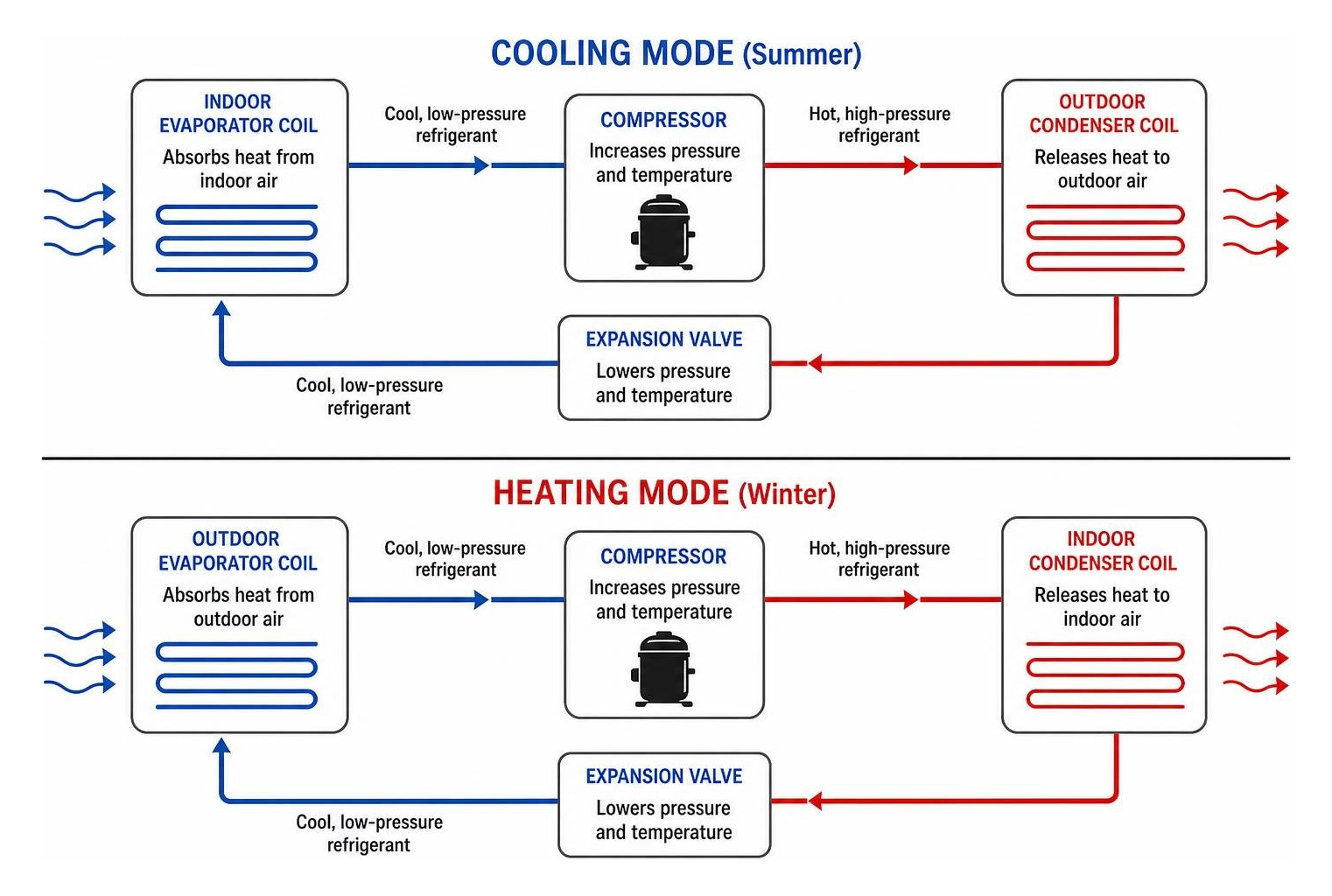
To fix common heat pump issues, start by checking the thermostat settings, resetting tripped breakers, replacing a dirty air filter, clearing debris from the outdoor coil, and verifying the defrost cycle. These simple heat pump repair steps resolve many performance problems before calling a technician. To understand why a system malfunctions, it helps to review the basic mechanics of how a heat pump works. Unlike a traditional furnace that burns fossil fuel to generate warmth, a heat pump relies on the thermodynamic properties of refrigerant to transfer heat between your indoor living space and the outdoor air.
During the warmer months, the system functions as a high-efficiency central air conditioner. It absorbs indoor thermal energy through the evaporator coil and pumps it outside through the condenser coil. When winter arrives in Illinois, the process reverses completely. The outdoor unit extracts ambient heat from the outside air and compresses the refrigerant to elevate its temperature, releasing that captured warmth into your home.
Because a heat pump delivers year-round heating and cooling, its internal components endure roughly twice the operating runtime of a standalone air conditioner or furnace. To evaluate energy performance across both cycles, systems are rated using SEER2 for cooling efficiency and HSPF2 for heating performance. You can decode your heat pump HSPF rating for smarter home heating to understand how seasonal wear directly affects everyday operational efficiency.
Understanding the Reversing Valve and Dual-Mode Cycling
The critical component responsible for shifting a heat pump between heating and cooling modes is the four-way reversing valve. This brass valve contains an internal sliding mechanism directed by an electrical solenoid coil.
When your thermostat calls for a change in operating mode, the solenoid energizes or de-energizes, directing refrigerant pressure to shift the internal slider. This action reverses the directional flow of the refrigerant circuit:
- Cooling Mode: Refrigerant flows from the compressor to the outdoor coil (acting as a condenser) and then to the indoor coil (acting as an evaporator).
- Heating Mode: Refrigerant flows directly from the compressor to the indoor coil (acting as a condenser) to release heat into your ductwork before traveling to the outdoor coil.
When a reversing valve fails mechanically, its internal slide can get physically stuck mid-travel. When this happens, high-pressure hot refrigerant bleeds directly into the suction line, preventing the system from heating or cooling properly regardless of thermostat settings.
Defrost Control Boards, Compressors, and Electrical Relays
Because the outdoor coil absorbs heat during sub-freezing winter operation, moisture in the outdoor air naturally condenses and freezes on the coil fins. To prevent a heavy buildup of ice from blocking airflow, heat pumps rely on an automated defrost system managed by a defrost control board, temperature sensors, and time relays.
During a defrost cycle, the control board temporarily switches the reversing valve back into cooling mode to direct warm refrigerant to the outdoor coil, quickly melting accumulated frost. At the same time, the outdoor fan pauses and auxiliary electric heat strips turn on indoors so you do not feel cold drafts from your supply registers.
Beyond the defrost system, heat pumps depend on several heavy-duty electrical parts that experience normal wear and tear:
- Run Capacitors: Store and deliver steady electrical voltage to run the compressor and outdoor fan motor smoothly.
- Contactor Switches: High-voltage electromagnetic switches that engage incoming line power whenever the thermostat signals a heating or cooling cycle.
- Compressor Motor Windings: The internal electrical windings within the hermetic compressor that drive the mechanical compression of refrigerant vapor.
- Fan Relays: Direct power to the indoor and outdoor blower fans based on active heating, cooling, or defrost cycles.
7 Easy Steps to Diagnose and Fix Common Heat Pump Problems
When your system stops heating or cooling correctly, walking through a structured troubleshooting process helps eliminate simple operational oversights before calling for service.
Before assuming a major mechanical failure has occurred, homeowners can learn how to diagnose HVAC issues and review basic DIY HVAC repair steps to fix your system safely.
Essential Heat Pump Repair Checklist for Common Malfunctions
Follow these seven diagnostic steps in sequence to resolve minor performance disruptions:
- Step 1: Check Thermostat Calibration and Mode Settings
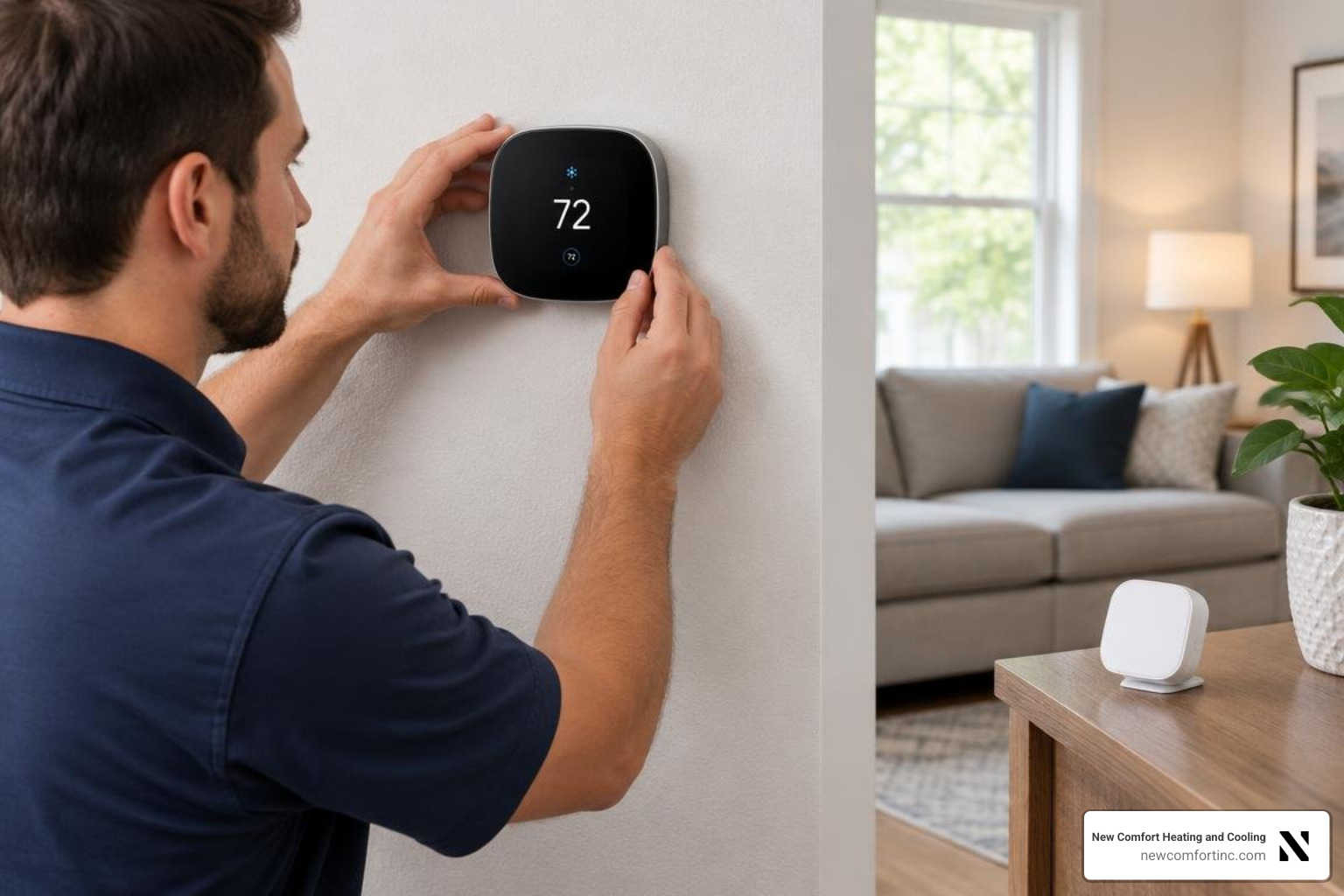
Ensure the thermostat selector is explicitly set to "Heat" or "Cool" rather than "Off." Verify that the setpoint temperature is at least 3 degrees above (for heating) or below (for cooling) the current room temperature. Check whether the thermostat display requires fresh batteries, and confirm that continuous fan mode is set to "Auto" rather than "On" to prevent unconditioned air from blowing when the compressor is idle. - Step 2: Inspect Electrical Disconnects and Circuit Breakers
Heat pumps operate on two distinct circuits: one for the indoor air handler and one for the outdoor condenser. Check your main electrical panel for a tripped dual-pole breaker. If tripped, firmly reset it once. Also verify that the outdoor disconnect switch near the condenser unit has not been turned off accidentally. - Step 3: Inspect and Replace the Air Filter
A clogged air filter restricts airflow across the indoor coil, starving the system of required air volume. This restriction causes indoor coils to freeze in summer and elevates head pressures in winter, causing high-limit safety switches to trip. Inspect your filter and replace it if surface dust or debris is visible. - Step 4: Clear Outdoor Coil Obstructions and Debris
Maintain at least two feet of clear space around the entire perimeter of the outdoor cabinet. Clear away autumn leaves, tall grass, weeds, and heavy snowdrifts that can choke outdoor heat absorption and restrict discharge airflow from the top fan. - Step 5: Inspect and Clear the Condensate Drain Line
During cooling mode and defrost cycles, moisture collects in the indoor drain pan. If the PVC drain line develops an algae clog, internal float switches will cut power to the thermostat or outdoor unit to prevent water damage. Clear the drain trap with a wet/dry vacuum or a gentle vinegar rinse. - Step 6: Observe the Outdoor Coil Defrost Operation
A light dusting of white frost across the outdoor coil is normal during freezing winter weather. However, if thick, solid ice encases the entire cabinet and fan guard, the system's defrost controls or sensors may be failing. Shut the system down to let the ice melt naturally. Never strike the coil or chip ice off with metal tools, as this easily punctures the delicate aluminum fins and copper tubing. - Step 7: Evaluate the Auxiliary and Emergency Heat Settings
If the outdoor unit fails during severe winter temperatures, turn on the auxiliary emergency heat setting on your thermostat. Understanding the emergency heat switch on heat pumps helps you use backup electric heat strips temporarily to protect your home's pipes while waiting for a professional service visit.
When to Seek Professional Heat Pump Repair Services
While basic airflow maintenance and thermostat checks are safe for homeowners, most heat pump mechanical and refrigeration issues require specialized tools, diagnostic instruments, and professional certification.

Knowing when to call an HVAC technician prevents minor electrical faults from cascading into catastrophic compressor failure. When severe weather hits Chicagoland, having access to local 24hr HVAC repair services ensures your home remains safe and warm. If you are in Cook County, our team provides comprehensive heating and air conditioning repair to quickly resolve system issues.
Safety Protocols and High-Voltage Diagnostic Warnings
Heat pumps carry serious electrical and mechanical safety hazards. Modern outdoor condensing units utilize 208/240-volt high-voltage circuits capable of causing severe injury. Furthermore, large motor run capacitors retain dangerous electrical energy even after the main circuit breaker has been disconnected.
Additionally, Section 608 of the Federal Clean Air Act strictly prohibits the venting of chemical refrigerants into the atmosphere. Diagnosing refrigerant leaks, recovering refrigerants, adjusting system subcooling or superheat, and brazing copper lines require EPA-certified technicians using calibrated manifold gauges, electronic leak detectors, and recovery machines. Homeowners should understand what to expect from a 24 hour HVAC service so they can rely on trained professionals for complex electrical and sealed-system repairs.
Making the Decision: System Restoration vs. Upgrade
When a heat pump experiences a major breakdown, homeowners must weigh whether repairing the existing equipment makes long-term sense compared to investing in an upgrade.
Exploring how a next-generation heat pump offers more affordable heating and cooling can help you weigh ongoing efficiency gains against short-term repair choices. For more insight into equipment planning, review the broader HVAC repair cost saving benefits before making a final commitment. If you are considering a full replacement, our team offers professional heat pump installation tailored to the demands of Midwestern winters.
Evaluating Heat Pump Repair vs. System Replacement
The decision to repair or replace hinges on equipment age, operating efficiency, overall reliability, and the scope of the required component repairs.
| Decision Factor | Recommend System Repair | Recommend System Replacement |
|---|---|---|
| Equipment Age | Under 10 years old with routine service history | Over 12 to 15 years old |
| Component Failure Scope | Minor electrical parts (capacitors, contactors, relays) | Major mechanical failure (burned-out compressor, leaking coils) |
| The 50% Rule | Total repair estimate is well below half the cost of a new system | Repair estimate exceeds 50% of the value of a modern replacement |
| Refrigerant Type | Uses modern R-410A or next-gen low-GWP refrigerants | Uses phased-out, obsolete R-22 refrigerant |
| Cold-Climate Capability | System meets winter heating demands without excessive auxiliary heat | System struggles in sub-zero weather and lacks variable-speed inverter tech |
| System Integration | Existing ductwork and electrical panel are fully compatible | Ready to upgrade to dual-fuel furnace pairing or integrated heat pump water heating |
Modern cold-climate inverter heat pumps maintain efficient heating capacity at temperatures well below 0°F, significantly reducing reliance on expensive electric resistance heat strips. Additionally, federal tax credits under the Energy Efficient Home Improvement Credit (Section 25C) and local utility rebates offer substantial financial incentives for homeowners upgrading to qualified high-efficiency heat pump systems.
Heat Pump Preventative Maintenance to Avoid Costly Breakdowns
Consistent preventative maintenance is the most effective way to ensure reliable heat pump operation, maintain peak efficiency, and avoid mid-season breakdowns.

Because heat pumps run all year long, they require professional maintenance twice a year: once in the spring before the cooling season, and once in the autumn before heating demands begin. Professional maintenance services should always include:
- Deep Coil Cleaning: Removing embedded dirt and grime from indoor and outdoor coils to restore optimal thermal transfer.
- Refrigerant Charge Verification: Checking operating pressures, subcooling, and superheat to catch tiny refrigerant leaks early.
- Electrical System Inspection: Measuring capacitor microfarad ratings, testing contactor points for pitting, and tightening all high-voltage terminal connections.
- Defrost Cycle Testing: Manually initiating the defrost cycle to verify sensor accuracy, reversing valve actuation, and auxiliary heat staging.
- Blower Motor and Airflow Balancing: Cleaning blower wheel blades, inspecting duct static pressures, and verifying proper cubic feet per minute (CFM) delivery.
- Condensate Management: Clearing and chemically treating the condensate drain pan, trap, and discharge line to prevent water backups.
Common Heat Pump Issues by Season in the Chicago Suburbs
Chicagoland weather puts a heat pump through two very different workloads every year. Knowing which heat pump issues tend to show up in each season helps you spot trouble early and schedule heat pump repair before a small fault turns into a no-heat or no-cooling call.
Winter Heat Pump Problems
From December through February, the outdoor unit works hardest in the coldest, wettest conditions. The most common winter heat pump problems we see in the western and southwest suburbs include:
- Ice Buildup That Will Not Clear: Freezing rain and drifting snow can overwhelm a weak defrost system, leaving the outdoor coil encased in ice.
- Heavy Reliance on Auxiliary Heat: If the "AUX" or "EM HEAT" indicator stays on during mild 35°F to 45°F days, the heat pump is not carrying its share of the load.
- Blocked Outdoor Units: Snow piled by plows, shovels, or roof runoff can bury the cabinet and choke off airflow.
- Short Cycling on Cold Mornings: Frequent starts and stops strain the compressor and usually point to airflow, sensor, or refrigerant charge issues.
Summer Heat Pump Problems
When humidity rolls in during July and August, the same equipment switches to cooling. Typical summer heat pump issues include warm air from the vents, a frozen indoor coil caused by a clogged filter, a buzzing outdoor unit with a failed capacitor, and water around the air handler from a blocked condensate line. Cottonwood seeds and grass clippings packed into the outdoor coil are another frequent cause of high head pressure and higher electric bills.
What to Expect During a Professional Heat Pump Repair Visit
If the seven steps above do not restore normal operation, a professional heat pump repair visit is the next move. Knowing what happens during the appointment makes it easier to ask good questions and compare recommendations.
- Conversation About Symptoms: The technician asks when the problem started, what the thermostat shows, and whether you noticed ice, noises, or tripped breakers. Your notes from the troubleshooting steps save valuable time.
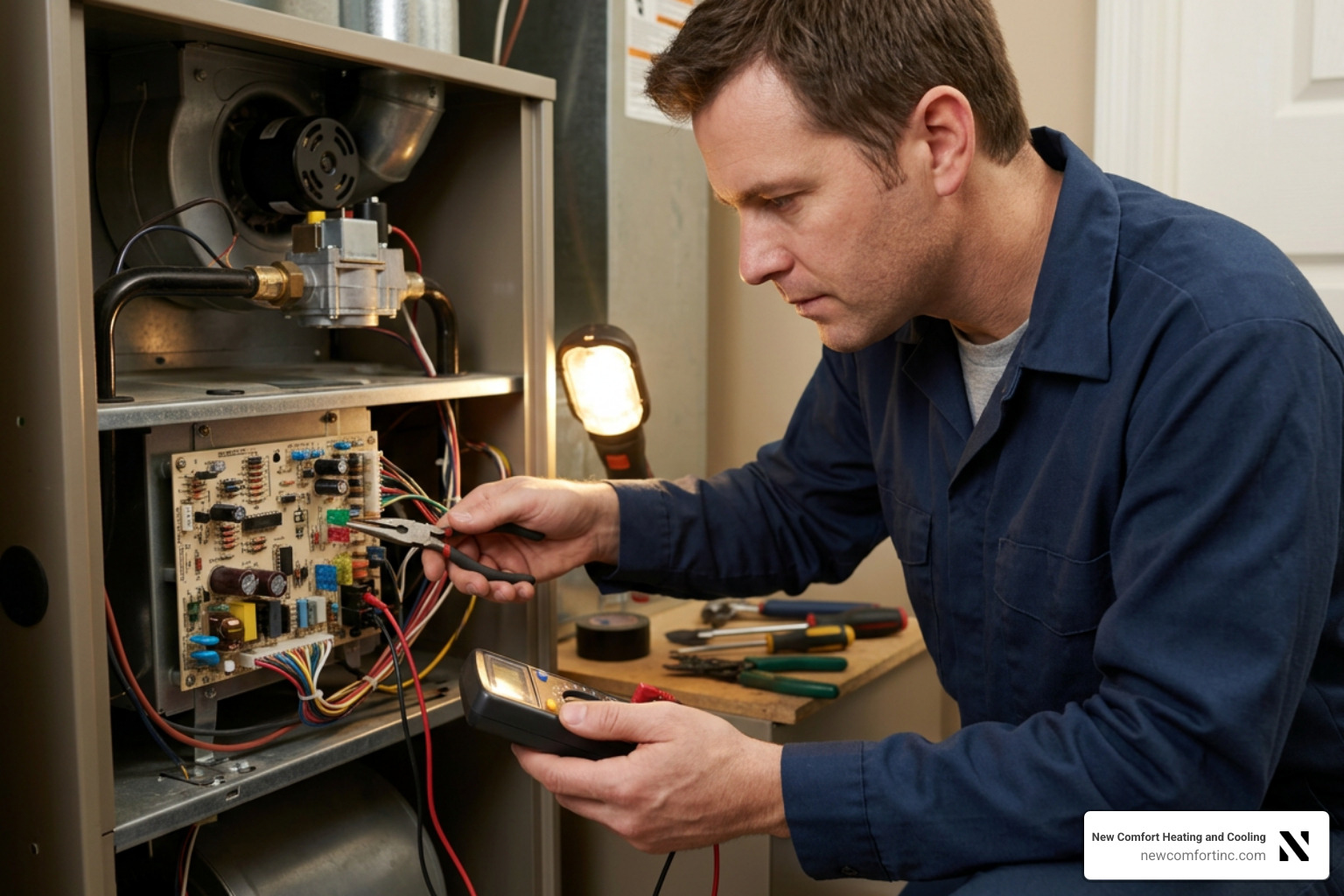
- Electrical Testing: Capacitors, contactors, relays, and wiring are checked with a meter to find weak or failed parts.
- Refrigerant Circuit Evaluation: Pressures, superheat, and subcooling are measured to confirm the charge and check the reversing valve and compressor.
- Airflow and Defrost Checks: The filter, blower, coils, and defrost board are inspected so the heat pump can heat and cool at its rated capacity.
- Clear Recommendations: Before any work begins, you should receive a plain-language explanation of what failed, your repair options, and whether replacement is worth considering.
Many heat pump repairs, such as a new capacitor, contactor, or defrost sensor, can be finished in a single visit. Larger repairs like a reversing valve or compressor replacement involve refrigerant recovery and brazing, so they take longer and may require ordering parts.
Heat Pump Repair Cost Factors
Every home and system is different, so it is wise to understand what shapes the price of heat pump repair before you call. The main cost drivers are the part that failed, how accessible the equipment is, whether refrigerant work is involved, the age and brand of the system, and whether the call happens after hours. A simple electrical part is typically a modest repair, while sealed-system work on the compressor, coil, or reversing valve costs considerably more. Ask for written pricing before approving any heat pump repair, and ask whether warranty coverage from the manufacturer applies to the failed part.
Seasonal Heat Pump Maintenance Checklist for Homeowners
Between professional tune-ups, a few simple habits keep your system ready for both seasons and reduce the odds of an emergency heat pump repair:
- Check the air filter monthly and replace it at least every one to three months.
- Keep two feet of clearance around the outdoor unit and gently brush off snow after storms.
- Make sure gutters and downspouts do not drip directly onto the outdoor cabinet, where water can refreeze on the coil.
- Rinse the outdoor coil with a garden hose in spring after turning off power at the disconnect.
- Pour a cup of white vinegar into the condensate drain access each spring to discourage algae.
- Listen for new rattles, grinding, or buzzing, and note any change in how long the system runs.
- Schedule professional heat pump maintenance in spring and fall.
Simple care like this keeps your heat pump efficient, helps it reach its full lifespan, and gives a technician a clean, healthy system to work with when service is needed.
Frequently Asked Questions About Heat Pumps
Why is my heat pump blowing cool air while in heat mode?
If your heat pump is delivering cool or lukewarm air during a heating call, several issues could be at play:
- Stuck Reversing Valve: The valve may have failed mechanically or lost electrical signal, leaving the refrigerant circuit stuck in cooling mode.
- Active Defrost Cycle: The system may be running a normal 5-to-10-minute defrost cycle to clear ice from the outdoor unit.
- Defective Auxiliary Heat Strips: If outdoor temperatures are extremely cold and the secondary electric resistance coils fail to engage, the heat pump may struggle to produce warm supply air.
- Undercharged Refrigerant: A slow refrigerant leak reduces the system's ability to absorb and compress outdoor heat.
What should I do if my outdoor unit is encased in ice?
If the outdoor cabinet develops a thick blanket of solid ice that does not melt away, turn the thermostat to "Off" or switch temporarily to "Emergency Heat."
Never chip away ice with screwdrivers, knives, or hammers, and never pour boiling water over the coil, as sudden thermal expansion can crack aluminum joints. The ice buildup is typically caused by a failed defrost sensor, a faulty defrost control board, a bad outdoor fan motor, or low refrigerant levels. Once the unit is turned off, contact an HVAC professional to diagnose the root cause safely.
How long does a residential heat pump typically last?
A residential heat pump typically lasts between 12 and 15 years. Because heat pumps run during both summer and winter, they accumulate operational runtime more quickly than standalone cooling units. Lifespan is directly influenced by regular biannual maintenance, proper system sizing, and regional winter weather severity.
How do I know if I need heat pump repair or just maintenance?
If the system still heats and cools but runs longer than usual, has a dirty filter, or has not been serviced in a year, routine maintenance is usually the right starting point. If you notice warm air in heat mode, constant auxiliary heat, ice that will not clear, tripped breakers, or loud buzzing and grinding, schedule heat pump repair so a technician can find the failed part before it damages the compressor.
Is it safe to keep running a heat pump that is making strange noises?
Not for long. Buzzing, grinding, or squealing often signals a failing capacitor, contactor, or motor bearing. Running the equipment in that condition can overheat the compressor. Switch the thermostat to emergency heat or off and call for heat pump repair. New Comfort Heating and Cooling offers 24/7 emergency service across Chicago's western and southwest suburbs at (708) 717-9995, or you can contact our team online.
Conclusion
Understanding how your heat pump works, recognizing early warning signs, and following basic diagnostic checks can help you quickly resolve minor issues and keep your home comfortable year-round. When complex problems arise—such as stuck reversing valves, refrigerant leaks, or electrical failures—relying on prompt professional service protects your equipment investment. At New Comfort Heating and Cooling, we are dedicated to delivering fast, dependable diagnostic support, upfront recommendations, and personalized, energy-efficient solutions for your home. If your system is underperforming, schedule professional service with New Comfort Heating and Cooling to restore reliable heating and cooling today.